
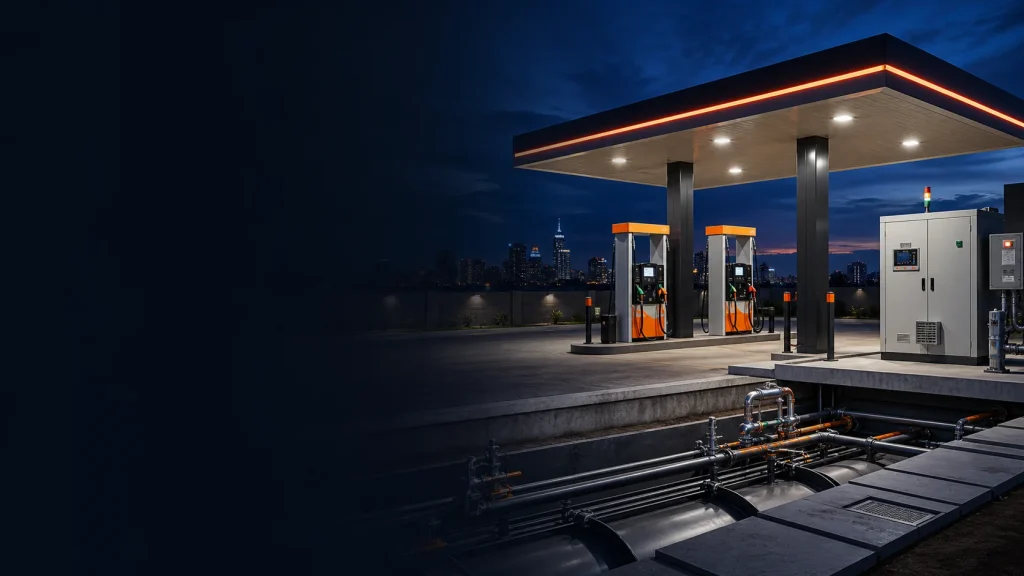
fuel piping installation contractors projects require more than buying the main equipment. Fuel piping performance depends on material compatibility, routing, joints, containment, falls, access, testing and protection during later civil work. This guide explains the questions owners, operators, consultants and procurement teams should resolve before requesting a final quotation.
Evaluating piping capability beyond the quoted pipe length
The first step is to define the required operating outcome. Capacity, transaction volume, site conditions, available utilities, existing equipment, reporting needs and future expansion can change the correct design. A clear requirement also helps suppliers quote the same scope, making commercial comparisons more meaningful.
Zama Engineering Systems approaches petroleum work as an integrated engineering task. Mechanical equipment, electrical power, earthing, controls, networking, security and maintenance access must be coordinated. Final brands, quantities, interfaces and regulatory responsibilities are confirmed during assessment and quotation.
Key items to include in the scope
- Material and system compatibility
- Routing and containment design
- Qualified installation procedures
- Pressure or integrity testing records
The quotation should state who supplies each component, who installs it, what tests will be completed and what information the customer must provide. It should also identify exclusions such as civil work, statutory fees, third-party inspections, internet service, ongoing software subscriptions or work by other appointed professionals.
Site assessment and design questions
- What products, volumes or assets will the system handle?
- What equipment and infrastructure already exist?
- Which users need operational, reporting or administrative access?
- What power, network and backup arrangements are available?
- Which alarms, reports, integrations or retention periods are required?
- What environmental, safety and access restrictions affect installation?
Answers to these questions should be documented before procurement. When existing equipment is involved, model numbers, firmware, interfaces, condition and ownership of configuration credentials may need verification.
Installation and commissioning stages
- Requirement review: Confirm the operational problem and measurable outcome.
- Site survey: Review positions, routes, distances, utilities, risks and existing assets.
- Design: Define equipment, interfaces, supporting works and responsibilities.
- Approval and procurement: Confirm the quotation, programme and product availability.
- Installation: Complete the agreed mechanical, electrical, control or network work.
- Testing: Verify integrity, operation, alarms, measurements and communications as applicable.
- Training and handover: Provide authorised users with operating guidance and relevant records.
Common mistakes to avoid
Common problems include ordering equipment before confirming compatibility, omitting essential accessories, undersizing storage or power, failing to define who configures integrations, and accepting a proposal without testing or handover criteria. Another risk is treating remote monitoring or automation as a substitute for sound operating procedures. Technology is most effective when responsibilities, exception handling and maintenance are also clear.
Maintenance and lifecycle planning
The project should identify consumables, inspection intervals, calibration or test requirements, software support, backup procedures and critical spare parts. Operators should know how to recognise an abnormal condition and who receives the first alert. Where data is used for reconciliation or management decisions, time settings, user permissions and audit records should be controlled.
How to compare quotations
Compare complete outcomes rather than headline equipment prices. Check capacities, specifications, accessories, installation, configuration, testing, training, warranty, subscriptions, travel, taxes and exclusions. Ask whether the design can be maintained locally and expanded without replacing the entire system.
Frequently asked questions
Can ZES provide a site survey?
Yes. A survey can establish the current site conditions, required scope and interfaces before a tailored quotation is prepared.
Can existing equipment be retained?
Possibly. Retention depends on condition, capacity, compatibility, documentation and the customer’s required outcome.
Does the system require ongoing support?
Most petroleum, automation and monitoring systems benefit from preventive inspection, fault support and periodic review of settings, sensors, records and user access.
Is regulatory approval included automatically?
No. Permits, licences, professional approvals and inspection responsibilities must be explicitly defined in the project scope and checked against current official requirements.
Fuel piping installation contractors Kenya clients shortlist should be assessed on the whole piping system, not a rate per metre. Product compatibility, pipe construction, jointing method, route, falls, containment, access, thermal movement, protection and testing all affect reliability. The installer should work from approved drawings and procedures, with technical supervision appropriate to the materials and project risk.
Ask bidders to price every connection and control point
The tender schedule should distinguish fill, vent, suction, pressure, return or other project-specific lines; fittings and transitions; sumps and chambers; valves; supports; sleeves; markers; containment and test points. Interfaces at the tank and dispenser must match the approved equipment. Coordinate the buried scope with the tank installation design and the final dispenser connection requirements.
Contractors should submit product data, storage and handling controls, installer competence evidence, jointing procedures, inspection and test plan, proposed test equipment and sample records. Procurement evaluation should consider traceability and the availability of approved fittings, not only pipe-brand marketing. Unreviewed mixing of systems or components can invalidate the intended performance and warranty.
Inspect and test before reinstatement
Acceptance hold points should include route and trench inspection, bedding or supports, pipe identification, joint completion, chamber entries, separation from other services and preparation for testing. The agreed integrity test must use suitable media, pressures, duration, calibrated instruments and safety controls for the installed system. Failed tests require documented repair and complete retesting.
Before backfill or concrete covers the route, collect photographs and survey information for the as-built drawing. The handover pack should contain material records, joint logs where required, test sheets, deviations, valve and access locations, warranties and maintenance instructions. Send ZES the tank, dispenser and site layout for a piping-scope assessment.
Route-protection checkpoint
After the pipe system passes its agreed tests, the project must protect it from the remaining construction work. Mark buried routes on site, brief civil crews and control drilling, excavation and heavy loading near chambers or shallow services. Confirm that compaction and surfacing methods match the engineering detail. The contractor should record any approved deviation between the drawing and installed route while it can still be measured. Route protection is a procurement consideration too: the piping contractors responsibility should extend through an agreed stage of reinstatement, rather than ending immediately after a test certificate is signed.
Discuss Your fuel piping installation contractors Project
Contact ZES with the site location, project stage, available drawings and required outcome.