
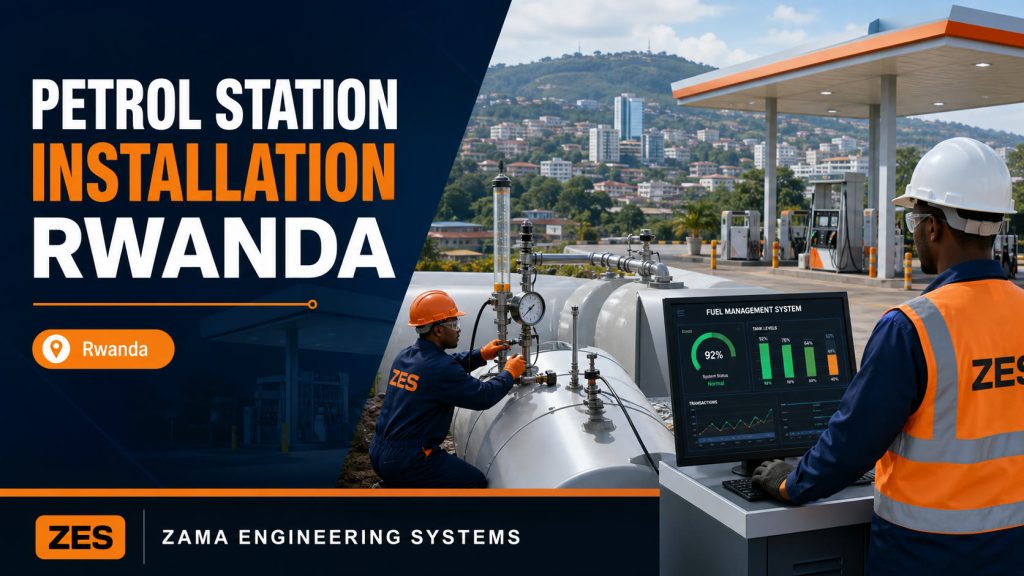
petrol station installation Rwanda searches often begin with equipment, but a dependable project starts by defining the operating model, site constraints, approvals, interfaces and support requirements. Rwanda’s compact but highly connected fuel market benefits from carefully planned station layouts, inventory reconciliation, automatic tank gauging and dependable forecourt controls. Detailed design and documentation should be treated as core project deliverables.
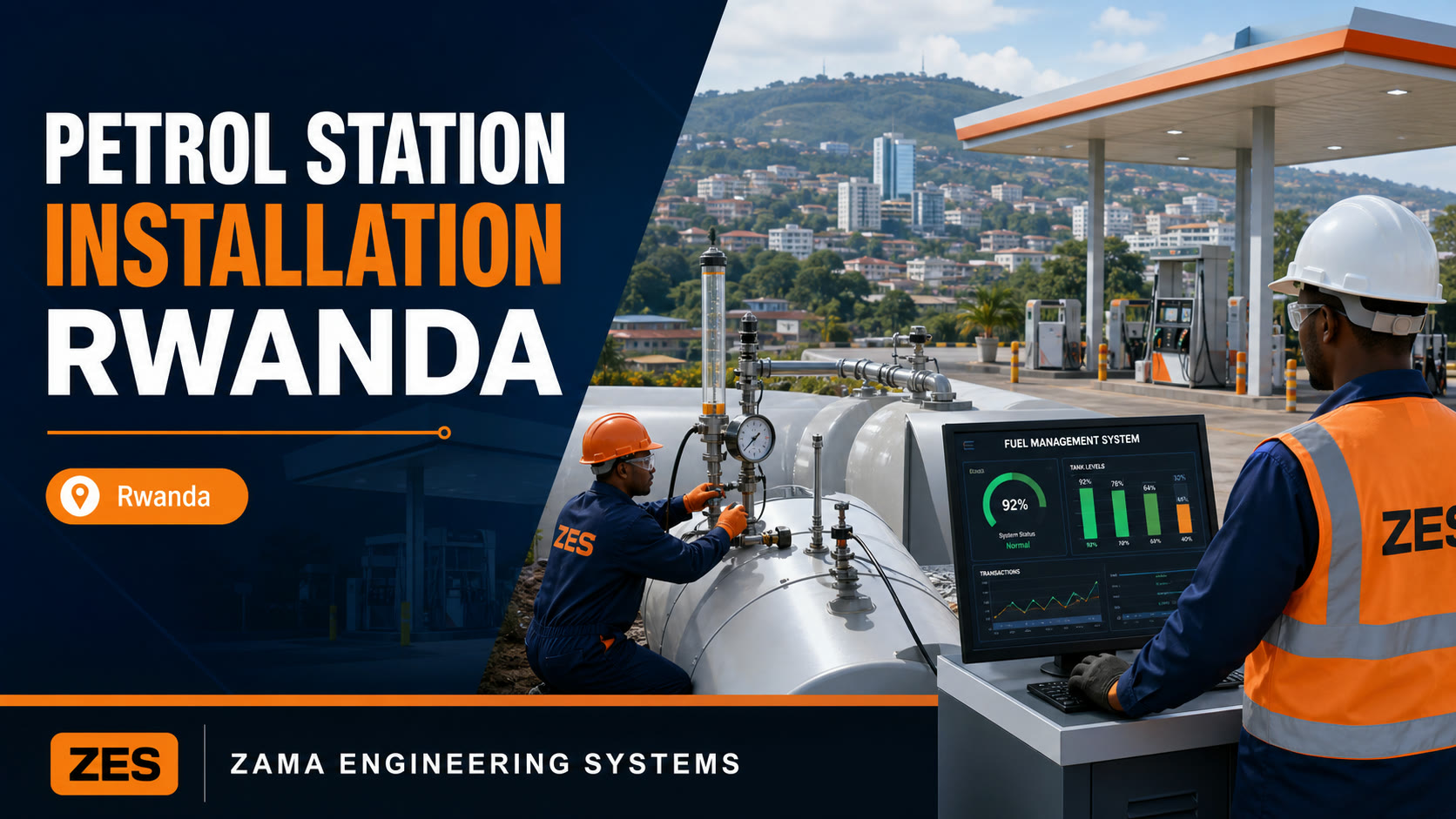
Petroleum engineering opportunities and operating needs
A Rwanda project should coordinate land and building approvals with the petroleum installation process. Tank charts, pressure testing, measuring-system verification and accurate handover records should be planned early because they affect both commissioning and later stock control.
Zama Engineering Systems supports customers with project scoping, system design, equipment selection, installation planning, automation, monitoring, networking, CCTV and maintenance strategy. Delivery in a new country is subject to site assessment, logistics, local professional participation and confirmation of the legal scope ZES is permitted to perform.
Locations and commercial corridors to consider
Potential service locations include Kigali, Gasabo, Kicukiro, Nyarugenge, Rubavu, Musanze, Huye and major national corridors. Site suitability cannot be decided from the town name alone. Traffic patterns, neighbouring land uses, road access, tanker turning, drainage, utilities, security, environmental sensitivity and the customer’s commercial plan all affect feasibility.
Services that can form part of the project
- Petrol station feasibility support and coordinated project scoping
- Underground or aboveground fuel-storage planning
- Fuel piping, fill, vent, suction and containment systems
- Fuel dispenser installation and commissioning coordination
- Electrical distribution, earthing, bonding and emergency isolation
- Automatic tank gauging, leak alarms and remote tank monitoring
- Forecourt automation, point-of-sale interfaces and fuel reconciliation
- Fleet fuel management for trucks, buses, equipment and generators
- CCTV, access control, networking and communications
- Preventive maintenance planning, training and technical support
Storage, dispensing and piping design
Storage capacity should be based on product demand, delivery lead time, working stock, reserve policy and available space. The project should document tank construction, access chambers, fill and vent arrangements, overfill controls, containment, corrosion protection and inspection access. Piping selection must account for fuel compatibility, routing, joints, falls, protection and a defined integrity-testing procedure.
Dispensers require more than a foundation and fuel connection. Power, earthing, communication, emergency shutdown, calibration coordination, labelling and safe vehicle circulation must be resolved. A complete quotation identifies every accessory and clearly separates supplier, contractor, customer and third-party responsibilities.
Automation and fuel inventory control
Automation can connect compatible dispensers, tank gauges, sales information and management reports. The operating procedure should explain how deliveries, opening stock, sales, transfers, adjustments and closing stock are reconciled. Management needs exception thresholds and audit records, not simply a large volume of data.
Remote monitoring may provide level, volume, water and alarm visibility from compatible sensors. Its usefulness depends on correct tank data, reliable power and connectivity, controlled user access and a named person responsible for responding to each alarm.
Regulatory and professional coordination
RURA publishes requirements for petrol-service-station installation and retail licensing, including construction, environmental and technical documentation.
For current official information, review the relevant regulator or authority guidance. Requirements can change and must be confirmed for the particular project.
ZES does not promise regulatory approval. The project scope should identify who prepares drawings, environmental submissions, engineering certifications, permit applications, inspection requests, calibration records and operating-licence documents. Local licensed professionals or contractors may be required.
How to prepare a useful request for quotation
- Provide the country, town, coordinates and current project stage.
- State whether the site is retail, fleet, industrial, agricultural, mining or generator-fuelling.
- List the products, expected volumes, storage capacity and number of dispensing points.
- Share available surveys, layouts, approvals, photographs and existing-equipment details.
- Describe the required automation, reports, remote monitoring, CCTV and network connections.
- Identify the intended programme and the parties already appointed locally.
Questions project owners should ask
Can one design be copied across different African countries?
No. A repeatable engineering approach is useful, but approvals, environmental conditions, supply chains, standards, languages and operating practices must be checked for each country and site.
Can ZES integrate equipment that is already installed?
Possibly. Model numbers, condition, interfaces, firmware, configuration access and the desired outcome must be assessed before compatibility is confirmed.
Is remote support enough for a fuel installation?
Remote diagnostics can reduce response time, but critical mechanical, electrical and safety work still needs competent local inspection and intervention.
What should be completed at handover?
Handover should cover tests, settings, asset information, operating guidance, user access, maintenance requirements, warranties, outstanding items and the agreed support route.
Discuss a Petrol Station Installation and Fuel Management Systems in Rwanda Project
Send ZES the site location, intended operating model, estimated capacity and available project documents for an initial scope review.