
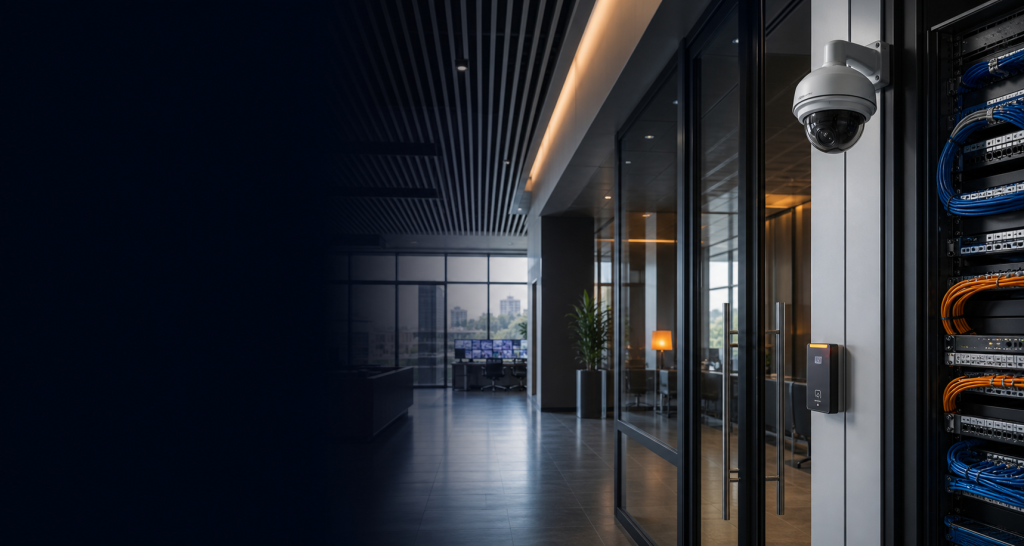
Access control systems for offices in Kenya work best when the door hardware, user permissions and daily operating procedures are designed together. A reader on the wall cannot compensate for a door that will not close properly or an unclear visitor process. Before requesting a quote, list the entrances and restricted rooms, who needs access and how people should leave safely during normal operation and an emergency.
Create a door schedule before selecting hardware
Record each door’s location, construction, swing direction, existing lock, closer and daily traffic. Note whether the door serves a shared corridor, a tenant office, a server room or a store. Photographs of the hardware can help an initial review, but sensitive documents and people should stay out of the image. The installer should confirm mechanical condition and mounting suitability during the survey. Reusing unsuitable locks to reduce the quote can undermine the intended result.
Plan around Nairobi office operations
In Westlands, Parklands and Upper Hill, a tenant’s office system may need to coexist with a building’s reception and shared access rules. CBD and Ngara premises can have restricted delivery or installation windows. Offices in Kilimani, Kileleshwa and along Ngong Road may occupy converted buildings where cabling and door construction vary between rooms. Confirm the actual property requirements rather than assuming that a standard office package fits every location. Keep reception usable while the work is phased.
Separate staff, visitors and restricted rooms
Define permission groups by job responsibility and schedule. A staff member may need the main entrance but not a records room. Decide who authorises visitors, how temporary credentials expire and what happens when a card is lost. Give system-administration rights to a small authorised group. Document employee departures so access is removed promptly. A visitor book, an intercom and an access-control system solve related but different tasks; ask which workflow is included.
Confirm safe exit and power-loss behaviour
The appropriate locking arrangement depends on the door, building design and applicable safety requirements. Have the responsible professionals agree emergency release and any fire-system interface before ordering hardware. Test normal exit, loss of power and authorised overrides during commissioning. Do not accept a configuration that could trap occupants or assume that an emergency exit can be treated like a store-room door. If a building interface is required, name the parties responsible for design, wiring and acceptance.
Compare quotations by complete door cost
A proposal should distinguish readers, controllers, locks, brackets, exit devices, power supplies, backup provision, network work and labour. Ask whether software licensing or subscriptions are recurring. Identify doors that need mechanical repair first. If you want attendance reporting from access events, confirm that the software supports the required rules; entering a door and starting a paid shift are not necessarily the same event. Treat existing CCTV or biometric integration as a compatibility exercise.
Acceptance checks for the office manager
Test an authorised user, a denied user, an expired visitor credential and a revoked card. Check that events carry the right door name and time. Confirm that the manager can change permissions, run an appropriate report and restore agreed settings. Review administrator access and the approved process for support. Keep a door schedule and written handover. Access logs should be available only to people with a legitimate role in using them.
Book a Nairobi office access-control survey
Share the building and area, number of doors, expected users, opening hours and landlord restrictions. State whether you need a new system, additional doors or repair of an existing installation. ZES will confirm the next practical assessment and the proposed scope. Use the access-control service page for the quotation and the Nairobi service-area guide when planning work across several locations.
Related planning guides
- Time and Attendance Biometric Systems in Nairobi: Office and Shift Planning
- CCTV and Access Control for Apartments in Nairobi: A Manager’s Guide
- CCTV Installation in Nairobi: Service Areas and the Right Site Brief
Discuss your site with ZES
Explore the relevant ZES service or request a site survey. Call +254 725 345 345 or email info@zes.co.ke. Include your location, property type and the outcome you need. ZES confirms scope, appointment availability and commercial terms for each enquiry.