
Warehouse and godown technical services in Nairobi should start with the facility’s movement of goods, staff and vehicles. A useful scope connects loading-bay visibility, authorised entry, dependable networking and an installation programme that respects operations. ZES can assess security, connectivity and related technical requirements; specialist structural, fire-safety or other engineering work must have its own confirmed responsibilities.
Map where operations lose visibility
Walk through receiving, dispatch, storage aisles, pedestrian entrances and restricted rooms. Ask what the operator needs to verify after a discrepancy: arrival of a vehicle, movement at a doorway or activity at a packing bench. A high-level camera overview is not the same as detailed coverage of a transaction. Racking, doors, moving stock and parked vehicles can obscure a scene. Build the coverage plan around the actual working layout.
Nairobi industrial locations and survey considerations
Industrial Area, Enterprise Road, Lunga Lunga Road and the Mombasa Road corridor provide useful location details when booking a survey. In Ruaraka and Baba Dogo, describe the compound entrance and any shared utility or network arrangement. Embakasi, Airport North Road and Utawala enquiries should identify the specific road and access requirements. Facilities in Mlolongo and Athi River are in neighbouring Machakos County; flag these locations separately so travel and mobilisation can be quoted accurately.
Treat networking as part of the system
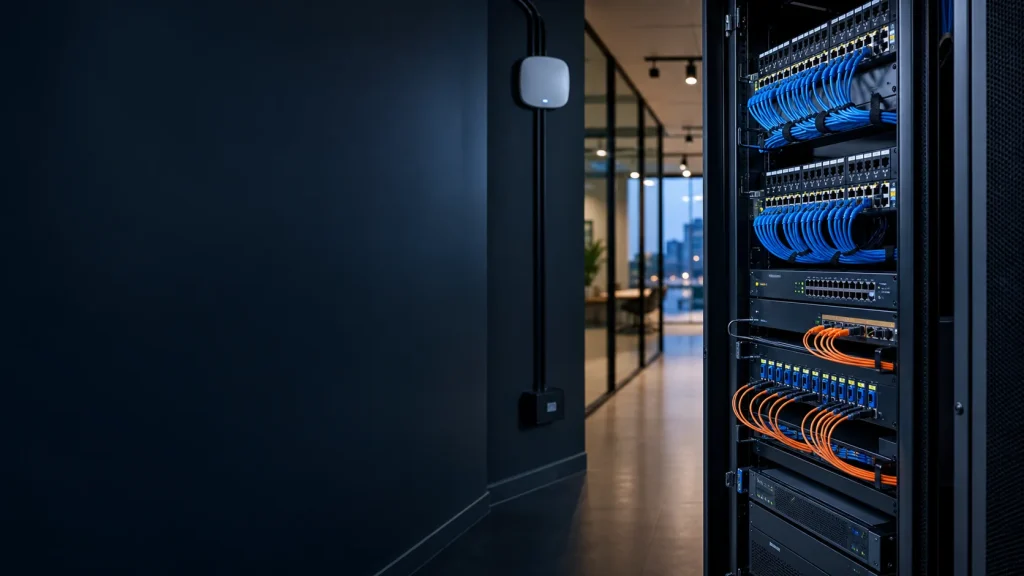
An IP camera installation may require switches, fibre or copper links, rack space and backup power. Map cable routes and identify the party responsible for each building-to-building connection. Keep business traffic, security equipment and guest access organised according to an approved design. Record switch and recorder capacity before adding devices. A stable internet link does not prove the internal network is healthy, and remote viewing failure does not always mean cameras have stopped recording.
Plan permissions around doors and zones
Give loading staff, office users, contractors and visitors access appropriate to their role. Restricted stores and records rooms can need different controls from the main entrance. Agree emergency-exit requirements with the responsible professionals. Do not connect a stock discrepancy directly to an employee sanction without a proper investigation. Attendance, door events and video can each supply context, but none should be treated as an infallible account of everything that happened.
Arrange installation around goods movement
Identify permitted work windows, isolation requirements, working-at-height arrangements and areas that must remain open. The proposal should specify access equipment and who supervises site permissions. Welding, drilling or electrical work near stored goods may require additional controls and specialist planning. Do not assume a normal office installation method is suitable for fuel, chemicals or other hazardous conditions. Make exclusions visible before accepting a quotation.
What to test with the warehouse team
Run a receiving and dispatch scenario using non-sensitive test activity. Check camera views while loading doors are open and under representative lighting. Verify playback, export, time synchronisation and authorised-user access. Test the agreed backup-power scope and network recovery. Have an operational representative confirm that equipment has not obstructed movement or created an access problem. Record outstanding items and the person responsible for closing them.
Build a phased improvement plan
If the budget is limited, rank gaps by operational need: a failed entrance view may deserve attention before additional general-overview cameras. Separate repairs from replacement and expansion. Keep a current asset list so future visits can start with model and fault details. Send ZES the site area, approximate layout, operating hours and main problem for a scoped proposal. Camera counts, network distances and access arrangements should be checked before a firm installation programme is agreed.
Related planning guides
- CCTV Installation Cost in Kenya: A Nairobi Buyer’s Guide
- Network Troubleshooting in Kenya: A Nairobi Business Fault Guide
- CCTV Installation in Nairobi: Service Areas and the Right Site Brief
Discuss your site with ZES
Explore the relevant ZES service or request a site survey. Call +254 725 345 345 or email info@zes.co.ke. Include your location, property type and the outcome you need. ZES confirms scope, appointment availability and commercial terms for each enquiry.