

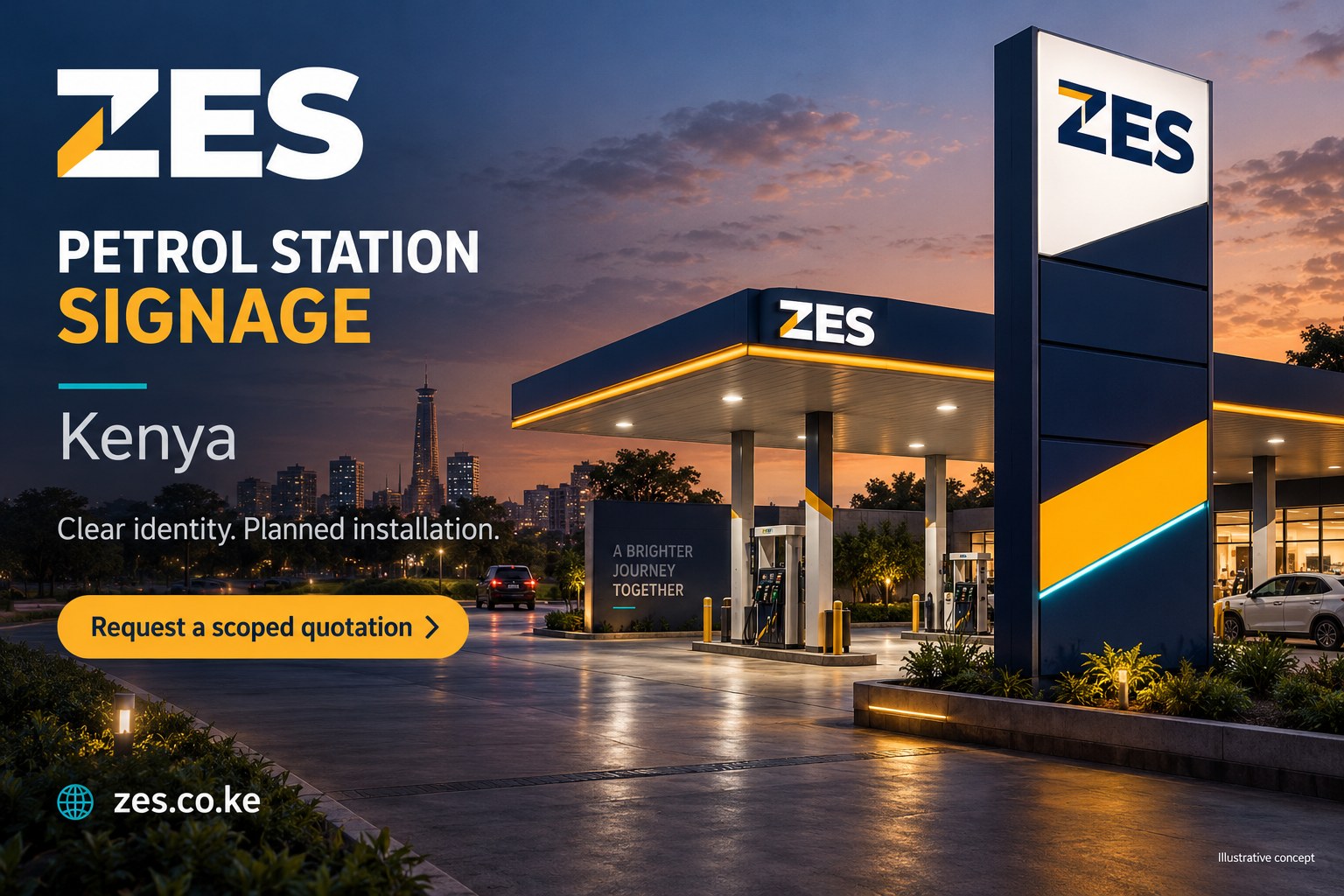
Petrol station signage installation in Kenya involves more than putting a logo above the forecourt. A station may need a roadside pylon, canopy fascia, illuminated brand panels, directional signs, safety notices and a price display. Each serves a different purpose, and each has its own support, electrical, visibility and maintenance requirements. A clear brief helps the owner buy a coordinated installation rather than a collection of signs that look unrelated or prove difficult to maintain.
For a ZES enquiry, begin with the station location, the signs required, photographs of the proposed positions and the brand artwork you are authorised to use. Explain whether this is a new station, rebranding project or replacement of damaged signs. Those details help determine what must be surveyed before dimensions, materials and installation methods are confirmed.
Start with the information customers need
Think through the customer journey from approaching the site to leaving it. Roadside identification helps a driver recognise the station. Entrance and exit guidance supports circulation. Product and price information helps customers understand the offer. On the forecourt, the signs should remain legible without competing with essential operating and safety information.
Make a schedule of proposed signs showing each location, purpose and message. Separate required operational notices from promotional graphics. A maintenance team should be able to identify a particular sign by a simple reference, such as “east entrance directional sign,” instead of relying on a photograph with no location. This schedule later becomes a useful installation and handover checklist.
Confirm brand and content approval
Use the brand owner's current approved artwork, colour references and layout rules where they apply. A low-resolution image copied from a website is a poor production reference. Confirm who approves the final text, product names, contact details and any promotional claims. Obtain written approval of the production artwork before material is cut or printed.
For a rebrand, identify which old signs will be removed and what condition may be concealed behind them. Previous fixings, damaged fascia and redundant cabling can affect the installation. The scope should say whether making good the supporting surface is included. Changing the visible logo alone may leave an inconsistent result if surrounding colours and lighting remain outside the project.
Survey the location before fixing dimensions
The survey should consider viewing direction, obstructions, available space and the relationship with entrances, buildings and overhead services. A design that looks balanced on a screen may not read clearly from the intended approach. Ask for a location photograph with a proportionate visual proposal, while recognising that a visual mock-up is not an engineered support design.
A freestanding pylon requires particular attention to its support and foundation arrangements. Existing supports should not be assumed suitable for larger or heavier replacements. Structural suitability must be assessed by the appropriate professional. The owner should also confirm applicable permissions and any requirements from the brand, landlord or relevant authorities before committing to installation.
Choose materials for the location and maintenance plan
Sign materials should be selected for their intended environment, finish and serviceability. Ask what is specified for the face, frame, backing and fixings, rather than accepting a general description such as “premium sign.” The quotation should explain which components are replaceable and how the sign will be accessed when a light source or display module needs attention.
Coastal exposure, rainwater, dust and sun can influence material and finish choices. Avoid treating one material as universally best. A well-made sign can still perform poorly if water accumulates inside it or access panels cannot be opened after installation. Request details of maintenance access and the contractor's approach to managing the conditions identified during the survey.
Plan illuminated signage as an electrical interface
Illuminated signs need an agreed electrical supply arrangement, switching method and access for maintenance. The signage contractor and responsible electrical personnel should confirm their respective boundaries. A quotation for the sign face may exclude cabling or changes to the distribution system. Clarifying this early prevents a completed sign from waiting for an unplanned electrical package.
Petrol stations require site-specific assessment of electrical equipment and installation locations. Product selection and work methods must account for the relevant environment and applicable requirements. This is not a do-it-yourself installation. Ask the responsible specialists to document the selected equipment and testing, without assuming that a generic weather rating alone establishes suitability for every station location.
Define how the price display will be operated
A price display is an information system as well as a sign. Establish who changes the figures, how updates are entered and how the operator confirms that the displayed information is correct. Where electronic displays are proposed, ask about the controller, supported format, power recovery behaviour and replacement parts. Clarify whether integration with another system is included or merely possible.
The handover should demonstrate the actual operating process to authorised staff. Record the equipment model, supplier support route and any software or licence dependencies. The owner should retain appropriate control of the system. Do not publish access credentials in a handover photograph or include them in general maintenance documents shared widely among contractors.
Coordinate installation with forecourt operations
Agree how delivery, lifting and work at height will affect vehicles and pedestrians. A sign above a public area can require a carefully managed work zone even if the installation itself appears brief. The operator should know when access will change and who can release the area after the work is inspected.
Installation planning must also consider the station's hazardous activities and site procedures. Work should be performed by competent personnel using the controls appropriate to the task and location. Avoid treating a quiet forecourt as an unrestricted construction area. The project programme should include site preparation, installation, testing and removal of temporary barriers and waste.
Compare quotations using a sign schedule
Issue the same sign schedule and approved design basis to each bidder. Compare dimensions, materials, finish, support work, lighting, electrical boundaries, access equipment and removal of existing items. A cheaper quotation may omit the foundation or assume the owner supplies a working electrical connection. Those differences should be visible before you compare totals.
For custom fabrication, agree the approval stages and how design changes affect price and delivery. State whether taxes, transport, accommodation where relevant, permits and making good are included. Any warranty should specify the component and conditions covered. A workmanship commitment, an electrical component warranty and a display supplier's support arrangement are different things.
Inspect the result in relevant viewing conditions
Review the installed signs from their intended approach and operating positions. Check spelling, alignment, visible finish and consistency with the approved artwork. For illuminated signs, agree an appropriate check of lighting and controls under the conditions in which the signs will be used. A daytime photograph alone may not show uneven illumination or an unreadable display.
The acceptance record should identify incomplete items and who will resolve them. Request equipment documentation, approved artwork files where contractually included, maintenance instructions and photographs. For support or electrical works, retain the relevant inspection and testing documents. Keep this information with the station's asset register so future repairs do not depend entirely on one person's recollection.
Plan cleaning, repairs and future changes
Ask how each sign should be cleaned and accessed without damaging its finish or exposing staff to unnecessary risk. Station employees should not be expected to improvise access at height. Include signage condition in the maintenance reporting process: failed illumination, loose panels, water ingress and impact damage should be referred to the appropriate service provider.
Consider how easily the sign can accommodate future changes. Replaceable panels and accessible components may make later updates more manageable, but they should be evaluated against the actual design and expected use. Keep approved artwork and equipment references organised to support consistent replacement parts and avoid mismatched colours or messages.
Preparing your ZES signage enquiry
Send the site location, sign schedule, authorised artwork and a description of existing supports and power arrangements if known. Include the required completion date and any operating constraints. Where you are unsure about the right sign type, describe the information customers need and the positions available. ZES can then confirm the assessment and specialist input required for a defined proposal.
Discuss your project with ZES
Share the site location, photographs taken from a safe position, available drawings, quantities and intended outcome. ZES can confirm the assessment needed and provide a scoped proposal with responsibilities and exclusions.
Request a project quotation | Explore the related ZES service | Call +254 725 345 345
For current petroleum permit and licence application information, consult EPRA application guidance. Project-specific regulatory advice should come from the responsible professionals and authorities.