
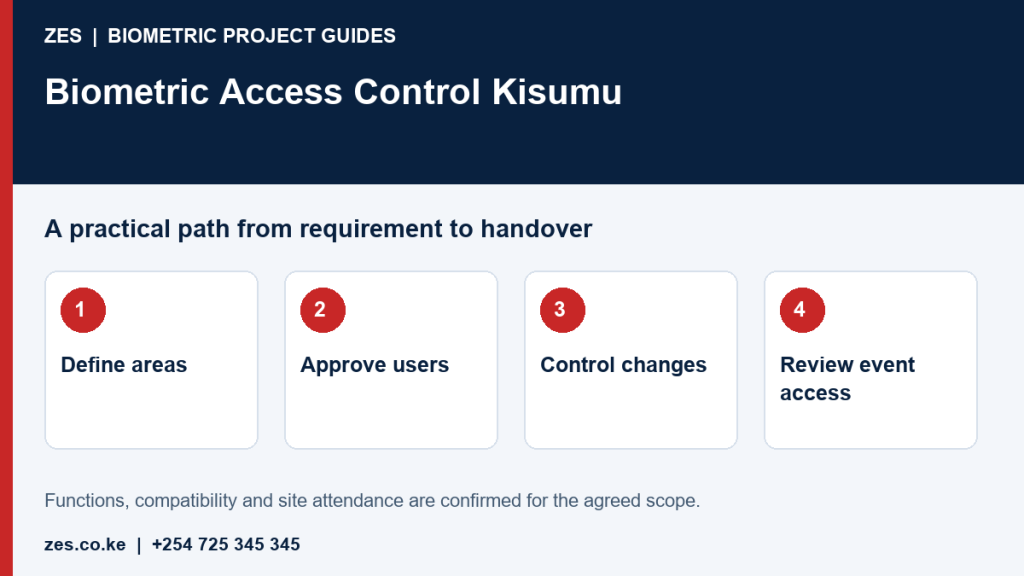
Biometric access control in Kisumu should start with a decision about who may enter each area and who approves that permission. Recognition equipment supports this decision; it does not define the organisation's access policy. This guide focuses on users, permissions and administration. A separate door-access article addresses the physical doorway and connected hardware. ZES can review access requirements and confirm the appropriate site assessment, system scope and specialist responsibilities.
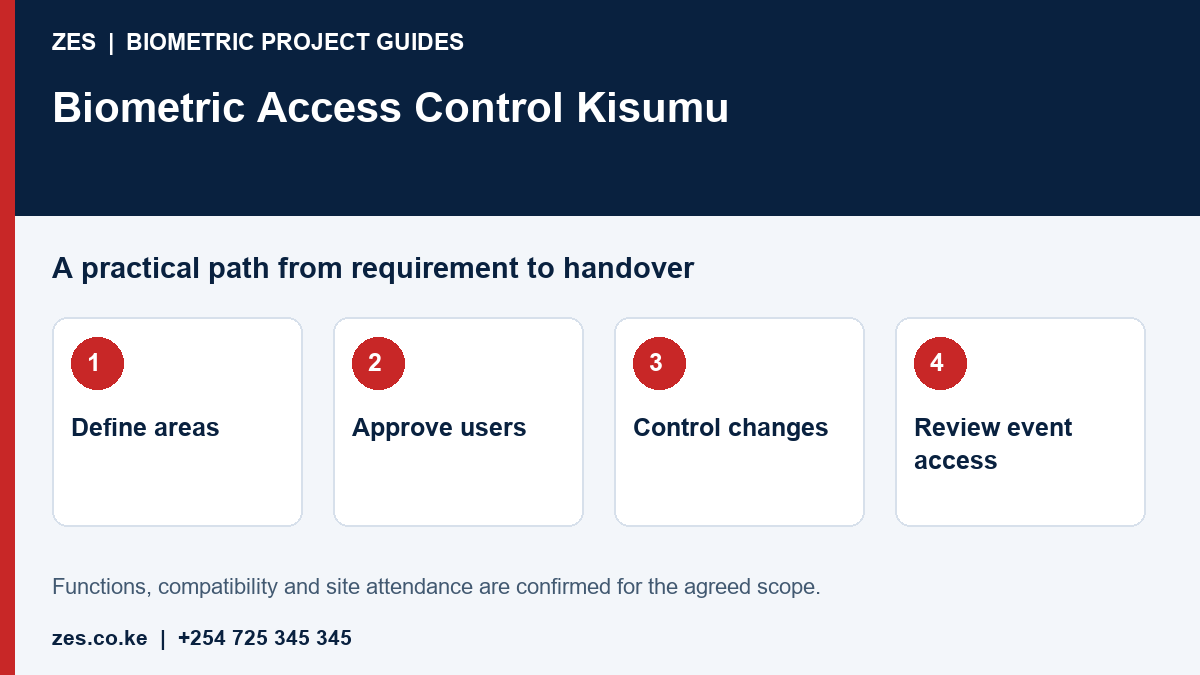
Define areas and authorised users
List offices, stores, staff-only rooms and other controlled areas. Identify the owner who approves entry for each. Separate employees, visitors, contractors and temporary permissions. Do not grant everyone the same access merely to simplify enrolment. Record the intended operating hours and exceptions. An access matrix gives the installer a practical basis for reviewing software and equipment requirements without making policy decisions that belong to the organisation.
Choose recognition with an exception path
Assess the proposed method with intended users and manufacturer information. Fingerprint, face, card and PIN functions vary by system. Confirm the authorised alternative when a user cannot reliably use the chosen method. Identity verification, enrolment and permission assignment are separate checkpoints. The organisation should review the purpose and handling of biometric information with responsible advisers. A demonstration should use sample identities rather than operational biometric records supplied through an informal enquiry.
Control changes during the employee lifecycle
Name the people authorised to add users, approve access, change roles and remove leavers. Establish what happens when a contractor appointment ends or a staff member transfers. Keep approvals and changes reviewable. Test a temporary permission, a revoked user and a role change with sample data. Recognition accuracy alone does not protect a restricted area if obsolete permissions remain active or administrators share an uncontrolled account.
Review access events proportionately
Decide who can view event records and what reports are required. An event may record an attempted or permitted interaction, but it should not be interpreted as proof of every person's subsequent movements. Ask how the selected system labels outcomes and limitations. Do not assume CCTV, visitor or attendance integration exists because all products are marketed as security systems. Confirm accessible interfaces, data ownership and tested behaviour for each requested connection.
Connect policy to the physical installation
The permission plan must fit the actual door, controller, lock and release arrangement. Have competent parties assess safe operation, emergency arrangements and responsibilities for the particular building. A policy guide is not an instruction to restrict a doorway without that review. ZES can assess the Kisumu requirement and confirm installation, logistics, training and support terms. Acceptance should test both approved user permissions and the separately agreed doorway functions.
Prepare an assessable ZES enquiry
Include the location, organisation type, employee numbers and number of devices or controlled doors. Describe the existing equipment, software, shifts and intended reports. Identify who will approve the scope and receive training. Share sample or sanitised requirements, not employee biometric records or passwords. Ask the proposal to distinguish equipment, supporting infrastructure, software, configuration, testing, training, recurring charges and support.
Frequently asked questions
Is access control the same as attendance?
No. Entry permissions and staff attendance reporting are different functions. Specify and test each if both are required.
Can temporary users be given restricted permissions?
That requirement can be specified, but the selected system's capabilities and administrative process must be demonstrated.
Related biometric guides
- Door Access Control Kisumu: Doorway Survey, Hardware and Handover
- Biometric Installers Near Me: How to Choose a Local Deployment and Support Partner
Discuss your requirement with ZES
ZES reviews each brief before confirming the appropriate assessment, installation or support scope. Site visits, travel, equipment availability and specialist delivery responsibilities are confirmed directly. Final interfaces and functions are agreed against accessible technical information and the written proposal.
Biometric attendance services · Access-control services · Request a quotation · Request a site assessment