
Updated 1 November 2026 · Zama Engineering Systems buyer guide
Walk Through Metal Detectors Kenya enquiries should combine equipment selection with visitor flow, operator responsibilities and an appropriate screening procedure. A detector is one part of a checkpoint. The site still needs accountable decisions about indications, assistance and exceptions. This guide helps buyers prepare a useful brief without assuming that a machine alone establishes a complete security service.
Define the checkpoint requirement
Explain the building use, expected visitors, peak arrival pattern and the purpose of the proposed screening. Identify whether a detector will replace an existing unit or form part of a new entrance. Describe any bag-check process separately. Do not specify equipment only from a photograph: dimensions, operating conditions and the required demonstration matter. Agree realistic objectives rather than expecting one device to identify every possible concern.
Walk Through Metal Detectors Kenya: assess the location
Review the entrance dimensions, nearby structures and the manufacturer's siting requirements. Include power, shelter where relevant and room for staff to manage the flow. Equipment should not create a bottleneck or obstruct an essential route. A competent setup should consider conditions that may affect operation. Relocating a detector later should prompt a review rather than assuming its previous settings and assessment still apply.
Plan queues and an alternative procedure
Visitors may carry ordinary metal items or need assistance with the normal process. Agree how staff provide instructions, handle an indication and refer a concern respectfully. An alternative process should be established by the responsible security and facilities team, informed by applicable product guidance. Staff should not improvise medical advice or make unsupported assurances. Keep the procedure practical for the people who actually attend the site.
Confirm operator training and responsibilities
Walk Through Metal Detector Installation Nairobi proposals should state whether delivery, setup, operator instruction and commissioning are included. Name the party who owns the screening procedure and authorises exceptions. Supply is not the same as providing trained security operators throughout the working day. Ask how settings are controlled and how changes are recorded. Unexplained adjustments by several users can make later faults difficult to understand.
Agree acceptance without unsafe shortcuts
The competent specialist should define appropriate demonstration and acceptance checks for the selected product and requirement. Record the conditions, outcomes and any limitations. A brief demonstration at a supplier's showroom does not establish performance at a different entrance. Do not use live dangerous items or improvised unsafe tests. The customer should receive an understandable record and know what is required before normal operation starts.
Keep maintenance and continuity clear
Ask for the equipment reference, user instructions, service contacts and fault-reporting procedure. Define what the site does while the unit is unavailable, under the customer's approved security arrangements. Maintenance and service tasks should follow the actual equipment and relevant requirements. Keep records of relocations, settings changes and repairs. A checkpoint remains useful when the equipment and its operating procedure are maintained together.
Compare the project scope
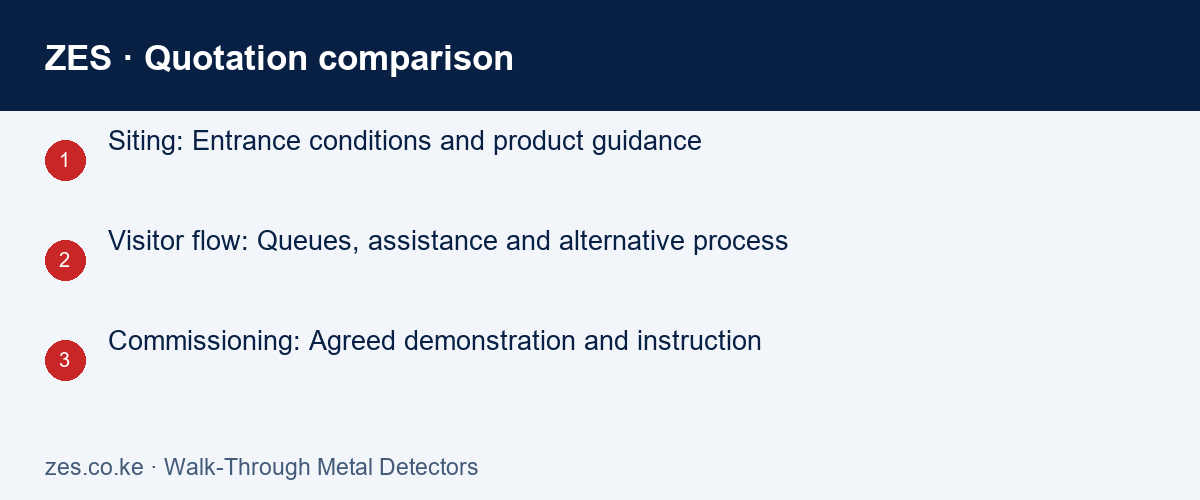
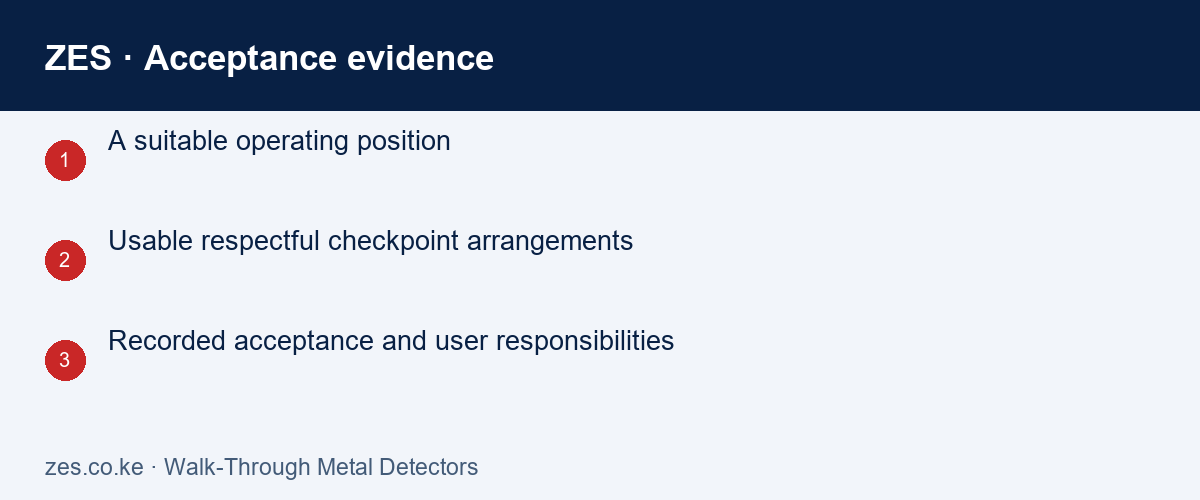
| Decision | Information to confirm | Useful acceptance evidence |
|---|---|---|
| Siting | Entrance conditions and product guidance | A suitable operating position |
| Visitor flow | Queues, assistance and alternative process | Usable respectful checkpoint arrangements |
| Commissioning | Agreed demonstration and instruction | Recorded acceptance and user responsibilities |
A practical planning example
A proposed training centre may receive most visitors shortly before a session. Queue space, staff instruction and an agreed alternative process can be as important as the detector itself. This is an illustrative checkpoint-planning example, not a claim of a completed ZES installation.
Walk Through Metal Detectors Kenya: enquiry checklist
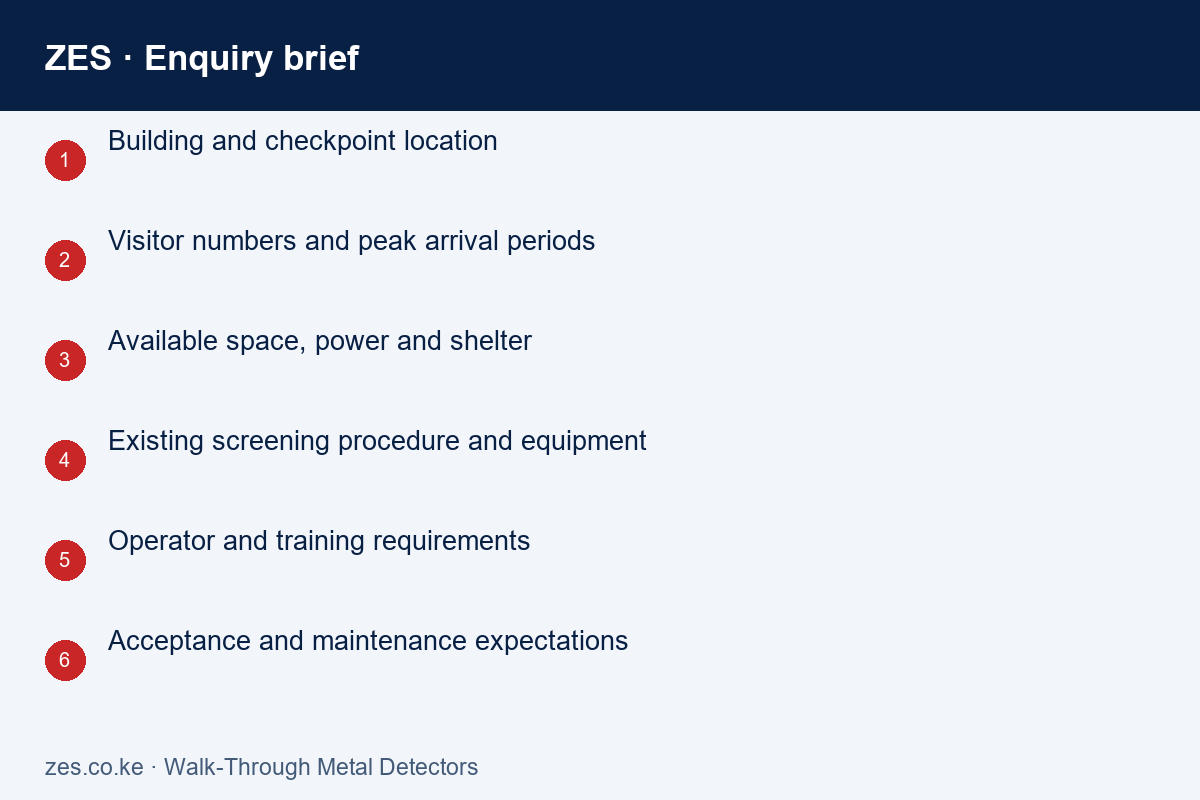
- Building and checkpoint location
- Visitor numbers and peak arrival periods
- Available space, power and shelter
- Existing screening procedure and equipment
- Operator and training requirements
- Acceptance and maintenance expectations
Related enquiry: Walk Through Metal Detector Installation Nairobi. Include the location and the intended outcome so the proposed scope can address the actual requirement.
Frequently asked questions
Is a detector a complete security solution?
No. It supports a defined screening process with trained people, response responsibilities and appropriate supporting measures.
Can an existing unit be relocated?
A competent review should check siting, condition, manufacturer guidance and the operating requirement at the new position.
Can ZES provide a quotation?
Share the site and requirement. Availability, assessment, installation and specialist responsibilities are confirmed for the actual project.
Walk Through Metal Detectors Kenya: discuss the scope with ZES
Explore the Walk-Through Metal Detectors service enquiry page or all specialist service categories. Share the site, quantities, existing equipment and required outcome. Assessment, availability, delivery responsibilities and commercial terms are confirmed in the written proposal.
Request a scoped quotation · Request a site assessment · Call +254 725 345 345
Further reference: Manufacturer walk-through detector product information. Product instructions and project-specific specialist advice remain important for the actual equipment and work.