
Updated 1 November 2026 · Zama Engineering Systems buyer guide
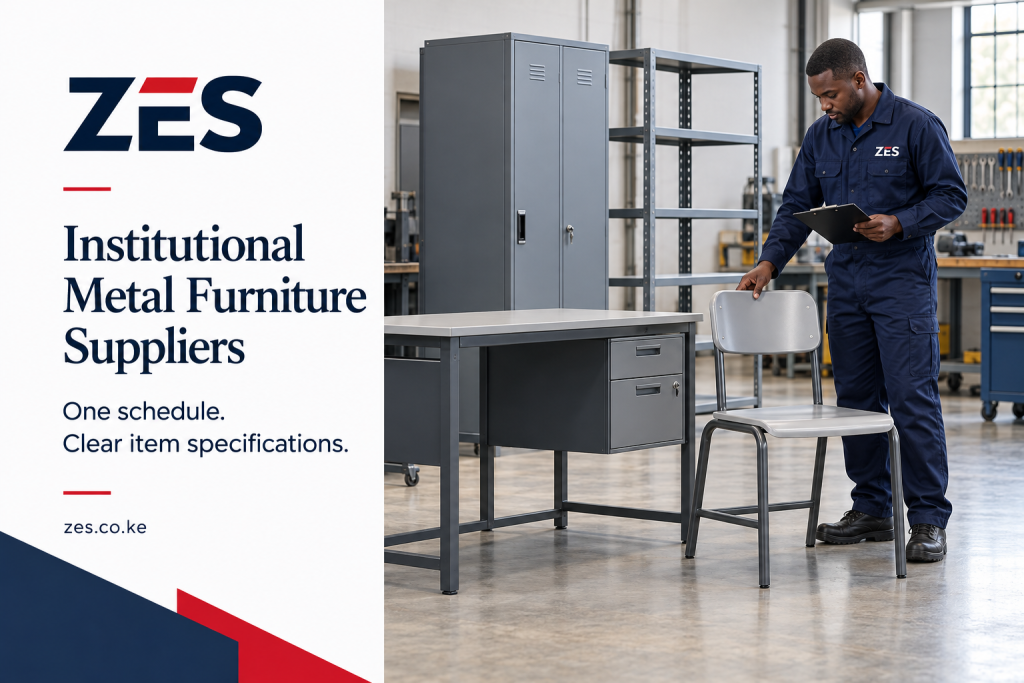
Institutional metal furniture suppliers may offer desks, seating, lockers, tables and storage, but each item needs its own duty and acceptance requirements. An institution can simplify procurement without treating every piece of metal furniture as interchangeable. This guide explains how to prepare a coordinated schedule, compare evidence and organise receiving for an assessed ZES or other supplier enquiry.
Create an item schedule tied to users
List item types, quantities, locations and intended users. Identify different age groups or departments where their requirements differ. Keep ordinary furniture distinct from specialist clinical, laboratory or hazardous-storage products. A common procurement package can still contain several specifications. The schedule should let each department confirm what it needs rather than order a generic assortment from a catalogue image.
Institutional metal furniture suppliers: define each product
For every item, record dimensions or design information, materials, finish and relevant hardware. Identify required samples, testing or product evidence. Terms such as institutional grade should be explained through measurable requirements. Keep alternatives visible and subject to approval. A bidder should know which details are fixed and which may be proposed, so the resulting offers can be compared fairly.
Approve samples and manage substitutions
An approved prototype or first article can establish an acceptance reference for batch items where appropriate. Record the approved configuration and agreed changes. A replacement material or accessory should not enter production merely because it looks similar. Any specialist product evidence must apply to the actual supplied item. Keep the sample and purchasing records available to receiving staff.
Compare the complete delivered scope
Clarify packing, transport, assembly, placement and installation where applicable. Lockers and shelving may need assessed securing arrangements, while other items have different needs. The quotation should identify customer dependencies and exclusions. A unit-price comparison alone can hide significant differences in delivery and completion. Confirm quotation validity, tax treatment and the variation process for the actual order.
Plan receiving by item and location
Agree the delivery programme and name the contacts who can accept each item group. Use the approved schedule to record quantities, damage and nonconforming items. Where several campuses or departments receive goods, keep the destination breakdown clear. Do not assume a general website proves available production capacity or a fixed lead time. Those commitments belong in the written offer.
Retain records for repair and repeat procurement
Keep specifications, approved samples and the supplier's relevant support terms. Record installed positions and product references where useful. A future repair or replacement should be assessed against the actual item and duty. Departments can update requirements for a later order, but changes should be deliberate. Good records make repeat procurement more consistent than a search for something that resembles the old furniture.
Compare the project scope
| Decision | Information to confirm | Useful acceptance evidence |
|---|---|---|
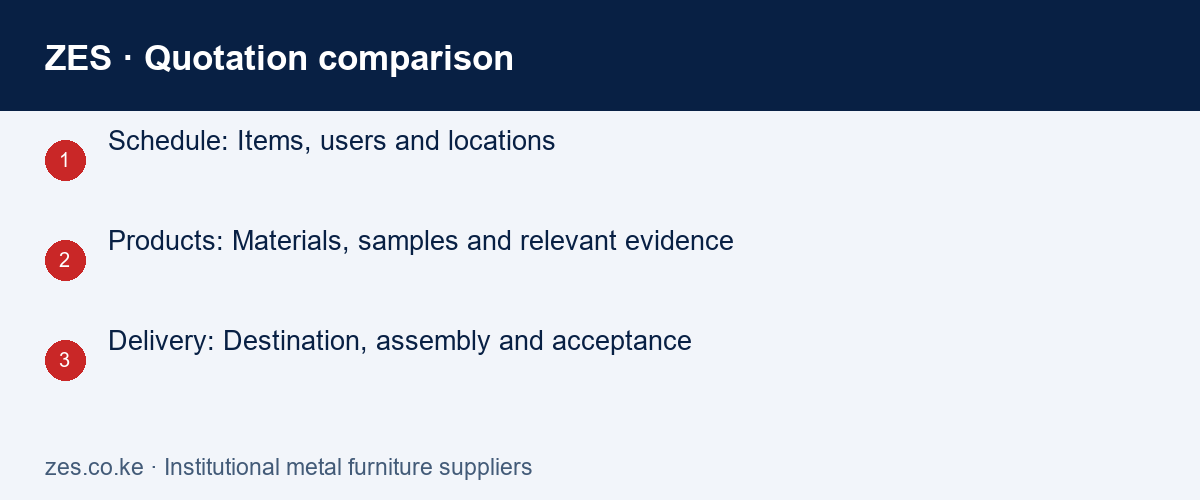
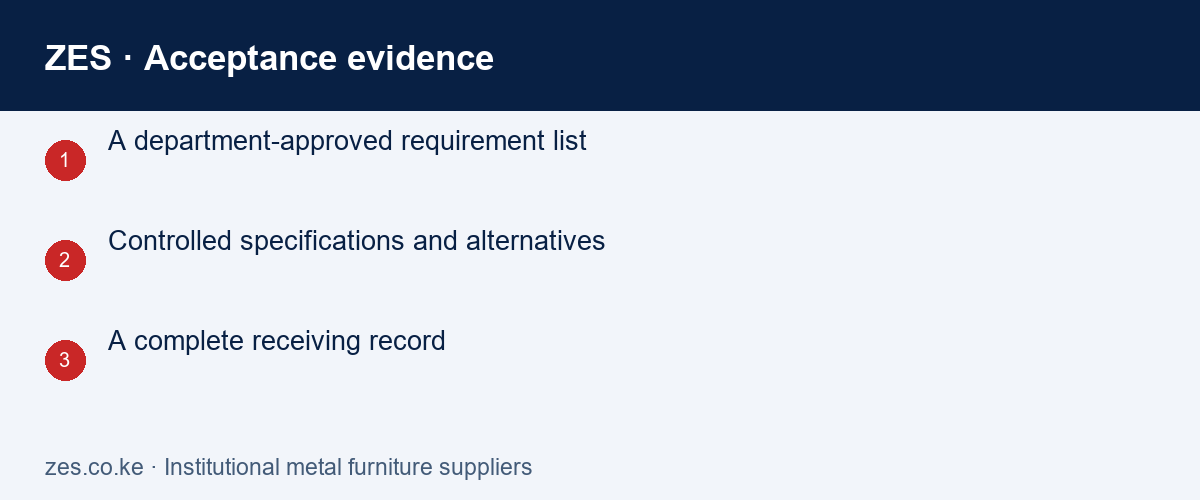
| Schedule | Items, users and locations | A department-approved requirement list |
| Products | Materials, samples and relevant evidence | Controlled specifications and alternatives |
| Delivery | Destination, assembly and acceptance | A complete receiving record |
A practical planning example
An institution ordering desks, lockers and dining tables can use one destination schedule while retaining separate specifications and receiving checks for each item type. This hypothetical example does not claim an existing public-sector order or supplier accreditation.
Institutional metal furniture suppliers: enquiry checklist
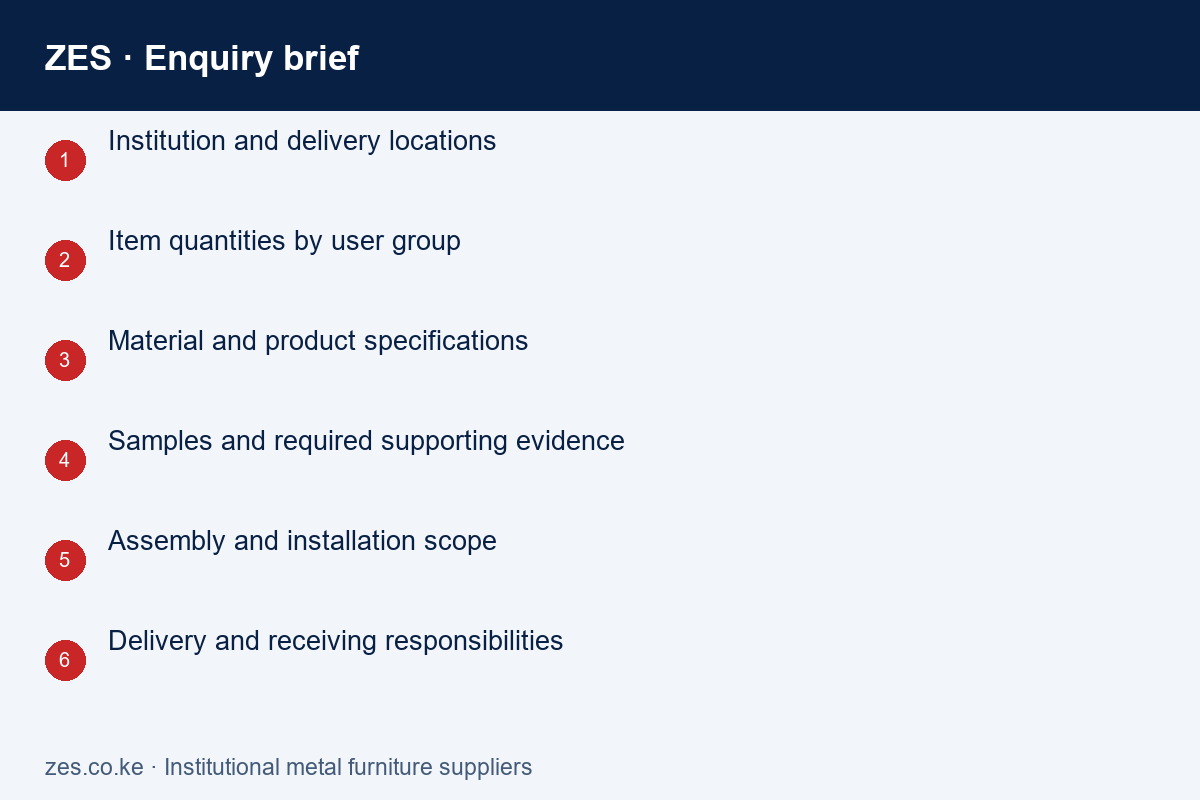
- Institution and delivery locations
- Item quantities by user group
- Material and product specifications
- Samples and required supporting evidence
- Assembly and installation scope
- Delivery and receiving responsibilities
Related enquiry: School and workplace steel furniture suppliers Kenya. Include the location and the intended outcome so the proposed scope can address the actual requirement.
Frequently asked questions
Can several furniture types be included in one enquiry?
Yes. Provide an item schedule while keeping distinct specifications and evidence requirements for each type.
Does institutional supply include approved medical products?
Not automatically. Specialist products need their own intended-use specification, relevant evidence and appropriate delivery arrangement.
Can ZES guarantee large-order capacity here?
No general capacity claim is made. Quantities, specification, samples and programme must be confirmed in the proposal.
Institutional metal furniture suppliers: discuss the scope with ZES
Read the related ZES project planning guide and explore welding and metal fabrication services. Share the site, quantities, existing equipment and required outcome. Assessment, availability, delivery responsibilities and commercial terms are confirmed in the written proposal.
Request a scoped quotation · Request a site assessment · Call +254 725 345 345
Further reference: NCA contractor information. Product instructions and project-specific specialist advice remain important for the actual equipment and work.