
Updated 3 November 2026 · Zama Engineering Systems buyer guide
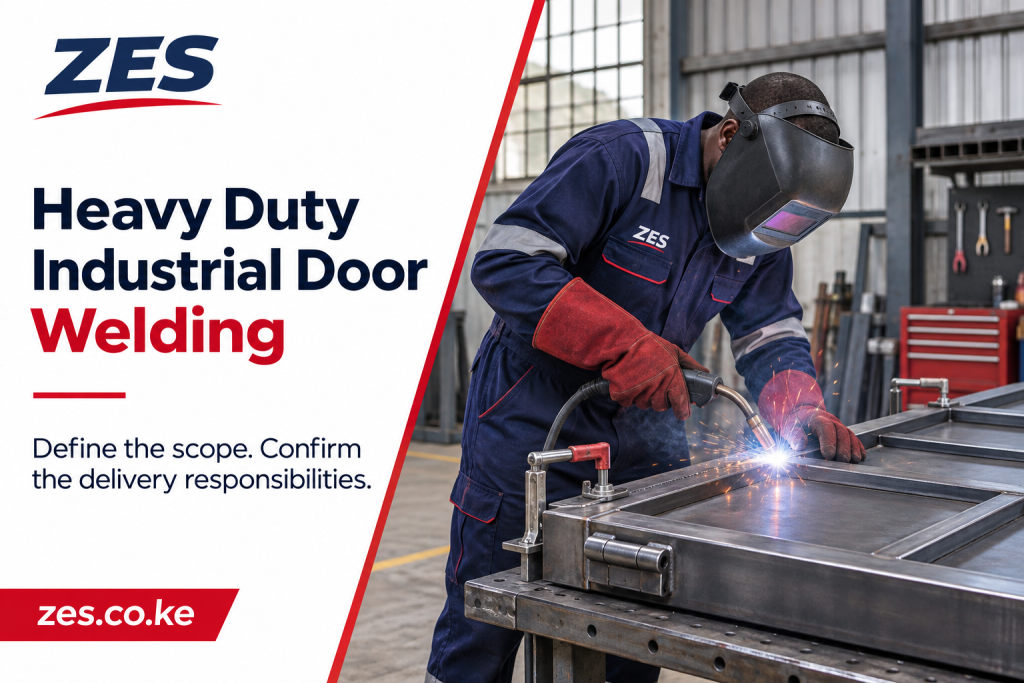
Heavy Duty Industrial Door Welding enquiries should identify the door's construction and intended function. A visible defect does not prove that welding is appropriate or that ordinary repair preserves specialist performance. This guide helps buyers organise an assessment and complete quotation without prescribing a welding process or declaring an uninspected assembly suitable for use.
Establish the actual door function
Provide available drawings, product records and the damage or modification request. Identify any specified fire, security or other performance. The responsible assessor should establish implications for the actual assembly. Do not treat an ordinary fabricated door and a tested specialist product as interchangeable merely because both have metal surfaces. A photograph cannot supply missing material or performance information.
Heavy Duty Industrial Door Welding: obtain technical approval
A competent party should assess material, condition, cause and appropriate repair or replacement information. Specialist products may require additional responsible advice and evidence. This guide does not approve a repair method. A neat joint does not establish that the original function or required performance remains acceptable. Ask what findings support the recommendation and what limitations remain.
Identify preparation and associated works
List affected hardware, finishes, adjacent items and reinstatement. Relevant work-area and hot-work arrangements must be established by the responsible site parties. A welding-only labour quote can omit removal, installation and specialist checks. Record retained components and approvals for further findings. Compare the completed assessed scope rather than an unexplained promise to strengthen the door.
Retain acceptance and product information
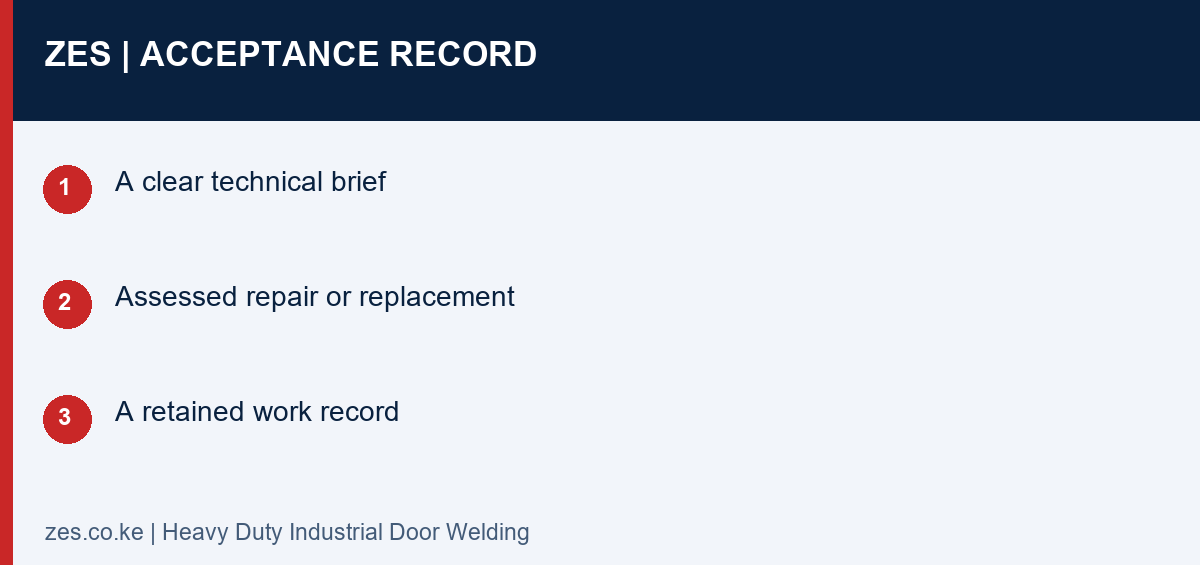
Agree the relevant inspection and supporting evidence before release to use. Record work performed, limitations and unresolved items. Keep references with the door's records. Future hardware changes or repairs should follow the appropriate review process. A professional service provides an accountable decision rather than guarantee that welding restores every industrial door regardless of condition or duty.
Compare the supplied scope
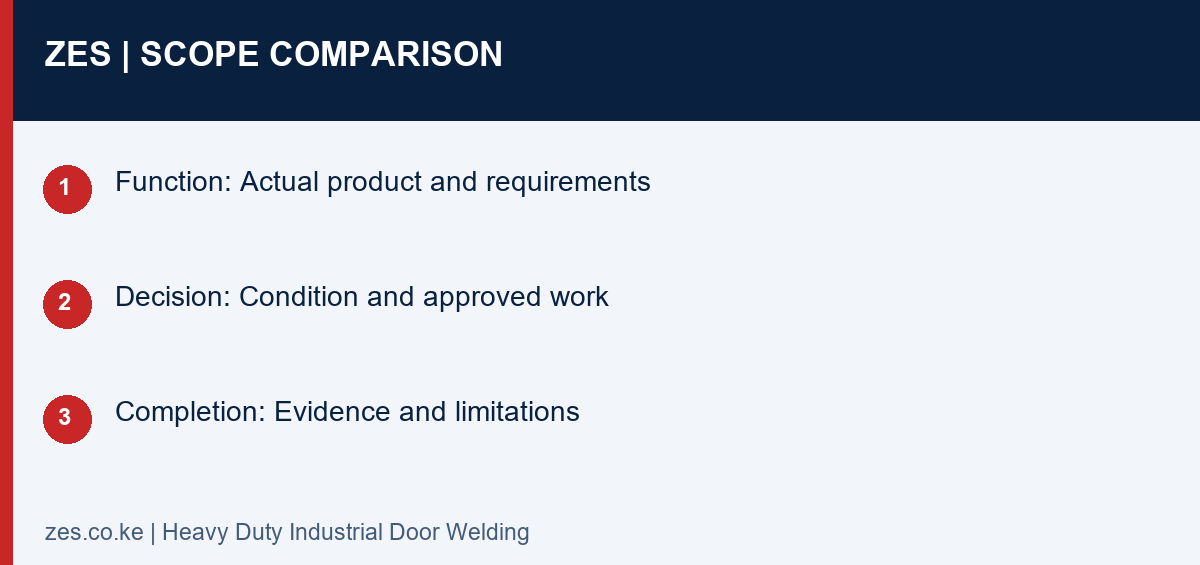
| Decision | Information to confirm | Useful result |
|---|---|---|
| Function | Actual product and requirements | A clear technical brief |
| Decision | Condition and approved work | Assessed repair or replacement |
| Completion | Evidence and limitations | A retained work record |
A practical planning example
A specialist door needs appropriate product-specific review before repair. It should not be treated as ordinary workshop steelwork solely because damage appears local. This is an illustrative scope question.
Heavy Duty Industrial Door Welding: enquiry checklist
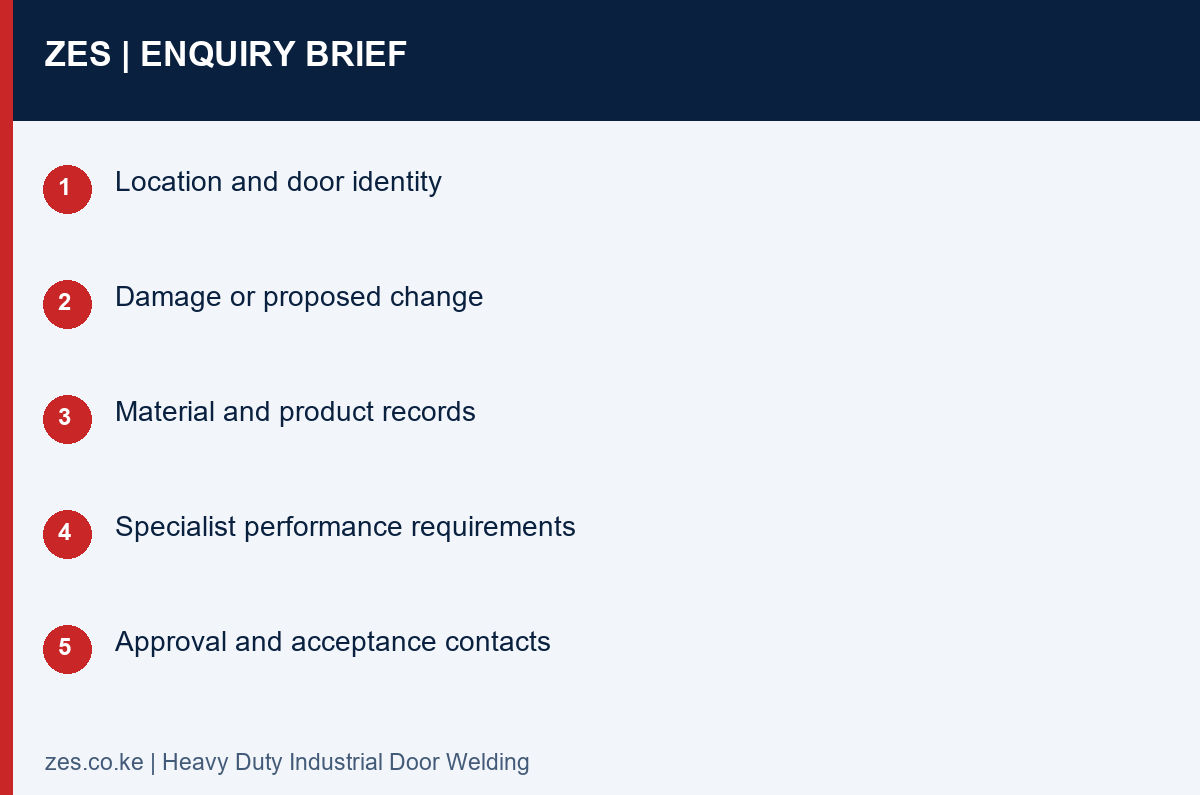
- Location and door identity
- Damage or proposed change
- Material and product records
- Specialist performance requirements
- Approval and acceptance contacts
Questions before arranging work
Does welding automatically preserve a fire rating?
No. Suitable responsible advice and relevant evidence must be established for the actual product and work.
Is heavy-duty a complete specification?
No. Define construction, material, function and required supporting evidence.
Discuss the metalwork requirement with ZES
Read the related ZES fabrication planning guide and explore welding and metal fabrication services. Share the location, equipment information and intended outcome. ZES confirms the appropriate assessment, availability, proposed delivery responsibilities and commercial terms for the actual enquiry.
Request a scoped quotation · Request a site assessment · Call +254 725 345 345
Technical background: NCA contractor information. Confirm the actual project requirements with the responsible advisers and relevant product information.