
Updated 4 November 2026 · Zama Engineering Systems buyer guide
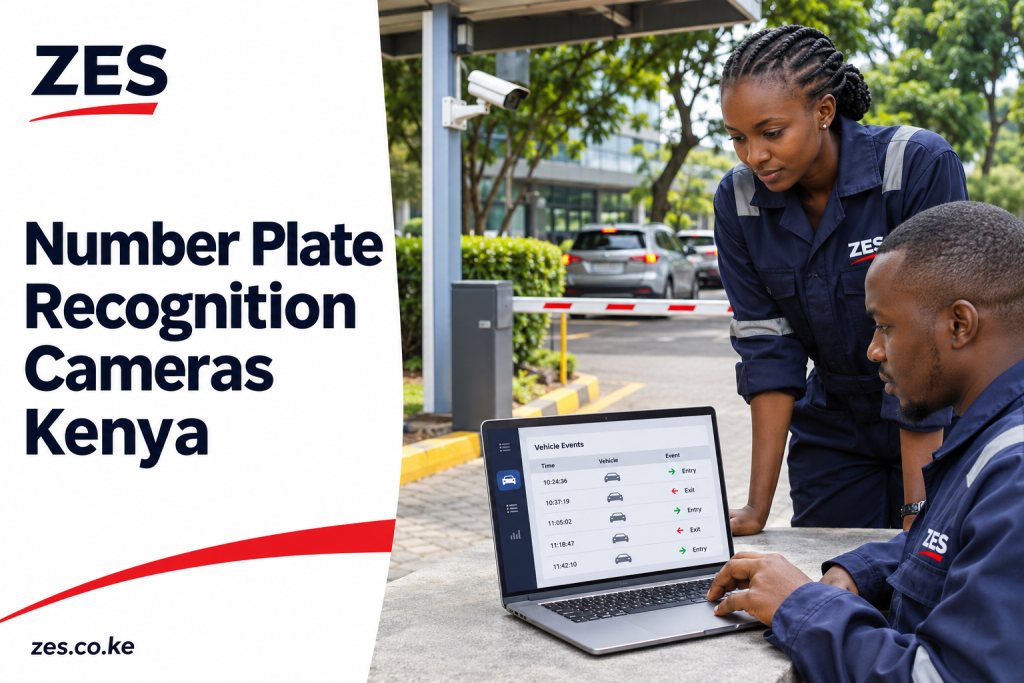
Number Plate Recognition Cameras Kenya are useful to assess when a customer needs a more structured way to find vehicle-related video events. The equipment choice should follow the record the organisation needs and the way authorised staff will review it. This guide focuses on the buyer's information workflow: event search, correction, export and ongoing ownership, alongside the separate camera-installation assessment.
Decide what the operator needs to retrieve
Explain whether staff need to locate a known event, review a period of activity or export an authorised record. Identify the information needed for that task without collecting unnecessary details in the sales brief. A searchable text field is useful only if the operator can relate it to the relevant event and recording. Ask the supplier to demonstrate the intended retrieval process rather than showing only an isolated recognition result.
Number Plate Recognition Cameras Kenya: compare the complete application
Request the camera, recognition software and operator application references. Ask which search and export functions are included and which depend on separate licences or services. Equipment from the same broad category may support different workflows. ONVIF profile information can help frame interoperability discussions, but the offered combination still needs a practical demonstration. The purchase decision should be based on the features the customer will actually receive and use.
Provide for uncertain and incorrect results
Agree how the authorised user can review an uncertain recognition result against the related image or footage. Define how discrepancies are reported and what records can be corrected through the permitted application workflow. Do not treat machine-read text as an unquestionable account of an event. Keep the distinction between the original recording, a derived recognition result and a later operator note clear in the training and acceptance process.
Establish access and record ownership
The organisation should nominate who administers the application and who is allowed to view or export vehicle-event records. Include user changes and account recovery in the handover arrangements. Set the recording and event-record retention requirements through the customer's responsible process, with appropriate advice where needed. Avoid sending real access lists or sensitive vehicle histories in an ordinary quotation enquiry. Use sample or appropriately controlled test information for demonstrations.
Accept the day-to-day workflow
Have the intended operator perform agreed searches and a sample export during acceptance. Confirm how timestamps are presented and how the relevant footage is located. Record the supplied software, licences, training and support responsibilities. If several locations are involved, agree whether a combined view is required and what that means for permissions. A system is easier to support when the handover explains the review process as clearly as the camera schedule.
Compare the supplied scope
| Decision | Information to confirm | Useful result |
|---|---|---|
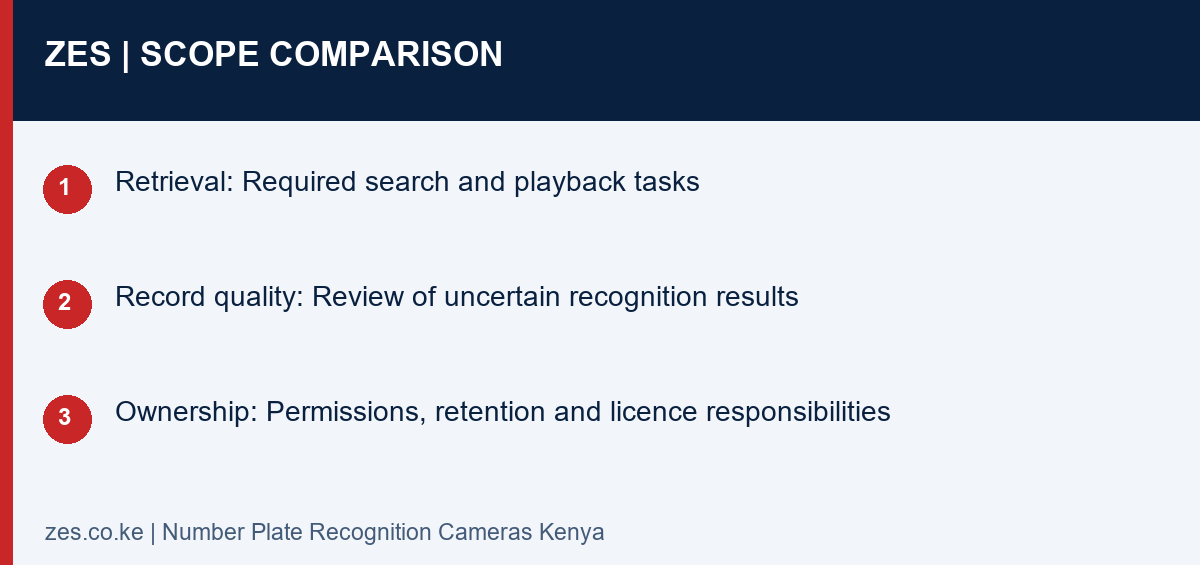
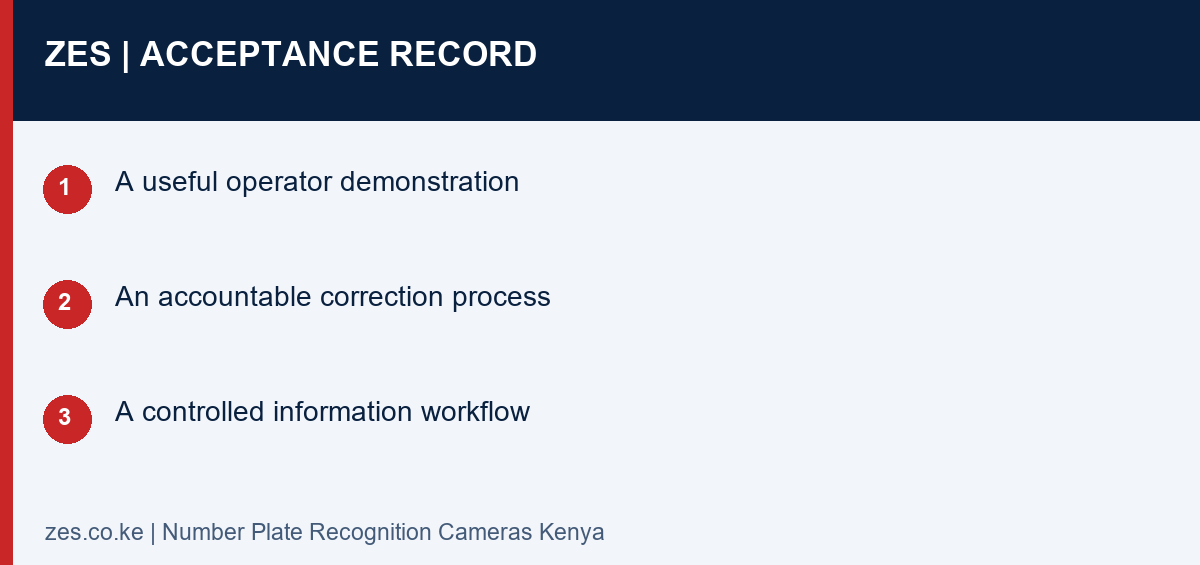
| Retrieval | Required search and playback tasks | A useful operator demonstration |
| Record quality | Review of uncertain recognition results | An accountable correction process |
| Ownership | Permissions, retention and licence responsibilities | A controlled information workflow |
A practical planning example
An authorised administrator may need to locate the video event associated with a reported vehicle visit. A useful demonstration begins with an approved test record, follows the search to the related footage and shows the permitted export. This tests the customer workflow instead of implying that every automatically read character is correct. It is a planning example rather than a real vehicle history.
Number Plate Recognition Cameras Kenya: enquiry checklist
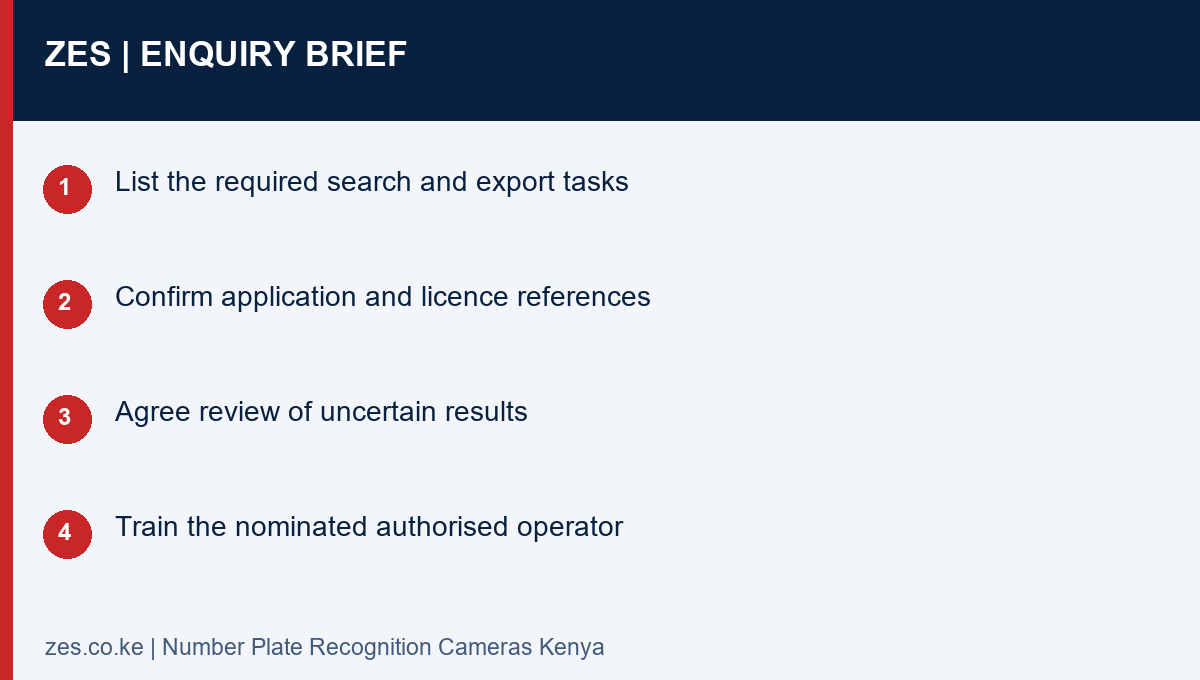
- List the required search and export tasks
- Confirm application and licence references
- Agree review of uncertain results
- Train the nominated authorised operator
Questions before commissioning
Do these cameras provide a complete parking-management system?
Not automatically. Define parking software, operational rules and any integration as separate assessed scope items.
Can a plate result be wrong?
The operator workflow should provide for review of uncertain or incorrect results. Do not assume universal recognition accuracy.
Discuss your CCTV requirement with ZES
Read the related ZES CCTV planning guide and explore CCTV surveillance services. Share the location, equipment information and intended outcome. ZES confirms the appropriate assessment, availability, proposed delivery responsibilities and commercial terms for the actual enquiry.
Request a scoped quotation · Request a site assessment · Call +254 725 345 345
Technical background: ONVIF profiles and interoperability background. Confirm the actual project requirements with the responsible advisers and relevant product information.