
Swing Gate Automation Lavington — planning, quotation and owner guidance
A hinged gate can make a strong first impression, but opening it by hand quickly becomes inconvenient when you use the entrance several times a day. Swing gate automation in Lavington offers a way to improve everyday access while retaining a suitable existing gate or completing a new entrance.
The quality of the result depends on more than the actuators. The leaves need room to move, the supports need to suit the installation, and the controls should make sense for the people using them. Zama Engineering Systems (ZES) helps customers bring these decisions together before installation.
Is swing gate automation right for your entrance?
Swing gates rotate around their hinges. That movement takes up space inside or outside the entrance, depending on the design. The available area, property boundary and nearby activity must therefore be considered before selecting the arrangement.
Start with the places where vehicles normally stop. A parked car, delivery vehicle or visitor waiting at an intercom should not occupy the area the leaves need. Pedestrian movement also belongs in the discussion.
If space is tight, compare the layout with sliding gate automation. The best choice is the one that fits the property and its use, rather than the one that looks most impressive in a product photograph.
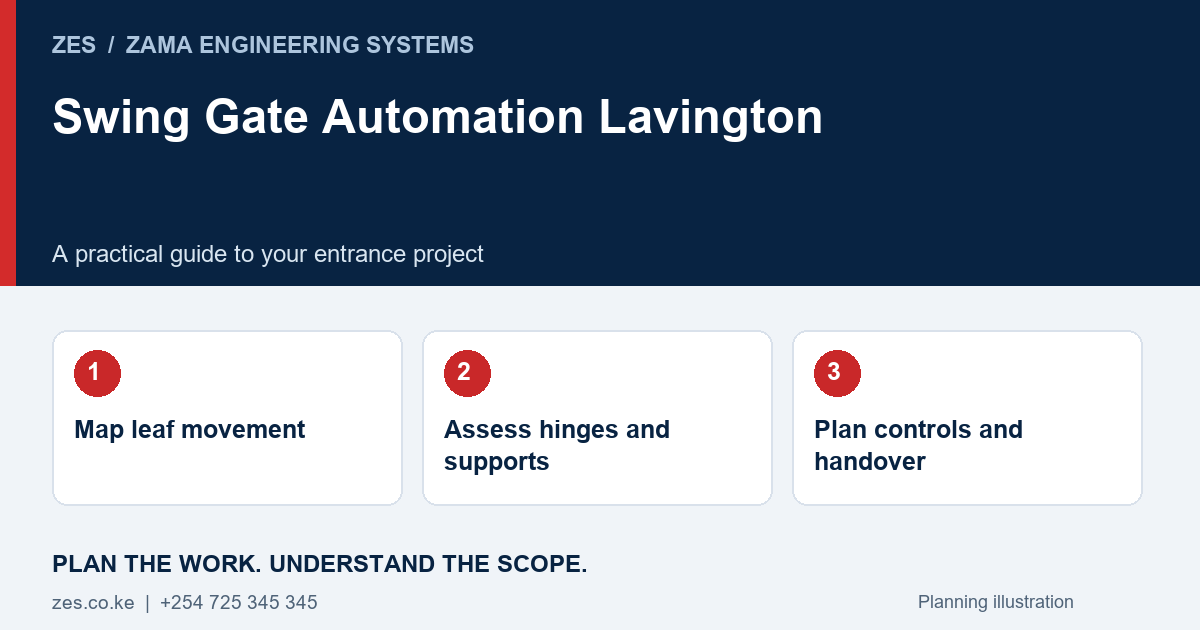
Swing gate automation Lavington: prepare the leaves and supports
Before actuators are fitted, the gate should be assessed for its structural condition and movement. Hinges, posts, alignment and mounting provisions all influence the work required.
Existing gates may need repairs or alterations before automation. If a leaf scrapes, sags or has been damaged, include that in your enquiry. The installer can then separate mechanical preparation from the automation package.
For a new gate, coordinate the fabricator and automation installer before construction is complete. Agreeing the relevant dimensions and mounting requirements early can avoid unnecessary changes to finished work.
Single-leaf and double-leaf options
A single-leaf gate uses one moving section. A double-leaf entrance uses two, which must operate according to the gate design and selected equipment. The installation scope should state the arrangement and the intended operating modes.
Tell ZES how you want the entrance to be used. Do you need full vehicle access for every operation? Will a guard control visitors? Is there a separate pedestrian door? These questions help shape a practical proposal.
Partial opening should not automatically be treated as a pedestrian-access solution. The appropriate arrangement needs to be assessed for the actual entrance.
Choosing suitable actuators
Actuators must match the gate’s characteristics and installation geometry. The hinge position, mounting space and required movement matter alongside the leaf dimensions and expected use.
Ask the supplier to identify the proposed equipment and explain any supporting alterations. Where existing brackets or accessories will be retained, their suitability should be checked. A quotation should not leave the owner guessing which parts of the old system remain.
Read the ZES swing gate operator guide for broader equipment-planning context. Final selection should follow the assessed gate and product documentation.
Access features that improve everyday use
| Daily need | Feature to consider |
|---|---|
| Opening from your vehicle | Compatible remotes for authorised users |
| Speaking to visitors | An intercom linked to the agreed access arrangement |
| Controlling several users | Suitable access permissions and administration |
| Handling outages | Selected backup provision and authorised release guidance |
| Coordinating a wider property | Compatible integration where it is useful |
Decide who will manage access after installation. Someone should know how to handle a lost remote, remove a departing user and obtain support. This is especially important when several people share the entrance.
How much does swing gate automation cost?
The total depends on the gate arrangement, selected actuators, preparation, electrical work and accessories. A two-leaf package and a single-leaf installation are different scopes. So are an installation on prepared supports and one requiring repairs.
Ask for an itemised quotation showing what is included, which work belongs to another contractor and what remains provisional. Confirm making good after alterations, the supplied remote quantity and the handover arrangements.
If budget is limited, ask which convenience features can be considered later. Necessary preparation and protective measures should remain part of the assessed installation.
Before the project is signed off
The handover should demonstrate normal operation and explain the relevant user instructions. The responsible installer should complete the appropriate checks and document any outstanding work.
Keep equipment information, release keys and access credentials with the property’s maintenance records. Ask for the actual support terms and the process for reporting a fault. Good records make future servicing easier.
Frequently asked questions
Can an ornamental metal gate be automated?
Potentially. Its appearance does not establish suitability; the structure, dimensions, movement and mounting arrangement need assessment.
Will both leaves open at the same time?
The operating sequence depends on the gate design and selected equipment. Agree the intended behaviour before installation.
Can I add an intercom later?
Possibly, subject to compatibility and the supporting infrastructure. Discuss future plans before the initial work is completed.
Seven easy checks before automating a swing gate
A swing gate has a visible moving leaf, but the important design questions include the space around it. Use these seven checks to make the proposal easier to understand. They are for planning and comparison; technical assessment belongs with the installer.
1. Mark the complete area swept by each leaf
Show the assessor where vehicles normally stop and park. Include the positions visitors may use when they are unfamiliar with the property. A swing gate needs its operating space throughout movement, not just when fully open.
Add pedestrian routes to the same plan. Consider how people approach a doorbell, intercom or separate pedestrian entrance. The proposal should account for those movements rather than assume everyone behaves like a regular driver.
If two leaves are involved, show both. Ask the designer to explain the intended opening arrangement and any nearby features that affect it. Do not assume a direction of opening is suitable simply because the existing manual gate uses it.
The useful outcome is a clear layout that all contractors understand. It helps you judge whether swing gate automation fits the entrance and whether an alternative arrangement should be considered before fabrication or finishing work is committed.
2. Review posts, hinges and leaf condition
Tell the assessor about scraping, sagging, impacts or previous repairs. These observations help identify where inspection is needed. They are not a substitute for checking the structure and movement.
The proposal should distinguish a suitable existing swing gate from one needing preparation. If repairs or alterations are required, ask for them to be identified separately from actuators and controls.
Where fabrication work is involved, agree who undertakes it and how readiness is confirmed. The automation installer needs a defined point at which the gate and mounting provisions can be assessed for the proposed equipment.
Avoid treating additional actuator force as a solution to an unexplained mechanical problem. Gate automation should follow appropriate preparation. Clear responsibility for that preparation helps prevent delays and makes the finished scope easier to verify at handover.
3. Understand why the actuators fit the geometry
Ask the installer to explain how the selected actuators suit the actual swing gate. The leaf characteristics, hinge position, available mounting space and product requirements should inform the choice.
An attractive equipment enclosure or familiar brand is not enough to establish suitability. Request the exact proposed model and identify any changes needed to posts, brackets or other supporting features.
If existing components will be reused, have them listed. Ask how their condition and compatibility will be confirmed. Retaining suitable parts may be practical, but it should be a considered decision.
For a new entrance, coordinate this discussion before the fabricator finalises the gate. Gate automation is easier to plan when the people supplying the leaves and the people fitting the actuators work from compatible information. Keep agreed dimensions and mounting provisions in the project record rather than relying only on verbal exchanges.
4. Agree how the leaves and users will operate
Explain the functions you expect from the entrance. Do you need full vehicle access for normal use? Who opens for visitors? Is there a separate pedestrian door? The operating plan should answer these questions.
For a double swing gate, the appropriate sequence depends on the design and selected equipment. Ask the installer to demonstrate the agreed behaviour at handover. Do not assume every system offers the same partial-opening options.
A convenience feature should not substitute for an assessed pedestrian arrangement. Discuss how people on foot use the property without relying on assumptions about the vehicle entrance.
Also decide who can change settings and add or remove users. A manageable control system has clear ownership. Gate automation should make daily access simpler for residents and staff while giving the responsible property contact the information needed to administer it.
5. Check electrical and accessory responsibilities
Identify who supplies the electrical provision and which routes are included. If another contractor handles the work, agree what must be complete before actuator installation and commissioning.
List the remotes, intercom or other controls in the quotation. State quantities and identify any retained equipment. Compatibility should be confirmed before those items are assumed to work together.
For connected controls, ask about account ownership, connectivity and recurring charges. Describe how the property should operate if the usual phone or connection is unavailable. The answer needs to relate to the selected products.
Keep backup arrangements and authorised release instructions in the scope where relevant. A swing gate owner should know what equipment is included and what its documented limitations are. Clear responsibilities reduce the chance of discovering at handover that an essential supporting task was never assigned.
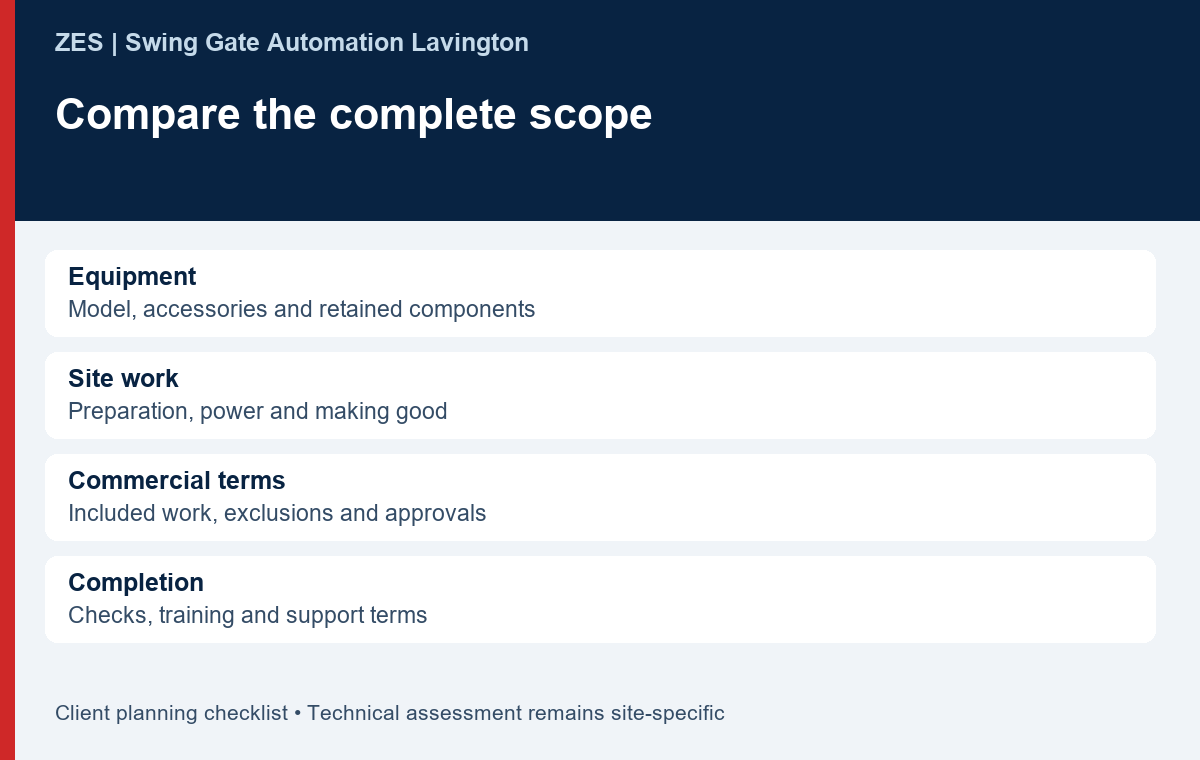
6. Compare the complete installed outcome
Put competing quotations beside the same site brief. Look for differences in gate preparation, actuators, electrical work, controls, making good and commissioning.
Ask suppliers to explain exclusions. A reference to work “by others” is useful only when you know who those others are and what they must deliver. Include taxes and any assessment charge when comparing totals.
If the scope is provisional, identify the questions that remain open. A quotation prepared before inspecting an existing swing gate may need to confirm its condition and mounting arrangement. That uncertainty should be visible rather than hidden inside a fixed-looking equipment price.
Discuss optional features separately from necessary work. A staged budget can be sensible when the initial installation is complete and suitable. Ask which future additions can be planned for and which cannot be confirmed until equipment is selected.
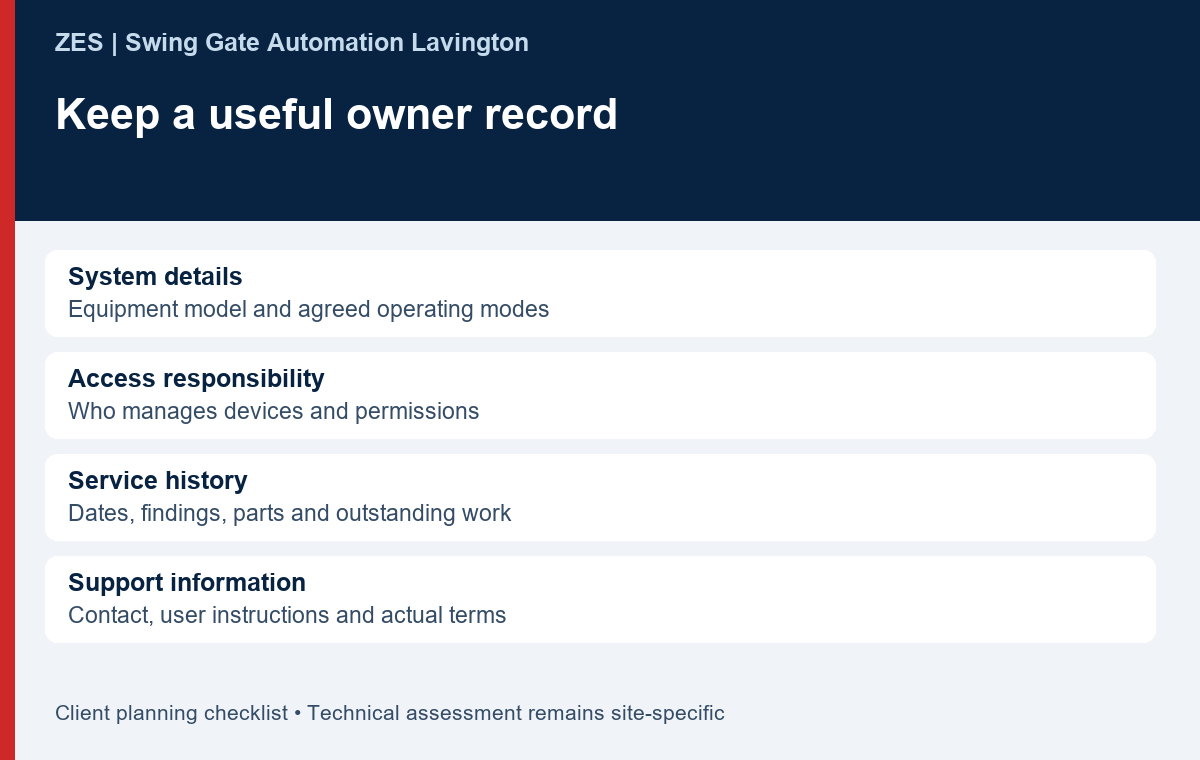
7. Make handover useful to the people who operate the gate
Arrange for the responsible users to receive the demonstration. They should understand normal controls, the relevant manufacturer instructions and how to report abnormal behaviour.
The installer should complete the applicable technical checks and document any remaining work. Do not test an uncertain protective response with a person, pet or vehicle. Those checks require appropriate professional procedures.
Keep model information, instructions, keys and support contacts with the property records. Identify who manages access permissions and who can approve service work. Avoid leaving important knowledge with one person who may later be unavailable.
Review the entrance when parking, landscaping or building arrangements change. A swing gate operates in shared space, and changes around it can matter. Report new movement problems instead of compensating with settings. Good ownership keeps the original gate automation plan connected to the way the property is actually used.
A planning example: keeping a decorative entrance
An owner may want to retain an existing decorative gate while adding convenient remote access. The correct starting point is an assessment of the leaves, supports, movement and available actuator positions. This is an illustrative scenario, not a completed ZES project.
The assessment may support retaining the gate with defined preparation, or it may identify changes needed before automation. The quotation should make those decisions visible. A preference to retain the appearance is a design requirement, not evidence that all existing components are suitable.
If repairs affect finishes, agree who restores them. If the actuator position changes the appearance of the entrance, discuss it before installation. These practical details matter to an owner who wants both convenience and a coherent finished result.
A clear scope allows the gate automation proposal to respond to the property’s priorities without hiding the work needed to achieve them.
Useful photographs for an initial enquiry
An overall view of the driveway and entrance helps explain the layout. Include a stationary view of the leaves and surrounding posts, together with any separate pedestrian door. Photograph from a safe position without entering a hazardous movement area.
Describe whether the swing gate is manual or already automated. Mention known scraping, alignment issues or recent alterations. Existing invoices and model information can help with an upgrade enquiry.
Tell ZES where vehicles usually wait, how visitors announce themselves and which controls you would like. If building work is planned, include the schedule and the contractor responsible for the gate.
These details support the first discussion. They do not remove the need to verify measurements and suitability before a final installation proposal.
Keeping future changes manageable
A new parking bay, wall feature or landscaping plan can affect the entrance after installation. Before making such changes, consider the swing gate’s operating space and maintenance access.
Keep the original proposal and equipment record available for anyone reviewing an alteration. That makes it easier to understand what was designed and where changes need assessment.
If additional users or different controls are required later, start with compatibility and administration. An accessory should improve the way the entrance works rather than introduce another unmanaged account or device.
Discuss maintenance and service requirements for the actual installation. The appropriate plan follows the equipment, use and environment, with records that help future support.
Review parking arrangements after installation
A swing gate needs its agreed operating space even when the property’s parking habits change. Explain the layout to regular users and anyone responsible for directing visitors.
If a second vehicle, delivery area or new parking bay is introduced, review its position against the gate movement. Do not treat the space in front of a stationary leaf as permanently available merely because the entrance is quiet at that moment.
The same applies to building materials and temporary storage. Make sure contractors understand which area belongs to the operating entrance and whom to contact if their work affects it.
Keep the gate automation plan available during later improvements. A new wall feature, garden structure or driveway alteration should be considered alongside the existing installation.
This review is an ownership task, not a request for users to test clearances around a moving gate. The installer or appropriate designer should assess technical questions. Your role is to communicate the change early and preserve a clear record of the agreed arrangement.
Discuss your Lavington gate with ZES
Send photographs of the gate and driveway, your location and the number of leaves. Tell us which access features you need. Book a site assessment or request a swing gate quotation to plan the installation.
Further reading: HSE powered-gate safety guidance explains why the complete installation needs assessment. This is UK technical background, not a statement of Kenyan legal requirements.
Gate Motor Repair Lavington: separate the fault from an upgrade
For Gate Motor Repair Lavington, report what the entrance does before deciding what part should be replaced. Explain whether the issue affects one leaf, both leaves, one control or the whole system. Include recent service records and any relevant changes to the entrance.
The assessor should distinguish gate mechanics, operator faults and control or power issues as applicable. Ask what finding supports the proposed work. A replacement recommendation should identify the actual model, retained accessories and any preparation required for the changed installation.
Automatic Gates Lavington: plan continued use
Owners researching Automatic Gates Lavington may be comparing a new entrance with repairs to an existing one. Keep those scopes distinct. Repair can address a defined fault while a redesign may involve new gate construction, different movement and revised controls.
Ask which usable components can remain and what limitations would remain with them. Compare complete costs, including fitting, necessary site work, checks and handover. Do not assume that a new motor renews the condition of every retained part.
If the gate is moving abnormally, keep people clear and avoid forcing it or bypassing protective devices. Follow the installed system’s instructions and arrange assistance where the procedure is unclear. Read automatic gate motor replacement for comparison questions, then request a quotation for the assessed scope.