
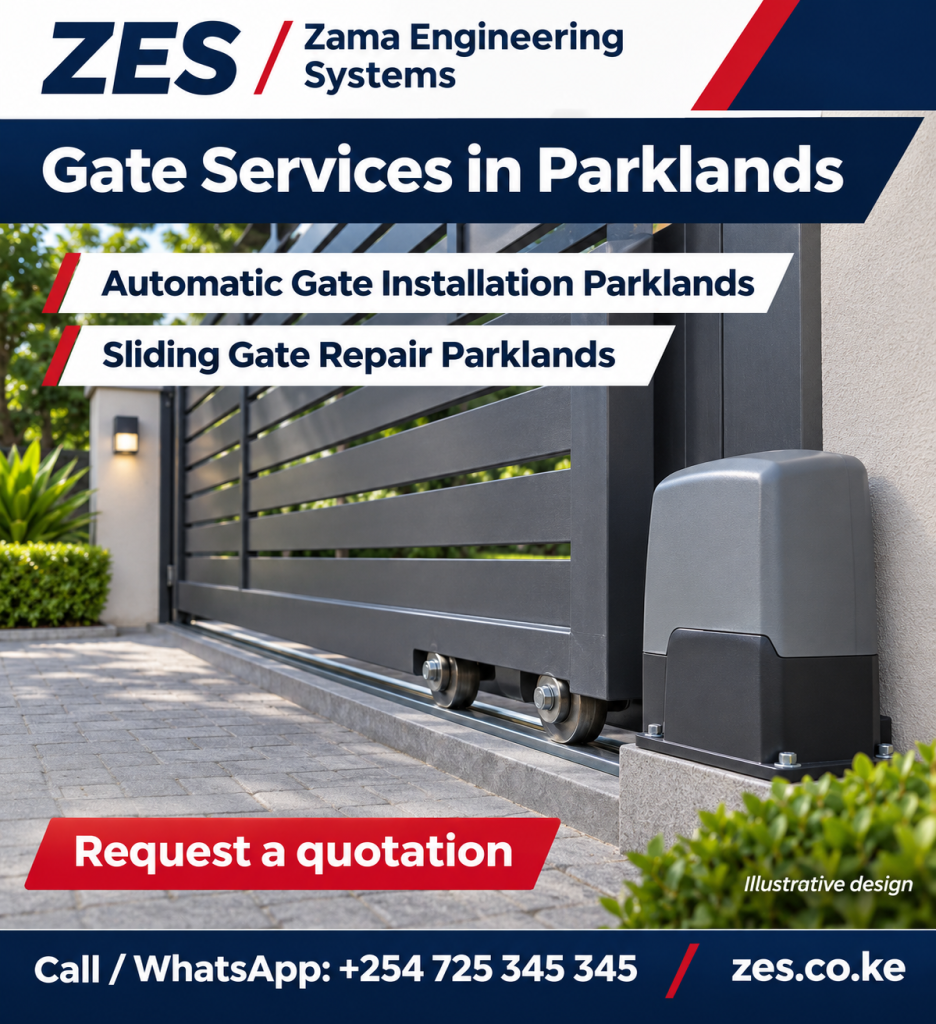
Automatic Gate Installation Parklands should begin with the sliding gate that the motor will move. Track condition, rollers, guides, supports and the available travel area can determine the preparation needed before automation. ZES can assess the entrance and explain the installation or repair scope for a Parklands property.
This guide connects new installation planning with Sliding Gate Repair Parklands enquiries. It helps owners distinguish a physical gate problem from a gate motor or control problem, compare complete proposals and keep useful records after work. It is not a set of instructions for adjusting a moving gate or electrical equipment.
Automatic Gate Installation Parklands: 7 easy movement checks
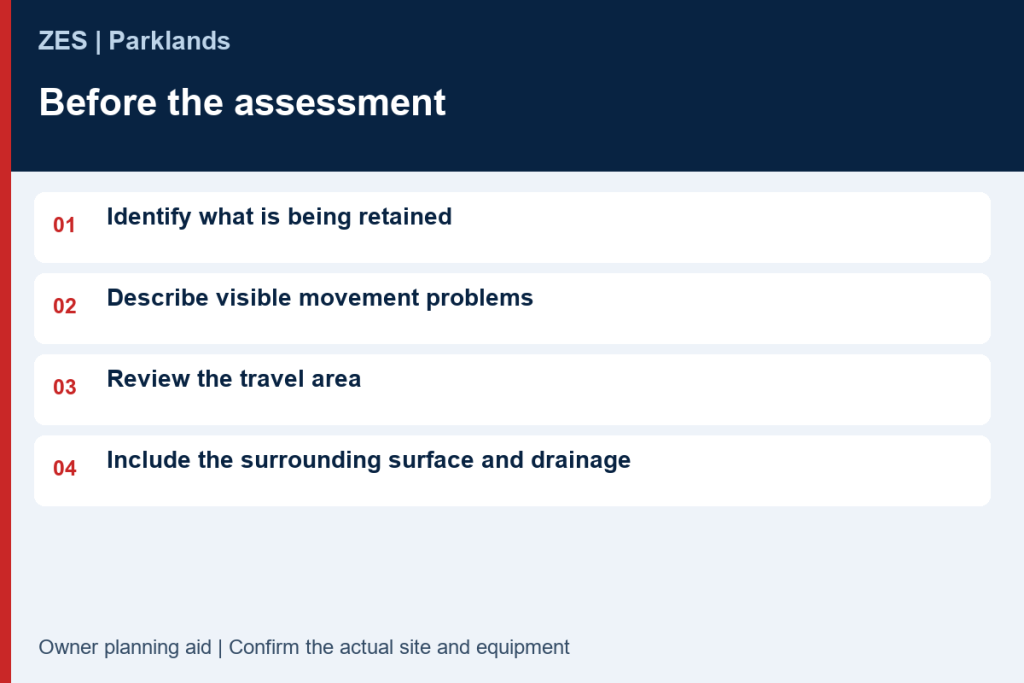
1. Identify what is being retained
Tell ZES whether you have a manual gate, an existing automated gate or a new fabrication project. Share photographs showing the complete opening and the area into which a sliding gate travels. State whether the sliding gate, track and supports are to remain or be replaced.
An existing gate is not automatically ready for automation. Ask the competent assessor to identify required preparation separately from the motor and controls. This makes the quotation easier to understand and prevents mechanical work from becoming an unexplained extra.
2. Describe visible movement problems
Report scraping, unusual noise, a gate that appears misaligned or a recurring stop at a particular position. These observations support assessment; they do not establish the cause on their own. Do not force the sliding gate or repeatedly trigger it while it behaves abnormally.
If there is visible damage or instability, keep people clear and seek competent assistance. Owner information gathering should remain safe. Detailed mechanical and electrical checks belong to the responsible technicians.
3. Review the travel area
the sliding gate needs suitable space to move beside the opening. Explain nearby walls, stored items, parked vehicles and pedestrian routes. If building work or landscaping has changed the surroundings, tell the assessor when that happened.
The width of the entrance and the available side-travel space are different questions. Provide approximate measurements for the initial enquiry, then let the installer confirm the relevant dimensions and arrangement before specifying equipment.
4. Include the surrounding surface and drainage
Tell ZES about recurring debris, standing water or surface changes around the track and operator. Those observations may affect the preparation and maintenance plan. They should be considered for the actual site rather than assumed from the area name.
If another contractor is responsible for paving or civil work, identify their role. The quotation should explain which preparation is included and which work must be completed by others before installation or acceptance.
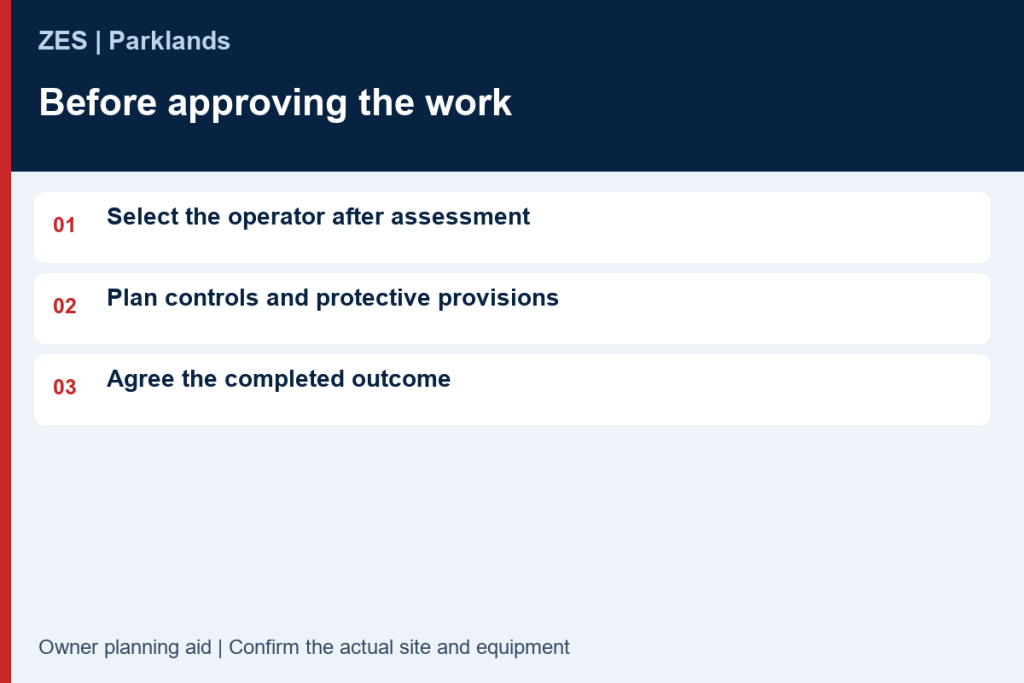
5. Select the operator after assessment
Describe expected use and peak periods as well as the sliding gate dimensions. The proposed motor should suit the assessed gate and operating demand. A more powerful motor should not be chosen merely to overcome an unresolved movement problem.
Ask for the exact model and supplied accessories. A motor-only price and a complete installation are different offers. Our sliding gate automation guide explains the wider buying comparison.
6. Plan controls and protective provisions
List the authorised users, required devices and any visitor-control arrangement. Explain where people wait or walk near the sliding gate. The complete entrance needs a competent assessment of its operation and relevant protective measures.
If an existing receiver or intercom is retained, confirm compatibility and responsibility for the connection. A working accessory should not be assumed suitable for a different operator without checking the supported arrangement.
7. Agree the completed outcome
Ask what work, checks, instructions and support terms are included. At handover, the responsible user should see the agreed controls demonstrated and receive the equipment details. Record any remaining defect or recommendation separately.
Keep the sliding gate and motor work in the same service history. If a track repair and an operator replacement were both performed, record both. Future enquiries can then distinguish the parts of the entrance that were changed.
Sliding Gate Repair Parklands: diagnosis before replacement
A sliding gate can stop or behave inconsistently for different reasons. Describe the response to the normal control, the sliding gate position and any known recent events. The technician should assess the relevant mechanical, power and control arrangements rather than replace a component based only on the symptom.
Ask the repair proposal to identify the finding, intended correction and retained equipment. If replacement is recommended, compare the complete replacement scope with a repair option where appropriate. Necessary gate preparation should remain visible in either proposal.
Do not bypass protective devices, increase force settings or improvise wiring to keep an abnormal gate moving. For a blocked entrance, explain the access situation to ZES and confirm attendance arrangements. No specific response time is promised by this article.
Example: a motor quotation reveals gate repairs
Imagine an owner requests automation for an existing manual sliding gate. During assessment, the responsible contractor identifies mechanical work needed before an operator can be installed. The useful next step is a clear scope, not an assumption that the installer is adding unnecessary equipment.
The quotation separates the gate preparation from the motor, controls and commissioning. It states who performs the civil or fabrication work and when the entrance will be ready for fitting. The owner can then compare competing proposals against the same completed condition.
If the owner receives a cheaper motor-only offer, the missing preparation is marked as unconfirmed rather than treated as included for free. This illustrative example shows how to compare scope; it contains no invented price or claim of a completed ZES project.
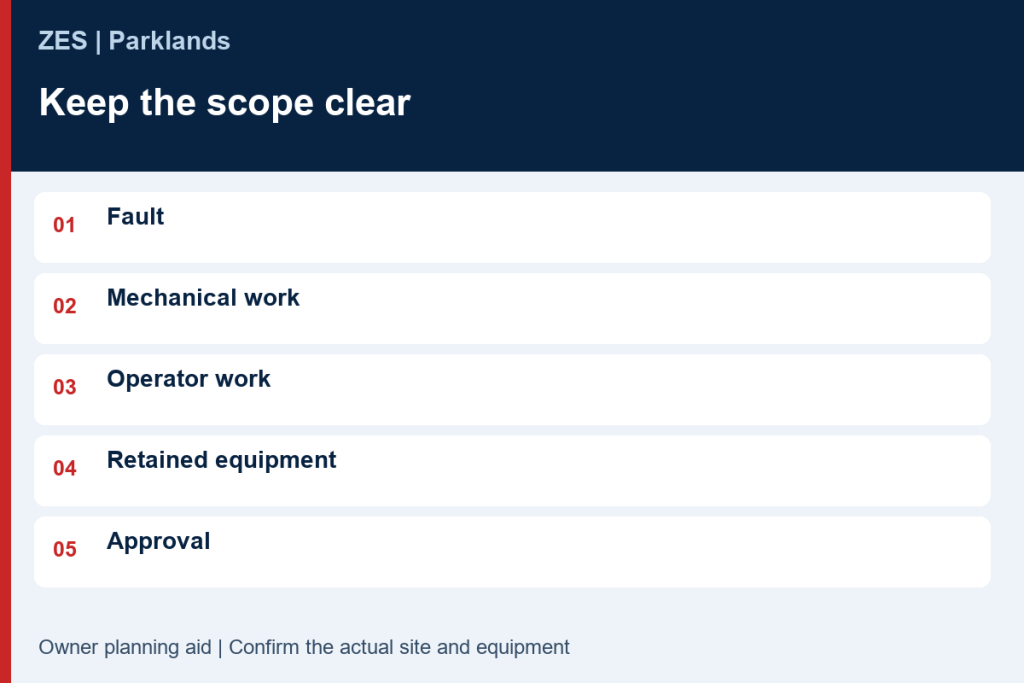
A repair comparison checklist
| Decision | Ask the supplier |
|---|---|
| Fault | What finding explains the reported behaviour? |
| Mechanical work | Which gate, track or support items need attention? |
| Operator work | Which motor or control components are affected? |
| Retained equipment | What remains and has compatibility been assessed? |
| Approval | How will further work be priced and authorised? |
| Handover | Which checks, instructions and actual terms are included? |
Keep this schedule with the quotation and service record. It helps the owner see whether two offers are addressing the same complaint. A confirmed mechanical repair and a guessed motor replacement are not equivalent proposals merely because both mention gate repair.
Planning a new sliding entrance
If fabrication has not started, coordinate the gate design with the automation requirement. The fabricator, builder and installer should understand the intended movement and interfaces. Ask who confirms the relevant dimensions, supports and equipment positions before work is finalised.
Tell the team about the power requirement and planned controls early. Finished paving should not be based on an unconfirmed cable route or mounting position. The actual work sequence belongs in the project discussion, with the responsible parties identified.
The manufacturer’s documentation should support the selected equipment. Resources such as FAAC manuals provide model-specific information for competent installers; they do not make every model suitable for every entrance.
Common Parklands enquiry questions
Can a repaired manual gate be automated later?
Potentially, after assessment and planning. Tell the repair contractor that future automation is intended so the relevant interfaces can be considered. Do not assume that a cosmetic repair alone establishes suitability for a motor.
Should the track and motor be replaced together?
Not automatically. The decision depends on condition, diagnosis and compatibility. Ask for the reason behind each proposed item and what the completed work is intended to restore or deliver.
Can an owner supply the motor?
Discuss the model and installation responsibility before buying. The installer should confirm suitability and the required accessories. Clarify the actual supply, installation and support terms for customer-supplied equipment.
What information helps with an initial quotation?
Provide location, gate photographs, approximate dimensions, current condition and expected use. State whether the enquiry is for fabrication, automation or repair. ZES can then explain what assessment is needed before the scope is firm.
Why gate preparation belongs in the installation quotation
A sliding gate installation has a mechanical structure as well as an automation system. The gate motor is only one part of the entrance. If the quotation discusses equipment but says nothing about the condition of the track, wheels, guides and supporting structure, ask how those matters will be assessed and allocated.
The owner does not need to diagnose the mechanics personally. Report visible changes or unusual movement already observed, then let the assessor identify the relevant work. Avoid pushing a damaged gate or repeatedly operating it to demonstrate resistance. Photographs can support an enquiry without replacing inspection.
Compare preparation and operator work separately
A proposal may include a sliding gate repair, an automation repair or both. Ask which finding supports each item. If a fabricator must correct part of the structure before the operator can be fitted, record the required sequence and who will confirm readiness.
For a new gate, coordinate the fabrication and automation requirements before the structure is finalised. Changes to the gate can affect its weight, movement and installation arrangement. Inform the automation installer if the approved design changes instead of assuming the original gate motor selection remains suitable.
Record what was retained
After gate installation, the handover record should distinguish new components from retained ones. If an old gate has been automated, it has not necessarily been rebuilt. Ask whether any recommendations about the structure or surrounding site remain outstanding.
A later sliding gate repair should refer to the current equipment and condition. Keep the earlier quotation and work record so the service provider can see which parts were renewed. This makes repair and replacement comparisons clearer, especially when the owner receives quotations with different assumptions about the gate mechanics.
Contact ZES about your Parklands entrance
Request an installation or repair quotation or book a site survey. Call or WhatsApp +254 725 345 345 with the location and basic gate details. A clear description helps the discussion begin with the actual entrance rather than a guessed motor rating.