
Choosing a TV wall bracket in Kenya starts with the model number of the television, how the room is used and what the wall can support. The size range on a box can help narrow the choices. Compatibility still depends on the mounting pattern, the rated load, the television manufacturer’s instructions and any limits specified by the bracket maker. Check these before ordering. If the wall construction is uncertain, include an on-site assessment in the installation scope.
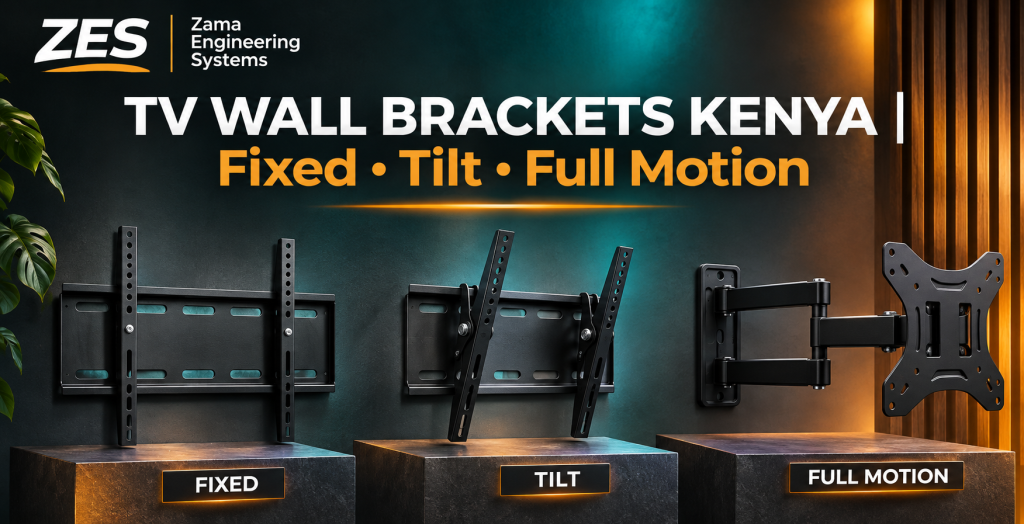
A fixed mount can keep the television close to the wall for viewing from one main position. A tilting mount allows an angle adjustment while staying relatively close to the wall. A full-motion mount can pull forward and rotate for another seating area. It also takes up more space when extended and places different demands on the supporting wall. Product listings often show their maximum movement under ideal conditions. The usable movement in a room depends on the screen width, walls, furniture, cable clearance and how the arm is positioned.
Bracket fit and equipment checks
Fixed bracket in a narrow lounge
Consider fixed bracket in a narrow lounge. In this situation, the viewer sits straight ahead and the media cabinet almost reaches the wall. Before choosing a mount, obtain the seated view and the depth available behind the television. Take this to the installer or seller and ask them to identify the proposed bracket by manufacturer and model.
During the comparison, make the decision around clearance for the plug, ports, locking system and ventilation. Check that the television installation instructions and the bracket documentation apply to the actual products being supplied. If the proposed support or clearances are uncertain, include an assessment in the quotation before agreeing to installation.
For acceptance, ask about how the installer will access the bracket release after the furniture is in place. Confirm the intended screen position using the room and devices as they will actually be used. If you change the room, screen or wall later, the installer will need these details to assess whether the mount is still suitable.
Tilting bracket above existing furniture
The bottom of the television must clear a tall media unit.
- Information to gather
- A side view of the proposed screen position and nearby furniture.
- Decision to make
- Whether the usable tilt helps from the main seat.
- What to confirm
- Clearance between the lower edge of the screen and the fittings behind it.
During the comparison, make the decision around whether the usable tilt helps from the main seat. Check that the television installation instructions and the bracket documentation apply to the actual products being supplied. If the proposed support or clearances are uncertain, include an assessment in the quotation before agreeing to installation.
For acceptance, ask about clearance between the lower edge of the screen and the fittings behind it. Confirm the intended screen position using the room and devices as they will actually be used. If you change the room, screen or wall later, the installer will need these details to assess whether the mount is still suitable.
Full-motion mount for two seating areas
Consider full-motion mount for two seating areas. In this situation, the television will face the dining area as well as the sofa. Before choosing a mount, obtain the two viewing positions and obstacles along the proposed swing. Take this to the installer or seller and ask them to identify the proposed bracket by manufacturer and model.
For acceptance, ask about whether cables can move with the arm without binding. Confirm the intended screen position using the room and devices as they will actually be used. If you change the room, screen or wall later, the installer will need these details to assess whether the mount is still suitable.
During the comparison, make the decision around how far a screen of this width can actually rotate. Check that the television installation instructions and the bracket documentation apply to the actual products being supplied. If the proposed support or clearances are uncertain, include an assessment in the quotation before agreeing to installation.
Large screen in a shared room
Consider large screen in a shared room. In this situation, the new television is significantly heavier than the old one. Before choosing a mount, obtain the weight without its stand and mounting instructions from the manufacturer. Take this to the installer or seller and ask them to identify the proposed bracket by manufacturer and model.
During the comparison, make the decision around whether the proposed bracket and its permitted mounting method suit the load. Check that the television installation instructions and the bracket documentation apply to the actual products being supplied. If the proposed support or clearances are uncertain, include an assessment in the quotation before agreeing to installation.
For acceptance, ask about how the team will handle and support the screen during installation. Confirm the intended screen position using the room and devices as they will actually be used. If you change the room, screen or wall later, the installer will need these details to assess whether the mount is still suitable.
Small screen in a corner
The buyer expects the TV to sit across a corner.
- Information to gather
- Photos and dimensions of both walls and the nearest furniture.
- Decision to make
- Actual arm reach with the chosen screen fitted.
- What to confirm
- Which supporting wall is suitable and where connectors will sit.
During the comparison, make the decision around actual arm reach with the chosen screen fitted. Check that the television installation instructions and the bracket documentation apply to the actual products being supplied. If the proposed support or clearances are uncertain, include an assessment in the quotation before agreeing to installation.
For acceptance, ask about which supporting wall is suitable and where connectors will sit. Confirm the intended screen position using the room and devices as they will actually be used. If you change the room, screen or wall later, the installer will need these details to assess whether the mount is still suitable.
Media wall with timber slats
Consider media wall with timber slats. In this situation, the face has a decorative finish but substrate details are missing. Before choosing a mount, obtain cabinet drawings and the location of any planned structural backing. Take this to the installer or seller and ask them to identify the proposed bracket by manufacturer and model.
For acceptance, ask about who coordinates with the joiner if the backing needs to change. Confirm the intended screen position using the room and devices as they will actually be used. If you change the room, screen or wall later, the installer will need these details to assess whether the mount is still suitable.
During the comparison, make the decision around how the installer will attach to suitable support behind the finish. Check that the television installation instructions and the bracket documentation apply to the actual products being supplied. If the proposed support or clearances are uncertain, include an assessment in the quotation before agreeing to installation.
Tiled feature wall
Consider tiled feature wall. In this situation, the visible finish is expensive and replacement tiles may be difficult to source. Before choosing a mount, obtain photos and any known details of adhesive, lining and substrate. Take this to the installer or seller and ask them to identify the proposed bracket by manufacturer and model.
During the comparison, make the decision around whether the chosen mount and fixing layout allow a responsible installation. Check that the television installation instructions and the bracket documentation apply to the actual products being supplied. If the proposed support or clearances are uncertain, include an assessment in the quotation before agreeing to installation.
For acceptance, ask about what happens if the installer cannot establish the wall build-up. Confirm the intended screen position using the room and devices as they will actually be used. If you change the room, screen or wall later, the installer will need these details to assess whether the mount is still suitable.
Lightweight partition
There is no reliable record of the partition framing.
- Information to gather
- Drawings if available and photos of both sides of the partition.
- Decision to make
- Whether adequate support can be verified for the intended bracket.
- What to confirm
- Whether a reinforced wall or an alternative furniture position needs to be considered.
During the comparison, make the decision around whether adequate support can be verified for the intended bracket. Check that the television installation instructions and the bracket documentation apply to the actual products being supplied. If the proposed support or clearances are uncertain, include an assessment in the quotation before agreeing to installation.
For acceptance, ask about whether a reinforced wall or an alternative furniture position needs to be considered. Confirm the intended screen position using the room and devices as they will actually be used. If you change the room, screen or wall later, the installer will need these details to assess whether the mount is still suitable.
Previously drilled wall
Consider previously drilled wall. In this situation, the existing bracket holes are visible after removing a smaller screen. Before choosing a mount, obtain the location of old fixings and the model of the removed bracket. Take this to the installer or seller and ask them to identify the proposed bracket by manufacturer and model.
For acceptance, ask about who repairs unused holes before the finished installation is accepted. Confirm the intended screen position using the room and devices as they will actually be used. If you change the room, screen or wall later, the installer will need these details to assess whether the mount is still suitable.
During the comparison, make the decision around whether any existing structural support can be assessed for reuse. Check that the television installation instructions and the bracket documentation apply to the actual products being supplied. If the proposed support or clearances are uncertain, include an assessment in the quotation before agreeing to installation.
Reusing a full-motion mount
Consider reusing a full-motion mount. In this situation, the replacement television fits a similar diagonal range. Before choosing a mount, obtain the new model’s mounting pattern and bracket’s model or paperwork. Take this to the installer or seller and ask them to identify the proposed bracket by manufacturer and model.
During the comparison, make the decision around whether the mount’s rating and fastening requirements suit the new combination. Check that the television installation instructions and the bracket documentation apply to the actual products being supplied. If the proposed support or clearances are uncertain, include an assessment in the quotation before agreeing to installation.
For acceptance, ask about how the installer assesses wear and verifies travel before handover. Confirm the intended screen position using the room and devices as they will actually be used. If you change the room, screen or wall later, the installer will need these details to assess whether the mount is still suitable.
Rooms, surfaces and existing installations
Bracket marketed as universal
The listing gives a wide range of supported TV sizes.
- Information to gather
- The actual manual and the pattern combinations it explicitly lists.
- Decision to make
- Which mounting hardware is specified for your TV.
- What to confirm
- Whether spacers or model-specific parts need to be supplied.
During the comparison, make the decision around which mounting hardware is specified for your TV. Check that the television installation instructions and the bracket documentation apply to the actual products being supplied. If the proposed support or clearances are uncertain, include an assessment in the quotation before agreeing to installation.
For acceptance, ask about whether spacers or model-specific parts need to be supplied. Confirm the intended screen position using the room and devices as they will actually be used. If you change the room, screen or wall later, the installer will need these details to assess whether the mount is still suitable.
Television with a recessed mounting area
Consider television with a recessed mounting area. In this situation, the back of the display is shaped around its mounting points. Before choosing a mount, obtain the drawing from the TV manual and a clear photo of the rear. Take this to the installer or seller and ask them to identify the proposed bracket by manufacturer and model.
For acceptance, ask about how the installer will check that the casing and connectors have clearance. Confirm the intended screen position using the room and devices as they will actually be used. If you change the room, screen or wall later, the installer will need these details to assess whether the mount is still suitable.
During the comparison, make the decision around whether the bracket rails and approved parts will sit correctly. Check that the television installation instructions and the bracket documentation apply to the actual products being supplied. If the proposed support or clearances are uncertain, include an assessment in the quotation before agreeing to installation.
TV with downward-facing ports
Consider tv with downward-facing ports. In this situation, the connections sit close to the wall and the cabinet is directly below. Before choosing a mount, obtain the location of power and signal ports and the plugs you plan to use. Take this to the installer or seller and ask them to identify the proposed bracket by manufacturer and model.
During the comparison, make the decision around whether any connectors need extra depth or a different route. Check that the television installation instructions and the bracket documentation apply to the actual products being supplied. If the proposed support or clearances are uncertain, include an assessment in the quotation before agreeing to installation.
For acceptance, ask about how the cables will be replaced after the screen is mounted. Confirm the intended screen position using the room and devices as they will actually be used. If you change the room, screen or wall later, the installer will need these details to assess whether the mount is still suitable.
TV with a separate connection box
Most sources attach to an external box rather than directly to the panel.
- Information to gather
- The display and box models plus their linking cable details.
- Decision to make
- Where the box can stay accessible and ventilated.
- What to confirm
- How the supplied cable reaches both devices along an approved route.
During the comparison, make the decision around where the box can stay accessible and ventilated. Check that the television installation instructions and the bracket documentation apply to the actual products being supplied. If the proposed support or clearances are uncertain, include an assessment in the quotation before agreeing to installation.
For acceptance, ask about how the supplied cable reaches both devices along an approved route. Confirm the intended screen position using the room and devices as they will actually be used. If you change the room, screen or wall later, the installer will need these details to assess whether the mount is still suitable.
Monitor used for presentations
Consider monitor used for presentations. In this situation, the display is installed for staff who connect different laptops. Before choosing a mount, obtain the screen weight, input list and where users stand to connect. Take this to the installer or seller and ask them to identify the proposed bracket by manufacturer and model.
For acceptance, ask about which controls and ports should remain reachable after installation. Confirm the intended screen position using the room and devices as they will actually be used. If you change the room, screen or wall later, the installer will need these details to assess whether the mount is still suitable.
During the comparison, make the decision around whether the screen needs adjustment or a fixed position. Check that the television installation instructions and the bracket documentation apply to the actual products being supplied. If the proposed support or clearances are uncertain, include an assessment in the quotation before agreeing to installation.
Commercial portrait display
Consider commercial portrait display. In this situation, the buyer wants to rotate a landscape display for signage. Before choosing a mount, obtain the display maker’s instructions and the proposed mount specifications. Take this to the installer or seller and ask them to identify the proposed bracket by manufacturer and model.
During the comparison, make the decision around whether both devices explicitly support the intended orientation. Check that the television installation instructions and the bracket documentation apply to the actual products being supplied. If the proposed support or clearances are uncertain, include an assessment in the quotation before agreeing to installation.
For acceptance, ask about how cables, content and cooling will be checked in the final position. Confirm the intended screen position using the room and devices as they will actually be used. If you change the room, screen or wall later, the installer will need these details to assess whether the mount is still suitable.
Screen near a door
The wall position looks suitable until the door opens fully.
- Information to gather
- Photos with the door closed and open plus the door swing.
- Decision to make
- Whether the display or extended arm enters the traffic path.
- What to confirm
- Which position will be demonstrated if the room uses an adjustable bracket.
During the comparison, make the decision around whether the display or extended arm enters the traffic path. Check that the television installation instructions and the bracket documentation apply to the actual products being supplied. If the proposed support or clearances are uncertain, include an assessment in the quotation before agreeing to installation.
For acceptance, ask about which position will be demonstrated if the room uses an adjustable bracket. Confirm the intended screen position using the room and devices as they will actually be used. If you change the room, screen or wall later, the installer will need these details to assess whether the mount is still suitable.
Soundbar attached to the system
Consider soundbar attached to the system. In this situation, the customer plans to fit a soundbar under a moving TV. Before choosing a mount, obtain the soundbar model and any approved attachment system. Take this to the installer or seller and ask them to identify the proposed bracket by manufacturer and model.
For acceptance, ask about how the installer checks clearance, access and cable strain during movement. Confirm the intended screen position using the room and devices as they will actually be used. If you change the room, screen or wall later, the installer will need these details to assess whether the mount is still suitable.
During the comparison, make the decision around whether the combined assembly stays within the bracket manufacturer’s rules. Check that the television installation instructions and the bracket documentation apply to the actual products being supplied. If the proposed support or clearances are uncertain, include an assessment in the quotation before agreeing to installation.
Renter buying for future reuse
Consider renter buying for future reuse. In this situation, the bracket could be moved to a different property later. Before choosing a mount, obtain the current TV model and the rules for the current wall. Take this to the installer or seller and ask them to identify the proposed bracket by manufacturer and model.
During the comparison, make the decision around a mount suitable for the present installation and clear documentation to keep. Check that the television installation instructions and the bracket documentation apply to the actual products being supplied. If the proposed support or clearances are uncertain, include an assessment in the quotation before agreeing to installation.
For acceptance, ask about how future reuse will be reassessed against the next wall and TV. Confirm the intended screen position using the room and devices as they will actually be used. If you change the room, screen or wall later, the installer will need these details to assess whether the mount is still suitable.
Comparing an unlabelled bracket
The used bracket has no legible manufacturer information.
- Information to gather
- Photos and any original purchase record you can find.
- Decision to make
- Whether the installer can verify the intended rating and required parts.
- What to confirm
- What compatible option is available if the old bracket cannot be verified.
During the comparison, make the decision around whether the installer can verify the intended rating and required parts. Check that the television installation instructions and the bracket documentation apply to the actual products being supplied. If the proposed support or clearances are uncertain, include an assessment in the quotation before agreeing to installation.
For acceptance, ask about what compatible option is available if the old bracket cannot be verified. Confirm the intended screen position using the room and devices as they will actually be used. If you change the room, screen or wall later, the installer will need these details to assess whether the mount is still suitable.
Purchasing and handover
Online return deadline
Consider online return deadline. In this situation, the buyer needs time to check the bracket before the return window closes. Before choosing a mount, obtain the listing, SKU, package contents and return deadline. Take this to the installer or seller and ask them to identify the proposed bracket by manufacturer and model.
For acceptance, ask about how the seller handles opened packaging and incomplete hardware. Confirm the intended screen position using the room and devices as they will actually be used. If you change the room, screen or wall later, the installer will need these details to assess whether the mount is still suitable.
During the comparison, make the decision around whether approval can be given from product documents or requires a visit. Check that the television installation instructions and the bracket documentation apply to the actual products being supplied. If the proposed support or clearances are uncertain, include an assessment in the quotation before agreeing to installation.
Different rooms in the same home
Consider different rooms in the same home. In this situation, one TV is viewed head-on while a second needs to turn toward the kitchen. Before choosing a mount, obtain model numbers and room photos for each screen separately. Take this to the installer or seller and ask them to identify the proposed bracket by manufacturer and model.
During the comparison, make the decision around whether buying different mount types better reflects each room’s use. Check that the television installation instructions and the bracket documentation apply to the actual products being supplied. If the proposed support or clearances are uncertain, include an assessment in the quotation before agreeing to installation.
For acceptance, ask about a labelled equipment list so parts are matched to their intended screens. Confirm the intended screen position using the room and devices as they will actually be used. If you change the room, screen or wall later, the installer will need these details to assess whether the mount is still suitable.
Mounting height above a fireplace area
The owner likes a high placement but also uses the heat source.
- Information to gather
- Heater details, heat exposure and the television instructions.
- Decision to make
- Whether the proposed environment is permitted by the equipment makers.
- What to confirm
- The alternative position if heat or viewing angle is unsuitable.
During the comparison, make the decision around whether the proposed environment is permitted by the equipment makers. Check that the television installation instructions and the bracket documentation apply to the actual products being supplied. If the proposed support or clearances are uncertain, include an assessment in the quotation before agreeing to installation.
For acceptance, ask about the alternative position if heat or viewing angle is unsuitable. Confirm the intended screen position using the room and devices as they will actually be used. If you change the room, screen or wall later, the installer will need these details to assess whether the mount is still suitable.
Retail installation behind a counter
Consider retail installation behind a counter. In this situation, staff need device access and visitors should stay away from the screen. Before choosing a mount, obtain the counter dimensions and staff circulation route. Take this to the installer or seller and ask them to identify the proposed bracket by manufacturer and model.
For acceptance, ask about who can authorise movement or maintenance after handover. Confirm the intended screen position using the room and devices as they will actually be used. If you change the room, screen or wall later, the installer will need these details to assess whether the mount is still suitable.
During the comparison, make the decision around whether a low-profile bracket leaves enough service clearance. Check that the television installation instructions and the bracket documentation apply to the actual products being supplied. If the proposed support or clearances are uncertain, include an assessment in the quotation before agreeing to installation.
Fastener pack missing from the box
Consider fastener pack missing from the box. In this situation, the new bracket is delivered without some labelled parts. Before choosing a mount, obtain the model, packing list and an inventory of what arrived. Take this to the installer or seller and ask them to identify the proposed bracket by manufacturer and model.
During the comparison, make the decision around which replacements the manufacturer permits for this exact bracket. Check that the television installation instructions and the bracket documentation apply to the actual products being supplied. If the proposed support or clearances are uncertain, include an assessment in the quotation before agreeing to installation.
For acceptance, ask about whether the installer can complete the visit without improvising parts. Confirm the intended screen position using the room and devices as they will actually be used. If you change the room, screen or wall later, the installer will need these details to assess whether the mount is still suitable.
Television needed in an accessible room
The display controls and service access must suit different users.
- Information to gather
- The preferred seated viewing position and the usual access path.
- Decision to make
- Whether fixed or adjustable placement works for the intended viewers.
- What to confirm
- How the room user approves screen position and access to controls.
During the comparison, make the decision around whether fixed or adjustable placement works for the intended viewers. Check that the television installation instructions and the bracket documentation apply to the actual products being supplied. If the proposed support or clearances are uncertain, include an assessment in the quotation before agreeing to installation.
For acceptance, ask about how the room user approves screen position and access to controls. Confirm the intended screen position using the room and devices as they will actually be used. If you change the room, screen or wall later, the installer will need these details to assess whether the mount is still suitable.
Bracket selection before furniture delivery
Consider bracket selection before furniture delivery. In this situation, the cabinet drawings exist but finished dimensions may change. Before choosing a mount, obtain the joiner’s plan and the confirmed equipment models. Take this to the installer or seller and ask them to identify the proposed bracket by manufacturer and model.
For acceptance, ask about which final dimensions must be signed off before installation. Confirm the intended screen position using the room and devices as they will actually be used. If you change the room, screen or wall later, the installer will need these details to assess whether the mount is still suitable.
During the comparison, make the decision around what can be provisionally specified before measuring the finished joinery. Check that the television installation instructions and the bracket documentation apply to the actual products being supplied. If the proposed support or clearances are uncertain, include an assessment in the quotation before agreeing to installation.
Mount for a business with multiple units
Consider mount for a business with multiple units. In this situation, the buyer wants to order one model in bulk. Before choosing a mount, obtain a room and display schedule grouped by actual wall and television type. Take this to the installer or seller and ask them to identify the proposed bracket by manufacturer and model.
During the comparison, make the decision around a sample installation before committing to quantities. Check that the television installation instructions and the bracket documentation apply to the actual products being supplied. If the proposed support or clearances are uncertain, include an assessment in the quotation before agreeing to installation.
For acceptance, ask about how exceptions will be documented without mixing different fastener packs. Confirm the intended screen position using the room and devices as they will actually be used. If you change the room, screen or wall later, the installer will need these details to assess whether the mount is still suitable.
Customer comparing total costs
One seller lists bracket only and the other includes an installation visit.
- Information to gather
- Written scope from each provider including any assessment charges.
- Decision to make
- The cost of compatible equipment, mounting and finishing as separate items.
- What to confirm
- Who is responsible if the wall is not ready on the appointment date.
During the comparison, make the decision around the cost of compatible equipment, mounting and finishing as separate items. Check that the television installation instructions and the bracket documentation apply to the actual products being supplied. If the proposed support or clearances are uncertain, include an assessment in the quotation before agreeing to installation.
For acceptance, ask about who is responsible if the wall is not ready on the appointment date. Confirm the intended screen position using the room and devices as they will actually be used. If you change the room, screen or wall later, the installer will need these details to assess whether the mount is still suitable.
Planning a later screen upgrade
Consider planning a later screen upgrade. In this situation, the current television may be replaced with a larger one next year. Before choosing a mount, obtain the current model and the space the future screen would occupy. Take this to the installer or seller and ask them to identify the proposed bracket by manufacturer and model.
For acceptance, ask about which documents and photos are needed to evaluate reuse. Confirm the intended screen position using the room and devices as they will actually be used. If you change the room, screen or wall later, the installer will need these details to assess whether the mount is still suitable.
During the comparison, make the decision around a bracket verified for today’s equipment and a plan to reassess later. Check that the television installation instructions and the bracket documentation apply to the actual products being supplied. If the proposed support or clearances are uncertain, include an assessment in the quotation before agreeing to installation.
Request a ZES quote
Send your exact installation location, TV model and photos of the wall and equipment to Zama Engineering Systems. Tell us which tasks you want included so the quotation can identify equipment, installation, cabling and testing separately. Review the ZES TV mounting service and the Kenya TV installation quote guide for related planning information.