
Automatic Gate Installation Ridgeways works best when the fabricator, builder and automation installer share the same entrance brief. A finished gate, a motor and a power cable do not automatically become a coordinated installation. ZES can assess the automation requirement and explain the equipment and site interfaces for a Ridgeways project.
This guide focuses on Sliding Gate Automation Ridgeways planning before fabrication and surrounding finishes are complete. It is also useful when an existing entrance needs changes. The responsible professionals must confirm the actual dimensions, condition and installation requirements; this article is a buyer’s planning guide.
Automatic Gate Installation Ridgeways: 7 easy coordination checks
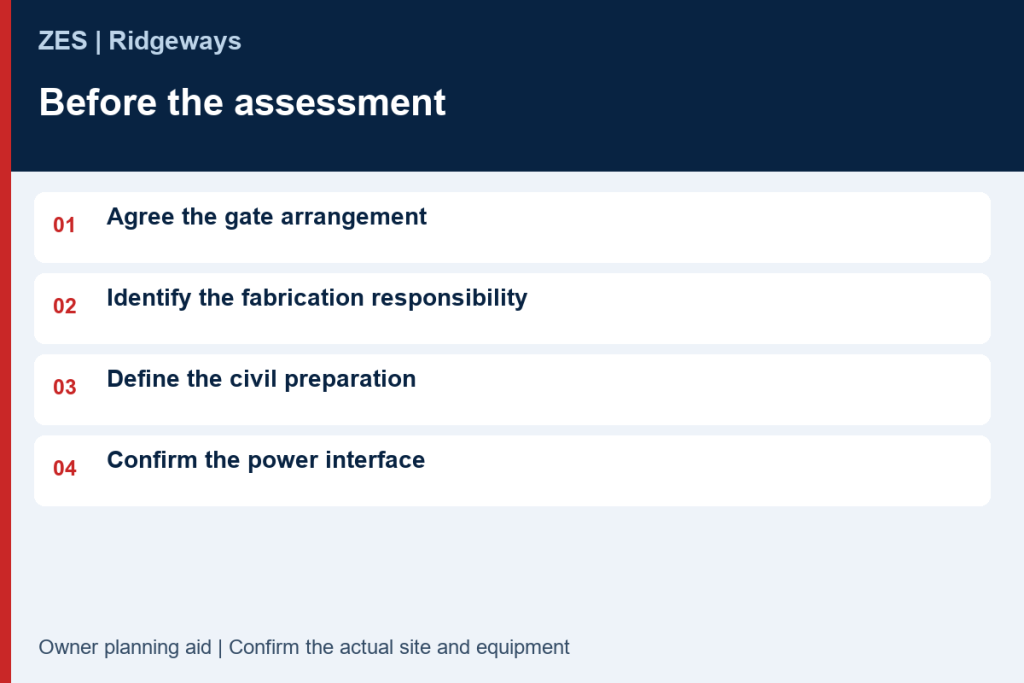
1. Agree the gate arrangement
State the required opening, intended gate type and use. For a sliding gate, show the area available beside the entrance for travel. For an existing gate, describe its condition and any known defects. Owner measurements can support the enquiry, but relevant dimensions need confirmation before equipment is ordered.
Explain pedestrian movement and visitor waiting areas at the same time. These affect the complete entrance discussion. Do not leave them until after the sliding gate and surrounding works have been fixed in place.
2. Identify the fabrication responsibility
Ask who designs and supplies the sliding gate, supports and running arrangement. If a separate fabricator is involved, coordinate the automation requirements before manufacture. The operator should be selected for an assessed gate rather than used to compensate for unsuitable fabrication or movement.
Keep drawings and approved changes with the project record. A change in gate dimensions, infill or arrangement should trigger a review of relevant assumptions. The installer should not discover a different gate on the fitting day.
3. Define the civil preparation
Mounting, foundations, track work and drainage may require coordination with the builder. Ask the proposal to identify the required preparation and responsible party. A general statement that the site will be ready is less useful than a defined interface and confirmation step.
If paving or landscaping is planned, discuss the sequence early. Reinstatement and finishes should be included or assigned clearly. The actual site determines the work; no standard foundation or cable-route specification is given here.
4. Confirm the power interface
Tell ZES what supply is available and who will assess or provide the required electrical work. Existing cables should not be assumed suitable without review. The competent electrical professional should confirm the relevant requirements for the proposed equipment.
If backup or solar operation is requested, describe the expected use and discuss a supported arrangement. Do not treat a generic battery or panel as automatically compatible with the selected motor.
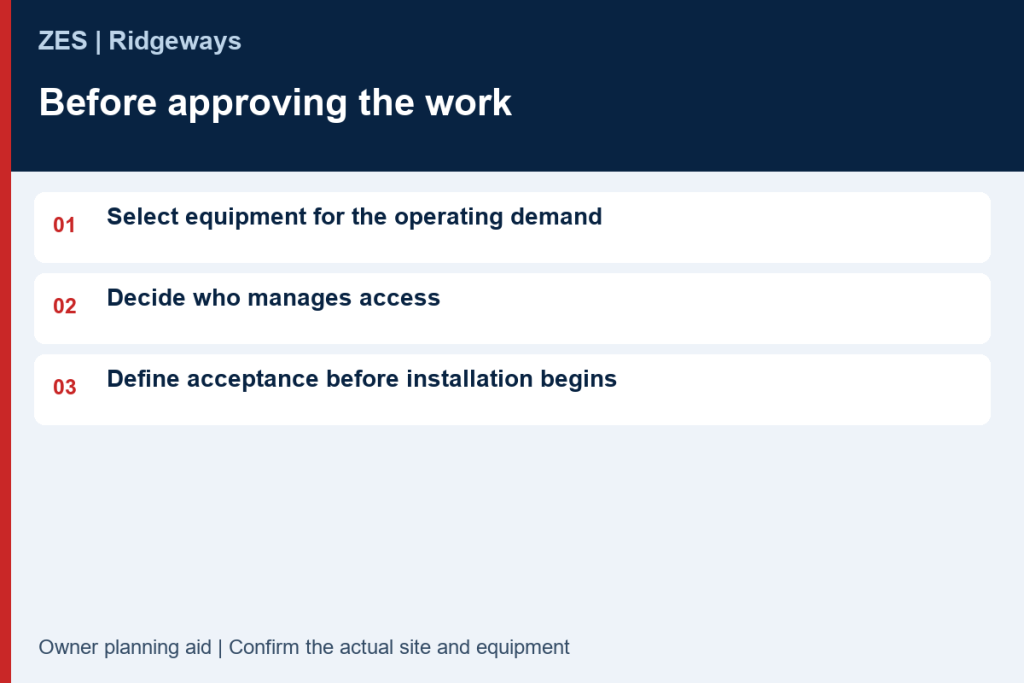
5. Select equipment for the operating demand
Describe the busiest period and likely usage, not only the sliding gate dimensions. A private entrance and a shared property may need different equipment assumptions. Ask for the proposed model and its suitability for the assessed gate and duty.
A quotation should list supplied controls and accessories. If the offer is described as a kit, ask what it contains and what the site needs in addition. The sliding gate buying guide provides a complete-scope comparison.
6. Decide who manages access
List the authorised users and desired control methods. Identify any existing intercom or access system that should work with the sliding gate. Compatibility, configuration and the completed demonstration need a named responsible party.
For shared access, nominate who issues devices and approves changes. Lost controls and departing users should be handled through the supported process. Keep private codes separate from general construction documents.
7. Define acceptance before installation begins
Agree the operation to be demonstrated, the documents to be supplied and who attends handover. The final record should identify the installed equipment, completed work and actual support terms. Any outstanding item should be listed separately.
Where several contractors contribute, confirm the complete entrance function rather than accepting isolated claims that each person’s item works. A coordinated acceptance process helps the owner see whether the agreed project has been delivered.
Sliding Gate Automation Ridgeways: avoid ordering the motor too early
A preferred motor brand or attractive advertised price can be a starting point for discussion, but it should not determine the entire project before the sliding gate is assessed. The physical arrangement, movement condition and usage need to inform the equipment selection.
If the owner has already purchased equipment, provide the exact model and supplied contents. ZES can discuss whether it suits the requirement and what additional assessment is needed. Clarify installation responsibility and actual support terms for customer-supplied items.
Manufacturer documentation should support the chosen arrangement. FAAC’s manuals resources are one example of model-specific information used by competent installers. A generic online installation diagram does not establish the correct details for every gate.
Example: a design change after the first quotation
Imagine a project initially briefed as one sliding-gate arrangement. During fabrication, the design or dimensions change. The useful response is to tell the installer and review the relevant equipment and site assumptions before continuing.
The project record should show the revised gate and any effect on mounting, power or controls. If the scope and cost change, obtain approval against the updated proposal. The owner should not compare a revised complete installation with an earlier quotation for a different entrance.
At handover, keep the final specification rather than only the first drawing. This illustrative example shows why coordination matters; it is not a claim about a specific ZES project or a promise that every design change creates additional cost.
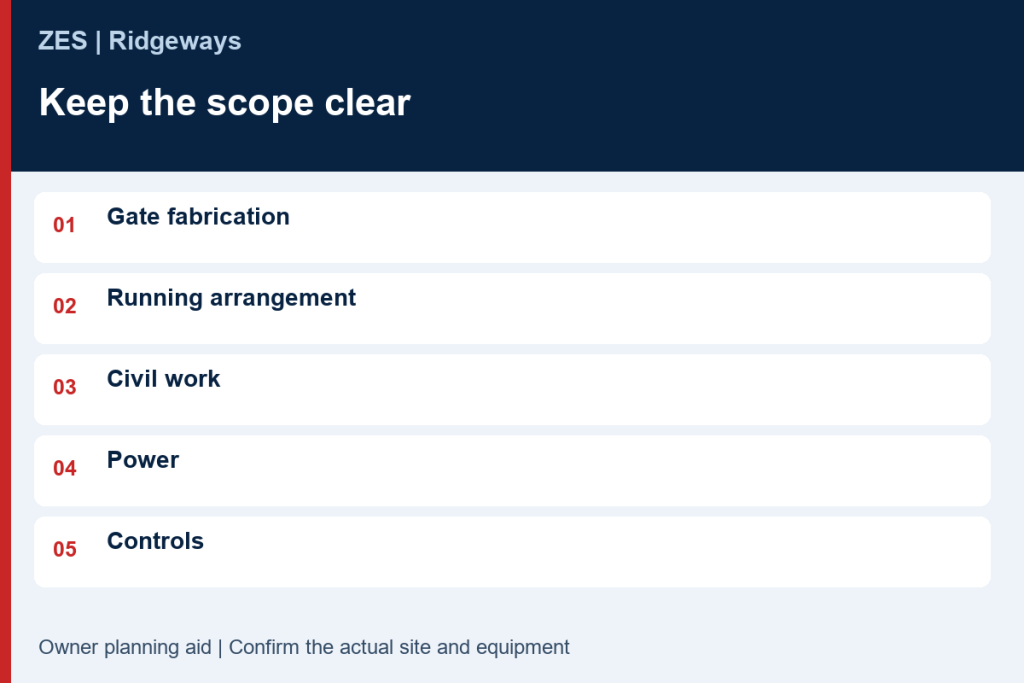
Responsibility checklist for a new entrance
| Interface | Record in the project brief |
|---|---|
| Gate fabrication | Design, dimensions and responsible supplier |
| Running arrangement | Assessment, preparation and acceptance responsibility |
| Civil work | Mounting, routes, drainage and finishes where required |
| Power | Competent assessment and supply-work responsibility |
| Controls | Required devices and supported external interfaces |
| Handover | Demonstration, documents and support terms |
The checklist helps reveal gaps before equipment is ordered. It is not a technical specification for construction. The actual design and installation requirements must come from the responsible competent parties.
What if the gate already exists?
An existing manual or automated gate needs a condition assessment before the proposal is finalised. Report scraping, unusual noise, support movement or recurring faults. Ask the quotation to separate necessary preparation from new equipment and optional improvements.
If a repair is needed first, clarify the intended outcome and retained components. A motor replacement is not automatically required because the sliding gate is unreliable. The replacement decision guide explains how to compare the options.
Keep any previous drawings, invoices and service reports available. They can support the discussion, but the current installed condition should still be confirmed. Past records may not show later modifications.
Questions for owners and builders
Who should choose the gate motor?
The equipment should be proposed from the assessed gate and intended operating duty. Owners can state preferences and requirements, while competent selection should consider the actual installation inputs.
Should paving be completed first?
Discuss the work sequence with the relevant contractors before finishes are finalised. The appropriate sequence depends on the site preparation and routes required. Do not rely on an unconfirmed equipment position.
Does the automation quotation include fabrication?
Only if the actual offer says so. Ask for fabrication, repairs, civil work, electrical work and automation equipment to be distinguished. Any excluded work needs a responsible provider.
How can ZES prepare a useful initial discussion?
Send the location, photographs or drawings, approximate dimensions, gate type and expected use. Identify the fabricator or builder where relevant and explain the project stage. ZES can then discuss the assessment and proposed scope.
A practical sequence for a new sliding entrance
Start a sliding gate project by confirming the entrance requirement and the responsibilities of the fabricator, builder and automation installer. The gate structure, support arrangement and operator installation affect one another. Agreeing the motor after all civil work is finished can leave avoidable questions about where equipment and routes belong.
The owner should give each provider the same current brief. Include the intended gate type, expected use, pedestrian arrangement and required controls. If the design changes, make sure the gate automation installer reviews the implications before equipment is ordered.
Define a readiness check
Before fitting the gate motor, identify who confirms that the relevant mechanical and site preparation is complete. the sliding gate should be assessed for its intended movement and installation conditions. The readiness check is a project coordination step, not an invitation for the owner to perform mechanical or electrical tests.
List unfinished tasks clearly. For example, distinguish the completion of fabrication from the completion of electrical preparation. A project can look nearly finished while an essential part of the gate installation scope remains outstanding.
Agree how changes will be priced
If an alteration affects the approved scope, ask for the revised work and cost before proceeding. A changed gate design may affect operator suitability or installation requirements. Avoid relying on a verbal assumption that the original package covers every later change.
At handover, collect the equipment details, relevant checks and user instructions. Keep records of the work performed by each provider together. If a sliding gate repair is required later, the service technician will then have a clearer account of the structure and automation. The aim is a complete entrance project with documented responsibilities, rather than a collection of separately supplied items whose interfaces remain uncertain.
Request a Ridgeways gate proposal
Request a quotation or book a site survey. Call or WhatsApp +254 725 345 345 with the entrance brief. Agreeing the interfaces early helps turn an equipment purchase into a clearly defined installation project.