
Updated 3 November 2026 · Zama Engineering Systems buyer guide
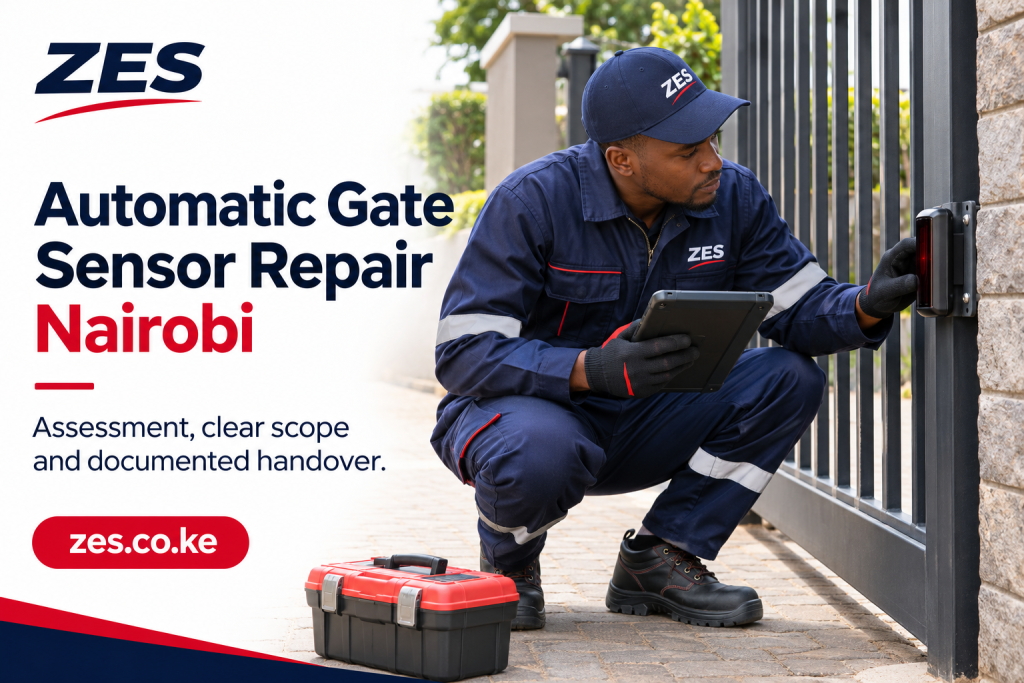
Automatic Gate Sensor Repair Nairobi enquiries should identify the actual device and the symptom rather than assume a sensor can simply be bypassed. Different installations use different devices and arrangements. This guide helps customers describe a concern and compare an assessed repair scope, with the relevant safety function and acceptance responsibilities kept explicit.
Identify the device and reported behaviour
Share the equipment reference, installation records and a safely taken photograph where available. Explain whether the symptom follows an impact, building work or another recent change. A device near a gate is not necessarily the same type as one pictured online. Do not step into a moving gate's path to test detection. Keep observations to what can be gathered safely during the initial enquiry.
Automatic Gate Sensor Repair Nairobi: assess its role
The competent technician should identify the device's intended function and relationship with the installed gate controls. Compatibility, mounting, environment and the wider arrangement can matter. Ask which findings support cleaning, adjustment, repair or replacement through the appropriate product procedures. This article does not prescribe settings or wiring. A sensor's presence alone does not prove that the complete entrance has an adequate safety arrangement.
Keep replacement and interface requirements clear
The quotation should identify the proposed device, supplied work, retained components and any necessary control-system review. A visually similar product is not proof of compatibility. Include site preparation, making good and commissioning responsibilities. Do not accept disabling a relevant safety function as an ordinary repair. Any interim use restrictions or alternative access arrangements should be established by the responsible competent and site parties.
Require relevant checks and a recorded outcome
The responsible technician should determine and perform the appropriate checks for the actual installation, without unsafe improvised demonstrations. Record the device, work, accepted configuration and remaining actions. Explain suitable user reporting and maintenance information. Later relocation, impacts or changes around the device may require review. The aim is the intended assessed function within the complete system, not merely extinguishing a fault indication.
Compare the supplied scope
| Decision | Information to confirm | Useful result |
|---|---|---|
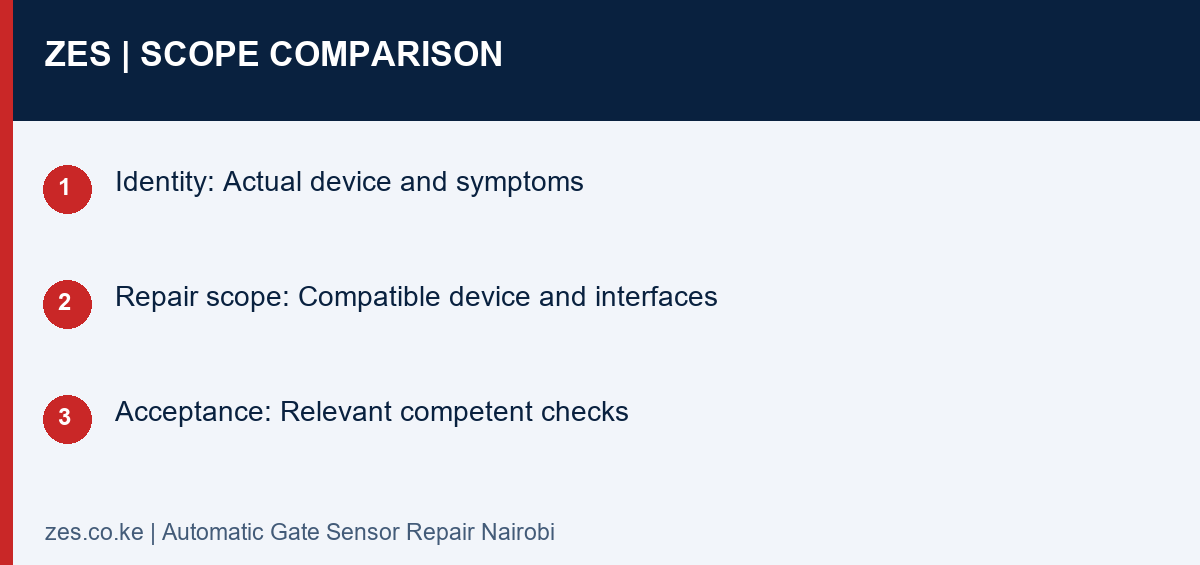
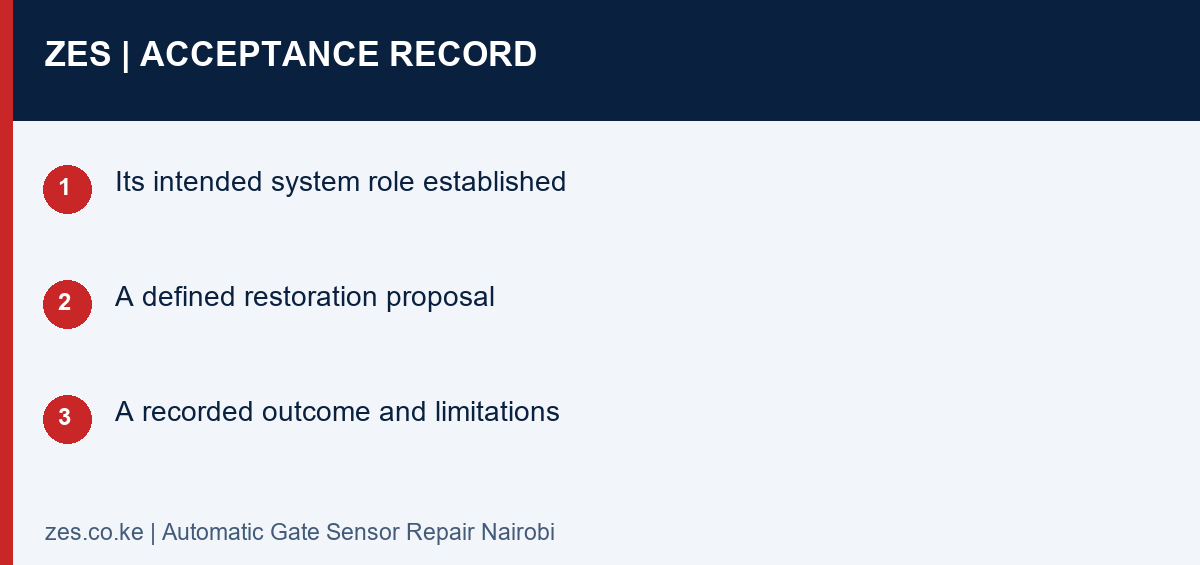
| Identity | Actual device and symptoms | Its intended system role established |
| Repair scope | Compatible device and interfaces | A defined restoration proposal |
| Acceptance | Relevant competent checks | A recorded outcome and limitations |
A practical planning example
A sensor concern follows work near a gatepost. The assessment should establish what changed and how the actual device is intended to work, rather than assume a fault can be cleared by disabling it. This is an illustrative enquiry scenario.
Automatic Gate Sensor Repair Nairobi: enquiry checklist
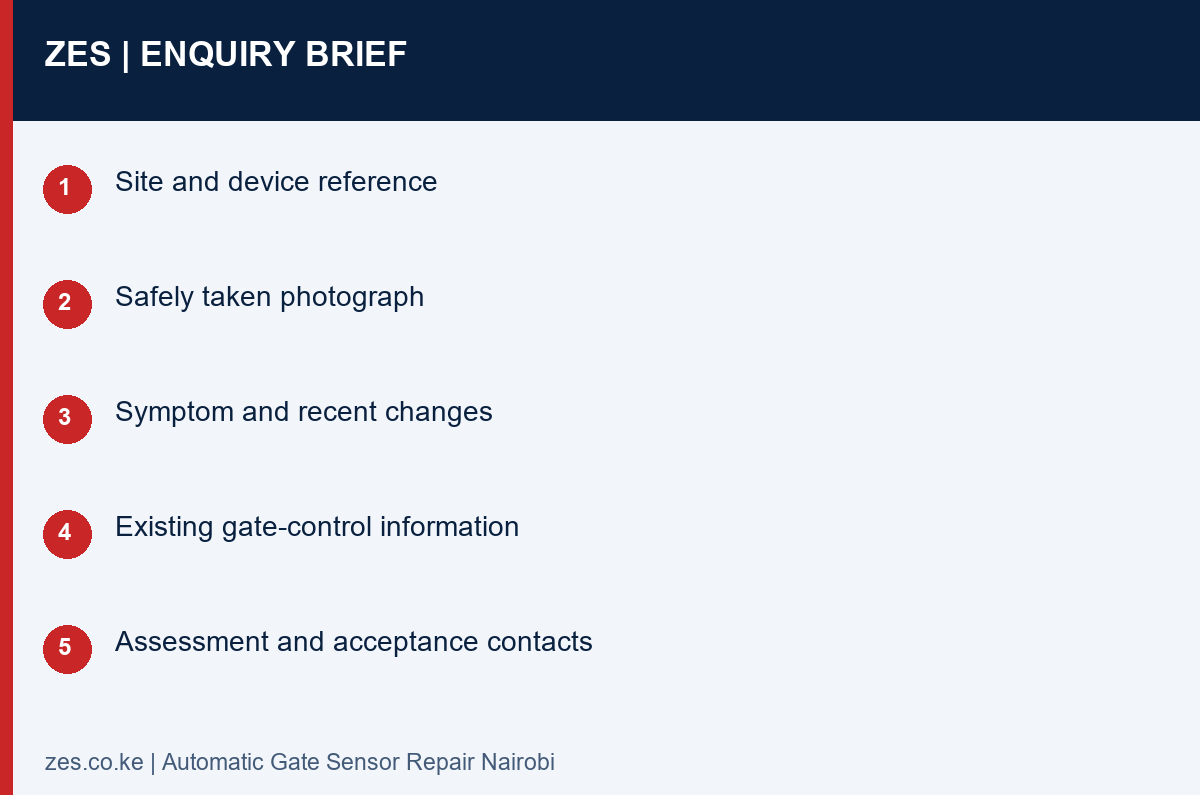
- Site and device reference
- Safely taken photograph
- Symptom and recent changes
- Existing gate-control information
- Assessment and acceptance contacts
Questions before arranging work
Can a sensor be bypassed while parts are ordered?
Do not use this article to authorise bypassing. Obtain competent assessment and an appropriate site arrangement.
Can any similar sensor replace the original?
Compatibility and the complete installed function must be established for the actual products and configuration.
Discuss the gate requirement with ZES
Read the related ZES gate project guide and explore the service categories. Share the location, equipment information and intended outcome. ZES confirms the appropriate assessment, availability, proposed delivery responsibilities and commercial terms for the actual enquiry.
Request a scoped quotation · Request a site assessment · Call +254 725 345 345
Technical background: HSE powered-gate technical background (UK). This background does not establish Kenyan legal requirements for a particular project. Use the actual product instructions and appropriate project-specific advice.