

Updated 4 November 2026 · Zama Engineering Systems buyer guide
CCTV Video Analytics Kenya projects need an operating plan after the first demonstration. A business can purchase a supported analytic function and still find that staff do not know how to review events, report nuisance notifications or approve later changes. This guide focuses on commissioning and ongoing operation, helping ZES customers turn a selected analytic use case into an accountable day-to-day workflow.
Start with an agreed event definition
Write the selected event in language the customer and installer both understand. State the intended reviewer and the business purpose, keeping sensitive operational settings in the controlled technical record. If several analytic functions are proposed, give each its own acceptance task. This prevents a broad software label from hiding different expectations. The customer should be able to explain what a useful notification looks like before anyone signs off the installation.
CCTV Video Analytics Kenya: establish a commissioning baseline
Record the actual equipment, software, licence scope and accepted event definitions. Ask the supplier to state how commissioning observations will be captured and which site conditions remain to be tested. The baseline should connect the technical configuration to the customer's intended workflow without exposing private settings publicly. ONVIF publishes information on profiles relevant to video and analytics interoperability, but the buyer should still test the actual combination being supplied.
Give operators a structured review process
Train the authorised user to locate the relevant footage, assess the event and record the appropriate outcome through the agreed process. Distinguish an equipment notification from a verified incident. Explain how uncertain results and repeated nuisance events should be reported to the responsible administrator. A useful operator guide describes the task in ordinary language and identifies when technical support is needed, rather than encouraging users to make unrecorded configuration changes.
Agree how adjustments are approved
Changes to camera position, the observed scene, software or operating hours can affect the accepted workflow. Name the person who approves a change and decide how its result will be reviewed. Keep a record of the reason for adjustment and the acceptance evidence for the revised arrangement. This is particularly useful when facilities and IT teams have different responsibilities. Avoid turning every unwanted event into an informal setting change that nobody can later explain.
Review usefulness as well as technical availability
A system can be online while its notifications no longer help the intended user. Arrange a suitable review process for event usefulness, unresolved issues and changes in the business requirement. Keep software and support responsibilities explicit, including recurring licences where applicable. If an analytic function is no longer justified, the customer should have a controlled decision process for changing it. The goal is a manageable information workflow rather than a screen full of unreviewed notifications.
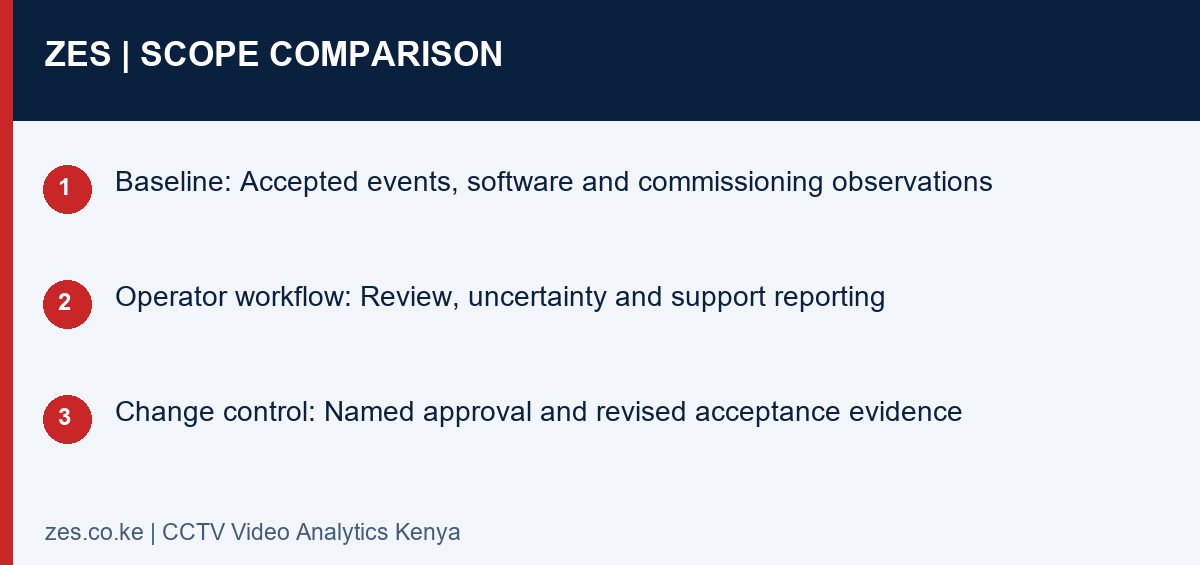
Compare the supplied scope
| Decision | Information to confirm | Useful result |
|---|---|---|
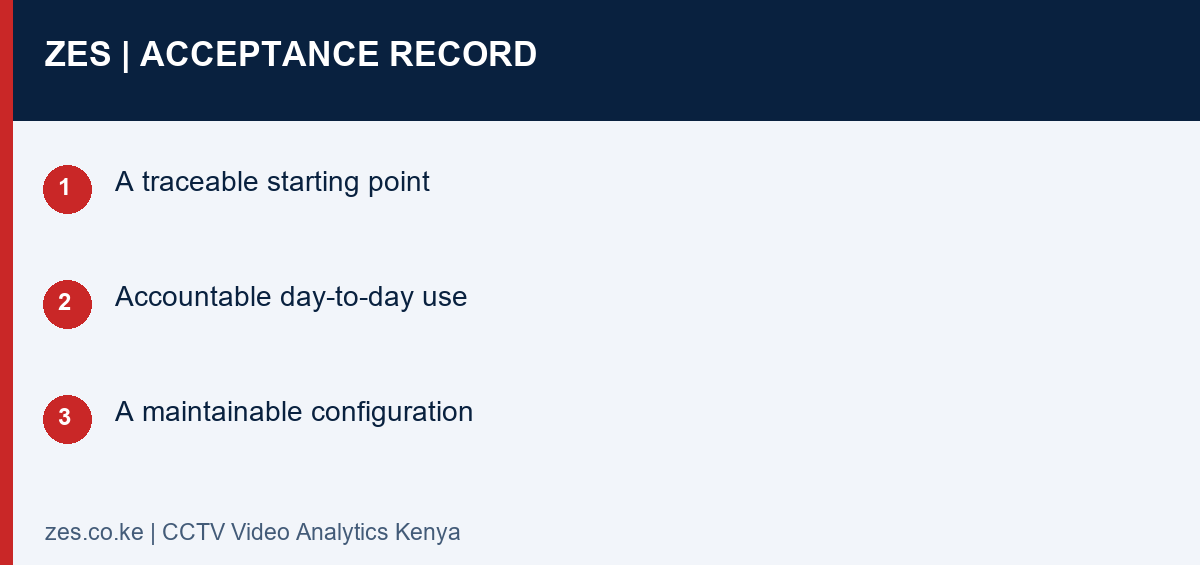
| Baseline | Accepted events, software and commissioning observations | A traceable starting point |
| Operator workflow | Review, uncertainty and support reporting | Accountable day-to-day use |
| Change control | Named approval and revised acceptance evidence | A maintainable configuration |
A practical planning example
A facilities team may find that a changed delivery schedule produces notifications outside the original operating pattern. The appropriate next step is to review the requirement with the responsible administrator, document the agreed change and assess its effect. That provides a usable history for later support. It is an illustrative maintenance scenario, not a claim about measured ZES analytics performance.
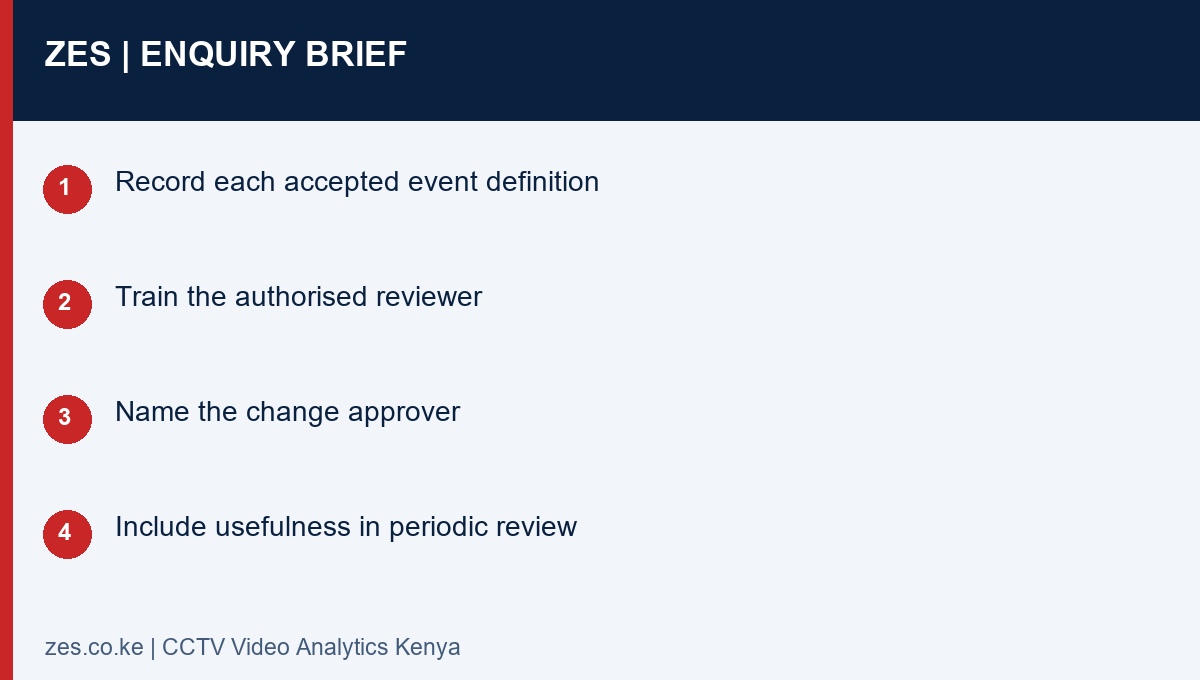
CCTV Video Analytics Kenya: enquiry checklist
- Record each accepted event definition
- Train the authorised reviewer
- Name the change approver
- Include usefulness in periodic review
Questions before commissioning
Is analytics commissioning a one-time task?
Initial acceptance establishes a baseline. Relevant scene or operational changes may need a documented review of that baseline.
Does an analytic notification prove an incident occurred?
The authorised operating process should provide for appropriate review. A notification and a verified event are distinct records.
Discuss your CCTV requirement with ZES
Read the related ZES CCTV planning guide and explore CCTV surveillance services. Share the location, equipment information and intended outcome. ZES confirms the appropriate assessment, availability, proposed delivery responsibilities and commercial terms for the actual enquiry.
Request a scoped quotation · Request a site assessment · Call +254 725 345 345
Technical background: ONVIF profiles for video-system interoperability. Confirm the actual project requirements with the responsible advisers and relevant product information.