
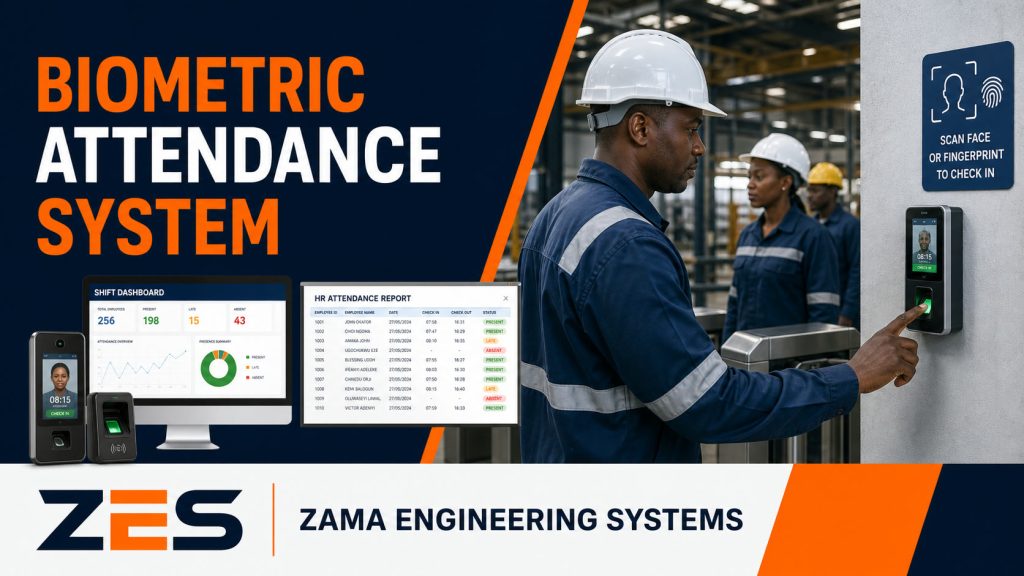
Which is the best biometric attendance system? The useful answer depends on your employees, working environment, shift rules and reporting process. There is no single model that is automatically best for a small office, a busy factory and a business with several branches.
The best fit is a system that passes your operational tests, gives administrators usable records and has a clear support arrangement. A structured comparison is more valuable than choosing the longest feature list.
Write your essential requirements first
Separate what you need today from features you may want later. Record employee numbers, clocking locations, work schedules and the people who approve attendance. Identify the reports currently used for management or payroll preparation.
If growth is likely, describe it specifically. Adding one nearby terminal is a different requirement from bringing several remote branches under central administration. Ask suppliers to explain the expansion path and any licence changes.
Compare methods using representative users
Fingerprint and face-based options need to be assessed in the intended setting. Ask users from different work areas to try the proposed equipment. Consider positioning, queues, ease of use and the procedure when identification is unsuccessful.
Cards or PINs can provide non-biometric alternatives where supported, but their operational risks differ. Decide how fallback use is approved and reviewed. Do not allow convenience to create an undocumented shared credential practice.
Give each supplier the same demonstration script
Prepare a normal shift, a late arrival, an overnight shift, an authorised absence and a missing clock-out. Ask the demonstrator to show how each appears in the report and how a supervisor handles an exception.
Include a new employee and a departing employee. Watch how profiles are created, permissions assigned and access removed. This reveals daily administration effort that a quick terminal demonstration may hide.
Evaluate reporting before choosing hardware
Check whether the report separates original clocking events from calculated attendance and approved corrections. The person who prepares payroll should review sample exports before purchase.
Where integration is required, ask for evidence of support for your exact software and version. Identify the party responsible for mapping fields and testing changes. Do not treat a general integration claim as a guarantee for your particular payroll or HR system.
Score operation and support alongside price
Use a simple comparison with categories for workflow fit, usability, infrastructure needs, cost and support. Agree which categories matter most before reviewing proposals. Record the reasons for each score instead of awarding points based on marketing language.
Ask who handles training, software access, backups and faults. Clarify recurring fees and support exclusions. A system should remain manageable when the original administrator is on leave or has left the company.
Choose after a realistic test
For an uncertain or larger rollout, agree a pilot with measurable outcomes and a review date. Check actual clocking and reports under ordinary working conditions. Resolve the causes of discrepancies before expanding.
ZES can help turn your requirements into a scoped installation proposal. For budgeting, review our attendance system price checklist and request an itemised quotation rather than relying on an isolated device price.
Discuss your project with ZES
Explore our time attendance systems services and request a site assessment or quotation. Share your location, user count, existing equipment and required outcome so the proposed scope matches your workplace.