
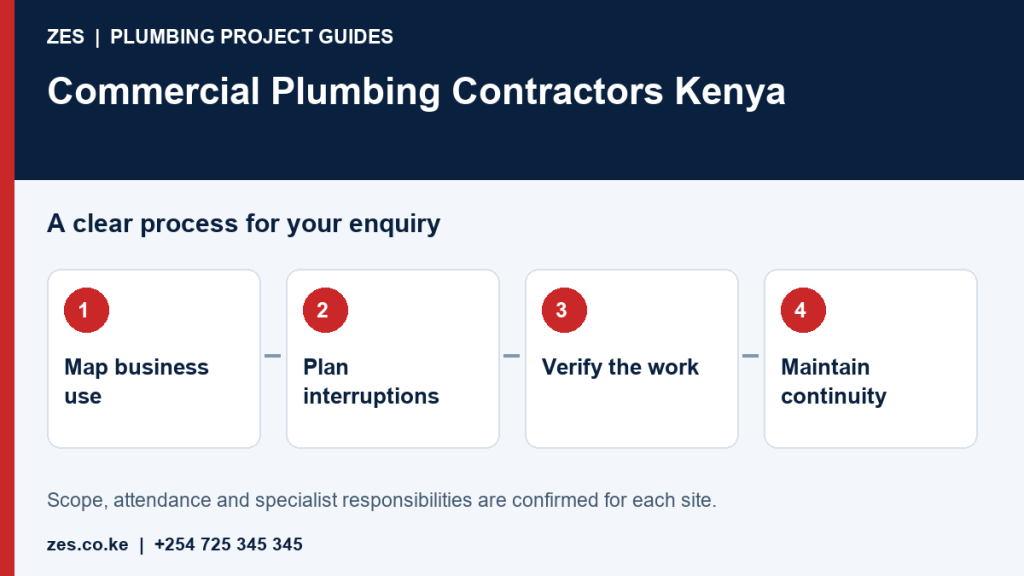
Commercial plumbing contractors in Kenya need to plan around business operations. Offices, restaurants, shops and hospitality premises have different demand peaks and consequences when supply or drainage fails. Procurement should address continuity and maintainability alongside materials and labour. This guide helps owners and facilities teams prepare repairs, alterations and fit-outs. ZES accepts commercial plumbing briefs and confirms the work, specialist interfaces and delivery arrangements suitable for the premises.
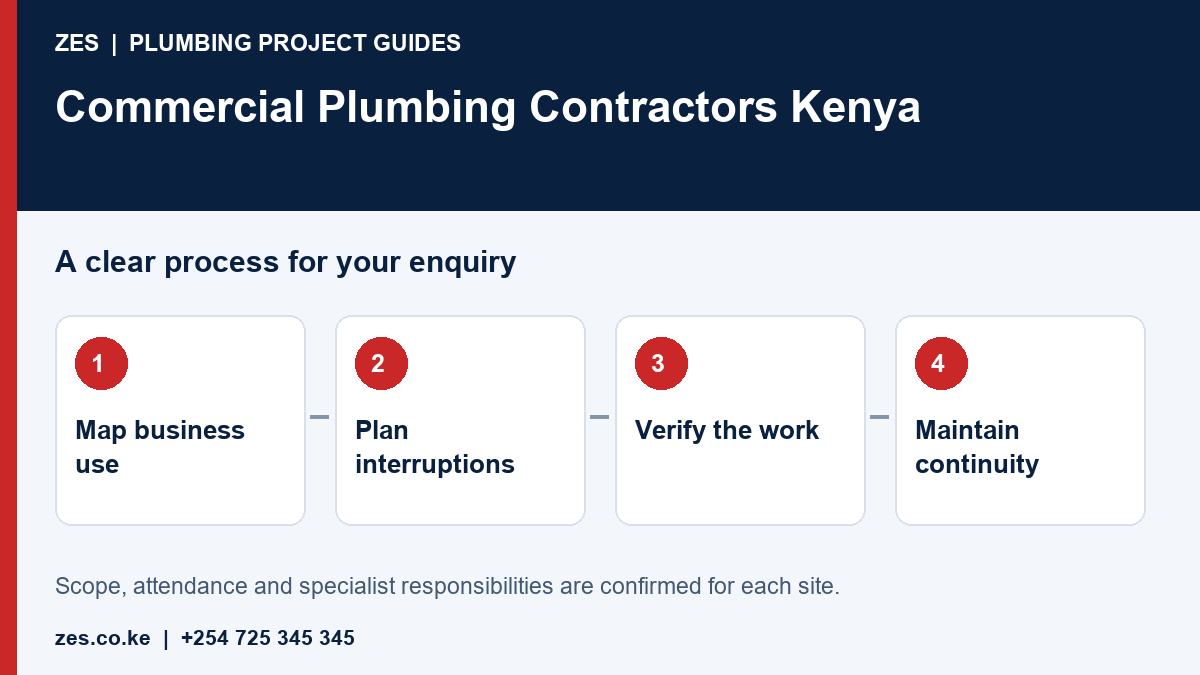
Map business-critical services
List washrooms, kitchens, cleaning points, tenant outlets and equipment relying on water or drainage. Identify the most disruptive interruption periods. Restaurant preparation hours and office occupancy can lead to different working windows. Separate essential restoration from optional upgrades. Record whether pumps, tanks and risers serve other tenants. This operational map helps define zones and temporary arrangements before pricing. A schedule based only on contractor convenience may overlook the business processes the installation is meant to support.
Coordinate with building management
Obtain approvals relevant to shared services, access and alterations. Confirm working hours, deliveries, noise constraints and the site representative. Work inside one unit can affect neighbours through shared supplies and drains. Allocate outage communication and restoration checks. Include ceiling access and reinstatement in the scope. During a fit-out, distinguish building-owner services from tenant responsibilities. Record decisions so the facilities manager, contractor and occupants receive the same information. Clear boundaries reduce disputes about which party should provide an enabling connection or repair.
Plan access for maintenance
Keep valves, inspection points and equipment accessible within the approved layout. A fitting hidden behind permanent joinery can turn a small fault into a closure. Coordinate access panels with design and operations staff. Identify the areas served by valves and update records after changes. Specialist appliances need their manufacturer connection requirements considered. Food-service and other sensitive applications may also need appointed technical review. Installation should support the actual use and cleaning routine while leaving a practical route for servicing and eventual replacement.
Compare complete delivery proposals
Request material and equipment specifications, labour, shutdown planning, testing, documentation and exclusions. Clarify removal of redundant components, waste disposal and reinstatement. Phased mobilisation and restricted hours can affect price. Compare alternatives for compatibility, serviceability and spare parts, as well as initial cost. Establish how hidden conditions and variations are handled. A complete quotation allows management to approve disruption and expenditure together, instead of discovering unresolved supporting works after premises have already closed for installation.
Base acceptance on operation
State what will be demonstrated: fixture function, leak and drainage checks, and any included tank or pump controls. Agree conditions and the person witnessing results. Report unresolved defects before reopening the affected area. Provide valve identification, component information and maintenance instructions appropriate to the scope. Records should identify the work area rather than use a general completion statement. Communicate restored service to those who approved the shutdown. Operational acceptance makes the business impact of remaining defects easier to assess and prioritise.
Maintain the system as use changes
Keep a fault log by location and asset. Investigate increasing consumption, recurring blockages and repeated component failures. Plan visits around use and consequences of interruption. A maintenance agreement should state response terms and whether materials or corrective work are extra. When premises expand or change use, reassess demand and drainage with appropriate professionals. Repeat the useful checks but update the plan as conditions change. A static list copied from the initial installation may no longer cover the building's actual operating needs.
Information to include in your project brief
- Trading and occupancy hours
- Critical fixtures and equipment
- Shared services and landlord approvals
- Permitted interruption and acceptance
Frequently asked questions
Can work proceed while the business remains open?
Some work can be phased or zoned. Safety, access and isolation determine what is practical; agree the method before promising continuity.
Are after-hours visits included?
Only where the appointment or maintenance agreement states the timing and charges.
What should a facilities team send?
Premises use, operating hours, affected areas, drawings, system details, shutdown limits and the intended outcome.
Related plumbing planning guides
- Industrial Plumbing Services Kenya: Factory Water, Drainage and Shutdown Planning
- School Plumbing Contractors Kenya: Water, Washrooms and Maintenance Planning
Discuss your plumbing requirement with ZES
Share the location, property use, symptoms or proposed work, and available drawings or photographs. ZES will review the information and confirm the suitable scope, any assessment arrangements and current attendance availability. Materials, responsibilities, programme and applicable terms are agreed in the written quotation.
Explore ZES plumbing services · Request a plumbing quotation · Call +254 725 345 345