
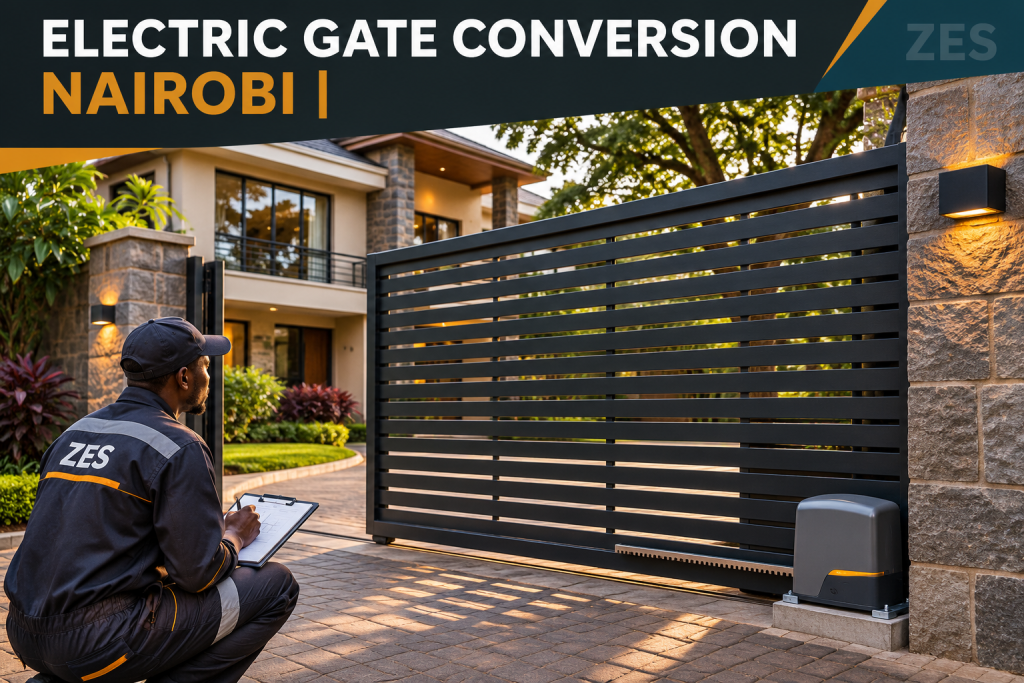
Electric Gate Conversion Nairobi — Assess the condition and movement of the manual gate before choosing an operator or authorising conversion work.
Electric gate conversion means adding powered movement and suitable controls to an existing manual entrance. The first question is whether the existing gate is a sound candidate for conversion. Look at how it moves, the strength of the supporting structure, the site layout and the places people walk or wait. A motor cannot make a worn track, weak pillar or misaligned hinge suitable for automatic use. The installer should assess the complete entrance before choosing the operator and explain what needs to be repaired, retained or replaced.
The conversion quote should identify which parts of the existing gate are retained, which structural work is priced separately, how the gate will be powered and what the contractor will test before handover. If the site needs remotes, an intercom or access credentials, include the visitor and resident procedures in the brief. The examples below illustrate decisions for Nairobi homes, rental compounds, apartments and working premises. They are discussion points for an installer’s site assessment.
Electric Gate Conversion Nairobi: Inspecting the existing gate and its supports
Sliding gate that changes resistance
The gate travels smoothly for part of the opening but catches near the end.
Site information. Describe the location of the resistance and share a photo of the full running surface. Ask the surveyor to note the condition of the existing gate before estimating the cost of powering it. Written assumptions matter when a survey is based mainly on photographs or when another trade is still expected to change the entrance.
Conversion decision. Ask for a mechanical assessment before choosing a motor or rack. Ask for the conversion quotation to show which equipment and work are included, what depends on a site condition and how a variation is agreed.
Acceptance check. Have the operator explain any track or roller work needed to make the entrance suitable. Ask who can approve changes if the physical entrance differs from the initial description. If a condition cannot be tested as part of commissioning, ask the provider to record how it will be checked, by whom and at which stage of the project.
Misaligned double swing leaves
The leaves no longer meet properly and one rubs when opened.
What to inspect. Show both pillars, hinge areas and the condition of the ends of the leaves. Use these details to decide which parts can stay and which need work before the operator is installed. Written assumptions matter when a survey is based mainly on photographs or when another trade is still expected to change the entrance.
Compare the options. Separate hinge, post or frame repair from the scope for installing actuators. Ask for the conversion quotation to show which equipment and work are included, what depends on a site condition and how a variation is agreed.
Handover. Confirm the corrected gate movement and proposed sequence before approving automation. Keep the written findings with the quotation and share them with whoever coordinates the other trades. If a condition cannot be tested as part of commissioning, ask the provider to record how it will be checked, by whom and at which stage of the project.
Sliding gate with no side clearance
The manual entrance opens into space now used for storage.
Prepare for the assessment. Identify the full opening and the space that remains available behind the wall. Ask the installer to set out the proposed changes and the effect on the normal users of the entrance. Written assumptions matter when a survey is based mainly on photographs or when another trade is still expected to change the entrance.
What to agree. Compare an agreed change of use, a modified layout and replacement if the run cannot be cleared. Ask for the conversion quotation to show which equipment and work are included, what depends on a site condition and how a variation is agreed.
What to verify. Ask the installer to confirm the gate travel with the area in its intended daily configuration. Have the worker responsible for this item confirm it with the property representative before acceptance. If a condition cannot be tested as part of commissioning, ask the provider to record how it will be checked, by whom and at which stage of the project.
Swing gate on a rising driveway
The owner wants to retain outward or inward movement despite changes in levels.
What to show the installer. Photograph the driveway, pavement and existing line of movement. Compare all offers on the same site conditions and the same definition of a completed entrance. Written assumptions matter when a survey is based mainly on photographs or when another trade is still expected to change the entrance.
Review the proposal. Have the installer assess full swing, traffic clearance and support before proposing a layout. Ask for the conversion quotation to show which equipment and work are included, what depends on a site condition and how a variation is agreed.
Follow-up. Agree where vehicles and pedestrians will be while the gate opens and closes. A handover record should allow a future technician to see what was added and what was retained. If a condition cannot be tested as part of commissioning, ask the provider to record how it will be checked, by whom and at which stage of the project.
Solid gate in a windy location
The leaves move differently after strong gusts and the owner suspects worn hinges.
Assessment evidence. Explain the behaviour on a normal day and in gusts without trying to reproduce a hazardous movement. Make this decision before placing equipment orders so the model and associated work can be reviewed together. Written assumptions matter when a survey is based mainly on photographs or when another trade is still expected to change the entrance.
Decide before ordering. Request a structural and mechanical assessment of the existing leaves and support. Ask for the conversion quotation to show which equipment and work are included, what depends on a site condition and how a variation is agreed.
What to confirm. Ask whether repair, modification or replacement is required before choosing equipment. Provide a reliable way to contact the support provider and explain who can authorise service work. If a condition cannot be tested as part of commissioning, ask the provider to record how it will be checked, by whom and at which stage of the project.
Pillars with visible damage
The manual gate still works but cracking or movement has been noticed near a support.
Site information. Give the contractor photos and any history of recent movement or masonry work. Ask the surveyor to note the condition of the existing gate before estimating the cost of powering it. Written assumptions matter when a survey is based mainly on photographs or when another trade is still expected to change the entrance.
Conversion decision. Ask the appropriate trade to assess the support before motor or bracket fitting is considered. Ask for the conversion quotation to show which equipment and work are included, what depends on a site condition and how a variation is agreed.
Acceptance check. Require responsibility for repair and reinspection to be clear in the proposal. Ask who can approve changes if the physical entrance differs from the initial description. If a condition cannot be tested as part of commissioning, ask the provider to record how it will be checked, by whom and at which stage of the project.
Gate repaired after a vehicle impact
The original leaf was welded back into shape after a collision.
What to inspect. Provide the repair history and note any difference in the gate’s travel. Use these details to decide which parts can stay and which need work before the operator is installed. Written assumptions matter when a survey is based mainly on photographs or when another trade is still expected to change the entrance.
Compare the options. Have the installer establish whether the frame and surroundings can support conversion. Ask for the conversion quotation to show which equipment and work are included, what depends on a site condition and how a variation is agreed.
Handover. Ask how the cause of the impact will be considered in the revised traffic plan. Keep the written findings with the quotation and share them with whoever coordinates the other trades. If a condition cannot be tested as part of commissioning, ask the provider to record how it will be checked, by whom and at which stage of the project.
Driveway track affected by drainage
The entrance picks up soil or standing water after a heavy downpour.
Prepare for the assessment. Show the sections that become blocked and the timing of any planned paving work. Ask the installer to set out the proposed changes and the effect on the normal users of the entrance. Written assumptions matter when a survey is based mainly on photographs or when another trade is still expected to change the entrance.
What to agree. Ask how civil improvements and gate preparation should be sequenced. Ask for the conversion quotation to show which equipment and work are included, what depends on a site condition and how a variation is agreed.
What to verify. Do not accept a conversion scope that leaves unclear who owns the drainage fix. Have the worker responsible for this item confirm it with the property representative before acceptance. If a condition cannot be tested as part of commissioning, ask the provider to record how it will be checked, by whom and at which stage of the project.
Decorative finish that must be retained
A homeowner wants to keep the gate appearance when adding powered equipment.
What to show the installer. Identify visible surfaces the owner wants preserved and share model or fabrication details if available. Compare all offers on the same site conditions and the same definition of a completed entrance. Written assumptions matter when a survey is based mainly on photographs or when another trade is still expected to change the entrance.
Review the proposal. Ask which parts may be modified and what an alternative scope would change visually. Ask for the conversion quotation to show which equipment and work are included, what depends on a site condition and how a variation is agreed.
Follow-up. Confirm equipment location and any permitted finish changes before work begins. A handover record should allow a future technician to see what was added and what was retained. If a condition cannot be tested as part of commissioning, ask the provider to record how it will be checked, by whom and at which stage of the project.
Uneven or changed ground level
The opening was resurfaced after the original gate was installed.
Assessment evidence. Share old drawings and photos of the finished levels next to the entrance. Make this decision before placing equipment orders so the model and associated work can be reviewed together. Written assumptions matter when a survey is based mainly on photographs or when another trade is still expected to change the entrance.
Decide before ordering. Check whether the changed driveway alters travel, clearance or mounting assumptions. Ask for the conversion quotation to show which equipment and work are included, what depends on a site condition and how a variation is agreed.
What to confirm. Reconfirm measurements after any remaining surfaces are completed. Provide a reliable way to contact the support provider and explain who can authorise service work. If a condition cannot be tested as part of commissioning, ask the provider to record how it will be checked, by whom and at which stage of the project.
Planning use, power and access controls
Home with different access needs
One resident usually drives in while another often walks to the shops.
Site information. Map separate vehicle and pedestrian movements and tell the installer where each person waits. Ask the surveyor to note the condition of the existing gate before estimating the cost of powering it. Written assumptions matter when a survey is based mainly on photographs or when another trade is still expected to change the entrance.
Conversion decision. Consider how the conversion interacts with the existing pedestrian route. Ask for the conversion quotation to show which equipment and work are included, what depends on a site condition and how a variation is agreed.
Acceptance check. Agree the appropriate procedure for both users before hardware is selected. Ask who can approve changes if the physical entrance differs from the initial description. If a condition cannot be tested as part of commissioning, ask the provider to record how it will be checked, by whom and at which stage of the project.
Apartment with a busy approach
Residents queue at the entrance during the evening and visitors use the same lane.
What to inspect. Observe where drivers wait and how a visitor gets a response. Use these details to decide which parts can stay and which need work before the operator is installed. Written assumptions matter when a survey is based mainly on photographs or when another trade is still expected to change the entrance.
Compare the options. Ask which parts of the current delay are caused by the gate and which by approval or site layout. Ask for the conversion quotation to show which equipment and work are included, what depends on a site condition and how a variation is agreed.
Handover. Test the approved flow with residents, the guard and site management. Keep the written findings with the quotation and share them with whoever coordinates the other trades. If a condition cannot be tested as part of commissioning, ask the provider to record how it will be checked, by whom and at which stage of the project.
Rental compound needing consent
A tenant wants a powered entrance but the owner controls alterations.
Prepare for the assessment. Obtain approvals for structural, electrical and access-control work and identify the equipment owner. Ask the installer to set out the proposed changes and the effect on the normal users of the entrance. Written assumptions matter when a survey is based mainly on photographs or when another trade is still expected to change the entrance.
What to agree. Clarify responsibility for recurring charges, repairs and handing back access at the end of the tenancy. Ask for the conversion quotation to show which equipment and work are included, what depends on a site condition and how a variation is agreed.
What to verify. Keep signed scope and equipment documentation with the property records. Have the worker responsible for this item confirm it with the property representative before acceptance. If a condition cannot be tested as part of commissioning, ask the provider to record how it will be checked, by whom and at which stage of the project.
Old intercom and new gate controls
The owner wants to retain visitor communication while adding an electric operator.
What to show the installer. Provide model numbers and describe which devices are expected to release the gate. Compare all offers on the same site conditions and the same definition of a completed entrance. Written assumptions matter when a survey is based mainly on photographs or when another trade is still expected to change the entrance.
Review the proposal. Ask for a compatibility assessment and quote separate work if an existing device must change. Ask for the conversion quotation to show which equipment and work are included, what depends on a site condition and how a variation is agreed.
Follow-up. Test visitor communication and the agreed vehicle entry process together. A handover record should allow a future technician to see what was added and what was retained. If a condition cannot be tested as part of commissioning, ask the provider to record how it will be checked, by whom and at which stage of the project.
Limited power at the entrance
A gate is far from the building and has no confirmed suitable supply.
Assessment evidence. Give the installer and electrician the location, expected operating hours and existing electrical information. Make this decision before placing equipment orders so the model and associated work can be reviewed together. Written assumptions matter when a survey is based mainly on photographs or when another trade is still expected to change the entrance.
Decide before ordering. Compare the cost and responsibilities for a suitable supply and any backup arrangement. Ask for the conversion quotation to show which equipment and work are included, what depends on a site condition and how a variation is agreed.
What to confirm. Make the required electrical work visible before approving the conversion date. Provide a reliable way to contact the support provider and explain who can authorise service work. If a condition cannot be tested as part of commissioning, ask the provider to record how it will be checked, by whom and at which stage of the project.
Power interruptions in an occupied compound
The gate is the main vehicle access and outages occur around peak arrival.
Site information. Record outage timing, estimated use and which controls are needed to admit vehicles. Ask the surveyor to note the condition of the existing gate before estimating the cost of powering it. Written assumptions matter when a survey is based mainly on photographs or when another trade is still expected to change the entrance.
Conversion decision. Ask for a backup assessment and approved access procedure rather than a headline runtime promise. Ask for the quotation to show which equipment and work are included, what depends on a site condition and how a variation is agreed.
Acceptance check. Have the installer demonstrate normal operation and the agreed fallback to authorised staff. Ask who can approve changes if the physical entrance differs from the initial description. If a condition cannot be tested as part of commissioning, ask the provider to record how it will be checked, by whom and at which stage of the project.
Remotes already owned by residents
The compound wants to keep earlier remotes from a different system.
What to inspect. Ask management for the existing equipment models and the number of legitimate users. Use these details to decide which parts can stay and which need work before the operator is installed. Written assumptions matter when a survey is based mainly on photographs or when another trade is still expected to change the entrance.
Compare the options. Verify compatibility and document separately any remotes that must be replaced or reissued. Ask for the quotation to show which equipment and work are included, what depends on a site condition and how a variation is agreed.
Handover. Keep an owner-controlled record of approved devices after commissioning. Keep the written findings with the quotation and share them with whoever coordinates the other trades. If a condition cannot be tested as part of commissioning, ask the provider to record how it will be checked, by whom and at which stage of the project.
Phone access requested alongside remotes
A household wants remote arrival approval on some days and standard remotes on others.
Prepare for the assessment. Explain which users should have the app and whether the entrance has dependable connectivity. Ask the installer to set out the proposed changes and the effect on the normal users of the entrance. Written assumptions matter when a survey is based mainly on photographs or when another trade is still expected to change the entrance.
What to agree. Ask the installer to compare local and remote options with their support and outage implications. Ask for the quotation to show which equipment and work are included, what depends on a site condition and how a variation is agreed.
What to verify. Verify each authorised usage case while retaining the approved safety functions. Have the worker responsible for this item confirm it with the property representative before acceptance. If a condition cannot be tested as part of commissioning, ask the provider to record how it will be checked, by whom and at which stage of the project.
Different people hold approval for the work
A caretaker sees the daily problems but the owner approves expenses.
What to show the installer. Bring both people into the survey and collect previous invoices or incident reports. Compare all offers on the same site conditions and the same definition of a completed entrance. Written assumptions matter when a survey is based mainly on photographs or when another trade is still expected to change the entrance.
Review the proposal. Separate necessary repairs, optional access upgrades and decisions about the existing gate design. Ask for the quotation to show which equipment and work are included, what depends on a site condition and how a variation is agreed.
Follow-up. Assign a person who can accept the work and keep the gate documentation. A handover record should allow a future technician to see what was added and what was retained. If a condition cannot be tested as part of commissioning, ask the provider to record how it will be checked, by whom and at which stage of the project.
Office parking entrance
Staff arrive early, visitors report to a guard and a separate tenant uses the car park.
Assessment evidence. List the user groups and describe when their access overlaps. Make this decision before placing equipment orders so the model and associated work can be reviewed together. Written assumptions matter when a survey is based mainly on photographs or when another trade is still expected to change the entrance.
Decide before ordering. Clarify which vehicles will be admitted by existing staff credentials and which need guard approval. Ask for the quotation to show which equipment and work are included, what depends on a site condition and how a variation is agreed.
What to confirm. Demonstrate the approved process during handover and agree who can change permissions. Provide a reliable way to contact the support provider and explain who can authorise service work. If a condition cannot be tested as part of commissioning, ask the provider to record how it will be checked, by whom and at which stage of the project.
Comparing scopes and accepting the conversion
Retrofit versus full replacement
Two providers disagree about whether the current frame and supports are suitable.
Site information. Request condition findings and list which parts each proposal retains. Ask the surveyor to note the condition of the existing gate before estimating the cost of powering it. Written assumptions matter when a survey is based mainly on photographs or when another trade is still expected to change the entrance.
Conversion decision. Compare repair plus automation with replacement using the same movement, access and support requirements. Ask for the quotation to show which equipment and work are included, what depends on a site condition and how a variation is agreed.
Acceptance check. Confirm the assumptions that would change cost if concealed conditions differ. Ask who can approve changes if the physical entrance differs from the initial description. If a condition cannot be tested as part of commissioning, ask the provider to record how it will be checked, by whom and at which stage of the project.
Owner-supplied motor
The owner has bought an operator after comparing online prices.
What to inspect. Bring the model documentation and explain whether the product can be returned. Use these details to decide which parts can stay and which need work before the operator is installed. Written assumptions matter when a survey is based mainly on photographs or when another trade is still expected to change the entrance.
Compare the options. Ask the installer to assess suitability and identify who supports equipment versus labour. Ask for the quotation to show which equipment and work are included, what depends on a site condition and how a variation is agreed.
Handover. Get written agreement on compatibility and warranty before the installation date. Keep the written findings with the quotation and share them with whoever coordinates the other trades. If a condition cannot be tested as part of commissioning, ask the provider to record how it will be checked, by whom and at which stage of the project.
Fabrication by one firm and automation by another
The person repairing the gate does not supply the operator.
Prepare for the assessment. Ask both contractors to agree the required alignment, support and mounting interfaces. Ask the installer to set out the proposed changes and the effect on the normal users of the entrance. Written assumptions matter when a survey is based mainly on photographs or when another trade is still expected to change the entrance.
What to agree. Identify who signs off the mechanical work before the motor is brought to site. Ask for the quotation to show which equipment and work are included, what depends on a site condition and how a variation is agreed.
What to verify. Record who owns each handoff if adjustments are still needed during commissioning. Have the worker responsible for this item confirm it with the property representative before acceptance. If a condition cannot be tested as part of commissioning, ask the provider to record how it will be checked, by whom and at which stage of the project.
Partial conversion during renovation
The motor must be fitted after paving and another contractor will install a new wall.
What to show the installer. Share the improvement programme and identify details that are still provisional. Compare all offers on the same site conditions and the same definition of a completed entrance. Written assumptions matter when a survey is based mainly on photographs or when another trade is still expected to change the entrance.
Review the proposal. Arrange a joint survey where dimensions, access and electrical routes depend on changing work. Ask for the quotation to show which equipment and work are included, what depends on a site condition and how a variation is agreed.
Follow-up. Include an approval step after the relevant finishes are in place. A handover record should allow a future technician to see what was added and what was retained. If a condition cannot be tested as part of commissioning, ask the provider to record how it will be checked, by whom and at which stage of the project.
Access during the work
The property has only one practical vehicle entrance.
Assessment evidence. Explain when access is essential and which temporary arrangements are permitted by management. Make this decision before placing equipment orders so the model and associated work can be reviewed together. Written assumptions matter when a survey is based mainly on photographs or when another trade is still expected to change the entrance.
Decide before ordering. Ask the contractor to propose a work sequence and identify any period when the entrance cannot operate. Ask for the quotation to show which equipment and work are included, what depends on a site condition and how a variation is agreed.
What to confirm. Communicate the approved arrangements to occupiers before work starts. Provide a reliable way to contact the support provider and explain who can authorise service work. If a condition cannot be tested as part of commissioning, ask the provider to record how it will be checked, by whom and at which stage of the project.
Electrical and mechanical costs quoted separately
The headline price lists operator fitting and excludes other site work.
Site information. Collect equipment, fabrication, power, access control and civil items in one comparison sheet. Ask the surveyor to note the condition of the existing gate before estimating the cost of powering it. Written assumptions matter when a survey is based mainly on photographs or when another trade is still expected to change the entrance.
Conversion decision. Ask bidders to quote against the same outcome and identify each exclusion. Ask for the quotation to show which equipment and work are included, what depends on a site condition and how a variation is agreed.
Acceptance check. Approve changes only after the responsible provider and costs are clear. Ask who can approve changes if the physical entrance differs from the initial description. If a condition cannot be tested as part of commissioning, ask the provider to record how it will be checked, by whom and at which stage of the project.
Testing with the property’s normal users
The gate was demonstrated to the owner but a guard will operate it every day.
What to inspect. Arrange handover with the people who will use the controls and report faults. Use these details to decide which parts can stay and which need work before the operator is installed. Written assumptions matter when a survey is based mainly on photographs or when another trade is still expected to change the entrance.
Compare the options. Include the normal visitor, delivery and outage scenarios agreed at the survey. Ask for the quotation to show which equipment and work are included, what depends on a site condition and how a variation is agreed.
Handover. Leave simple written operating instructions and escalation contacts with authorised staff. Keep the written findings with the quotation and share them with whoever coordinates the other trades. If a condition cannot be tested as part of commissioning, ask the provider to record how it will be checked, by whom and at which stage of the project.
Receiving the completed asset record
Several vendors fitted parts and the facility needs a single reference for support.
Prepare for the assessment. Ask for model details, manuals, warranty terms and the commissioning record. Ask the installer to set out the proposed changes and the effect on the normal users of the entrance. Written assumptions matter when a survey is based mainly on photographs or when another trade is still expected to change the entrance.
What to agree. Keep the entrance information together and identify who can approve later changes. Ask for the quotation to show which equipment and work are included, what depends on a site condition and how a variation is agreed.
What to verify. Confirm the record is available to site staff without exposing private access information. Have the worker responsible for this item confirm it with the property representative before acceptance. If a condition cannot be tested as part of commissioning, ask the provider to record how it will be checked, by whom and at which stage of the project.
Planning preventive checks after conversion
The original manual gate did not have a formal maintenance schedule.
What to show the installer. Ask the installer to recommend inspection arrangements based on equipment, use and environment. Compare all offers on the same site conditions and the same definition of a completed entrance. Written assumptions matter when a survey is based mainly on photographs or when another trade is still expected to change the entrance.
Review the proposal. Agree who reports unusual movement and how requests for service are recorded. Ask for the quotation to show which equipment and work are included, what depends on a site condition and how a variation is agreed.
Follow-up. Keep dates and findings so future issues can be compared with earlier observations. A handover record should allow a future technician to see what was added and what was retained. If a condition cannot be tested as part of commissioning, ask the provider to record how it will be checked, by whom and at which stage of the project.
Changing the entrance after handover
The compound expects new traffic or building changes a year after conversion.
Assessment evidence. Record the planned works and show how they might affect the usable opening or access procedures. Make this decision before placing equipment orders so the model and associated work can be reviewed together. Written assumptions matter when a survey is based mainly on photographs or when another trade is still expected to change the entrance.
Decide before ordering. Review gate operation and site risks before adding, moving or removing controls. Ask for the quotation to show which equipment and work are included, what depends on a site condition and how a variation is agreed.
What to confirm. Update operating instructions and service records if the approved arrangement changes. Provide a reliable way to contact the support provider and explain who can authorise service work. If a condition cannot be tested as part of commissioning, ask the provider to record how it will be checked, by whom and at which stage of the project.
What to send for a gate conversion survey
Share a location pin and photographs of the full opening, both sides of the gate, the space it occupies when open and any places people walk beside it. Describe how it moves and what work has already been done. State whether you want to add an intercom, a backup power arrangement or another way to approve visitors. Mention access or drilling restrictions if the site is shared or rented.
What should the conversion quote identify?
Ask for repairs and replacement parts to be itemised and attributed to a named contractor. Clarify who handles power, mounting, access devices, safety assessment and commissioning. For technical context, the UK Health and Safety Executive’s powered-gate guidance explains why converted gates need an assessment of the whole installation. Ask your installer to confirm the applicable requirements for the Kenya project.
In a conversion quotation, separate the changes needed to make the existing gate suitable from the cost of the operator. For a manual gate that still needs repairs, ask who completes those repairs and who verifies the result before the operator is fitted. At the conversion handover, record the operator model, the equipment retained and the conditions under which the gate was tested.
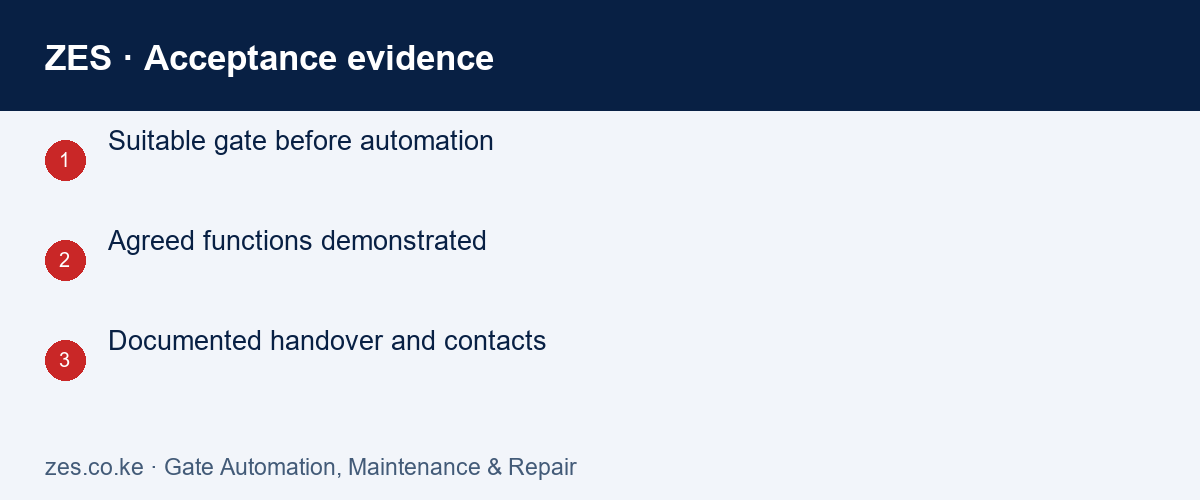
Request a ZES site assessment
Contact ZES with the property location and entrance details. Ask the team to confirm the survey scope, availability and compatibility before work is booked. See the ZES automatic gate installation guide for Nairobi for related information.