
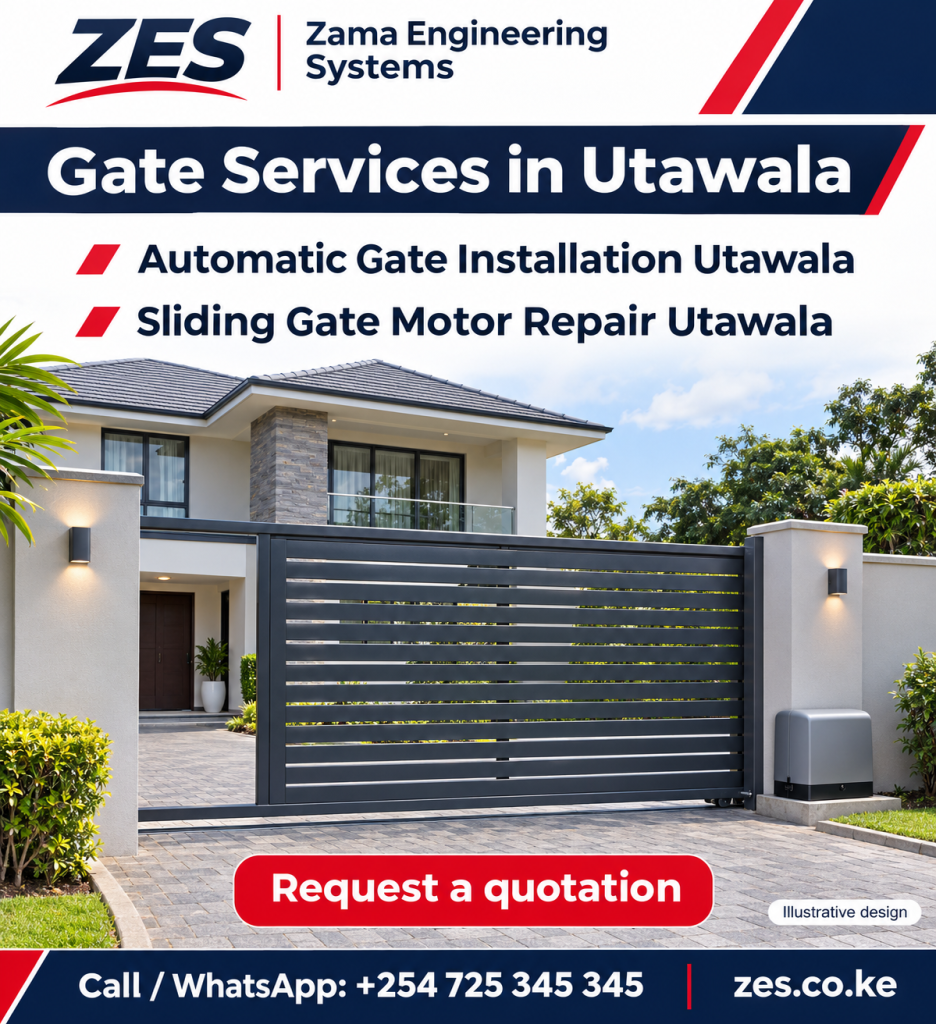
Electric Gate Installation Utawala — planning, quotation and owner guidance
An electric gate is most useful when it feels like a natural part of the property: arrive, open the entrance, drive in and control access without unnecessary effort. Achieving that result starts before the motor is fitted.
For electric gate installation in Utawala, Zama Engineering Systems (ZES) helps customers define the entrance, supporting works and controls as one project. Whether you are finishing a new home or upgrading an established property, the goal is a complete installation with clear responsibilities and practical day-to-day operation.
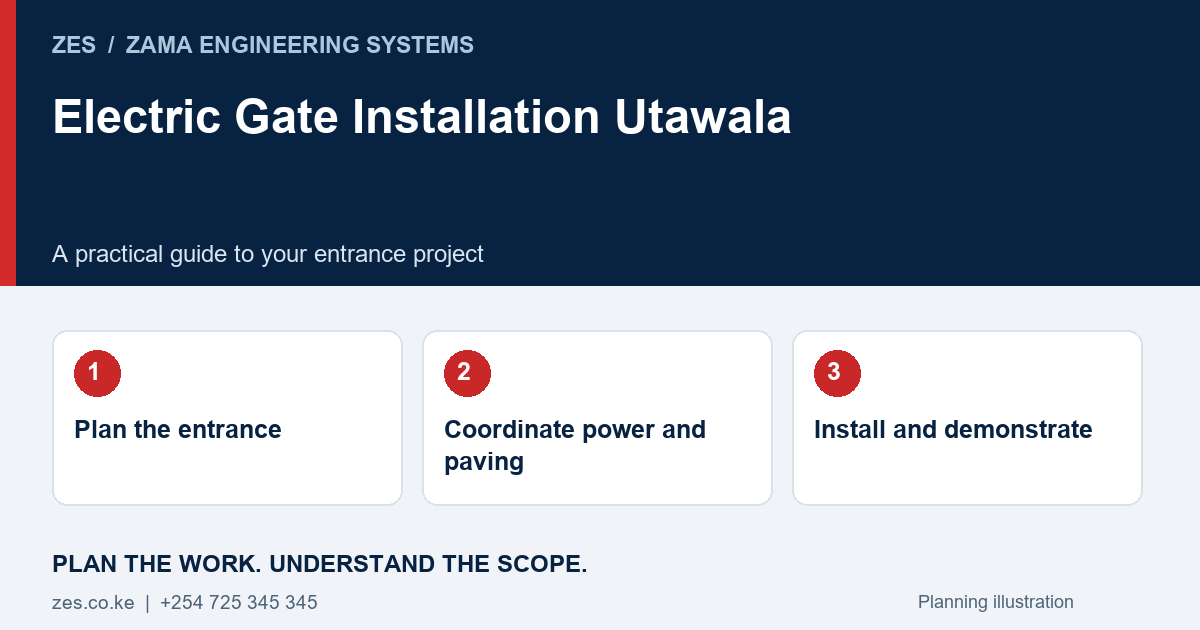
Electric gate installation Utawala: where do you start?
Start with the gate you have or the entrance you intend to build. The available space helps determine whether sliding or swing operation is appropriate.
A sliding gate needs a suitable area beside the opening for its travel. A swing gate needs clearance for the leaves. Consider parking positions, pedestrian movement and where visitors will wait. These details are difficult to resolve after the gate and driveway have been finished.
Photographs, a simple site sketch and approximate dimensions can support the first conversation. Final equipment selection should follow verified measurements and assessment.
New build or retrofit?
For a new build, automation can be coordinated with gate fabrication, wall construction and driveway finishes. Discuss the required equipment positions and routes while changes are still straightforward.
For an existing entrance, the first task is to assess what can be retained. The gate may be suitable for automation after preparation, or it may need mechanical work. Existing power provision and controls also need to be reviewed.
Do not assume an older manual gate must be discarded. Equally, do not assume a new gate is automatically ready for an operator. Suitability depends on its actual construction and movement.
Plan electrical work before final finishes
An electric gate needs appropriate electrical provision. Tell the assessor where the intended supply is located and which parts of the route are already built or paved.
The technical design and connection work belong with competent personnel. As the customer, you should know whether that work is included in the gate quotation or assigned to another contractor.
If a driveway must be opened for the work, agree who restores it. If paving is still pending, coordinate routes and equipment positions before it is completed. This can prevent the frustration of disturbing newly finished surfaces.
Decide how people will use the gate
The right control arrangement depends on the users. A household may primarily need remotes. An entrance serving several occupants or regular visitors may benefit from an intercom or managed access options.
| Question | Decision it helps you make |
|---|---|
| Who uses the gate daily? | Quantity and type of user controls |
| How do visitors announce themselves? | Intercom or other communication arrangement |
| Who manages access changes? | Responsibility for users and lost devices |
| What happens during an outage? | Backup and authorised release requirements |
| Are more features planned later? | Useful provision during the initial work |
If you want connected controls, ask about network requirements and account administration. An appealing feature should still be practical when the usual phone or connection is unavailable.
What is included in the installed cost?
Electric gate installation costs vary with the gate, operator, preparation, power work and controls. The neighbourhood name does not establish a reliable price for those different requirements.
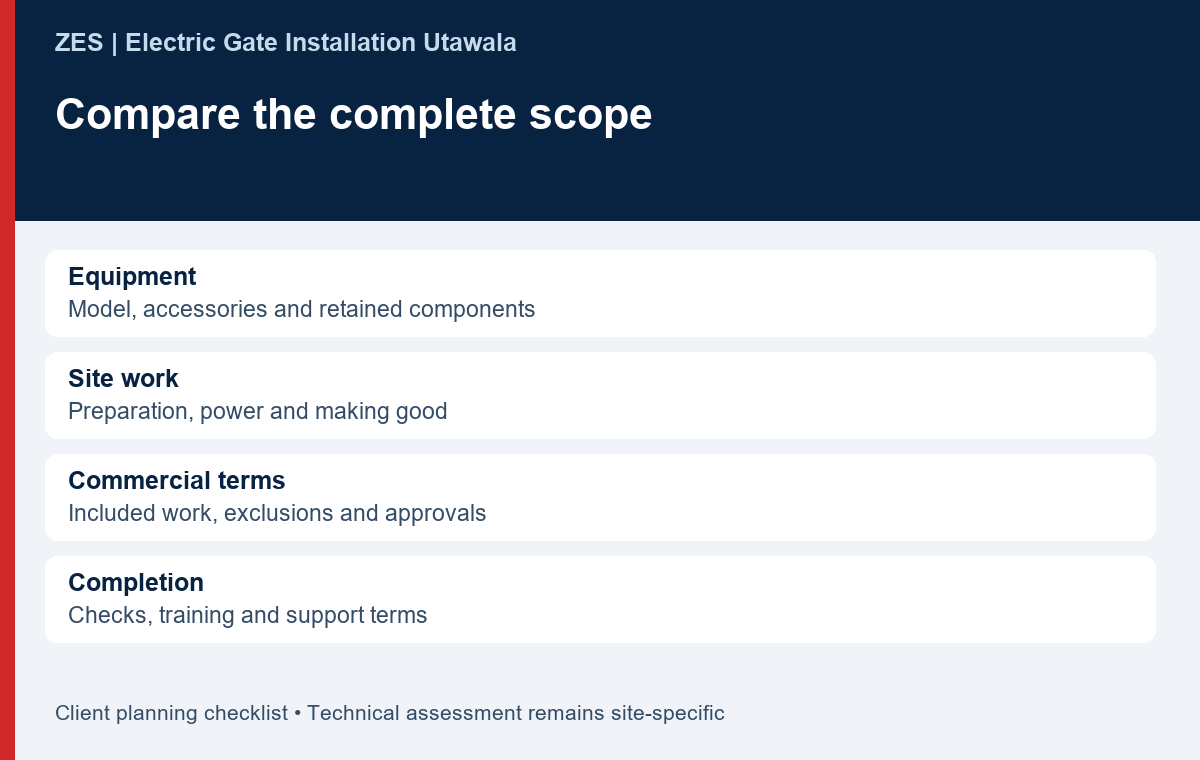
Ask for an itemised quotation. It should identify whether fabrication is included, which mechanical repairs are needed, what equipment will be supplied and who handles electrical and civil work.
The proposal should also cover commissioning, user guidance and any making good. Clarify taxes and exclusions before comparing totals. The ZES electric gate installation guide provides additional context for comparing complete scopes.
A practical installation sequence
The work normally needs coordinated stages: assessment, agreed design and quotation, site preparation, equipment installation and commissioning. The exact schedule depends on the project.
A new-build client should tell the installer when the gate, power and driveway will be ready. A retrofit client should discuss how access will be managed while work takes place. If several contractors are involved, one contact should coordinate decisions.
Changes to gate dimensions or finished levels should be communicated before installation proceeds. An updated drawing or written scope is more useful than relying on separate verbal instructions.
Handover: make sure you can operate what you bought
At completion, ask for a demonstration of normal opening and closing, the agreed user controls and the applicable outage procedure. The responsible installer should complete the relevant checks before normal use.
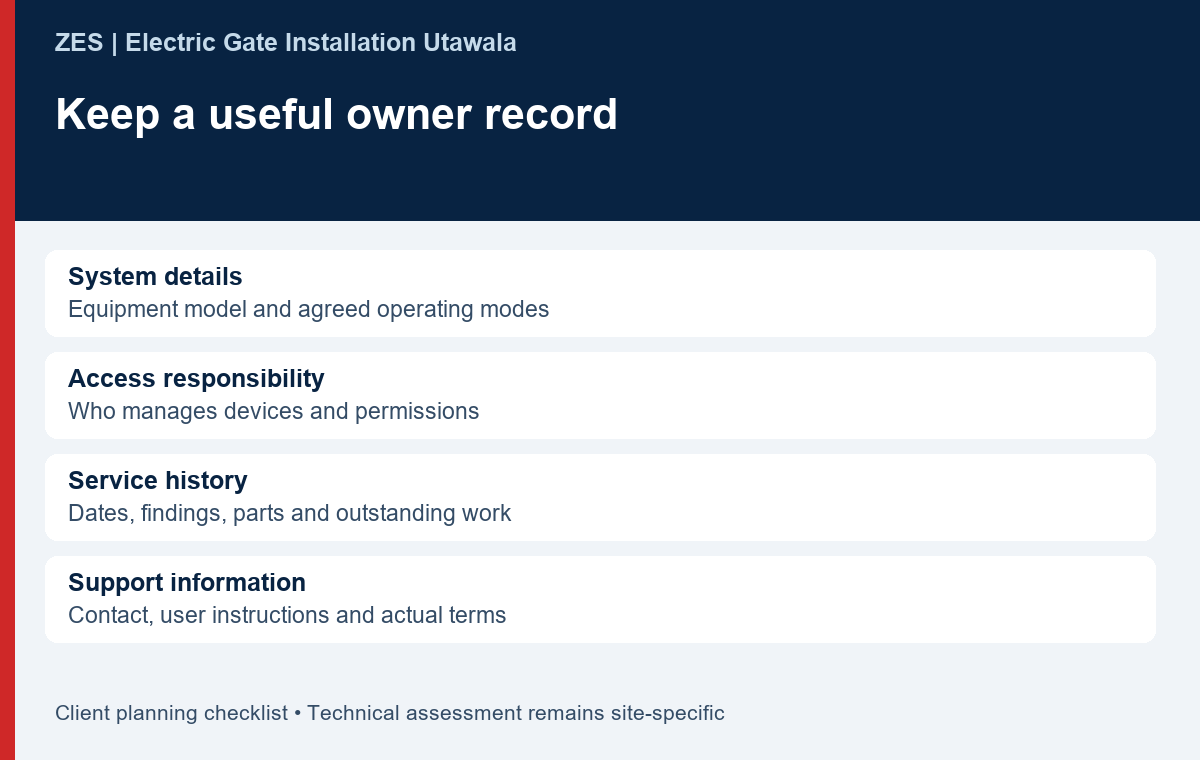
Keep the equipment details, user instructions and release keys. Confirm who holds administrative access for connected systems. Ask for the actual warranty and support terms in writing, including how to report a fault.
Frequently asked questions
Is gate fabrication included?
Only when it is part of the agreed quotation. Specify whether you need automation for an existing gate or a project that includes supplying the gate.
Can backup power be included?
Discuss the requirement during equipment selection. The proposal should explain the compatible arrangement and its limitations.
Can installation happen after paving?
It may be possible, but assessment is needed to determine the required routes and reinstatement. Early coordination is preferable where you still control the building schedule.
Seven easy checks before starting an electric gate installation
A gate installation is easier to manage when the supporting work and owner decisions are clear. These checks help you prepare a project brief and compare the proposal without attempting technical design yourself.
1. Agree the entrance layout before fabrication
Show where vehicles stop, turn and park. Include the space visitors use when they need to contact someone inside. The electric gate arrangement should fit those movements rather than force drivers to improvise around it.
Compare sliding and swing options against the actual available space. Ask the assessor to explain the complete travel or swept area, including the position when the gate is fully open.
Add pedestrian access and nearby structures to the plan. An entrance may look wide enough in a photograph while other features affect its practical use. Final measurements and design decisions need proper assessment.
If the gate is not yet built, share the agreed layout with the fabricator. Coordination before construction is more straightforward than changing completed steelwork or finishes. Keep the approved arrangement with the project documents so later decisions use the same information.
2. Identify what the existing gate needs
For a retrofit, describe the gate’s condition and any difficulty with movement. Mention scraping, unusual noise, impacts or earlier repairs. These observations help the assessor decide what to inspect.
Ask the proposal to distinguish retained components from required preparation. A gate installation may involve automation only on a suitable entrance, or it may need mechanical work first.
Do not assume a new motor resolves every existing problem. Equally, do not assume the whole gate must be replaced. The assessed condition and intended equipment should guide that decision.
If another contractor handles preparation, agree who confirms it is ready. An electric gate project can lose time when equipment arrives before supporting work is complete. A defined readiness point gives the owner and installer a practical way to coordinate the stages.
3. Assign electrical provision to a named responsibility
Tell the assessor where the intended supply is located and what lies between it and the entrance. Existing paving, walls and planned building work can affect the scope.
The appropriate electrical design, protection and connection work require competent assessment. The customer’s task is to ensure that the quotation includes or clearly assigns that work.
Ask whether the electric gate installer supplies the electrical provision or expects it from another contractor. If it is separate, establish the information required and the point at which completion is checked.
Avoid selecting cable sizes or protection from a generic online example. The actual project needs its own design. Clear responsibility matters more to the purchasing decision than memorising technical specifications that may not apply to your property.
4. Coordinate routes, levels and making good
If the driveway is unfinished, discuss gate installation routes and equipment positions before paving. If it is already complete, ask what disturbance the proposed work requires and who restores it.
Share any planned changes to finished levels. Alterations after equipment positions are agreed may need the installer’s review. Keep the gate contractor and paving contractor informed rather than allowing each to work from a different assumption.
Describe observed water flow and areas where debris gathers. These are useful site facts for the assessment, without assuming every Utawala property has the same conditions.
Record responsibility for bases, routes and reinstatement. The electric gate quotation should lead to an understandable finished result, including the supporting work. An attractive equipment installation can still leave an owner dissatisfied if necessary finishing work was never included or assigned.
5. Select controls that match daily life
Count the regular users and decide how visitors will announce themselves. This helps establish the required remotes and whether an intercom or other control arrangement would be useful.
For connected features, ask who owns the account, what network is required and whether there are recurring charges. Identify an alternative access arrangement for situations where the usual phone or connection is unavailable.
Discuss power interruption requirements during equipment selection. The proposal should explain any included backup and its documented limitations. Authorised manual release and user guidance also belong in the handover discussion.
An electric gate should be convenient for the people who operate it, not just impressive during a demonstration. Choose features whose purpose and administration are clear. Keep the quantity and type of supplied controls in the written scope.
6. Compare the complete project cost
Ask for gate fabrication, mechanical preparation, automation equipment, electrical work, controls and finishing to be identified separately where relevant. Some projects need all of those elements; others do not.
A motor package price is not the same as the cost of a complete gate installation. Clarify what the owner must arrange outside the supplier’s quotation before comparing totals.
Ask about assessment charges, taxes, payment milestones and provisional items. If a condition found during work could change the price, agree how that change will be documented and authorised.
Where the budget requires phases, keep the first stage complete and usable. Discuss later convenience features separately from required supporting work. A clear scope helps you make a realistic decision without removing an item that another part of the electric gate installation depends on.
7. Define completion and owner training
Agree the functions that will be demonstrated at handover. Include the supplied controls, relevant operating modes and the documented procedure for an outage.
The responsible installer should complete the applicable commissioning and protective checks. Do not use a person or vehicle to test an uncertain response. Ask for completed work and any outstanding recommendations to be recorded.
Collect model information, user instructions, release keys and support contacts. Connected accounts and administrative permissions should be assigned to the appropriate property contact.
Keep the gate installation record available for future service. When parking, landscaping, building work or the user population changes, review whether the entrance arrangement needs attention. Ownership continues after installation, and clear records make later decisions easier.
A new-build planning example
Imagine a homeowner preparing to pave a driveway while the entrance gate is still being fabricated. Automation is wanted, but no one has agreed the equipment position or electrical route. This is an illustrative scenario, not a report of a ZES project.
The useful next step is a coordinated assessment. The fabricator, installer and responsible building contractor can identify the decisions that must be settled before finishing work.
The gate installation quotation can then distinguish the equipment and installation from supporting work supplied elsewhere. The owner knows what must be ready and who is responsible.
This approach does not guarantee that every later change disappears. It gives the project a shared basis for dealing with changes. An electric gate becomes part of the completed property rather than an addition that forces avoidable alterations immediately after paving.
A retrofit planning example
An established property may already have a manual gate, a finished driveway and a preferred place for vehicles to wait. The owner wants convenient remote access without unnecessary disruption.
The assessment should establish whether the existing gate is suitable, what preparation is needed and how supporting work can be carried out. Photographs can help the first discussion, but they do not establish the final scope.
Ask the proposal to identify disturbance and making good. If a particular finish is important, communicate that before work begins so the responsible contractor can address it in the scope.
The aim is an electric gate installation that respects the existing property while meeting the assessed requirements. Retaining a component is useful where appropriate, but the preference to keep it should not replace the technical assessment.
A brief that helps you obtain a useful quotation
Send the Utawala location, the gate type or proposed design and photographs of the entrance. State whether the project is a new build or an upgrade.
Describe the number of regular users, visitor arrangements and preferred controls. Include the construction programme and any relevant work by other contractors. If there are known gate problems, explain them as observations.
Ask the supplier to identify the information still needed for a final price. A useful quotation process distinguishes an initial estimate from a confirmed scope rather than making the two appear identical.
Keep sensitive access information out of ordinary enquiry attachments. The project brief should explain the requirement without distributing credentials or private entry instructions.
After the first month of use
As users become familiar with the electric gate, collect practical questions about operation and administration. Refer them to the installer or the product instructions rather than making undocumented changes.
Record any impact, unusual movement or recurring control problem. If behaviour is unsafe or unpredictable, stop using the affected entrance and arrange professional assessment.
Keep the issued-device record current. If a remote is lost or an authorised user leaves, follow the agreed process for updating access.
Review any building or landscaping work that happens after the gate installation. The entrance remains a moving system with defined space and maintenance needs. Keeping those needs visible helps preserve the usefulness of the original design.
Confirm readiness before the installation date
Before the agreed visit, check the site tasks assigned to the owner or other contractors. Confirm the gate’s preparation status, access arrangements and whether supporting electrical work is ready for the installer’s review.
Tell the provider about any change to the building programme. An unfinished wall, altered driveway level or blocked working area can affect the proposed sequence. It is better to discuss that before the installation team arrives.
Arrange for the authorised project contact to be available for decisions. They should have the current quotation and understand the approval process for any additional work.
Keep deliveries and visitor movement coordinated with the work area. The installer should explain the relevant site arrangements, and the property contact can communicate them to affected users.
A readiness check does not replace technical inspection. It confirms that the agreed gate installation dependencies have been addressed and that the team has the information needed to proceed. This helps the electric gate become part of a properly coordinated completion programme.
Get your Utawala gate project started
Send ZES your location, photographs or drawings and the current construction stage. Tell us how you want to control access. Request a site survey or get an installation quotation covering the complete entrance.
Further reading: HSE powered-gate safety guidance explains why the complete installation needs assessment. This is UK technical background, not a statement of Kenyan legal requirements.
Automatic Gate Installation Utawala: sequence site work
Automatic Gate Installation Utawala should be planned alongside gate fabrication, driveway work and electrical preparation. Confirm the intended gate arrangement and operator requirements before completing surfaces or supports that may need alteration. Identify the responsible contractor for each part of the entrance.
If work is phased, record what is complete and what remains before automation can be commissioned. Avoid assuming that a future operator can be selected independently of the gate and site arrangement. The final proposal should reflect actual dimensions, condition and usage.
Sliding Gate Motor Repair Utawala: check more than the motor
A Sliding Gate Motor Repair Utawala enquiry should describe the observed symptom, gate position and relevant history. Include any recent paving, fabrication, impact or service work. These details help an assessor identify what to review, but do not by themselves prove the fault’s cause.
The assessment may need to consider track, wheels, guides, operator, controls and power arrangement. Ask which findings support the proposed repair and whether other work must be completed first. Replacing an operator does not remove an underlying mechanical problem.
Compare the quotation using the confirmed work, compatible parts, fitting, checks and handover. Record retained equipment and remaining recommendations. Read sliding gate automation in Kenya for project planning or request a quotation from ZES for the actual entrance.