
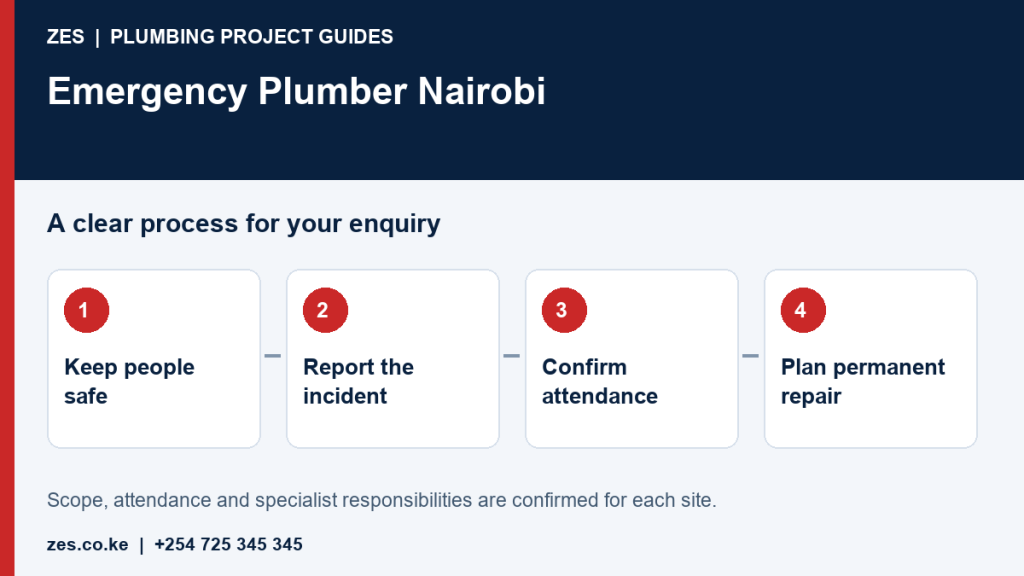
An emergency plumber enquiry in Nairobi should communicate the immediate risk before discussing permanent repairs. Escaping water, wastewater backup and sudden service loss can affect occupants and adjoining property. Priorities are keeping people away from danger, contacting the building representative and arranging competent assessment. This guide explains reporting and preparation, rather than risky repair methods. Call ZES to check current attendance availability. Response times, charges and the work that can be undertaken must be confirmed directly; this article does not promise round-the-clock attendance.
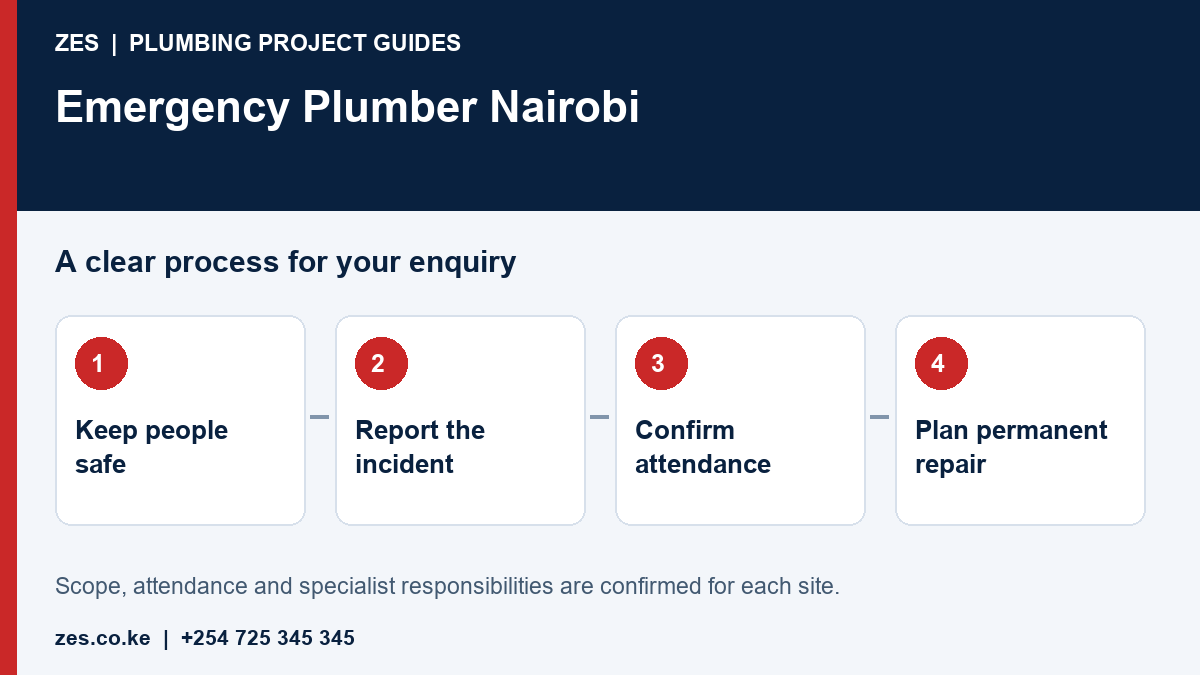
Assess whether the area is safe to approach
Keep people away from standing water near sockets, electrical panels, pumps or damaged appliances. Do not enter a flooded electrical room or touch wet electrical equipment. Escalate suspected electrical hazards to responsible facilities or electrical personnel. Avoid contact with suspected sewage and keep children away from affected areas. If there is an immediate threat to life, use the appropriate emergency response channels. A plumbing appointment does not replace assistance for an electrical incident, dangerous structure or other immediate hazard.
Limit further escape only where safe
If you know an accessible isolation valve, are authorised to operate it and can reach it safely, isolating the affected water supply may reduce further damage. Do not climb an exposed tank support, force a seized valve or dismantle pipework. Shared supplies need coordination because the wrong isolation can affect neighbours or equipment. Inform the caretaker and identify the affected area. Move possessions only when it is safe. Do not stand below a damaged ceiling or enter contaminated water to save contents.
Make the first call specific
Give the location, building type, callback contact and a brief description, such as water escaping below a basin or several drains backing up. Explain whether flow continues, whether an authorised person has isolated supply and whether other units are affected. Mention gate procedures, access restrictions and who may approve work. Send photographs from a safe position if useful. This supports triage and equipment planning. It does not establish a confirmed diagnosis, a final price or an arrival commitment until the attending team confirms arrangements.
Distinguish containment from permanent repair
An initial visit may establish the source and a temporary measure before final repair is possible. Hidden damage, spare parts and the state of surrounding pipework can change the method. Ask what has been restored, what remains isolated and what follow-up is necessary. Document the limitations of any temporary work. The disappearance of visible water does not establish that all affected systems and finishes are sound. Agree the next step and responsible person so an emergency measure is not inadvertently treated as a completed long-term solution.
Approve expenditure and additional investigation
Confirm attendance charges, diagnostic scope, materials and any out-of-hours arrangement before dispatch where practical. Obtain approval before opening finishes or replacing major components. Establish how additional findings will be reported and who can authorise changes. Verbal decisions during an urgent incident should still be recorded afterwards. Keep the scope, photographs, job reference and invoice together. Plumbing repair may exclude restoration of walls, ceilings, flooring or contents. Separating those responsibilities makes recovery easier to coordinate with the owner and other service providers.
Review the cause after service restoration
Investigate repeat leaks, recurring blockages and inaccessible isolation points after immediate disruption is controlled. A wider system review may be more useful than another patch. Update the building contact list and valve records for authorised staff. Schedule permanent correction and any damage assessment still required. Explain restored operating limits to affected occupants. Preparation should improve safe reporting and access, without implying every fault can be prevented. An accurate incident history helps the next technician understand the issue and avoids repeating assumptions from the first call.
Information to include in your project brief
- Safe description of the incident
- Whether water is still escaping
- Building authority and contact
- Access restrictions and affected neighbours
Frequently asked questions
Does ZES offer guaranteed 24-hour response?
No guaranteed 24-hour or same-day response is stated here. Call +254 725 345 345 to confirm current availability.
Should a blocked fixture remain in use?
Stop using affected fixtures where continued use causes overflow or backup. Keep clear of wastewater and request assessment.
Can a final price be given by phone?
An initial scope can be discussed, but access, concealed damage and parts may require inspection before a final quotation.
Related plumbing planning guides
- Water Tank Installation Kenya: Capacity, Supports and Connection Planning
- Industrial Plumbing Services Kenya: Factory Water, Drainage and Shutdown Planning
Discuss your plumbing requirement with ZES
Share the location, property use, symptoms or proposed work, and available drawings or photographs. ZES will review the information and confirm the suitable scope, any assessment arrangements and current attendance availability. Materials, responsibilities, programme and applicable terms are agreed in the written quotation.
Explore ZES plumbing services · Request a plumbing quotation · Call +254 725 345 345