
Gate Automation Kahawa West enquiries are easier to scope when the owner can explain the entrance, the required work and who can approve it. For an Automatic Gate Repair Kahawa West visit, a clear fault report also helps the technician prepare without assuming that a particular part has failed. ZES can assess the requirement and provide a quotation based on the actual installation.
This guide is about arranging an effective assessment and an accountable approval process. It does not promise a particular arrival time or a repair before the fault and parts requirements are known.
Gate Automation Kahawa West: 7 easy planning checks
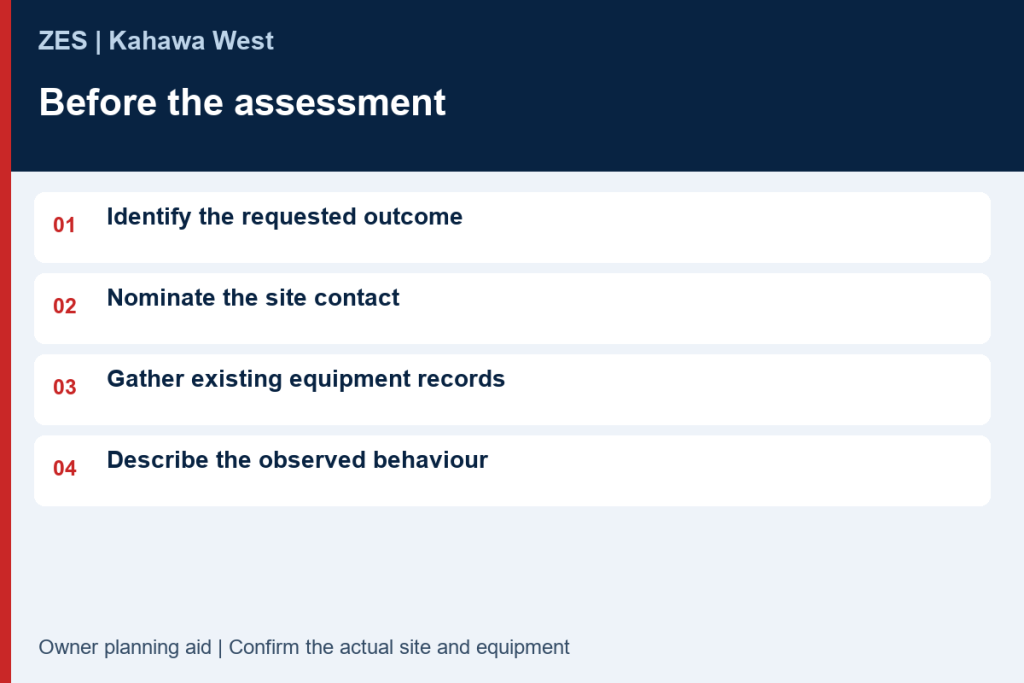
1. Identify the requested outcome
Explain whether you need a new automated entrance, automation of an existing gate, repair, replacement or a change to controls. If more than one task is required, list the priorities. A fault investigation and an optional upgrade should not become indistinguishable in the quotation.
For a new installation, describe the gate type and condition, expected usage and the people using the entrance. Include pedestrian arrangements and any other access equipment that must work with the automatic gate.
2. Nominate the site contact
Choose someone who knows the reported problem and can provide lawful access to the relevant areas. Give accurate directions and any site-entry requirements. Confirm who will meet the technician and which times can be considered.
The contact person and the person authorised to approve costs may be different. Make that distinction clear before the visit so findings can be communicated to the right person.
3. Gather existing equipment records
Find the installation invoice, manuals, previous service reports and any known model references. These records can reduce uncertainty about equipment, although they still need to correspond with what is installed.
Do not open electrical enclosures or climb into unsafe positions to obtain information. Safely accessible photographs are sufficient for an initial enquiry; inaccessible details can be recorded during the assessment.
4. Describe the observed behaviour
State what the automatic gate does, when the problem began and whether it affects every control. Include the gate’s current position and how access is affected. Explain any recent power event, construction work, impact or service without assuming it caused the fault.
Avoid repeated test cycles where movement is abnormal. Keep people clear of the travel area and follow the relevant installed-system instructions for any approved temporary arrangement.
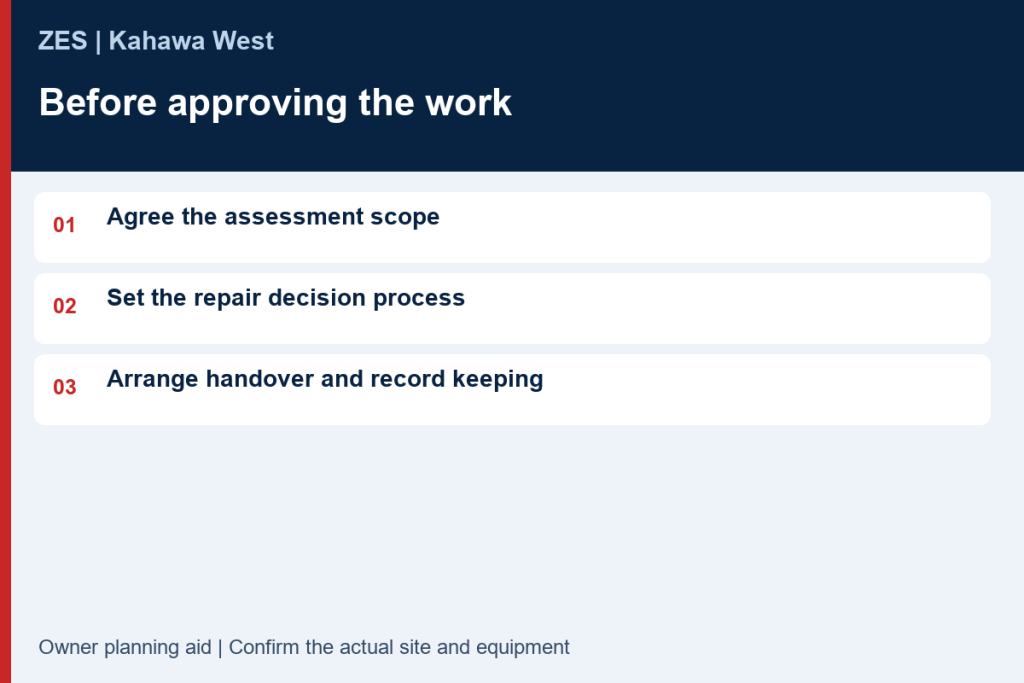
5. Agree the assessment scope
Ask what the visit covers and whether an attendance or diagnostic charge applies. Establish whether the first step is assessment only or whether specified minor work may be approved within an agreed limit.
An approval limit should be explicit. Silence should not be treated as consent to a replacement, and a technician should not be expected to order parts before compatibility and authorisation are settled.
6. Set the repair decision process
Ask for findings, recommended work, proposed parts and the total quoted scope. For a shared property, nominate the approving manager or committee representative. Agree how a changed scope will be handled if further issues are discovered.
If parts must be sourced, confirm the actual item, availability and lead time. Do not equate an initial visit with a promise that every possible replacement is immediately available.
7. Arrange handover and record keeping
Make sure a responsible person is available for the completion explanation. Record the work done, checks completed, supplied items and remaining recommendations. Keep the actual warranty and support terms with the invoice.
Update users if operating behaviour or controls have changed. A useful repair record should remain available when the property manager or caretaker changes.
Automatic Gate Repair Kahawa West: prepare a concise fault brief
A useful brief can be short: the site location, gate type, equipment information already available, symptom, start date, current access situation and contact person. Photographs should show the entrance and relevant visible equipment without revealing access codes or private security information unnecessarily.
For an intermittent problem, explain the pattern you have already noticed. For example, state whether one handset is affected or all normal controls behave similarly. Avoid deliberately reproducing hazardous behaviour for a recording.
Let the technician distinguish a control problem, a mechanical problem and a gate motor or power-related fault. The same visible symptom can have different causes. A credible quotation should follow the assessment findings.
An illustrative approval problem
A caretaker reports that a gate stops unpredictably. The owner is away and the technician is asked to proceed, but nobody has agreed who can approve parts. Work can become delayed even after the fault has been assessed.
A better arrangement identifies the owner or authorised manager in advance, gives a way to share the findings and separates attendance from repair approval. If a replacement is proposed, the responsible person can review the model and scope before ordering. This is a planning example, not a claim about a completed ZES job.
What the quotation should explain
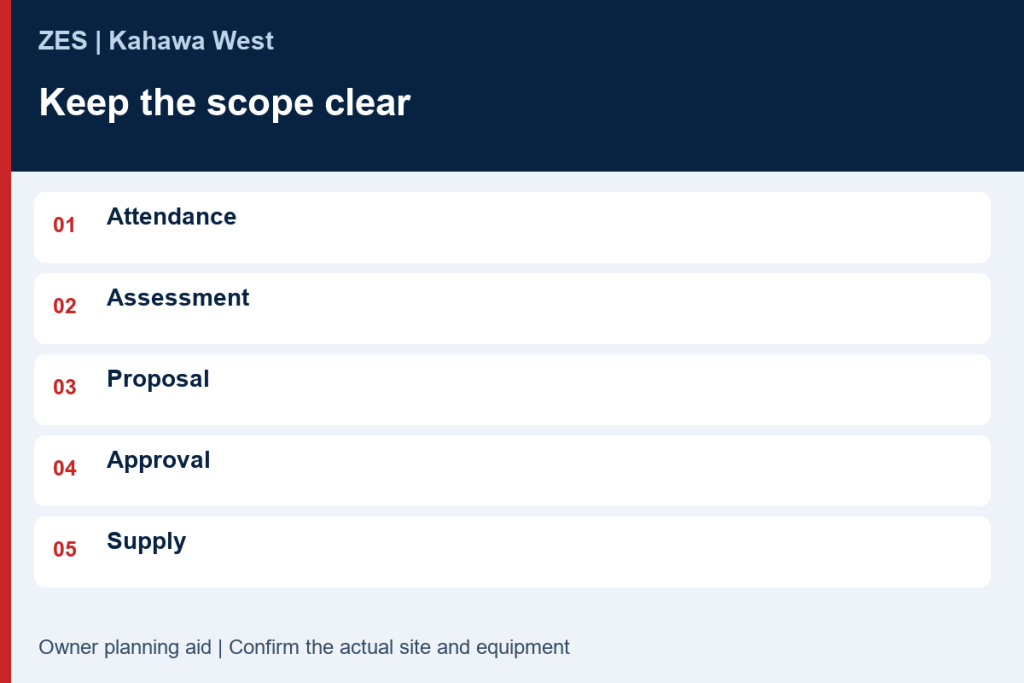
| Stage | Information to request |
|---|---|
| Attendance | Appointment arrangement and any agreed charge |
| Assessment | Reported complaint and relevant findings |
| Proposal | Repair work, parts and retained equipment |
| Approval | Who can authorise the cost and changed scope |
| Supply | Confirmed availability and expected lead time |
| Completion | Checks, instructions and service record |
For installation work, also separate gate fabrication, civil work, electrical preparation, automation equipment and controls. A package description alone may not reveal which contractor is responsible for each task.
The automatic gate installation cost guide explains scope comparison. For a fault that prevents normal opening, see automatic gate not opening repair for owner-facing enquiry guidance.
Questions before booking
Can the repair be completed during the first visit?
That depends on the findings, authorisation, required work and availability of compatible parts. Confirm the arrangement with ZES rather than assume every enquiry can be completed in one attendance.
Should I buy a replacement motor first?
An assessment should establish whether replacement is appropriate and which model fits the automatic gate and operating demand. Buying first can leave important compatibility and installation questions unanswered.
Who should attend the handover?
Someone responsible for daily operation and someone authorised to accept the completed scope should be involved as appropriate. The users need practical instructions; the owner needs the work and commercial records.
What happens if additional work is discovered?
Agree how the findings will be documented and approved. Ask whether the automatic gate can be used under an appropriate temporary arrangement, and follow the technician’s instructions rather than improvising a bypass.
Where can I find the correct manual?
Use the actual equipment reference. The FAAC manuals and certificates library is one manufacturer resource where applicable. A manual for a different model is not a substitute for identifying the installed system.
Make the service visit easy to authorise and document
An efficient gate repair visit depends on more than a technician knowing the address. The person arranging attendance should explain the complaint, provide relevant equipment records and identify who can approve the proposed work. If these roles are split between an owner and caretaker, make the arrangement explicit.
For a new gate automation project, prepare the site requirement before asking for equipment prices. Explain the gate type, project stage, expected usage and desired controls. A gate motor can then be discussed in relation to the actual entrance rather than as an isolated product.
Agree what attendance means
Confirm whether the booking is for assessment, specified work or an agreed combination. Ask about any attendance or diagnostic charge and what information will be supplied afterward. An assessment appointment should not be understood as a guarantee that every possible repair will be completed during that visit.
If the responsible owner is unavailable, establish how findings will be shared and approved. Do not leave the technician relying on an unclear verbal instruction from someone without spending authority.
Handle parts and changed scope
After assessment, ask for the proposed item, compatibility basis, fitting work and availability. A gate motor or controller may need to be identified precisely before an order can be confirmed. Record the expected lead time rather than assuming immediate supply.
If further findings change the gate repair scope, request the revised proposal and approval requirement. Keep optional improvements separate from work needed to address the reported complaint. This helps the owner understand what is being authorised at each stage.
Close the visit with a usable record
The final record should identify the finding, completed work, supplied parts and relevant checks. Include any outstanding recommendation and the actual warranty or support terms. The responsible user should understand the current operation of the automatic gate.
File the report with the equipment documents and update the gate automation record after future changes. A clear history can reduce uncertainty during the next service enquiry, especially when the person who arranged the previous visit is no longer managing the property.
Arrange an assessment in Kahawa West
Request a quotation with your location, requirement and contact details, or book a site survey. You can also call ZES on +254 725 345 345. Confirm the appointment, assessment scope and approval process when arranging the work.