
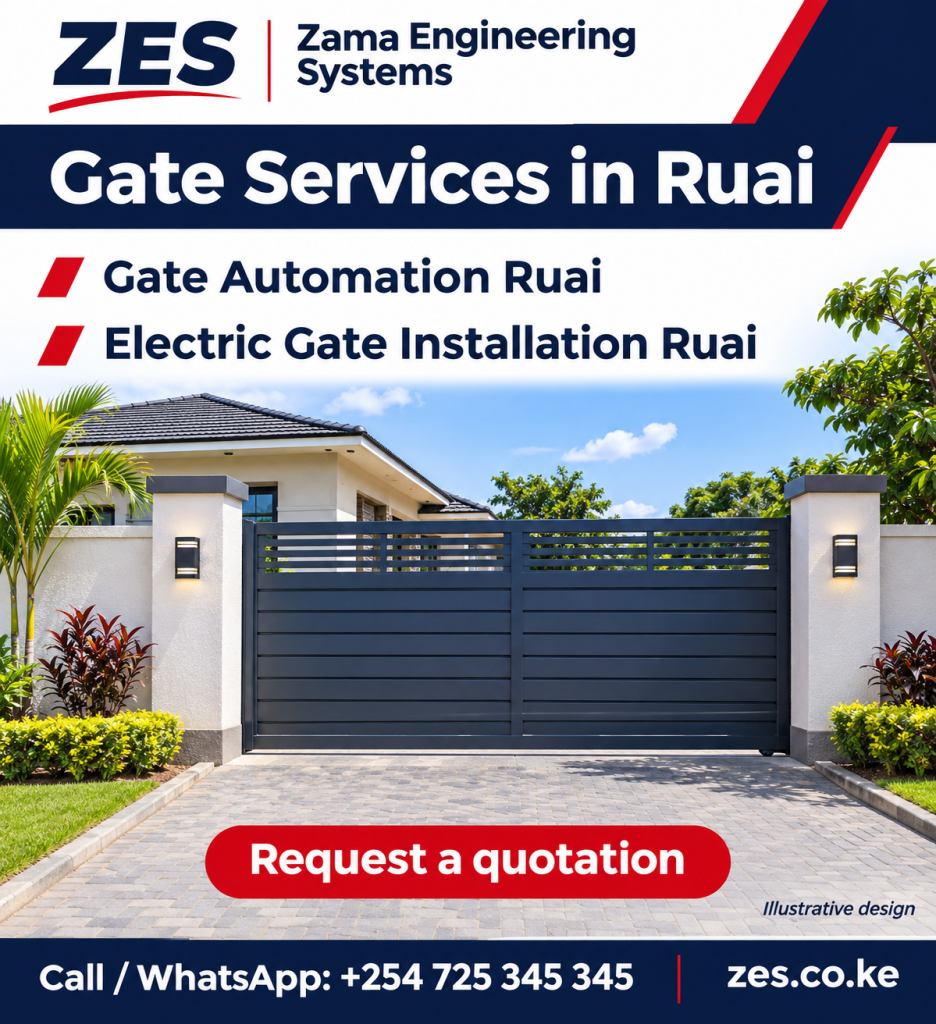
Gate Automation Ruai projects can be easier to manage when the entrance is planned in stages with clear responsibilities. Gate fabrication, power provision, surrounding works and automation equipment may be ordered at different times, but they still need to form one suitable completed installation. ZES can assess the requirement and discuss Electric Gate Installation Ruai proposals around the actual site.
This guide is for owners planning a new entrance or coordinating an upgrade with building work. It does not assume a particular power supply, ground condition or property layout in Ruai. Those details need to be established for the individual project.
Gate Automation Ruai: 7 easy project-stage checks
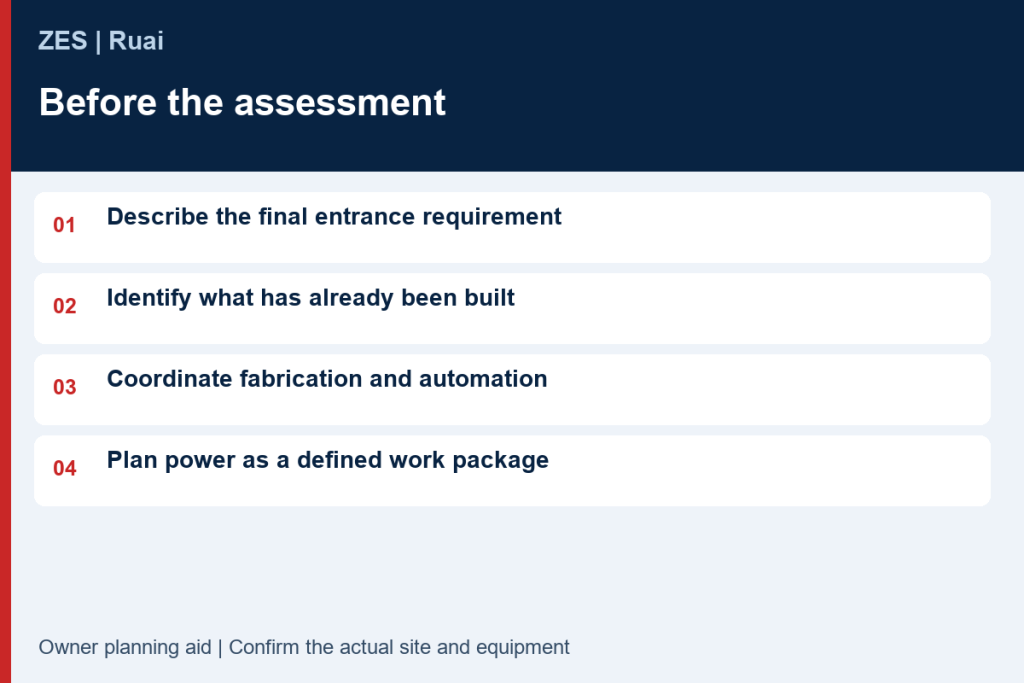
1. Describe the final entrance requirement
State the gate type, approximate opening, expected use and desired controls. Include how visitors and pedestrians will enter. If the design is not settled, explain the options under consideration rather than ordering a motor on an assumption.
Photographs and drawings help the initial discussion. Relevant dimensions, movement and suitability should still be confirmed by the responsible professionals before fabrication or equipment selection is finalised.
2. Identify what has already been built
List completed work and work still planned. An existing gate, supports or cable route may need assessment before being incorporated into the proposal. Previous expenditure does not establish that an item suits the new arrangement.
Tell ZES about known defects, previous repairs or design changes. The quote should separate necessary preparation from new equipment so the owner can understand the complete project.
3. Coordinate fabrication and automation
The fabricator and installer should understand the intended gate movement and equipment interfaces. Ask who confirms the relevant gate and support requirements. Avoid completing fabrication on an assumption that any motor can be added afterwards.
If the gate design changes, review the equipment and preparation assumptions. Keep approved drawings and changes together. The final installation should reflect the current design rather than an earlier brief.
4. Plan power as a defined work package
Explain the available supply and who will assess the required electrical work. Existing cables or enclosures should not be assumed suitable without review. The competent professional should confirm the actual requirements and relevant protection.
If solar or backup operation is proposed, state the expected usage and discuss a supported arrangement. The solar gate guide covers demand and compatibility questions without promising a universal package size.
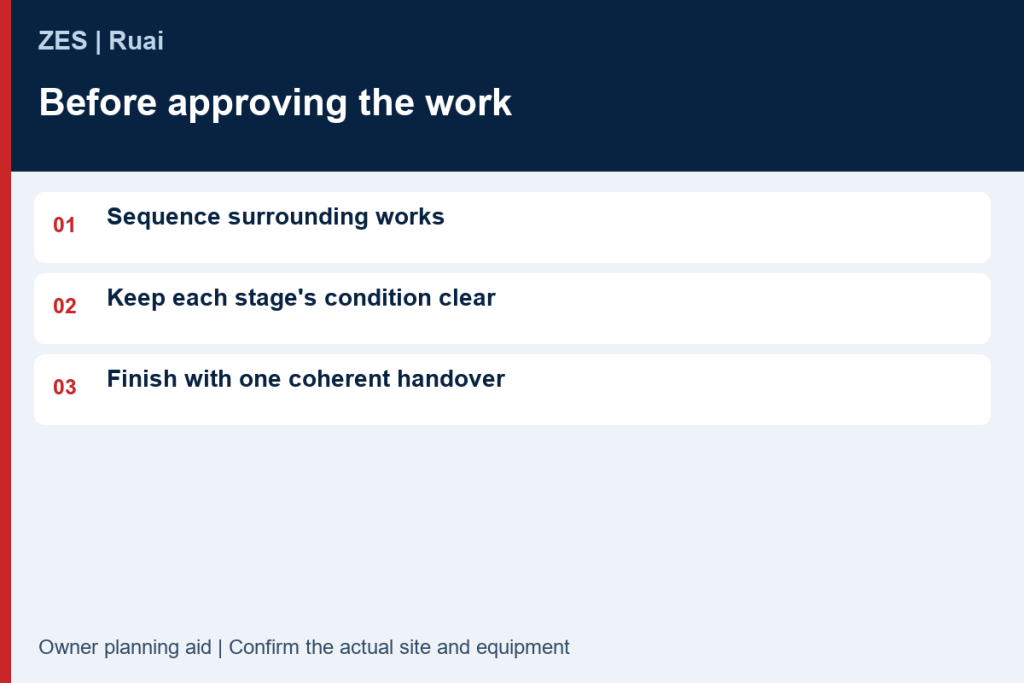
5. Sequence surrounding works
Discuss mounting, cable routes and any civil preparation before paving or landscaping is finalised. Identify who performs and checks each item. An undefined instruction that the site will be ready can leave important work between contractors.
Ask whether reinstatement and cleanup are included where applicable. The appropriate sequence depends on the assessed site and proposed equipment; this guide does not prescribe construction dimensions or a standard foundation.
6. Keep each stage’s condition clear
If the project is phased, ask what will be complete at each stage and what must happen before normal operation. Do not leave an unfinished entrance described as operational simply because some equipment has been fitted.
Agree the approval point for changes and the responsible contact. A useful staged proposal states included work, dependencies and exclusions so the owner can plan the remaining commitments.
7. Finish with one coherent handover
Retain the final gate and equipment details, relevant user instructions and actual support terms. The responsible user should see the agreed controls demonstrated. Record work completed by other contractors where it affects the installation.
Any outstanding defect or interface should be listed separately. A handover is more useful when it describes the complete entrance rather than separate receipts for items bought at different times.
Electric Gate Installation Ruai: compare the whole project
A motor-only price does not include every possible gate, civil, electrical or control requirement. Ask for the exact equipment and supplied contents, then identify the work needed to install and commission it at your property.
If the owner is supplying some items, discuss suitability and responsibility before purchase. A supported installation should not be assembled from unrelated assumptions about motors, batteries, controls and gate condition. The installer should explain what can be retained and what must be confirmed.
Ask about applicable taxes, transport, quotation validity and actual support terms. No fixed Ruai installation price, local branch or guaranteed attendance time is claimed here. ZES can confirm the specific arrangements for your enquiry.
Example: automation follows fabrication and paving
In an illustrative project, an owner has already commissioned a gate and plans to automate it after other building work. Before the surroundings are finished, the installer reviews the entrance and identifies the necessary equipment interfaces and preparation.
The project team records who handles mounting, power and any changes to the automatic gate. If some work must be revised, the reason and scope are explained before approval. The owner can then compare the complete remaining work rather than a misleadingly isolated motor price.
The example does not mean every completed gate requires rework. It shows why the actual entrance should be assessed and why early coordination can prevent important decisions from being left until fitting day.
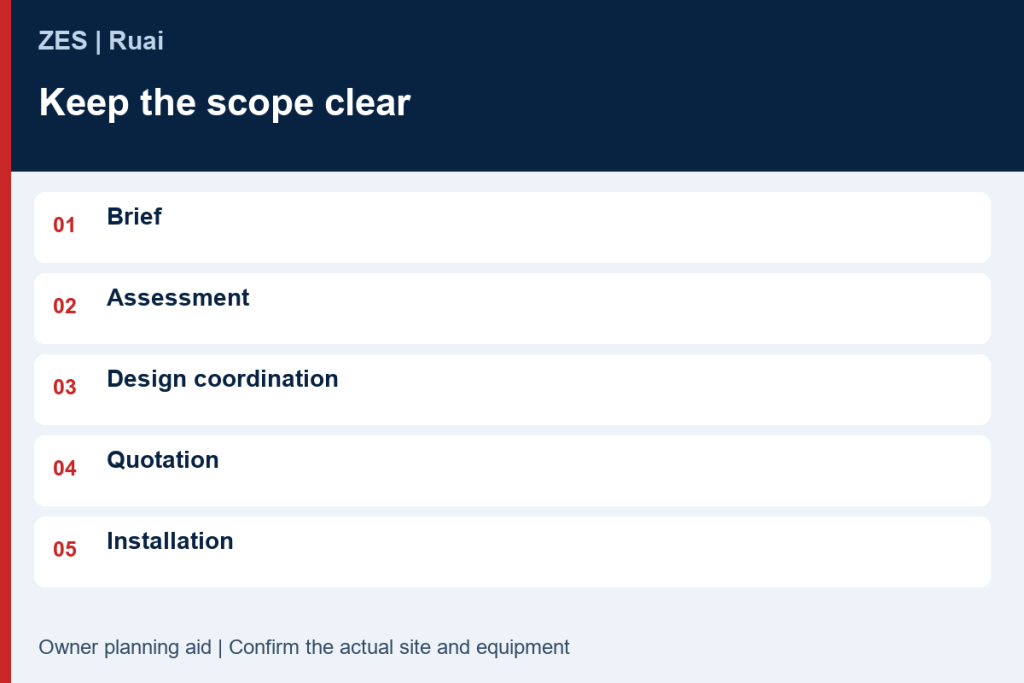
A simple stage schedule
| Stage | Decision to record |
|---|---|
| Brief | Gate type, use, controls and responsible contact |
| Assessment | Existing condition and required preparation |
| Design coordination | Fabrication, mounting and electrical interfaces |
| Quotation | Supplied items, exclusions and approval terms |
| Installation | Work arrangements and agreed responsibilities |
| Acceptance | Demonstration, records and outstanding items |
Use the schedule as an owner-planning aid. Technical specifications should come from the relevant competent parties and model documentation. FAAC’s manuals resources illustrate the importance of using instructions for the actual selected equipment.
If the project is an upgrade instead
Explain why the change is wanted. A new control method, unreliable motor and damaged gate are different concerns. Record each requirement so the proposal can separate repairs from optional improvements.
Provide the known equipment models and previous service history. Ask whether existing accessories remain compatible. If replacement is proposed, compare the complete scope with repair where appropriate, using the motor replacement guide.
Keep users informed if controls or operating procedures change. Shared properties should nominate a person to approve devices and retain the documentation. A phased upgrade still needs a clearly understood final arrangement.
Questions about staged installations
Can I buy the motor now and install it later?
Discuss the exact model and site requirement before purchase. Suitability, supplied accessories and installation responsibility should be confirmed. A product bought early may not match a later design change.
Can the builder prepare the site?
Potentially, with a defined scope and coordination between the responsible professionals. The installer should confirm the required interfaces and how readiness is checked. Avoid working from a generic image alone.
Is solar automatically cheaper than extending power?
No universal cost claim is made. Compare complete assessed options, including the equipment, site work and maintenance implications. The site’s actual demand and compatible arrangement matter.
What should I send ZES first?
Provide the Ruai location, photographs or drawings, current project stage, gate type and expected usage. State what has already been supplied and what you want included in the proposal.
Phasing gate automation during a building project
A phased entrance project needs a shared plan even if the gate motor will be installed later. Confirm the intended gate arrangement and ask how fabrication, civil work and electrical preparation relate to the future automation. The aim is to avoid completing one stage on assumptions that the next provider cannot use.
Keep the current brief available to the builder and installer. If the entrance design changes, ask for a review of the affected requirements. A gate automation proposal prepared for an earlier layout should not be treated as automatically suitable for the revised project.
Record the boundary of each phase
At the end of a phase, note what was completed, what remains and which party is responsible. A fabricated gate may still need assessment before automation. A prepared cable route does not by itself confirm that the electrical installation is ready.
Do not describe the whole gate installation as complete merely because the entrance can be opened manually. The final automatic gate scope includes the agreed equipment, controls, relevant checks and user handover.
Avoid premature equipment purchases
Before buying a gate motor, confirm the actual gate dimensions, construction, movement and expected use with the installer. Equipment selection should follow the assessed requirement. An early purchase made from a general package advert can leave unanswered questions about suitability and included accessories.
If the owner already has equipment, provide the exact model and contents. Ask whether it is appropriate for the project and what additional work or items are required. Do not assume an unopened kit represents the full cost of the entrance.
Plan completion and later responsibility
Agree who will coordinate final readiness and who accepts the completed gate automation work. The handover should include equipment references, relevant instructions and actual support terms. Record any outstanding recommendations instead of leaving them as informal promises.
Keep those documents after the building project ends. A future gate repair enquiry will be easier to scope when the owner can identify the installed equipment and explain the original work. Update the record after subsequent changes so it remains useful to the person responsible for the entrance.
Request a Ruai project assessment
Request a quotation or book a site survey. Call or WhatsApp +254 725 345 345 to discuss the entrance and next assessment step. A clear staged brief helps every supplier work toward the same completed installation.