
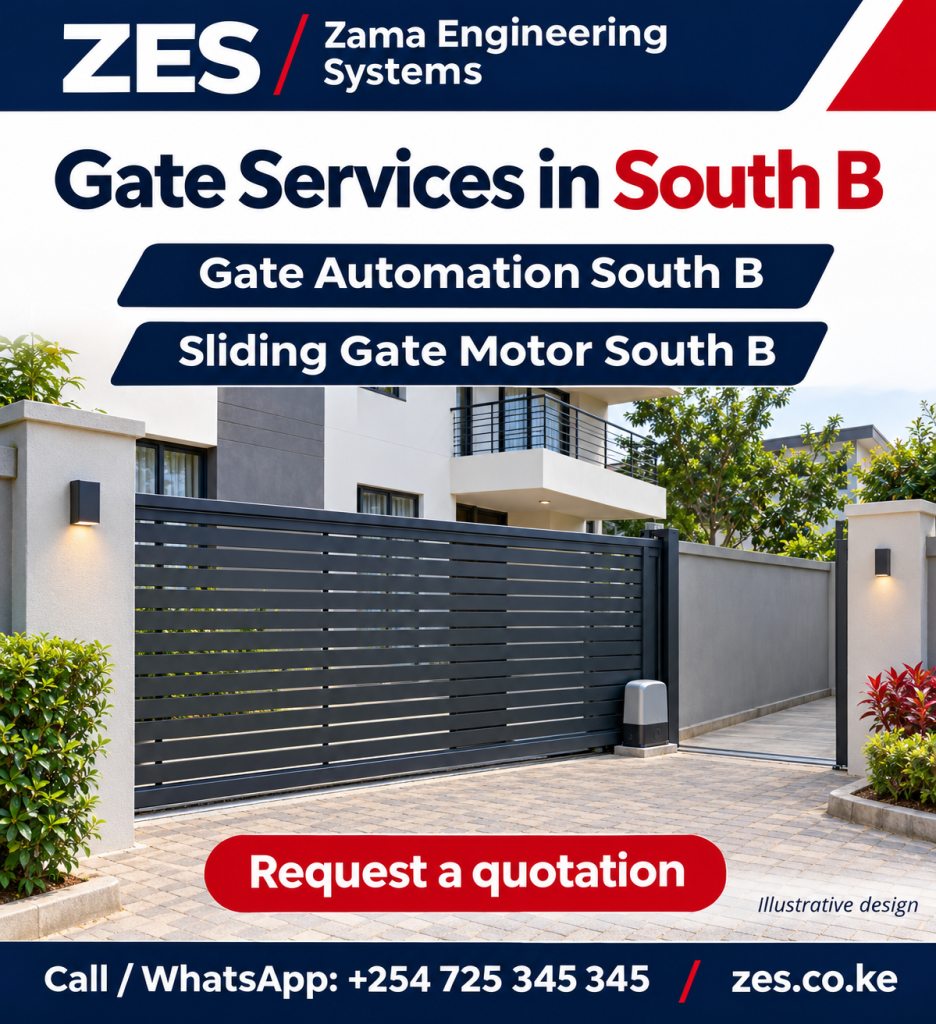
Gate Automation South B enquiries are easier to assess when the owner separates the physical gate, the gate motor and the user controls. A fault or missing function in one part does not prove that the complete installation must be replaced. ZES can review the entrance requirement and prepare an assessed installation or repair proposal for a South B property.
This guide focuses on Sliding Gate Motor South B decisions: selecting a gate motor, understanding the complete supplied scope and checking whether an existing gate needs preparation. It is a buying guide, not an instruction sheet for live electrical work or mechanical adjustment.
Gate Automation South B: 7 easy equipment checks
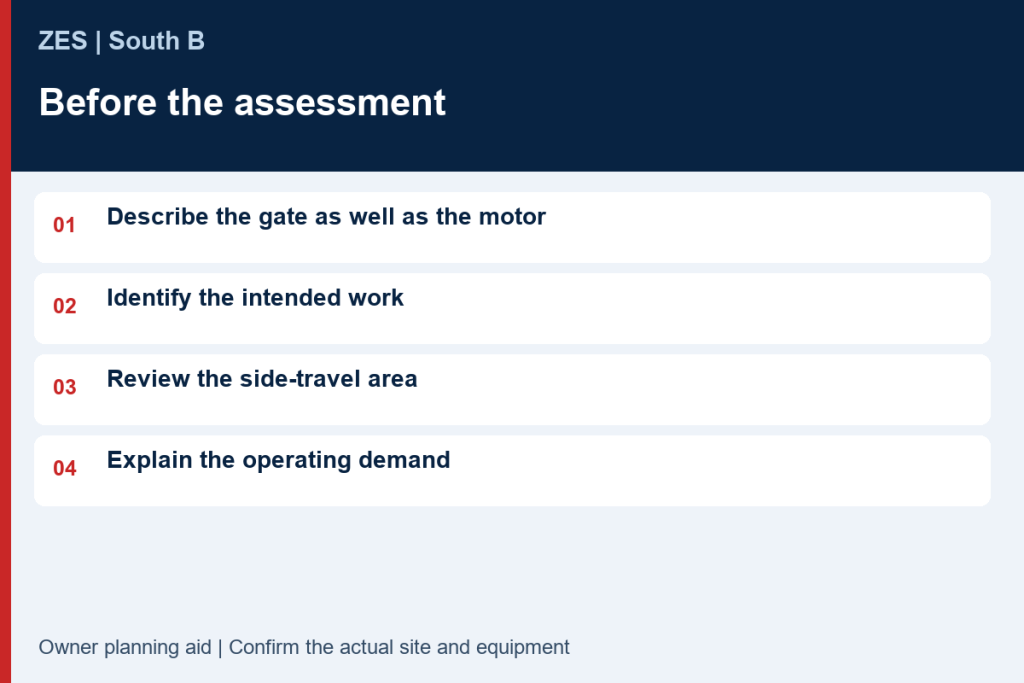
1. Describe the gate as well as the motor
Provide photographs of the opening and the area beside it. State whether the sliding gate is new, manual or automated, and explain any visible damage or movement problem. A motor enquiry should not omit the condition of the mechanism it will move.
Owner measurements can help the initial discussion, but the installer must confirm the relevant dimensions and suitability. Do not estimate the technical motor rating from appearance alone.
2. Identify the intended work
New automation, replacement of a failed operator and an additional remote are different requests. State which applies and list any other complaint separately. This helps avoid an equipment quotation that does not address the owner’s actual need.
If the current gate is unreliable, ask for diagnosis before ordering a replacement. A more powerful operator is not a universal remedy for track, roller or support problems.
3. Review the side-travel area
A sliding gate requires an appropriate travel arrangement beside the opening. Explain nearby walls, parked vehicles, stored items and pedestrian movement. Changes to the surroundings may affect the entrance even if the sliding gate itself has not changed.
Ask the competent assessor to explain any preparation required. The quote should distinguish gate repairs and site work from the gate motor and controls.
4. Explain the operating demand
Tell ZES about normal use and the busiest period. Shared access, frequent deliveries or planned changes in occupancy can affect the selection inputs. Ask how the proposed model suits the assessed gate and duty.
Do not compare equipment only by a headline capacity. The complete installation and supported configuration matter. Keep the model and the assumptions used for selection with the project record.
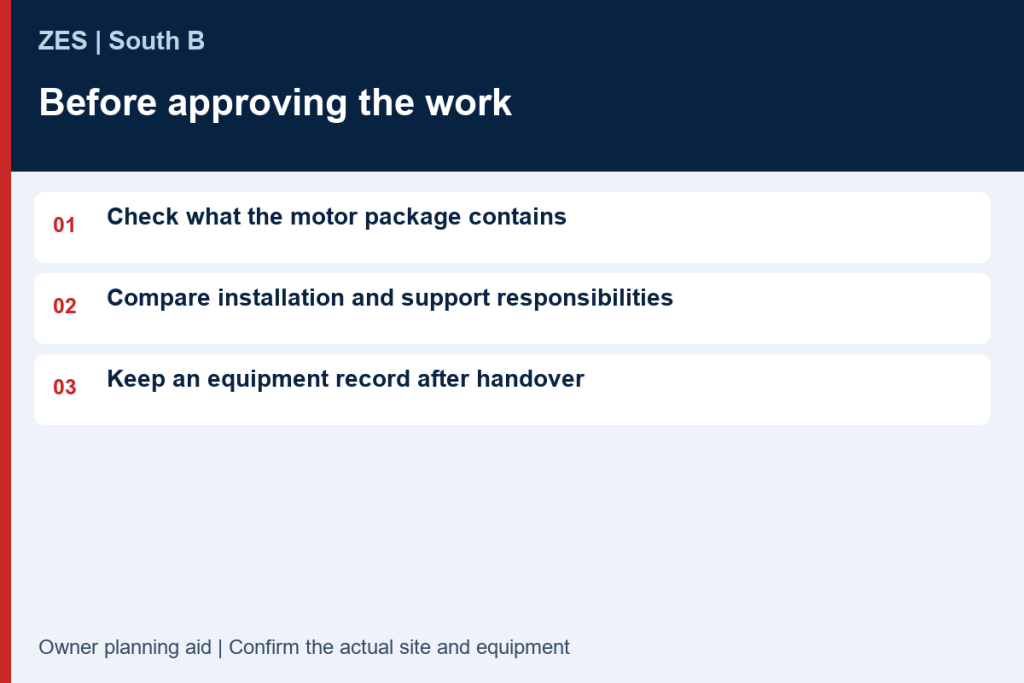
5. Check what the motor package contains
Ask for the gate motor, controller and supplied accessories to be named. The word kit does not guarantee that every required item is included. Controls, mounting work, power preparation and relevant protective provisions should be clear in the proposal.
If existing components are retained, ask whether their condition and compatibility have been checked. A working remote or receiver should not be assumed suitable for a different operator without review.
6. Compare installation and support responsibilities
A supply-only price and an installed quotation describe different services. Ask whether fitting, configuration, commissioning, instructions and making good are included. Confirm taxes, transport and actual support terms from the offer.
For customer-supplied equipment, agree responsibilities before purchase. A supplier’s product terms and an installer’s workmanship terms may cover different things. The actual documents should establish the arrangement.
7. Keep an equipment record after handover
Retain the installed model, relevant manuals, invoice and final scope. Record issued controls and the person responsible for access changes. List outstanding work separately from completed checks.
If a fault occurs later, describe the symptom and refer to the record. The next enquiry can then identify the actual installation instead of guessing from an old photograph or an incomplete product name.
Sliding Gate Motor South B: motor-only versus complete installation
A motor-only offer may be useful when the exact component and fitting responsibility are already known. For a new installation, it is not necessarily a complete budget. the sliding gate, mounting, rack, power work, controls and commissioning must be considered as applicable to the assessed site.
Ask two suppliers to describe the same completed outcome before comparing their totals. Mark missing items as unconfirmed rather than assigning a guessed allowance. The installation cost guide provides a practical comparison framework.
No universal motor price is quoted here. Current equipment availability, supplied contents and project terms should come from an actual ZES quotation.
Example: a replacement motor is proposed after repeated stopping
An owner reports a sliding gate that stops during ordinary operation. The symptom is recorded, along with recent events and previous repairs. The technician assesses the relevant gate and equipment condition before recommending work.
If mechanical repairs and operator work are both needed, the proposal explains their purposes separately. If the motor can be retained, that should be clear. If replacement is preferred, the reason and required changes to other components should be documented.
This illustrative example is not a remote diagnosis. Similar symptoms can arise from different causes. It shows why the completed repair scope matters more than a quick recommendation to buy another motor.
Information for a useful equipment enquiry
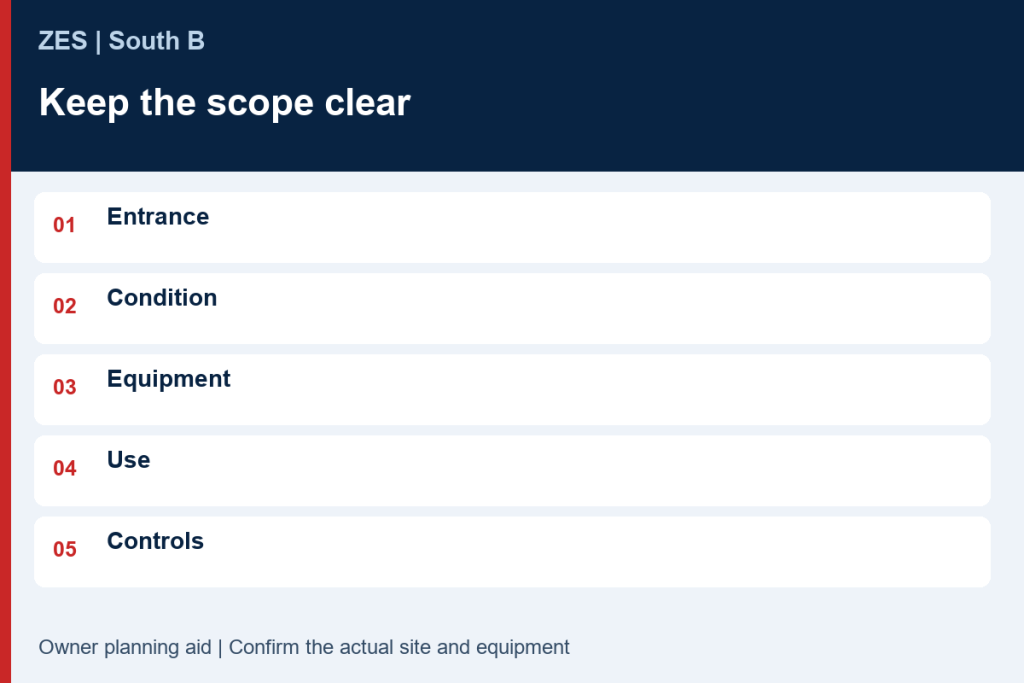
| Detail | What to provide |
|---|---|
| Entrance | Location, gate type and complete photographs |
| Condition | Known damage, movement problems or previous work |
| Equipment | Model from records or safely accessible labels |
| Use | Daily pattern and busiest operating period |
| Controls | Required devices and existing external systems |
| Project | New installation, replacement or repair |
Do not open electrical enclosures to obtain a label for the enquiry. If information is inaccessible, tell ZES that it needs checking during assessment. Keep private access codes out of general messages.
When controls are the real complaint
If the owner needs more remotes or has one unreliable handset, describe that specifically. The receiver may be separate from the gate motor, so the motor brand alone may not establish the correct device. Compatibility and authorised programming should be confirmed before supply.
For shared access, nominate who approves devices and handles missing remotes. The remote programming guide explains the difference between a replacement device and removal of an old access permission.
If every normal control produces abnormal movement, report the wider fault. Avoid repeatedly operating the sliding gate to prove a theory, and seek competent assessment where the entrance is unsafe or unpredictable.
Common sliding-motor questions
Can the existing rack be retained?
That depends on condition and compatibility with the proposed arrangement. Ask the assessor to explain the decision rather than assume every replacement motor requires all new mechanical components or none at all.
Will a larger motor make the gate reliable?
Not by itself. Equipment selection should follow assessment of the gate and operating demand. Unresolved mechanical or control faults should not be hidden by choosing a larger operator.
Where do technical specifications come from?
Use the documentation for the exact proposed model. Manufacturer sources such as FAAC manuals provide relevant information for competent selection and installation.
Can ZES advise before I purchase a motor?
Yes—send the entrance information and explain the requirement. ZES can discuss the assessment needed to prepare a suitable proposal and identify what remains to be confirmed on site.
Understanding what a sliding gate motor package includes
A sliding gate motor advertisement may describe equipment without defining the installation work at your property. Before comparing prices, ask for the exact model, kit contents and additional items needed for the agreed operation. A product photograph should not be treated as an inventory of everything included.
The gate automation proposal should identify whether it covers automation of an existing gate or a wider entrance project. Gate fabrication, track repairs, electrical preparation and making good may be separate responsibilities. Include them when comparing the complete cost.
Separate suitability from completeness
An equipment package can contain several accessories and still be unsuitable for a particular gate. Selection needs to reflect the assessed gate, movement and operating demand. Ask the installer to explain the choice rather than relying only on an advertised maximum gate weight.
Equally, a suitable gate motor may be quoted without all the items needed for the requested controls. List the functions and devices you want, then ask what the proposed arrangement requires. Compatibility should be confirmed for retained receivers, remotes or interfaces.
Check the preparation assumptions
Ask whether the quote assumes that the sliding gate is already mechanically suitable and that electrical preparation is complete. If those assumptions have not been checked, establish how the final scope will be confirmed. Photographs can support initial discussion without proving every aspect of readiness.
If assessment identifies a gate repair, ask whether it must be completed before the motor installation. A stronger operator is not a substitute for correcting a physical defect. Record the responsible provider and the sequence of work.
Keep supply and workmanship terms clear
If the owner buys equipment separately, discuss fitting and compatibility before purchase. Confirm which party handles equipment warranty enquiries and which party is responsible for installation workmanship. Retain the actual terms instead of assuming a standard cover period.
At completion, record the installed gate motor and accessories, relevant checks and user instructions. Any retained equipment should be identified. This gives a later service provider a useful account of the gate automation system and helps the owner understand what the original package did and did not renew.
Request a South B gate proposal
Contact ZES for a quotation or book a site survey. Call or WhatsApp +254 725 345 345 with the location and project details. A clear equipment brief helps you compare the complete installation rather than isolated product prices.