
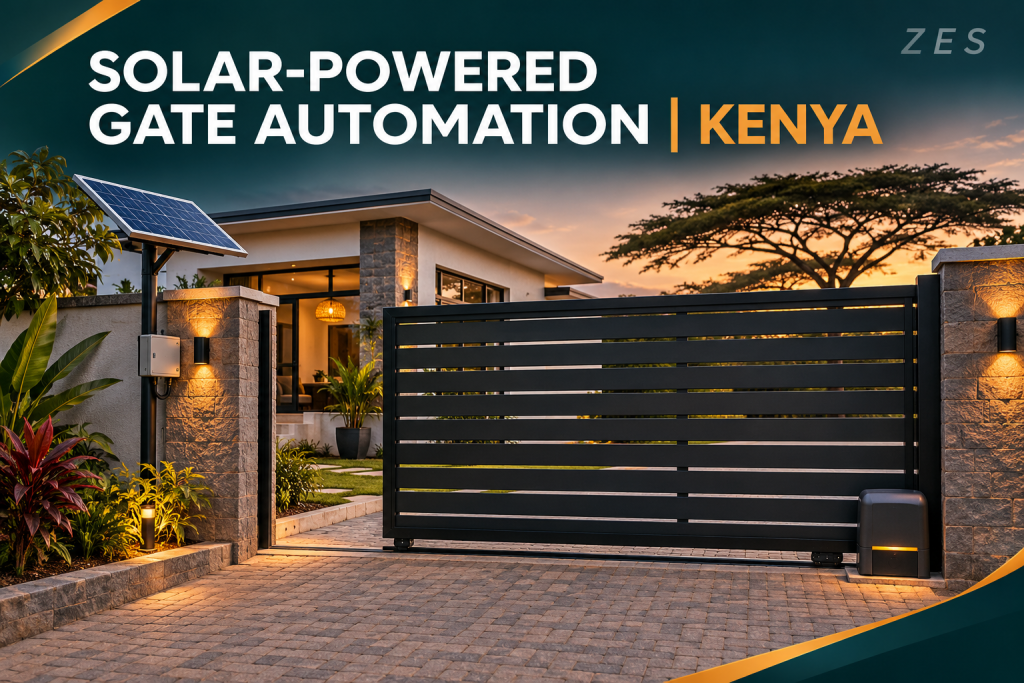
Solar Powered Gate Automation Kenya — Start with the gate’s condition, the expected traffic and the devices that need power during an outage.
Solar-powered gate automation can make sense when an entrance is far from a reliable mains supply or when a property wants a second way to charge the operator’s battery. A solar panel, a battery and a motor need to be considered together. Start with the gate’s condition, the movements the entrance must handle and the devices that have to stay available. A survey should check the proposed panel position, shade, equipment compatibility and site access. The design should explain how the entrance will operate if several poor charging days coincide with high demand.
A solar-charged gate stores energy for use after sunset. A battery-backed mains gate gets its charge from the mains unless it has another approved charging source. A hybrid layout may combine sources where the operator and charging equipment support it. Ask the installer to identify which arrangement it is quoting and which parts are supported by the manufacturer. An agreed outage procedure is part of the design, especially at an estate or business entrance. The examples below are planning scenarios for discussion with a qualified installer.
Solar Powered Gate Automation Kenya: Defining the duty and charging options
Remote driveway without mains
A property entrance is far from the house and the owner wants to avoid a long power route.
Survey brief. Measure the separation from the buildings and identify the entrance functions needed every day. Use this information to ask the designer for a written explanation of the proposed charging arrangement. Written assumptions matter when a survey is based mainly on photographs or when another trade is still expected to change the entrance.
Design decision. Compare an independent solar arrangement with any practical mains route, including civil work and future access. Ask for the quotation to show which equipment and work are included, what depends on a site condition and how a variation is agreed.
Acceptance check. Ask where an authorised operator can find the backup procedure and service contact. Check which parts of the entrance would remain usable if charging or connectivity is interrupted. If a condition cannot be tested as part of commissioning, ask the provider to record how it will be checked, by whom and at which stage of the project.
Intermittent mains supply
An existing motor works normally when mains is available but the battery is frequently depleted.
What to verify first. Record the pattern of outages and how the gate behaves before and after power is restored. Ask the surveyor to measure or verify the site conditions before treating an estimate as a specification. Written assumptions matter when a survey is based mainly on photographs or when another trade is still expected to change the entrance.
Compare the options. Assess whether the issue is battery condition, inadequate charging time or a separate fault before quoting solar. Ask for the quotation to show which equipment and work are included, what depends on a site condition and how a variation is agreed.
Handover. Agree what a supervised test should show about continued and restored operation. Agree who records changes when the equipment or surrounding site is modified later. If a condition cannot be tested as part of commissioning, ask the provider to record how it will be checked, by whom and at which stage of the project.
Home with evening traffic
The household arrives after sunset when the panel is no longer charging.
Information the designer needs. Note how many vehicles enter during the evening and what additional equipment is in use. Compare the proposals against the same duty and the same assumptions about the rest of the installation. Written assumptions matter when a survey is based mainly on photographs or when another trade is still expected to change the entrance.
What to agree. Compare designs by stored-energy needs through the night rather than by panel output alone. Ask for the quotation to show which equipment and work are included, what depends on a site condition and how a variation is agreed.
What to verify. Ask how the design accounts for a night of higher-than-usual traffic. The service record should identify the physical location of the components and what was actually tested. If a condition cannot be tested as part of commissioning, ask the provider to record how it will be checked, by whom and at which stage of the project.
Busy estate entrance
Several residents arrive in quick succession and delivery vehicles require guard approval.
What to show the installer. Collect a representative daily movement count and note the most concentrated period. Give the installer these details before approving equipment so a different panel or enclosure position remains possible. Written assumptions matter when a survey is based mainly on photographs or when another trade is still expected to change the entrance.
Review the proposal. Require the proposal to describe the full entrance workflow and the gate operator’s expected duty. Ask for the quotation to show which equipment and work are included, what depends on a site condition and how a variation is agreed.
Follow-up. Test authorised resident entry and visitor handling using the agreed fallback. Have the provider clarify which observations would justify a review after the entrance has been in use. If a condition cannot be tested as part of commissioning, ask the provider to record how it will be checked, by whom and at which stage of the project.
Farm access with seasonal activity
Most days are quiet but planting or harvest creates a short period of frequent movements.
Survey evidence. Give the installer typical and seasonal traffic estimates, vehicle types and busy hours. Ask for the model list, the operating conditions it assumes and a written explanation of any items outside the scope. Written assumptions matter when a survey is based mainly on photographs or when another trade is still expected to change the entrance.
Decide before ordering. Compare options for normal duty and a documented operating plan for the busy period. Ask for the quotation to show which equipment and work are included, what depends on a site condition and how a variation is agreed.
What to confirm. Agree who maintains equipment and manages access during seasonal peaks. Keep the acceptance criteria with the quote so the property manager can use them at handover. If a condition cannot be tested as part of commissioning, ask the provider to record how it will be checked, by whom and at which stage of the project.
Second home with long gaps between visits
The gate may remain idle for weeks while a receiver still needs power.
Survey brief. List standby devices, visit patterns and who can inspect the property when it is empty. Use this information to ask the designer for a written explanation of the proposed charging arrangement. Written assumptions matter when a survey is based mainly on photographs or when another trade is still expected to change the entrance.
Design decision. Ask the installer to assess parasitic loads and charging when no vehicles are present. Ask for the quotation to show which equipment and work are included, what depends on a site condition and how a variation is agreed.
Acceptance check. Document who is alerted to a persistent fault and how the next visit is arranged. Check which parts of the entrance would remain usable if charging or connectivity is interrupted. If a condition cannot be tested as part of commissioning, ask the provider to record how it will be checked, by whom and at which stage of the project.
Commercial entrance with early dispatch
Drivers start arriving before daylight and outbound vehicles need predictable exit arrangements.
What to verify first. Show dispatch windows and indicate which vehicles are waiting when operations begin. Ask the surveyor to measure or verify the site conditions before treating an estimate as a specification. Written assumptions matter when a survey is based mainly on photographs or when another trade is still expected to change the entrance.
Compare the options. Include the early-morning duty in the design brief and compare alternative control arrangements. Ask for the quotation to show which equipment and work are included, what depends on a site condition and how a variation is agreed.
Handover. Ask for handover across shifts and a written escalation route. Agree who records changes when the equipment or surrounding site is modified later. If a condition cannot be tested as part of commissioning, ask the provider to record how it will be checked, by whom and at which stage of the project.
Range of equipment on the backup
The site assumes the intercom, cameras and router will all stay online.
Information the designer needs. List each device, its power source and the specific task the site needs from it. Compare the proposals against the same duty and the same assumptions about the rest of the installation. Written assumptions matter when a survey is based mainly on photographs or when another trade is still expected to change the entrance.
What to agree. Separate the energy required to move the gate from the energy needed to verify or approve a visitor. Ask for the quotation to show which equipment and work are included, what depends on a site condition and how a variation is agreed.
What to verify. Demonstrate enough of the approved workflow to confirm that its essential devices stay available. The service record should identify the physical location of the components and what was actually tested. If a condition cannot be tested as part of commissioning, ask the provider to record how it will be checked, by whom and at which stage of the project.
Low traffic but frequent phone commands
A homeowner wants remote admission and a position indication.
What to show the installer. Identify the proposed phone accessory, communications method and feedback expected. Give the installer these details before approving equipment so a different panel or enclosure position remains possible. Written assumptions matter when a survey is based mainly on photographs or when another trade is still expected to change the entrance.
Review the proposal. Ask which devices must be powered continuously and how user access changes during an outage. Ask for the quotation to show which equipment and work are included, what depends on a site condition and how a variation is agreed.
Follow-up. Check command and confirmation on site under the intended communications conditions. Have the provider clarify which observations would justify a review after the entrance has been in use. If a condition cannot be tested as part of commissioning, ask the provider to record how it will be checked, by whom and at which stage of the project.
Mains battery backup versus solar
Two quotes advertise backup but one includes a panel and the other assumes mains charging.
Survey evidence. Request the charging source, operator model, battery arrangement and solar scope from both providers. Ask for the model list, the operating conditions it assumes and a written explanation of any items outside the scope. Written assumptions matter when a survey is based mainly on photographs or when another trade is still expected to change the entrance.
Decide before ordering. Compare the two designs against the same outage pattern and vehicle schedule. Ask for the quotation to show which equipment and work are included, what depends on a site condition and how a variation is agreed.
What to confirm. Keep assumptions and exclusions with the accepted quote. Keep the acceptance criteria with the quote so the property manager can use them at handover. If a condition cannot be tested as part of commissioning, ask the provider to record how it will be checked, by whom and at which stage of the project.
Checking the panel position and connected equipment
Shade from a wall
One panel location looks neat in the site photo but loses sun as the day progresses.
Survey brief. Show the proposed location from several angles and identify nearby walls and trees. Use this information to ask the designer for a written explanation of the proposed charging arrangement. Written assumptions matter when a survey is based mainly on photographs or when another trade is still expected to change the entrance.
Design decision. Ask the installer to assess shade and access throughout the relevant conditions. Ask for the quotation to show which equipment and work are included, what depends on a site condition and how a variation is agreed.
Acceptance check. Request a marked-up location that the owner can check before equipment is ordered. Check which parts of the entrance would remain usable if charging or connectivity is interrupted. If a condition cannot be tested as part of commissioning, ask the provider to record how it will be checked, by whom and at which stage of the project.
Tree growth near the entrance
The panel has good exposure in the short term but vegetation may grow across it.
What to verify first. Give the installer the landscaping plan and the approximate size of mature planting. Ask the surveyor to measure or verify the site conditions before treating an estimate as a specification. Written assumptions matter when a survey is based mainly on photographs or when another trade is still expected to change the entrance.
Compare the options. Discuss an alternative position or responsibilities for maintaining the approved clear space. Ask for the quotation to show which equipment and work are included, what depends on a site condition and how a variation is agreed.
Handover. Record who can review changes if the landscaping is redesigned. Agree who records changes when the equipment or surrounding site is modified later. If a condition cannot be tested as part of commissioning, ask the provider to record how it will be checked, by whom and at which stage of the project.
Panel placed away from gate traffic
The safest accessible spot is some distance from the operator.
Information the designer needs. Describe the full cable route and show where vehicles or future excavation may affect it. Compare the proposals against the same duty and the same assumptions about the rest of the installation. Written assumptions matter when a survey is based mainly on photographs or when another trade is still expected to change the entrance.
What to agree. Ask the designer to specify suitable routing, protection and product compatibility. Ask for the quotation to show which equipment and work are included, what depends on a site condition and how a variation is agreed.
What to verify. Document the final route for building maintenance and subsequent service visits. The service record should identify the physical location of the components and what was actually tested. If a condition cannot be tested as part of commissioning, ask the provider to record how it will be checked, by whom and at which stage of the project.
Exposed panel mount
A proposed mounting position receives strong wind and is close to the vehicle entrance.
What to show the installer. Have the survey team review the mounting surface and explain how it is used. Give the installer these details before approving equipment so a different panel or enclosure position remains possible. Written assumptions matter when a survey is based mainly on photographs or when another trade is still expected to change the entrance.
Review the proposal. Request an equipment support and location suited to site exposure. Ask for the quotation to show which equipment and work are included, what depends on a site condition and how a variation is agreed.
Follow-up. Ask who verifies the support and whether ongoing inspection is included. Have the provider clarify which observations would justify a review after the entrance has been in use. If a condition cannot be tested as part of commissioning, ask the provider to record how it will be checked, by whom and at which stage of the project.
Cleaning and service access
The owner can see the panel but cannot reach it safely for regular care.
Survey evidence. Include access to the equipment in the survey rather than deciding purely by visibility. Ask for the model list, the operating conditions it assumes and a written explanation of any items outside the scope. Written assumptions matter when a survey is based mainly on photographs or when another trade is still expected to change the entrance.
Decide before ordering. Have the provider propose a safe service arrangement that protects normal site traffic. Ask for the quotation to show which equipment and work are included, what depends on a site condition and how a variation is agreed.
What to confirm. Agree how cleaning and inspection will be scheduled and assigned. Keep the acceptance criteria with the quote so the property manager can use them at handover. If a condition cannot be tested as part of commissioning, ask the provider to record how it will be checked, by whom and at which stage of the project.
Dust from the access road
Road dust collects at the entrance during dry periods.
Survey brief. Share photos and tell the installer how often nearby equipment needs cleaning. Use this information to ask the designer for a written explanation of the proposed charging arrangement. Written assumptions matter when a survey is based mainly on photographs or when another trade is still expected to change the entrance.
Design decision. Include the actual environment in estimates and compare service access at alternative mounting positions. Ask for the quotation to show which equipment and work are included, what depends on a site condition and how a variation is agreed.
Acceptance check. Ask how observations will be recorded so the plan can be reviewed after operation. Check which parts of the entrance would remain usable if charging or connectivity is interrupted. If a condition cannot be tested as part of commissioning, ask the provider to record how it will be checked, by whom and at which stage of the project.
Rain and runoff
Water takes an unexpected path across the driveway in heavy rain.
What to verify first. Show drainage patterns and identify areas where water collects around the operator. Ask the surveyor to measure or verify the site conditions before treating an estimate as a specification. Written assumptions matter when a survey is based mainly on photographs or when another trade is still expected to change the entrance.
Compare the options. Coordinate panel support, enclosure location and civil drainage work with the relevant trades. Ask for the quotation to show which equipment and work are included, what depends on a site condition and how a variation is agreed.
Handover. Confirm the completed installation can be inspected without obstructing the driveway. Agree who records changes when the equipment or surrounding site is modified later. If a condition cannot be tested as part of commissioning, ask the provider to record how it will be checked, by whom and at which stage of the project.
Property owner planning security lighting
The customer wants to add lights after the gate is installed.
Information the designer needs. Give the installer the lighting proposal and explain which lights serve the entrance. Compare the proposals against the same duty and the same assumptions about the rest of the installation. Written assumptions matter when a survey is based mainly on photographs or when another trade is still expected to change the entrance.
What to agree. Check that the estimate identifies approved loads and records which equipment is excluded. Ask for the quotation to show which equipment and work are included, what depends on a site condition and how a variation is agreed.
What to verify. Reassess the system before any later loads are connected. The service record should identify the physical location of the components and what was actually tested. If a condition cannot be tested as part of commissioning, ask the provider to record how it will be checked, by whom and at which stage of the project.
Existing gate drags on its track
The chief complaint is short battery runtime but the rolling gate is visibly stiff.
What to show the installer. Tell the technician where the gate changes speed or makes unusual noise. Give the installer these details before approving equipment so a different panel or enclosure position remains possible. Written assumptions matter when a survey is based mainly on photographs or when another trade is still expected to change the entrance.
Review the proposal. Include mechanical diagnosis before increasing the energy supply or ordering an operator. Ask for the quotation to show which equipment and work are included, what depends on a site condition and how a variation is agreed.
Follow-up. Ask for a report distinguishing the gate’s condition from the power system. Have the provider clarify which observations would justify a review after the entrance has been in use. If a condition cannot be tested as part of commissioning, ask the provider to record how it will be checked, by whom and at which stage of the project.
Operator model compatibility
The owner has already found a panel and battery priced separately.
Survey evidence. Provide the exact product identifiers and obtain the operator manufacturer’s instructions. Ask for the model list, the operating conditions it assumes and a written explanation of any items outside the scope. Written assumptions matter when a survey is based mainly on photographs or when another trade is still expected to change the entrance.
Decide before ordering. Let the designer assess the whole charging and storage arrangement before parts are purchased. Ask for the quotation to show which equipment and work are included, what depends on a site condition and how a variation is agreed.
What to confirm. Request the final list of approved equipment and warranty responsibilities. Keep the acceptance criteria with the quote so the property manager can use them at handover. If a condition cannot be tested as part of commissioning, ask the provider to record how it will be checked, by whom and at which stage of the project.
Comparing proposals, commissioning and service
Modifying a recently installed gate
An installer fitted a new operator that is still within its service period.
Survey brief. Find the original commissioning and warranty documents and identify the provider. Use this information to ask the designer for a written explanation of the proposed charging arrangement. Written assumptions matter when a survey is based mainly on photographs or when another trade is still expected to change the entrance.
Design decision. Ask how the proposed solar change affects support and who would stand behind the integrated system. Ask for the quotation to show which equipment and work are included, what depends on a site condition and how a variation is agreed.
Acceptance check. Keep written compatibility confirmation and the updated handover record. Check which parts of the entrance would remain usable if charging or connectivity is interrupted. If a condition cannot be tested as part of commissioning, ask the provider to record how it will be checked, by whom and at which stage of the project.
Extended cloudy period
A customer expects operation under every weather condition.
What to verify first. Discuss the busiest use, the period of weak charging to plan for and the available authorised alternatives. Ask the surveyor to measure or verify the site conditions before treating an estimate as a specification. Written assumptions matter when a survey is based mainly on photographs or when another trade is still expected to change the entrance.
Compare the options. Ask the provider to state its assumptions and limitations without promising indefinite runtime. Ask for the quotation to show which equipment and work are included, what depends on a site condition and how a variation is agreed.
Handover. Make sure normal operators know when to use the site fallback and when to call for help. Agree who records changes when the equipment or surrounding site is modified later. If a condition cannot be tested as part of commissioning, ask the provider to record how it will be checked, by whom and at which stage of the project.
Comparing battery life estimates
One supplier promises a longer replacement interval than a competitor.
Information the designer needs. Ask for the equipment specifications, expected operating conditions and warranty terms. Compare the proposals against the same duty and the same assumptions about the rest of the installation. Written assumptions matter when a survey is based mainly on photographs or when another trade is still expected to change the entrance.
What to agree. Compare the estimates against usage and maintenance conditions that resemble the actual site. Ask for the quotation to show which equipment and work are included, what depends on a site condition and how a variation is agreed.
What to verify. Record the installation date and ask which checks should trigger a service enquiry. The service record should identify the physical location of the components and what was actually tested. If a condition cannot be tested as part of commissioning, ask the provider to record how it will be checked, by whom and at which stage of the project.
Replacing a weak battery
A previously reliable solar gate now struggles during routine evening movements.
What to show the installer. Record usage, recent weather and whether a similar problem appeared before. Give the installer these details before approving equipment so a different panel or enclosure position remains possible. Written assumptions matter when a survey is based mainly on photographs or when another trade is still expected to change the entrance.
Review the proposal. Request diagnosis of the battery, charging equipment and gate movement rather than buying the same battery on assumption. Ask for the quotation to show which equipment and work are included, what depends on a site condition and how a variation is agreed.
Follow-up. Verify the remedy under the agreed operating scenario before closing the service request. Have the provider clarify which observations would justify a review after the entrance has been in use. If a condition cannot be tested as part of commissioning, ask the provider to record how it will be checked, by whom and at which stage of the project.
Interrupted installation programme
Civil work and gate installation are scheduled by different contractors.
Survey evidence. List the power, structural and commissioning handoffs that require access to the same area. Ask for the model list, the operating conditions it assumes and a written explanation of any items outside the scope. Written assumptions matter when a survey is based mainly on photographs or when another trade is still expected to change the entrance.
Decide before ordering. Agree which drawings and measurements each party will use before any route is closed. Ask for the quotation to show which equipment and work are included, what depends on a site condition and how a variation is agreed.
What to confirm. Keep outstanding work visible on the handover list and assign each item. Keep the acceptance criteria with the quote so the property manager can use them at handover. If a condition cannot be tested as part of commissioning, ask the provider to record how it will be checked, by whom and at which stage of the project.
Site with limited technician access
The entrance is remote and an urgent trip could be costly.
Survey brief. Ask providers to set out travel terms, parts availability and how faults are logged. Use this information to ask the designer for a written explanation of the proposed charging arrangement. Written assumptions matter when a survey is based mainly on photographs or when another trade is still expected to change the entrance.
Design decision. Compare maintenance and call-out arrangements alongside equipment costs. Ask for the quotation to show which equipment and work are included, what depends on a site condition and how a variation is agreed.
Acceptance check. Keep the exact location, access requirements and model details ready for service. Check which parts of the entrance would remain usable if charging or connectivity is interrupted. If a condition cannot be tested as part of commissioning, ask the provider to record how it will be checked, by whom and at which stage of the project.
Choosing between two panel positions
One position is better for maintenance but the other may offer better exposure.
What to verify first. Ask the designer to assess both locations with the same load and service requirements. Ask the surveyor to measure or verify the site conditions before treating an estimate as a specification. Written assumptions matter when a survey is based mainly on photographs or when another trade is still expected to change the entrance.
Compare the options. Compare the likely trade-offs rather than treating mounting location as a decorative choice. Ask for the quotation to show which equipment and work are included, what depends on a site condition and how a variation is agreed.
Handover. Confirm the decision in the project record so later changes can be reviewed. Agree who records changes when the equipment or surrounding site is modified later. If a condition cannot be tested as part of commissioning, ask the provider to record how it will be checked, by whom and at which stage of the project.
Commissioning a hybrid setup
Mains and solar both contribute to keeping the system available.
Information the designer needs. Agree which states the qualified installer will demonstrate and who will witness them. Compare the proposals against the same duty and the same assumptions about the rest of the installation. Written assumptions matter when a survey is based mainly on photographs or when another trade is still expected to change the entrance.
What to agree. Include normal use, the intended loss of supply case and a return to ordinary service. Ask for the quotation to show which equipment and work are included, what depends on a site condition and how a variation is agreed.
What to verify. Have authorised staff explain the approved operating procedure back to the installer. The service record should identify the physical location of the components and what was actually tested. If a condition cannot be tested as part of commissioning, ask the provider to record how it will be checked, by whom and at which stage of the project.
Keeping useful records
Management wants to monitor the installation without frequent site visits.
What to show the installer. Agree what observations, alerts or visits can produce reliable information. Give the installer these details before approving equipment so a different panel or enclosure position remains possible. Written assumptions matter when a survey is based mainly on photographs or when another trade is still expected to change the entrance.
Review the proposal. Record equipment identifiers, maintenance dates and operator comments consistently. Ask for the quotation to show which equipment and work are included, what depends on a site condition and how a variation is agreed.
Follow-up. Compare later faults with the original checks before approving upgrades. Have the provider clarify which observations would justify a review after the entrance has been in use. If a condition cannot be tested as part of commissioning, ask the provider to record how it will be checked, by whom and at which stage of the project.
Updating the system after traffic grows
A quiet residential entrance becomes a shared entrance with additional users.
Survey evidence. Record the new traffic and connected equipment before reviewing the original design. Ask for the model list, the operating conditions it assumes and a written explanation of any items outside the scope. Written assumptions matter when a survey is based mainly on photographs or when another trade is still expected to change the entrance.
Decide before ordering. Ask whether changed usage requires a new assessment of operator duty, storage and charging. Ask for the quotation to show which equipment and work are included, what depends on a site condition and how a variation is agreed.
What to confirm. Document revised assumptions and schedule a new handover where responsibilities change. Keep the acceptance criteria with the quote so the property manager can use them at handover. If a condition cannot be tested as part of commissioning, ask the provider to record how it will be checked, by whom and at which stage of the project.
What to send for a solar gate survey
Send a location pin and two wide photos showing the gate, the surrounding walls and the proposed panel area. Include the operator model if one is already installed. Describe how many movements you expect on a normal day, how busy the busiest period gets and the longest interruption the property wants to plan for. Add an inventory of devices that must keep operating. If the gate is difficult to move or has a recurring fault, describe the symptoms so diagnosis can be scoped before sizing a replacement system.
What should the quote identify?
Request the operating model, charging source, battery arrangement, panel location, work assigned to other trades and the proposed method of commissioning. Ask for the assumptions behind any performance estimate and where to get help if observed operation differs. A site assessment may recommend improving the current mains-backed installation, adding a solar source where supported, or specifying a new operator and power arrangement. Confirm availability and compatibility before ordering components.
Ask the installer to confirm that the proposed operator supports solar charging. For example, CENTURION’s model-specific solar guidance identifies a separate regulator and battery in its D5 EVO SMART example. Match the recommendations to the exact model, the battery, the accessible panel location and the approved backup requirements of your site.
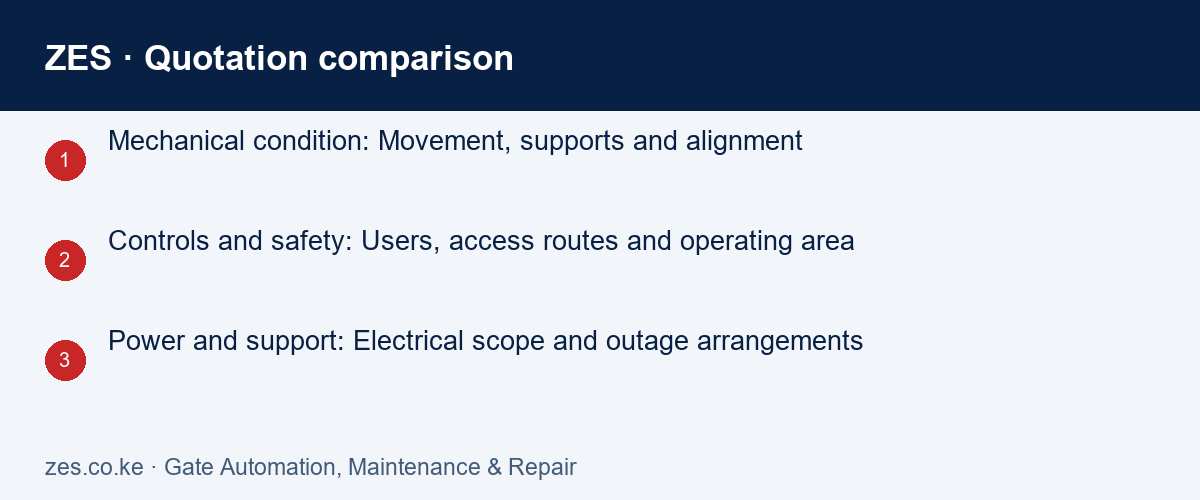
Request a ZES site assessment
Contact ZES with the property location and entrance details. Ask the team to confirm the survey scope, availability and compatibility before work is booked. See the ZES gate motor battery backup and replacement for related information.