
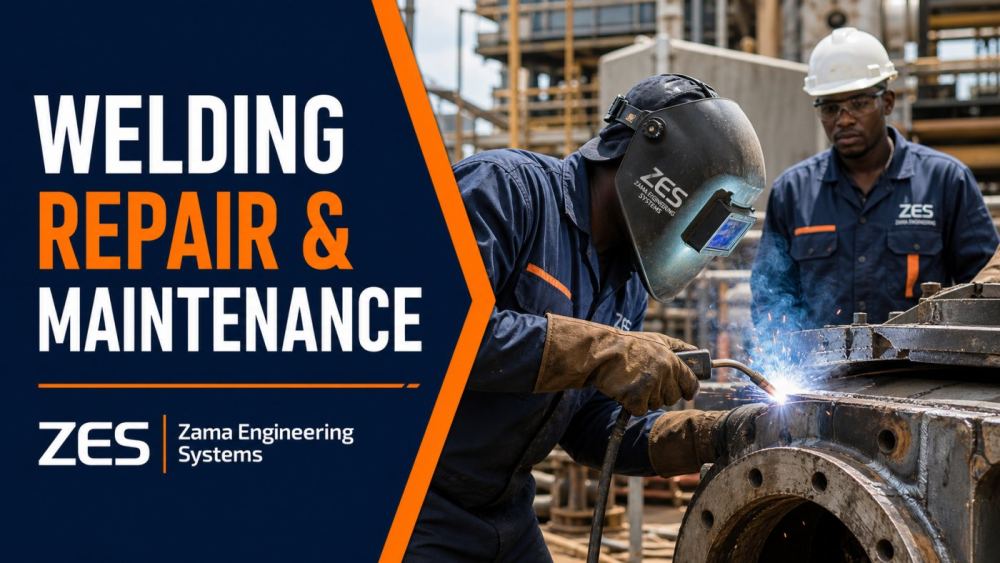
A welding repair company in Kenya should investigate why metalwork failed before covering the visible crack. ZES supports commercial and industrial clients with risk triage, planned repair scopes and recurring metalwork maintenance. Emergency work is prioritised according to safety and operational consequence; response time is confirmed after location, access and scope are known.
First decide whether the asset is safe to inspect
Keep people away from unstable gates, stairs, roofs, platforms, racks, machinery guards and supports. Stop or isolate connected equipment where required. Photographs and operating history help triage, but no one should climb, load or manipulate a damaged asset merely to improve a quotation photograph.
The arrival assessment records distortion, crack location, corrosion, lost section, loose anchors, previous patches, impact evidence, unusual noise and changes in use. Safety-critical or structural damage may require a qualified engineer, manufacturer or other specialist before a repair method is approved.
Repair the cause, not only the symptom
Common causes include overload, impact, vibration, misalignment, stress concentration, poor drainage, seized hinges, inadequate anchorage, corrosion and an original detail unsuited to the duty. Grinding a crack and laying another weld may produce a neat surface without changing the condition that caused failure.
The permanent scope can include unloading or temporary support, removal of defective material, replacement pieces, approved reinforcement, alignment, welding, new fasteners or anchors, coating restoration and functional testing. Work that changes structural behaviour must follow approved design information.
Factory machinery welding repairs
Machinery repairs require coordination with mechanical, electrical, controls and production teams. Confirm isolation, stored energy, process contamination, alignment and OEM information where available. Welding heat and distortion can affect bearings, seals, machined faces, sensors and alignment even when the repair area appears local.
Plan the return-to-service test before starting. The responsible plant person should authorise operation, observe initial loading and record follow-up checks. If the component is consumable or repeatedly failing, a replacement strategy or redesigned part may be more economical than another shutdown repair.
Turn repeated emergencies into a maintenance contract
A welding maintenance contractor can survey a portfolio and build an asset list for gates, rails, stairs, platforms, barriers, doors, canopies, supports and fabricated furniture. Inspection frequency should reflect exposure and consequence—not an arbitrary monthly visit for every item.
- Record location, asset identity and photograph.
- Check corrosion, cracks, looseness, wear and operation.
- Classify urgent isolation, planned repair and observation items.
- Price defined repairs and obtain approval before variation work.
- Close findings with photographs and completion status.
- Trend repeat failures so the underlying detail can be corrected.
Service levels should state contact routes, coverage, attendance targets if agreed, exclusions, parts and access arrangements. Do not market a guaranteed nationwide emergency time unless the resources and contract actually support it.
Evidence after a repair
Record the defect, assessment, approved method, work completed, inspection, functional test, usage restriction and recommended review date. Photographs are especially useful where coating later hides the repair. A repair warranty should define its scope and exclude unapproved overload or changes.
For controlled site-callout planning, see on-site and mobile welding services. New fabricated replacements can be developed through custom metal fabrication.
Failure-assessment inputs
Collect the asset’s purpose, approximate age, material information, normal load, recent impact or operational change, maintenance history and previous repairs. Mark when the defect appeared and whether it grows under use. Photographs of the whole assembly can reveal misalignment or support conditions that a close-up misses.
Where failure could injure people or damage critical equipment, engage the appropriate competent designer or manufacturer. A welder can identify visible preparation and access needs, but should not be asked to declare structural capacity outside the agreed competence and evidence.
Repairability of corroded steel
Surface rust, pitting and deep section loss require different responses. Cleaning may reveal that material is too thin for a reliable weld. Inspect moisture sources, drainage, contact with soil or masonry and inaccessible internal corrosion. Patching onto weak surrounding steel only moves the boundary of the problem.
A repair proposal can define cut-out limits, replacement section, reinforcement, anchorage and coating. If widespread deterioration makes repair uneconomical, compare replacement cost and downtime. Keep a note of inaccessible areas that need future monitoring.
Repair method and technical approval
The method should identify unloading or support, defect removal, joint preparation, alignment, material, welding sequence, inspection, coating and functional test. Structural, pressure-containing, lifting or original-equipment components may need specialist procedures and approval. Do not weld a fuel tank or hazardous container under a general metalwork repair scope.
Agree acceptance before starting. A repair might restore operation, extend service temporarily, or form part of a permanent engineered solution. State which outcome applies and any restriction on load, speed or duration.
Emergency repair HSE
Urgency does not remove the need for isolation, stability, permits, fire controls and competent access. Emergencies often occur at night, in bad weather or during operational pressure, increasing the risk of incomplete information. Assign one person with authority to stop work and one person to accept return to service.
Secure the area before tools arrive. If a temporary prop or barrier is installed, label it and prevent unauthorised removal. Communicate what remains unsafe at shift change. The close-out note should distinguish completed repair from temporary risk control.
Planned maintenance scope and service levels
Start with an asset register and criticality rating. An external security gate, public staircase, roof access and low-use storage stand do not need identical frequency. Define inspection items, photographs, defect classification, emergency contact, quotation approval, planned repair windows and reporting format.
A service-level agreement may set acknowledgement and attendance targets for covered locations, but must state hours, geography, access dependencies and exclusions. Parts, lifting, structural design and major replacement can be priced separately. Review performance using closed defects and repeat-failure reduction, not number of visits alone.
Repair QA and follow-up
Inspection should cover the repair and its cause: alignment, anchors, moving hardware, surrounding cracks, vibration or drainage. Conduct the agreed function test under controlled conditions. Record coating restoration and photographs. For a critical repair, schedule a defined follow-up after initial use.
Trend repeat locations. Three repairs to the same hinge, base plate or guard may justify redesign, traffic management or operational change. Maintenance data should inform capital replacement rather than normalise recurring failure.
Repair buyer checklist
- Isolate unsafe assets and protect people first.
- Describe duty, history and recent changes.
- Assess surrounding material, anchors and alignment.
- Identify specialist design or OEM approval.
- Define temporary versus permanent outcome.
- Agree inspection, function test and restrictions.
- Restore coating and record concealed work.
- Schedule follow-up and track repeat defects.
What drives repair cost?
Cost depends on access, dismantling, support, defect extent, material, preparation, replacement pieces, specialist approval, permits, lifting, working hours, coating and testing. An emergency callout may only establish the safe permanent scope. Ask for separate provisional and confirmed work where hidden condition controls price.
Repair decision examples
A loose handrail may need new anchors or substrate repair rather than weld. A sagging gate may need post, hinge and wheel correction. A cracked platform bracket may reveal overload or vibration. A repeatedly torn machine guard may be struck because its access sequence is wrong. Each case starts with the whole assembly and operating history.
When replacement is chosen, keep the failed component and photographs until the new detail is approved. They help establish interfaces and failure causes, but should not be copied without correcting the weakness. Where practical, inspect similar assets for the same early symptom.
Questions to ask a repair contractor
- What evidence supports the proposed failure cause?
- Is the surrounding parent material sound?
- Does the asset need unloading, temporary support or design review?
- Which part is temporary and which is permanent?
- What inspection and return-to-service test will be performed?
- How will corrosion protection be restored?
- When should the repair be checked again?
Building a repair budget
Use condition categories rather than a single lump sum for unknown assets. Price defined minor repairs, provisional invasive work and major replacements separately. Include access, permits, lifting, coating and operational shutdown. A small paid survey can prevent awarding a cheap schedule that excludes the repairs most likely to control safety and downtime.
Protecting failure evidence
Before grinding or straightening, photograph the defect, surrounding assembly and asset identification. Keep removed pieces where practical until the repair decision is closed. Evidence helps a competent reviewer distinguish impact, fatigue, corrosion and poor alignment. It also protects future maintenance teams from repeating the same cosmetic patch.
Frequently asked questions
Do you provide emergency commercial welding?
ZES can triage urgent requests, but attendance depends on location, safety, technician availability, access and the information provided. Immediate isolation may be the first action.
Is a cracked weld always the welder’s fault?
No. Cracks can result from design, duty, impact, vibration, corrosion, material, fit-up or workmanship. Assessment should consider the whole failure rather than assume one cause.
Can maintenance be priced annually?
Yes after an asset survey defines quantities, inspection frequency, coverage, exclusions and how corrective work is approved.