
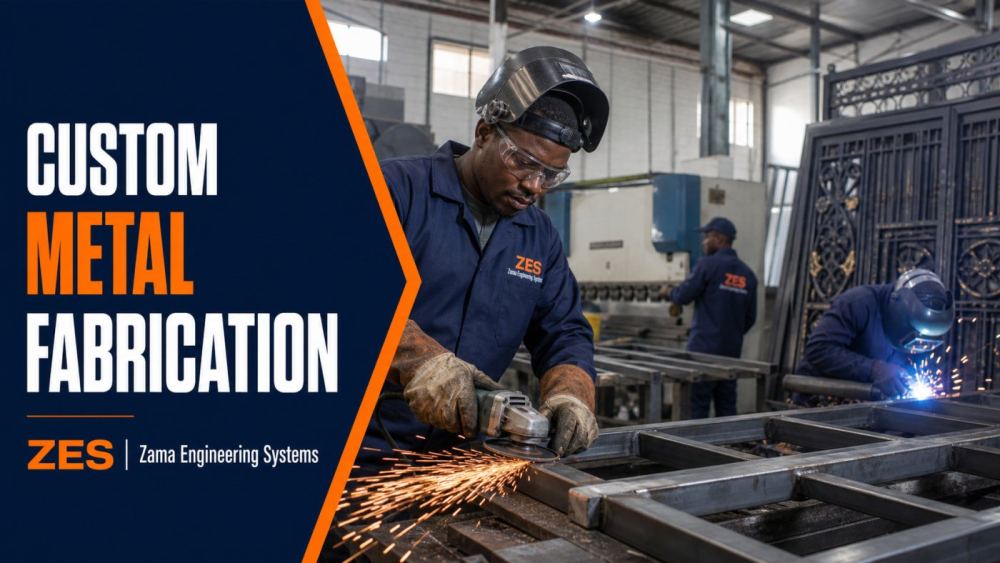
Custom metal fabrication services in Kenya are most valuable when a standard catalogue item cannot meet the site, equipment or user requirement. ZES helps buyers define the problem, verify interfaces, approve a workable detail and inspect the finished component. Custom does not mean undocumented: dimensions, material, finish, safe use and acceptance still need to be clear.
Turn the operational problem into a fabrication brief
Explain why the existing product or arrangement is unsuitable. The reason may be an unusual opening, equipment footprint, hygiene requirement, security risk, maintenance-access problem, load, appearance or the need to match an existing system. Identify the people who use or service the item and the conditions it experiences.
Useful inputs include site photographs, sketches, samples, equipment manuals, interface dimensions, preferred materials, coating requirements and quantity. Flag dimensions that cannot be taken until shutdown or dismantling. If loads or public safety are involved, obtain the necessary professional design information before production.
Prototype, sample or direct production?
A first article is valuable for repeat furniture, brackets, guards, cabinets, trolleys and stands. It lets the buyer check fit, ergonomics, access, clearances, appearance and cleaning before committing to a batch. For a one-off installed frame, a full prototype may be uneconomical, but templates, mock-ups or digital/shop drawings can reduce risk.
Approve changes in writing. A small alteration to a handle, hinge or hole pattern can affect every unit in a batch. The production record should identify which sample or drawing controls the final work.
Material, finish and maintainability
The apparent cheapest material may be expensive if it corrodes, distorts, cannot be cleaned or needs frequent repainting. Choose material and section around exposure, stiffness, weight, availability and future repair. External hollow sections need attention to water entry and trapped moisture. Dissimilar metals and chemical exposure may require specialist advice.
Specify the visible standard of weld finishing and coating sample where appearance matters. Do not grind functional welds merely to make every joint look flat unless the detail and procedure allow it. Design removable panels, consumable wear parts and service access so maintenance does not destroy the component.
What a custom-fabrication quotation should state
- Approved drawing, sketch, sample or dimensional schedule.
- Material, thickness, section and purchased hardware.
- Quantity, prototype arrangements and batch tolerances.
- Surface preparation, coating and colour.
- Delivery, installation, anchors and client interfaces.
- Inspection, functional testing and defect correction.
- Assumptions, exclusions, lead time and approval dates.
For a credible comparison, issue the same information to each fabricator. Ask whether design development is included or whether the contractor is pricing only an already-defined component.
Common custom components
Applications can include equipment guards, cabinets, brackets, frames, counters, trolleys, storage stands, access panels, gates and service platforms. The right detail depends on actual duty. ZES does not claim that one photograph or a previous project is a universal design.
Where the main need is a commercial building feature, see commercial staircase, canopy and shopfront metalwork. For installed steel that has failed, begin with welding repair assessment.
Custom-fabrication design inputs
Convert informal requirements into measurable inputs: envelope dimensions, interfaces, payload, operating movement, human reach, cleaning, expected life, environment and the consequence of a part loosening or failing. Identify fixed dimensions and those the fabricator may propose. If the item must match existing equipment, record datum points rather than measuring from damaged edges.
State applicable architectural, structural, machinery, food, accessibility or safety requirements. A fabricator can help develop manufacture-ready detail, but specialist design responsibility must be explicit. Where a client owns intellectual property or provides confidential drawings, agree document handling and permitted use.
Design for manufacture and assembly
A concept may be difficult to cut, bend, weld, coat, transport or install as drawn. Review available section sizes, bend radii, tool access, weld sequence, distortion, fasteners and component splits. Simplifying a hidden bracket can reduce cost without compromising duty, while oversimplifying a moving or loaded interface can cause failure.
Design pieces that fit through doors and can be lifted safely. Use repeatable datum features and tolerances. Decide which joints are welded, bolted or otherwise assembled, and whether the client needs to dismantle the product later. Avoid sealed cavities or inaccessible coating faces unless the detail deliberately manages them.
Hardware and bought-out components
Locks, hinges, castors, bearings, slides, gas struts, handles, latches and fasteners often control performance more than the fabricated frame. Specify duty, environment and supplier reference where needed. Confirm availability before finalising hole patterns. Cheap untraceable hardware can make a custom product impossible to maintain.
The handover should identify replacement parts and adjustment points. Protect precision or plated hardware during welding and coating. Where electrical devices or sensors mount to the item, coordinate cable routes, earth bonding and service access with the competent electrical or controls team.
Custom-work HSE
Prototype testing must not expose users to an unproven item. Use controlled loads or function tests specified by a competent person. During trial fitting, support the component and isolate equipment. A close dimensional fit does not justify placing hands near an unisolated machine.
Workshop hazards include lifting irregular shapes, sharp edges, unstable assemblies and stored spring or counterweight energy. Plan fixtures and lifting points. At the client site, add permits, public segregation, working-at-height controls and protection of existing finishes.
Quality plan for one-off and repeat work
For a one-off item, identify critical-to-fit and critical-to-function dimensions. Record them before coating. For batches, use an approved first article, jig checks and a sampling plan. Inspect parts across the production run because a worn jig or changed material can introduce drift.
Check squareness, flatness, operation, hardware, sharp edges, finish and required load or fit. Label variants clearly. If the client approves a deviation, update the reference rather than expecting the workshop to remember it for a future order.
Custom-fabrication cost drivers
Engineering development, surveys, prototypes and approvals can be a larger share of a one-off price than raw material. Complexity, tight tolerances, forming, machining, special hardware, finish, trial assembly, testing and installation also matter. A batch may lower unit cost only after the design is stable.
Ask for separate prices for design development, prototype, production quantity, finish, delivery and installation. This lets the buyer stop or revise after the prototype without disguising sunk work in a unit rate.
Buyer checklist for a bespoke component
- State the real problem and intended users.
- Mark critical interfaces and dimensions.
- Assign technical approval and intellectual-property rights.
- Approve material, hardware and finish.
- Decide whether a prototype or first article is required.
- Agree tolerances and acceptance tests.
- Plan delivery, lifting, assembly and installation.
- Keep the final revision and replaceable-part list.
Questions that improve a custom-fabrication result
- What exact problem does the component solve?
- Which dimensions and interfaces cannot change?
- Who approves function, appearance and safety?
- Does the item need to be transported or dismantled?
- Which parts will wear and how are they replaced?
- What cleaning, weather or chemical exposure applies?
- What must the prototype demonstrate before batching?
- Which files and rights does the buyer receive?
Managing tolerances at an existing site
Old walls, floors and equipment are rarely perfectly straight or square. Identify a reliable datum and measure at the installation condition. Decide whether adjustment comes from slots, packers, a secondary frame or site trimming. Uncontrolled large gaps filled by weld are not a tolerance strategy. For repeated units fitted to varied openings, group measured sizes or use an approved adjustable detail.
Handover for a bespoke item
Give the client the final drawing or recorded sample, revision, materials, hardware references, finish, inspection, operating guidance and replaceable parts. Explain adjustment and safe removal. If the item has a capacity, orientation or prohibited use, communicate and mark it as the approved design requires. A future workshop should not have to reverse-engineer the product from a broken example.
Acceptance in the intended environment
A workshop demonstration may not reveal uneven floors, restricted access, vibration, glare, cleaning equipment or the reach of the real operator. Complete final acceptance at the intended site after installation. Observe a representative use cycle, then check fasteners, alignment, stability and interference. Record any approved adjustment in the final revision.
Where the buyer orders future units, reference that final installed revision—not the early workshop sample. This prevents a successful site correction from disappearing from the next batch.
Frequently asked questions
Can ZES manufacture a batch from one sample?
Yes, after confirming that the sample is the approved reference and recording any required changes. A first-article check should precede the full batch.
Can you copy a product from the internet?
An image can explain intent but rarely provides dimensions, material, load or intellectual-property permission. ZES develops a site-specific, lawful brief instead of treating a photograph as a fabrication drawing.
What causes custom projects to delay?
Unconfirmed dimensions, changing approvals, unavailable hardware, unclear finish and late access to the installation point are common causes. A decision schedule should accompany the quotation.