
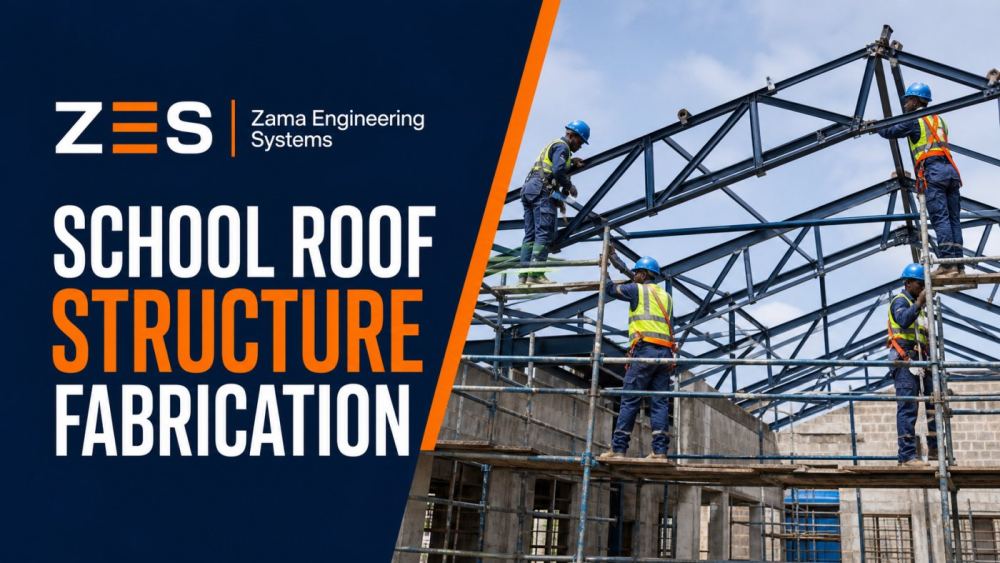
School roof structure fabrication should deliver safe, durable and maintainable steelwork—not simply a visually complete weld. Zama Engineering Systems (ZES) supports schools, colleges, churches operating schools, education developers, architects and contractors with engineer-approved information, roof survey, truss and member schedules, controlled workshop fabrication, coating, transport, safe erection and connection inspection. Every quotation starts with the real operating requirement, site condition and acceptance criteria.
This guide helps decision-makers define a credible scope, compare proposals and avoid preventable failures. It covers classroom roof trusses, hall roofs, walkway canopies, dormitory roofs, dining-hall frames and repair strengthening details. Final quantities, materials, structural details, access requirements and regulated approvals are confirmed after a site survey and, where necessary, input from appropriately qualified professionals.
Understanding School roof structure fabrication
The value of professional fabrication comes from how well the finished item performs in its environment. The same detail may face weather, frequent handling, vibration, impact, cleaning chemicals or heavy public use. A competent contractor considers material thickness, joint layout, heat distortion, drainage, corrosion protection, anchorage, safe edges and future repair access before production begins.
For this service, typical assets include classroom roof trusses, hall roofs, walkway canopies, dormitory roofs, dining-hall frames and repair strengthening details. The design should match the duty rather than copy a photograph without dimensions or load information. Where structural adequacy or public safety is involved, approved drawings and competent review are essential.
What a professional scope should include
A useful request for quotation identifies the site, purpose, dimensions, expected users, operating environment, finish, access conditions, programme and handover evidence. The expected delivery sequence is engineer-approved information, roof survey, truss and member schedules, controlled workshop fabrication, coating, transport, safe erection and connection inspection. Any exclusions—civil foundations, electrical work, painting, lifting, design certification or removal of old work—should be stated clearly.
Material and finish decisions
Material selection affects strength, appearance, corrosion resistance, availability and repairability. The specification should name the relevant steel form, section size or performance requirement. Outdoor work normally requires thoughtful surface preparation and a coating system suited to exposure. Painting over rust, moisture or welding residue is not durable corrosion protection.
Measurements and drawings
Site dimensions should be verified before fabrication. Drawings or approved sketches should show overall size, openings, fixing points, moving clearances, connection details and finish. Written approval protects both the client and fabricator when several people are involved in the decision.
Quality, safety and acceptance
Relevant risks include unapproved structural changes, unstable erection, wind exposure, incorrect connections, water traps, coating damage and unsafe occupied-site work. Quality control therefore begins before welding. Material condition, joint preparation, alignment and fit-up should be checked. During work, the team controls heat, sequence and access. After welding, the item is inspected, edges are made safe, moving parts are tested and protective finishes are completed.
Acceptance should be evidence-based. Check dimensions, alignment, stability, anchorage, operation, surface finish, drainage, clearance and any specified load or functional test. Concealed connections should be photographed before covering. Defects and temporary measures should be recorded with a responsible person and completion date.
Questions procurement teams should ask
- Has the contractor inspected the real site and operating conditions?
- Are materials, section sizes, quantities and finishes clearly specified?
- Who is responsible for design information and structural approval?
- How will occupied areas, students, customers or operations be protected?
- Which measurements, samples or drawings require approval?
- What inspection and testing will demonstrate completion?
- What warranty, maintenance guidance and response process are included?
How ZES approaches the project
Discovery and survey
ZES records the operational problem, users, dimensions, condition, environment, access and consequences of failure. Urgent safety issues are separated from optional improvements. This phase is adapted specifically to School roof structure fabrication and the client’s site conditions.
Scope and proposal
The team translates findings into deliverables, quantities, assumptions, exclusions, programme and acceptance requirements. Options are presented where material, finish or phasing affects cost. This phase is adapted specifically to School roof structure fabrication and the client’s site conditions.
Fabrication planning
Measurements and approved details are confirmed before cutting. Materials, jigs, sequences, access and protective controls are planned to reduce rework and disruption. This phase is adapted specifically to School roof structure fabrication and the client’s site conditions.
Production and installation
Competent technicians fabricate, prepare and install the work using controlled procedures. Existing property and live operations are protected, and concealed details are recorded. This phase is adapted specifically to School roof structure fabrication and the client’s site conditions.
Inspection and handover
The completed work is checked against the agreed scope. The client receives operating or maintenance guidance, warranty information and a record of any follow-up action. This phase is adapted specifically to School roof structure fabrication and the client’s site conditions.
Commercial planning considerations
1. Define the problem before choosing a design
For School roof structure fabrication, this decision influences durability, cost and safe use of classroom roof trusses, hall roofs, walkway canopies, dormitory roofs, dining-hall frames and repair strengthening details. Record the agreed requirement, responsible person and acceptance evidence. Doing so reduces disputes, prevents repeated site work and gives future technicians reliable information.
2. Prioritise public and worker safety
For School roof structure fabrication, this decision influences durability, cost and safe use of classroom roof trusses, hall roofs, walkway canopies, dormitory roofs, dining-hall frames and repair strengthening details. Record the agreed requirement, responsible person and acceptance evidence. Doing so reduces disputes, prevents repeated site work and gives future technicians reliable information.
3. Confirm dimensions at the installation point
For School roof structure fabrication, this decision influences durability, cost and safe use of classroom roof trusses, hall roofs, walkway canopies, dormitory roofs, dining-hall frames and repair strengthening details. Record the agreed requirement, responsible person and acceptance evidence. Doing so reduces disputes, prevents repeated site work and gives future technicians reliable information.
4. Specify the finish and exposure environment
For School roof structure fabrication, this decision influences durability, cost and safe use of classroom roof trusses, hall roofs, walkway canopies, dormitory roofs, dining-hall frames and repair strengthening details. Record the agreed requirement, responsible person and acceptance evidence. Doing so reduces disputes, prevents repeated site work and gives future technicians reliable information.
5. Plan work around occupied or operational areas
For School roof structure fabrication, this decision influences durability, cost and safe use of classroom roof trusses, hall roofs, walkway canopies, dormitory roofs, dining-hall frames and repair strengthening details. Record the agreed requirement, responsible person and acceptance evidence. Doing so reduces disputes, prevents repeated site work and gives future technicians reliable information.
6. Separate structural design from fabrication responsibility
For School roof structure fabrication, this decision influences durability, cost and safe use of classroom roof trusses, hall roofs, walkway canopies, dormitory roofs, dining-hall frames and repair strengthening details. Record the agreed requirement, responsible person and acceptance evidence. Doing so reduces disputes, prevents repeated site work and gives future technicians reliable information.
7. Require written approval for substitutions
For School roof structure fabrication, this decision influences durability, cost and safe use of classroom roof trusses, hall roofs, walkway canopies, dormitory roofs, dining-hall frames and repair strengthening details. Record the agreed requirement, responsible person and acceptance evidence. Doing so reduces disputes, prevents repeated site work and gives future technicians reliable information.
8. Check interfaces with walls, slabs, roofs and services
For School roof structure fabrication, this decision influences durability, cost and safe use of classroom roof trusses, hall roofs, walkway canopies, dormitory roofs, dining-hall frames and repair strengthening details. Record the agreed requirement, responsible person and acceptance evidence. Doing so reduces disputes, prevents repeated site work and gives future technicians reliable information.
9. Allow safe access for installation and future maintenance
For School roof structure fabrication, this decision influences durability, cost and safe use of classroom roof trusses, hall roofs, walkway canopies, dormitory roofs, dining-hall frames and repair strengthening details. Record the agreed requirement, responsible person and acceptance evidence. Doing so reduces disputes, prevents repeated site work and gives future technicians reliable information.
10. Record concealed anchors and connections
For School roof structure fabrication, this decision influences durability, cost and safe use of classroom roof trusses, hall roofs, walkway canopies, dormitory roofs, dining-hall frames and repair strengthening details. Record the agreed requirement, responsible person and acceptance evidence. Doing so reduces disputes, prevents repeated site work and gives future technicians reliable information.
11. Test moving parts and user clearances
For School roof structure fabrication, this decision influences durability, cost and safe use of classroom roof trusses, hall roofs, walkway canopies, dormitory roofs, dining-hall frames and repair strengthening details. Record the agreed requirement, responsible person and acceptance evidence. Doing so reduces disputes, prevents repeated site work and gives future technicians reliable information.
12. Plan corrosion inspection and repainting
For School roof structure fabrication, this decision influences durability, cost and safe use of classroom roof trusses, hall roofs, walkway canopies, dormitory roofs, dining-hall frames and repair strengthening details. Record the agreed requirement, responsible person and acceptance evidence. Doing so reduces disputes, prevents repeated site work and gives future technicians reliable information.
13. Keep a close-out list for incomplete details
For School roof structure fabrication, this decision influences durability, cost and safe use of classroom roof trusses, hall roofs, walkway canopies, dormitory roofs, dining-hall frames and repair strengthening details. Record the agreed requirement, responsible person and acceptance evidence. Doing so reduces disputes, prevents repeated site work and gives future technicians reliable information.
14. Retain drawings and photographs for future repairs
For School roof structure fabrication, this decision influences durability, cost and safe use of classroom roof trusses, hall roofs, walkway canopies, dormitory roofs, dining-hall frames and repair strengthening details. Record the agreed requirement, responsible person and acceptance evidence. Doing so reduces disputes, prevents repeated site work and gives future technicians reliable information.
15. Review the work after the first period of use
For School roof structure fabrication, this decision influences durability, cost and safe use of classroom roof trusses, hall roofs, walkway canopies, dormitory roofs, dining-hall frames and repair strengthening details. Record the agreed requirement, responsible person and acceptance evidence. Doing so reduces disputes, prevents repeated site work and gives future technicians reliable information.
Maintenance and repair planning
Fabricated steelwork should be inspected for corrosion, loose anchors, damaged coatings, cracked joints, distortion, worn hinges, sharp edges and changes in how the item is used. High-traffic and safety-critical assets need more frequent checks. Small defects are normally easier to control before they affect surrounding material or users.
Repairs should address the cause, not only cover the visible crack. Overload, impact, poor drainage, misalignment, vibration and unsuitable base material can make a defect return. ZES can combine planned inspections with welding repair and commercial metalwork maintenance.
Related welding searches covered by this guide
- School roof structure fabrication
- Structural steel fabrication company
Frequently asked questions
How much does the work cost?
Pricing depends on measurements, steel sections, quantity, finish, access, lifting, civil interfaces, design input and installation conditions. A survey produces a more reliable quotation than a generic price.
Can work be completed at our premises?
Many repairs and installations can be completed onsite when fire, power, access and public-safety controls are suitable. Workshop fabrication is often better for accuracy, finish and reducing disruption.
Does ZES provide drawings?
ZES can prepare fabrication information appropriate to the agreed scope. Structural design or certification requirements are confirmed separately and handled by suitably qualified professionals where necessary.
Can existing metalwork be repaired?
Yes, after inspection. Severely corroded, distorted or incorrectly designed components may need replacement rather than cosmetic welding.
How long does fabrication take?
Programme depends on survey access, approvals, material availability, quantity, finish and installation windows. Confirming decisions early prevents avoidable delays.
Request a welding site survey
Send ZES the site location, photographs, approximate measurements, required use and preferred completion date. The team will confirm the appropriate assessment and quotation process.