
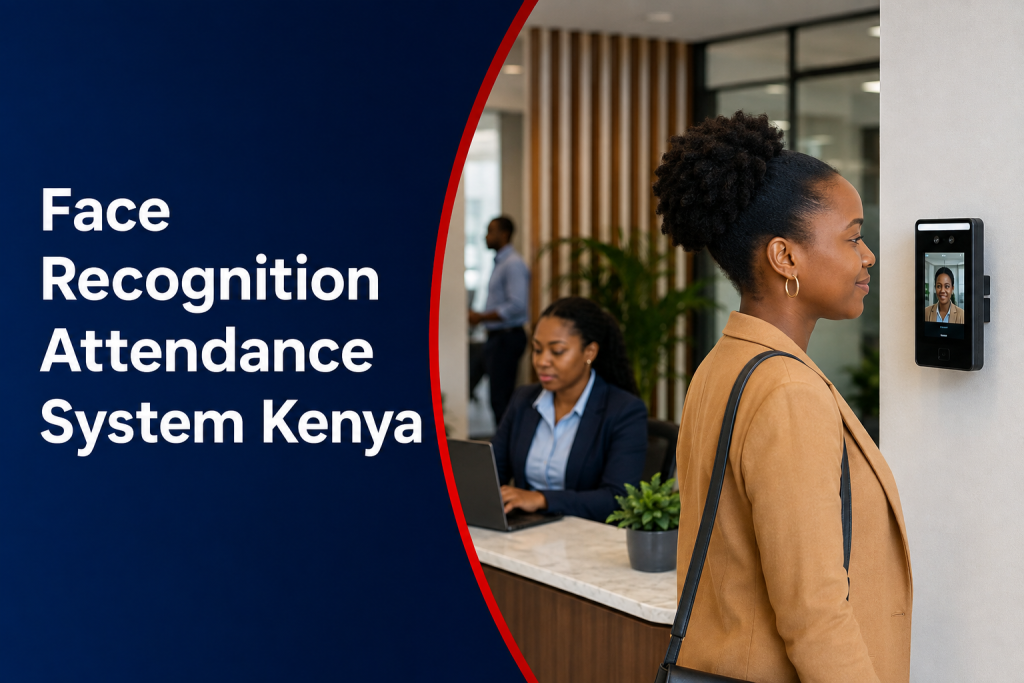
A Face Recognition Attendance System Kenya deployment can provide contactless staff clock-in, but reliable results depend on device placement, enrollment quality, lighting, user flow and responsible biometric-data management. It should be evaluated as a complete attendance process, not just a camera feature.
Where face attendance can work well
Offices, factories, schools and multi-branch businesses may benefit where staff need a quick contactless transaction. The technology is not automatically suitable for every environment. Protective equipment, outdoor glare, crowding, dramatic lighting changes and camera height can affect use.
Placement and lighting
Mount the terminal where users can approach naturally and pause without blocking an entrance. Avoid strong backlighting, direct rain and uncontrolled sunlight where the device is not designed for it. Test morning, midday and evening conditions rather than approving the location from one demonstration.
Enrollment and identity records
Use an approved worker record and a controlled enrollment process. Capture the data required by the selected system, confirm the employee identifier and avoid creating duplicate profiles. Administrators should record when users are added, changed or removed.
Anti-spoofing is not a guarantee
Some devices advertise liveness or anti-spoofing features. Their actual capability varies, so organizations should review manufacturer documentation and test the selected model. Attendance approval should still include exception review and human oversight, especially where records affect pay or discipline.
Shifts, lateness and overtime
The recognition event is only the raw input. The attendance software must apply approved schedules, overnight shifts, grace periods, leave and overtime rules. Managers should investigate missing or unusual punches, and manual adjustments should keep a reason and audit trail.
Fallback for unsuccessful recognition
A legitimate employee may not be recognized because of lighting, appearance changes, injury, disability, device fault or enrollment quality. Define a respectful fallback method and escalation path. Do not allow a failed match to become an automatic payroll deduction or disciplinary conclusion.
Privacy and necessity
Facial templates are biometric data and are treated as sensitive personal data under Kenya’s Data Protection Act. Organizations should assess whether biometric processing is necessary, provide clear information, limit collection and access, secure data and define retention. The ODPC guidance library includes biometric-data and DPIA materials.
Questions to ask a supplier
- What lighting and mounting conditions does the device require?
- Does it store templates, images or both, and where?
- How many users and offline transactions can it support?
- How are duplicate profiles and failed matches handled?
- Can attendance rules and approval workflows match our shifts?
- What export or integration is available for payroll review?
- How are users removed and retained data deleted?
Compare with fingerprint attendance
Fingerprint systems may be cost-effective but can be affected by worn or dirty fingers. Face recognition is contactless but more sensitive to camera position and lighting. A representative pilot is more useful than a generic feature comparison. See fingerprint scanner installation for the alternative workflow.
What affects the system quotation?
Key variables include user capacity, number of terminals, indoor or outdoor placement, mounting and power, branch connectivity, attendance software, shift configuration, payroll exchange, training and support. Ask whether licensing, hosting, upgrades and replacement equipment are one-time or recurring costs.
Frequently asked questions
Will face recognition work with glasses or changed hairstyles?
Performance varies by device, enrollment and environment. Test representative appearance changes during a pilot and retain a controlled fallback for unsuccessful recognition.
Does the system store employee photographs?
Storage design differs. Some systems use facial templates, some retain images, and some use both. The organization should confirm exactly what is captured, stored, transmitted and deleted.
Can it calculate overtime automatically?
Attendance software can calculate proposed totals from configured rules, but authorized supervisors and HR should review overtime and exceptions before payroll or disciplinary decisions.
Request a face-attendance pilot plan
Share your workforce size, branches, shift patterns, environment and payroll process. Request a scoped ZES assessment that includes placement, enrollment, reporting, privacy controls and acceptance tests.