
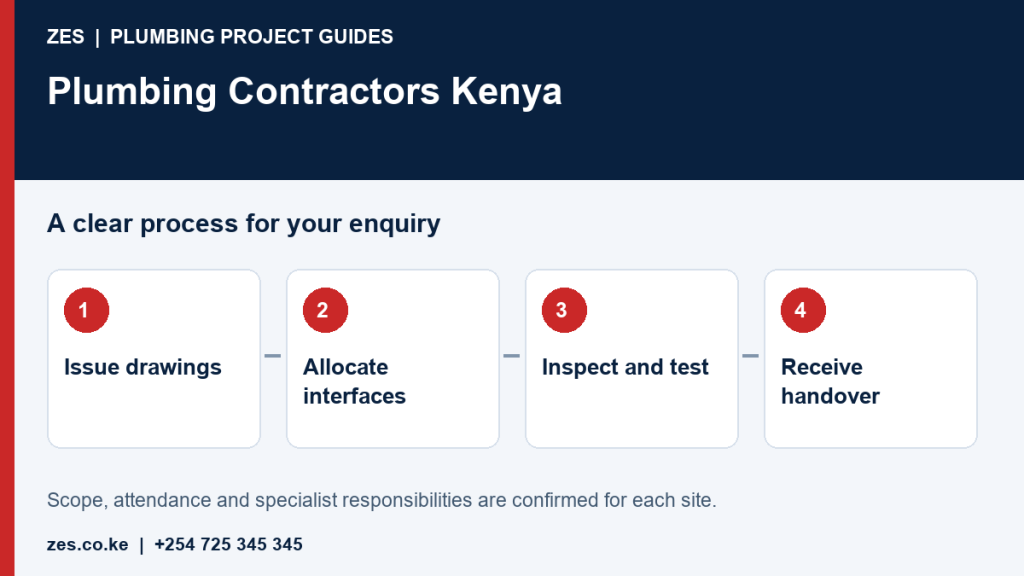
Appointing plumbing contractors in Kenya starts with a coordinated construction scope. Water supply and drainage affect structure, finishes, storage, electrical systems and the operation of the completed building. A tender that lists only bathrooms leaves important interfaces unresolved. This guide helps developers, consultants, main contractors and procurement teams issue comparable information, allocate responsibilities and define acceptance. ZES can review project enquiries and confirm suitable plumbing delivery arrangements against the drawings, site conditions and agreed responsibilities.
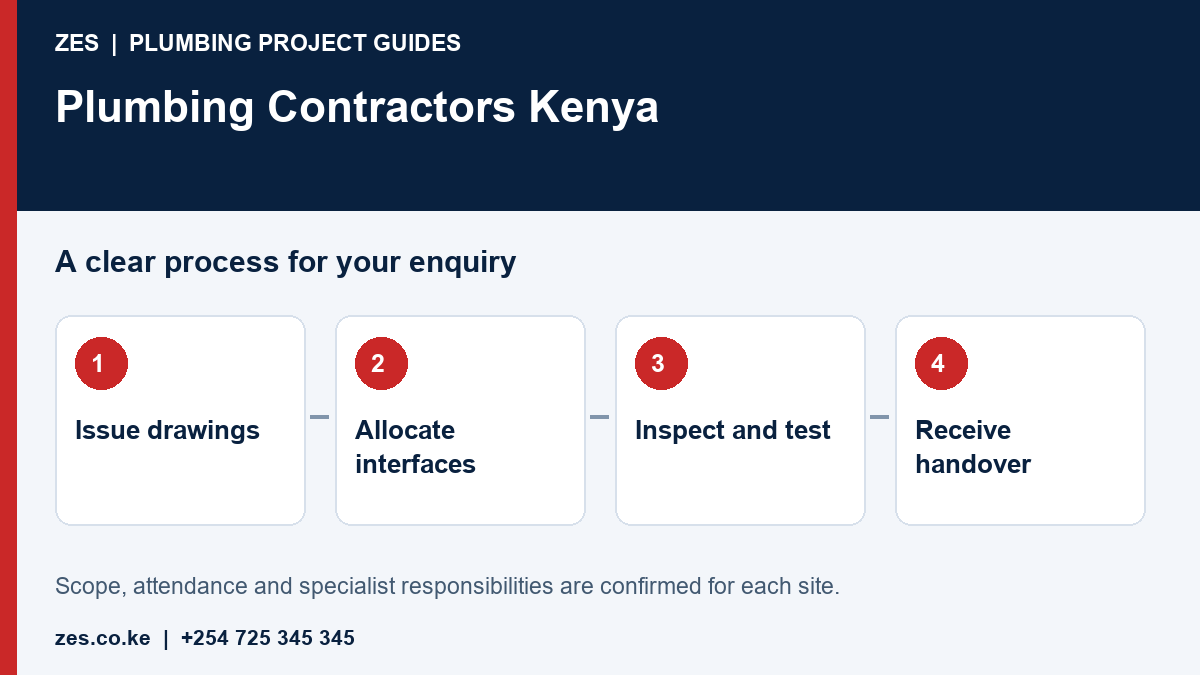
Issue controlled design information
Provide current layouts, specifications, fixture schedules and available water and drainage design. Mark the drawing revision used for pricing and list unresolved queries. Each bidder should receive the same information. Include location, programme, building use, phases and procurement route. Where the design remains incomplete, request explicit assumptions and provisional quantities. Later changes should be reviewed for technical, price and programme effects. Do not let an informal instruction silently replace the basis on which different quotations were compared.
Allocate responsibilities between trades
Identify who provides excavation, sleeves, builders work, waterproofing, pump power, structural supports and reinstatement. Establish responsibility for existing-service connections and necessary permissions. A supplier, plumber and electrician may otherwise each assume another contractor supplies controls or commissioning. Use an interface schedule with owners and dates. The main contractor should coordinate inspection access before ceilings and risers close. Installation ability alone does not establish responsibility for professional design or regulated certification; those roles belong in the appointment.
Approve materials before purchase
Request pipe systems, fittings, valves and fixture details rather than broad descriptions such as best quality. Check suitability for pressure, temperature, water and environment against the actual specification. Review manufacturer information and joint compatibility. Alternatives require the appointed technical approval before ordering. Available spare parts and maintainability influence lifecycle cost. Keep material approvals with procurement records so future maintenance does not depend on guessing what was installed. Clarify who bears the cost of an unapproved substitution and any resulting rework.
Build inspection into the programme
Agree checkpoints for supports, concealed routes, joints, tests and existing-system connections. Methods must suit the material and manufacturer requirements; do not copy a test pressure or duration from another project. Keep records before trenches, walls and ceilings hide the work. Document failed checks, corrective work and repeat tests. Commissioning needs water, safe disposal and coordination with other trades. State acceptance requirements at procurement so the completed job is judged against an agreed basis, rather than an improvised checklist at occupation.
Evaluate price against complete scope
Separate materials, labour, access, testing, commissioning, documentation and exclusions. Clarify taxes, transport and payment stages where applicable. Explain how variations, waiting time and phased mobilisation are priced. A low total with unclear quantities can move risk into later claims. Verify relevant references and qualifications for the required work. Ask who will supervise and attend coordination meetings. A proposal should make it possible to compare the whole agreed outcome, including the cost of supporting works and the consequences of programme constraints.
Specify an operational handover
Require as-built routes, valve identification, test records, material information and equipment instructions. Name the operator who receives guidance. Record defects and the reporting process, including applicable written warranty terms. For a phased development, define the handed-over zones and responsibility for unfinished sections. Owners should be able to identify a component and isolate an affected area without reconstructing the installation from memory. Clear records also help future contractors assess extensions without disturbing unrelated parts of the building.
Information to include in your project brief
- Drawing revisions and specification
- Fixture and material schedules
- Trade interface responsibilities
- Inspection and handover requirements
Frequently asked questions
Must the installer provide the design?
Only when that responsibility is expressly included and supported by appropriate competence. Specify design, installation and certification roles separately.
Can quotations be obtained before design completion?
Preliminary budgets can be useful when assumptions are clear. A firm scope requires sufficiently resolved design and quantities.
What makes quotations comparable?
The same drawings, material basis, quantities, interfaces, testing requirements and exclusions.
Related plumbing planning guides
- Plumbing Installation Nairobi: A New-Build Planning and Handover Guide
- Water Pump Installation Nairobi: Duty, Controls and Commissioning Guide
Discuss your plumbing requirement with ZES
Share the location, property use, symptoms or proposed work, and available drawings or photographs. ZES will review the information and confirm the suitable scope, any assessment arrangements and current attendance availability. Materials, responsibilities, programme and applicable terms are agreed in the written quotation.
Explore ZES plumbing services · Request a plumbing quotation · Call +254 725 345 345