
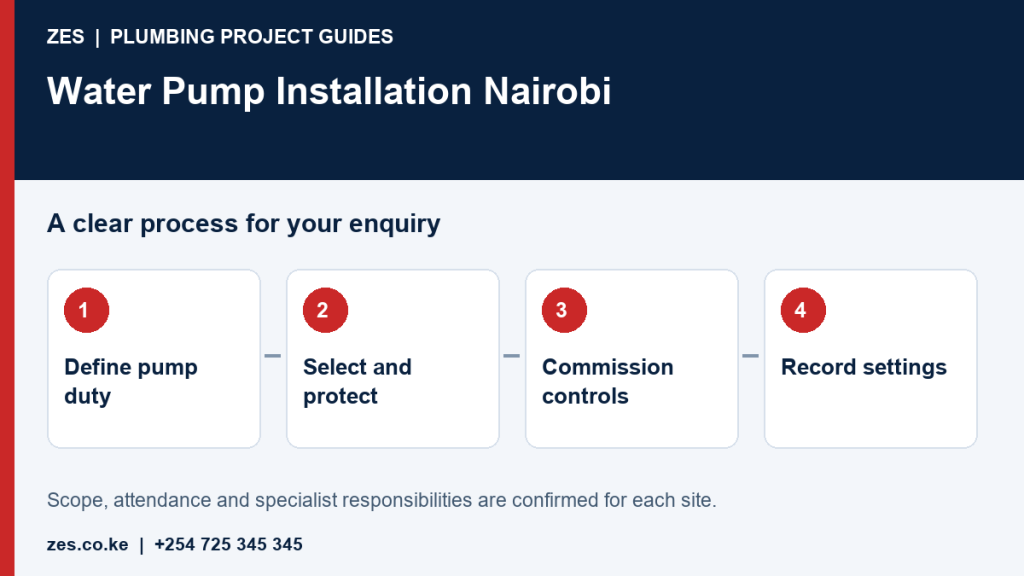
Water pump installation in Nairobi starts with the duty: moving water to storage, boosting a building supply or serving particular equipment. Choosing by motor power alone can produce poor performance or unnecessary cost. Owners should understand the source, demand, head, controls and service access before purchasing. This guide explains the information required for selection and handover. ZES reviews pump-related plumbing requirements and confirms competent electrical and technical coordination appropriate to the proposed installation.
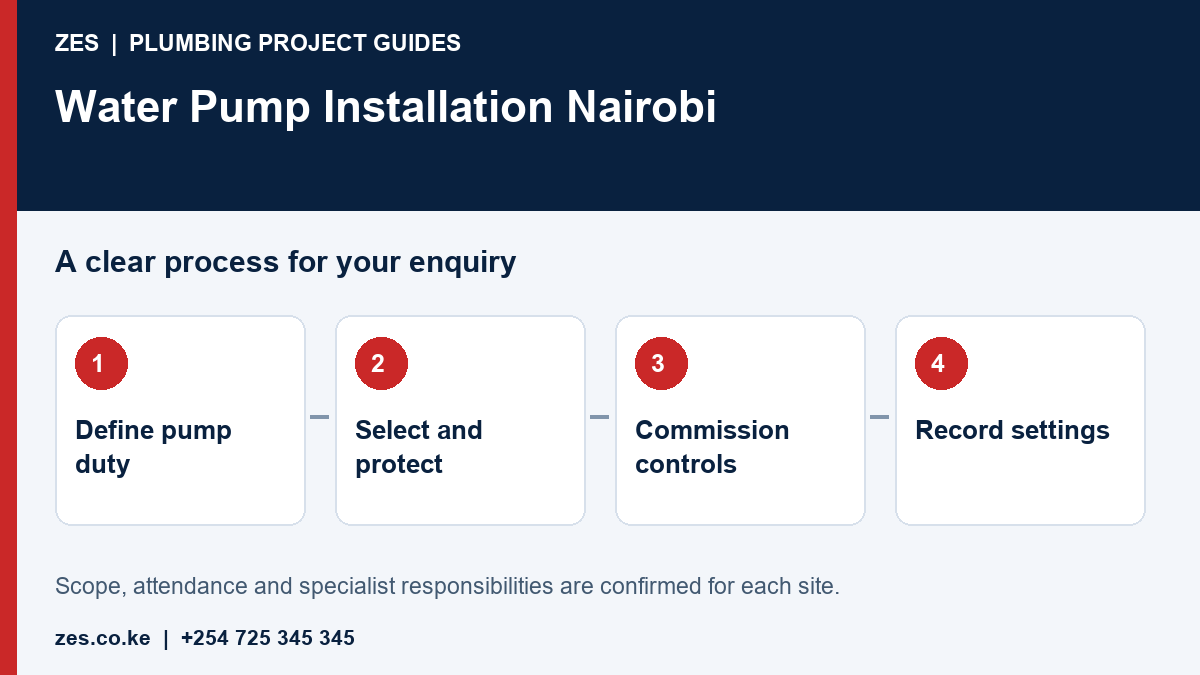
Describe the source and destination
Identify where water comes from, where it must go and when it is needed. Record tank positions, approximate level differences, pipe routes and served fixtures. Explain intermittent supply and whether the duty is transfer or pressure boosting. Existing nameplate details and accessible photographs are helpful. The old motor rating is not a complete design basis because occupancy and routes may have changed. A useful assessment considers available water, demand and the whole distribution arrangement before recommending another pump.
Select against flow and head
The equipment needs to deliver the required flow against system head, including elevation, pipe losses and required outlet conditions. Establish these through the design assessment and manufacturer performance information. Bigger equipment is not a universal remedy. Restrictive pipes, limited supply or unsuitable suction conditions may remain unresolved. Ask the proposal to state the selection basis and operating limits. A variable commercial duty may need a different arrangement from a domestic transfer system. Compare the proposed equipment against the actual use, rather than a headline power rating.
Agree controls and protection
Document how the pump starts, stops and responds to an empty source, full destination or fault. Running without adequate water can damage pump components; dry-running protection must suit the equipment and installation. Level controls, pressure controls and other devices should be compatible. Electrical supply and protective measures need competent responsibility. Keep settings and safe isolation available to authorised staff. Explain which adjustments an operator may make and when a technician should attend. A control box is useful only when its function and limitations are understood.
Provide a maintainable location
Assess weather exposure, ventilation, vibration, noise, flooding and service access. Follow model-specific manufacturer instructions for position and other installation conditions. Support connected pipework appropriately. Replacement should be possible without dismantling unrelated services. Specify who provides the base, shelter, drainage and electrical connection. Where occupied premises depend on the pump, agree the interruption and communication plan. A neat installation still needs practical clearance for inspection, isolation and repair. Hidden or inaccessible equipment can turn routine servicing into avoidable disruption.
Test the operating sequence
Initial filling or priming and start-up should follow manufacturer requirements with competent personnel. Test the agreed start, stop and fault behaviour, rather than only observing the motor run. Record operating conditions, settings and checks. Inspect connections and performance of the served system. Demonstrate the controls and fault-reporting process to the owner representative. Do not repeatedly reset faulting equipment without establishing the cause and following the instructions. Commissioning evidence provides a useful baseline for later diagnosis when demand or behaviour changes.
Compare total ownership cost
Consider the pump, controls, pipe alterations, power, protection, installation, access and commissioning. Clarify exclusions and spare-part availability. Energy use depends on the real duty and operation, so a product description alone cannot establish a savings promise. Record recurring cycling, pressure loss and replaced components in maintenance history. Repeated faults may call for a system review rather than another equipment purchase. Keep selection and commissioning documents available so future decisions reflect the original operating basis and any changes made since installation.
Information to include in your project brief
- Source and destination levels
- Required flow and outlet duty
- Existing pump and pipe information
- Electrical and control responsibilities
Frequently asked questions
Is horsepower enough to select a pump?
No. Flow, head, source conditions, duty and controls need assessment against manufacturer information.
Will a pump always solve low pressure?
No. Restricted pipes, valves and inadequate source supply are among the conditions that need diagnosis first.
Who provides electrical work?
The quotation should identify the competent party responsible for supply, isolation, protection, controls and electrical commissioning.
Equipment reference: Grundfos explanation of dry-running protection. Follow the instructions for the actual pump model.
Related plumbing planning guides
- Commercial Plumbing Contractors Kenya: A Business Continuity and Procurement Guide
- Plumbing Services Kiambu: Repairs, Renovations and Local Project Planning
Discuss your plumbing requirement with ZES
Share the location, property use, symptoms or proposed work, and available drawings or photographs. ZES will review the information and confirm the suitable scope, any assessment arrangements and current attendance availability. Materials, responsibilities, programme and applicable terms are agreed in the written quotation.
Explore ZES plumbing services · Request a plumbing quotation · Call +254 725 345 345