
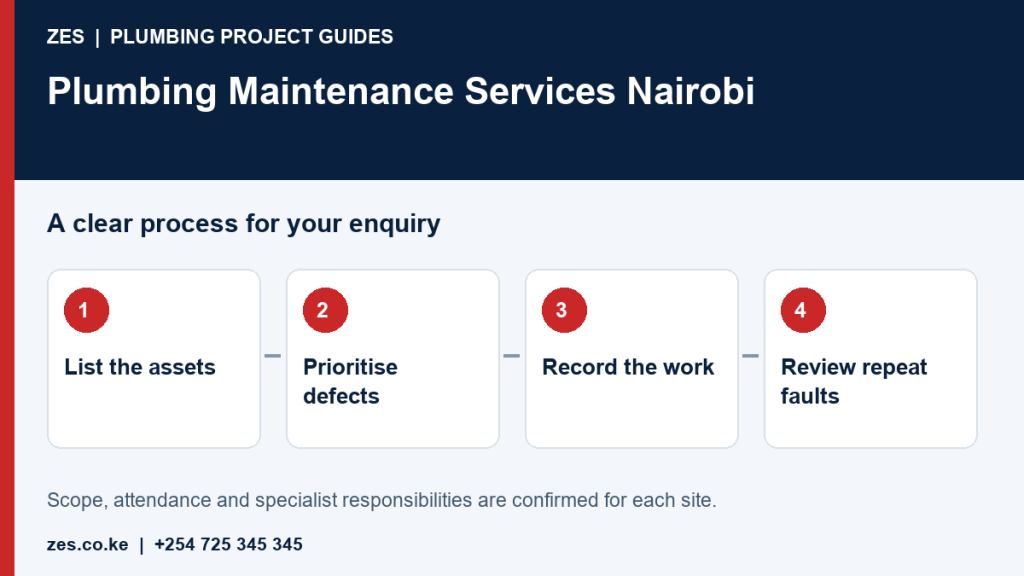
Plumbing maintenance services in Nairobi are most useful when inspection results connect to repair history and operating priorities. Property managers often inherit incomplete drawings, shared tanks and several generations of pipework. A planned approach turns those fragments into a usable maintenance record. This guide explains asset registers, proportionate inspection, repair approval and verification. ZES accepts maintenance enquiries for existing plumbing installations, with tasks, attendance and reporting arrangements agreed for the particular property.
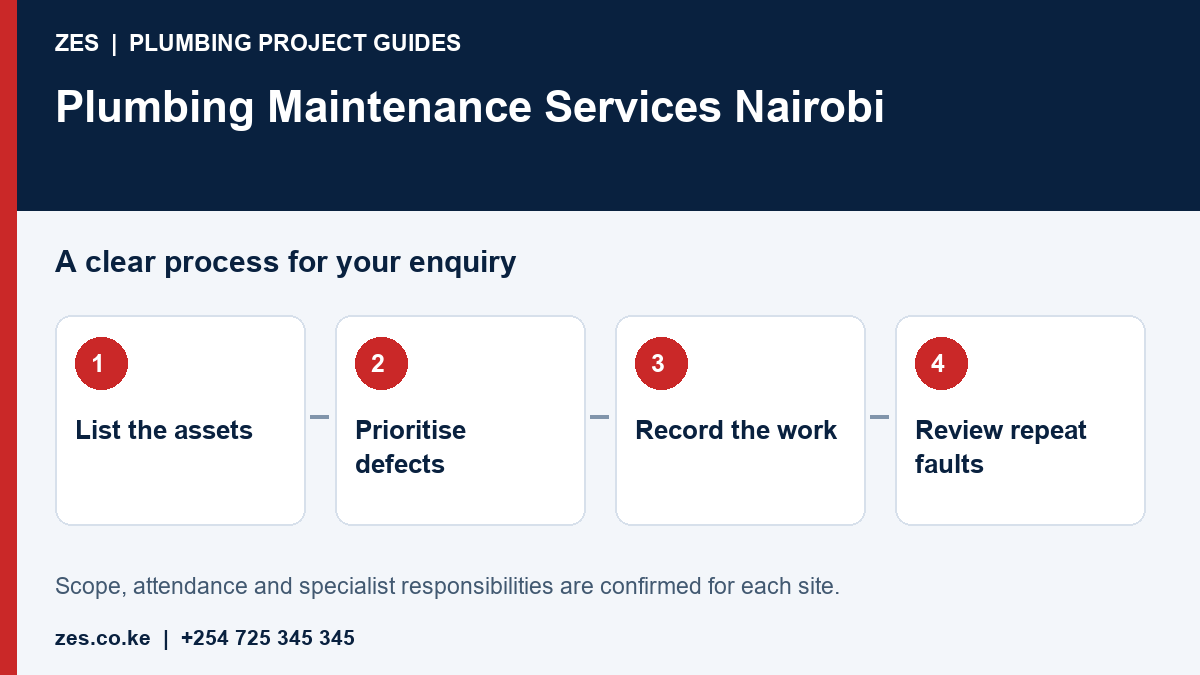
Build a practical asset register
List tanks, pumps, meters, important valves, distribution zones and significant fixtures. Record location, identification, component details and the area served. Photographs and a consistent naming convention can prevent confusion between similar-looking installations. Highlight missing drawings and inaccessible components. Keep records available to authorised staff while protecting sensitive operational details. The register need not be complex, but it should let a visiting technician identify the affected area without reconstructing the entire building history through conversations with several caretakers.
Prioritise condition and consequences
A leak above electrical equipment may need different priority from a garden tap. Consider water loss, occupancy, property damage, hygiene and the effect of interruption. Condition and manufacturer guidance should inform inspection intervals; one fixed frequency does not suit all systems. Record why a defect is prioritised and when it will be reviewed. Schools, apartments and kitchens have different use patterns. A documented priority helps the manager justify spending and distinguish urgent corrective work from improvements that can reasonably be scheduled later.
Make observations consistent and safe
Use a short inspection record for visible leakage, unusual pump behaviour, refill concerns, slow drainage and fixture condition. Describe actual observations rather than merely marking satisfactory. Compare consumption changes with occupancy and known operations. Staff should stay within their competence and safe access. Electrical equipment, unsafe heights, confined spaces and suspected contamination need appropriate escalation. The plan should identify who observes, who diagnoses and who authorises repairs. Consistency makes it easier to recognise a developing pattern before another disruptive failure occurs.
Convert repeat faults into corrective projects
Review incidents by asset, location and established cause. Similar failures can suggest deteriorating pipework, unsuitable components or an installation operating outside its original conditions. Ask for an assessment before approving another repeated patch. Compare repair and renewal in terms of disruption, future access and lifecycle cost. Where practical, group compatible work into a planned shutdown. Keep uncertain findings labelled as uncertain. An unsupported assumption in an early job note should not silently become the justification for major expenditure on a replacement programme.
Define the maintenance appointment
State included assets, inspection tasks, reporting, attendance and exclusions. Clarify materials, consumables and corrective-work charges. Emergency response terms must be explicit rather than inferred from the phrase maintenance contract. Identify spending authority and escalation contacts. Reports should list defects, priority, recommended action and follow-up. For multiple sites, use a consistent format while retaining site-specific conditions. A useful agreement makes the service understandable to both caretaker and owner, including what happens when the inspection discovers work outside the routine visit scope.
Close work with evidence and updated records
Keep relevant photographs, test results, replaced-component information and recommendations. Update routes and valve records after alterations. Ask for operator guidance where controls change. Close the task when agreed work and checks are recorded, not merely when an invoice arrives. Review the maintenance plan after renovations or occupancy changes. The history belongs to the property and should remain useful when agents, staff or contractors change. This continuity helps the next technician investigate efficiently and prevents known defects from disappearing during management handover.
Information to include in your project brief
- Asset and valve register
- Recurring defects and repair history
- Inspection and reporting scope
- Repair approval and response arrangements
Frequently asked questions
How often should plumbing be serviced?
Use condition, duty, manufacturer guidance and the consequences of failure to agree the site schedule.
Does maintenance automatically include emergency repairs?
No. Included labour, materials, attendance and response commitments must be stated in the agreement.
What belongs in a maintenance report?
Assets checked, findings, completed work, verification, defect priorities and outstanding actions.
Related plumbing planning guides
- Plumbing Services Kiambu: Repairs, Renovations and Local Project Planning
- Plumbers in Ruiru: Local Repairs, Rental Properties and New Connections
Discuss your plumbing requirement with ZES
Share the location, property use, symptoms or proposed work, and available drawings or photographs. ZES will review the information and confirm the suitable scope, any assessment arrangements and current attendance availability. Materials, responsibilities, programme and applicable terms are agreed in the written quotation.
Explore ZES plumbing services · Request a plumbing quotation · Call +254 725 345 345