
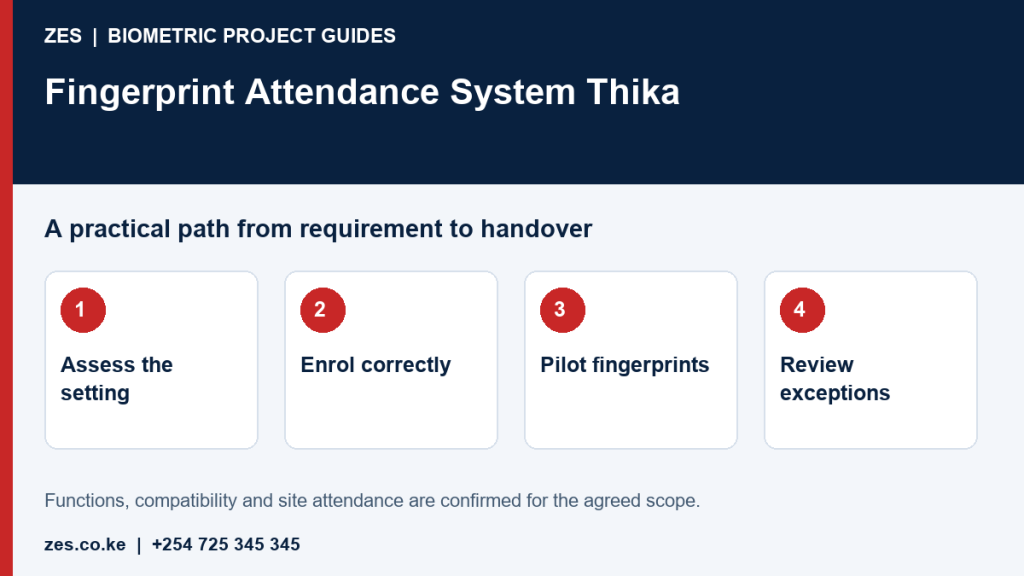
A fingerprint attendance system in Thika needs to work for the employees, entry points and conditions at the actual workplace. This guide focuses on reliable recognition and enrolment, while software reporting is a separate part of the project. Before selecting a terminal, identify intended users, peak clocking periods and the administrator who will review exceptions. ZES accepts Thika requirements and confirms site assessment, deployment and support arrangements directly.
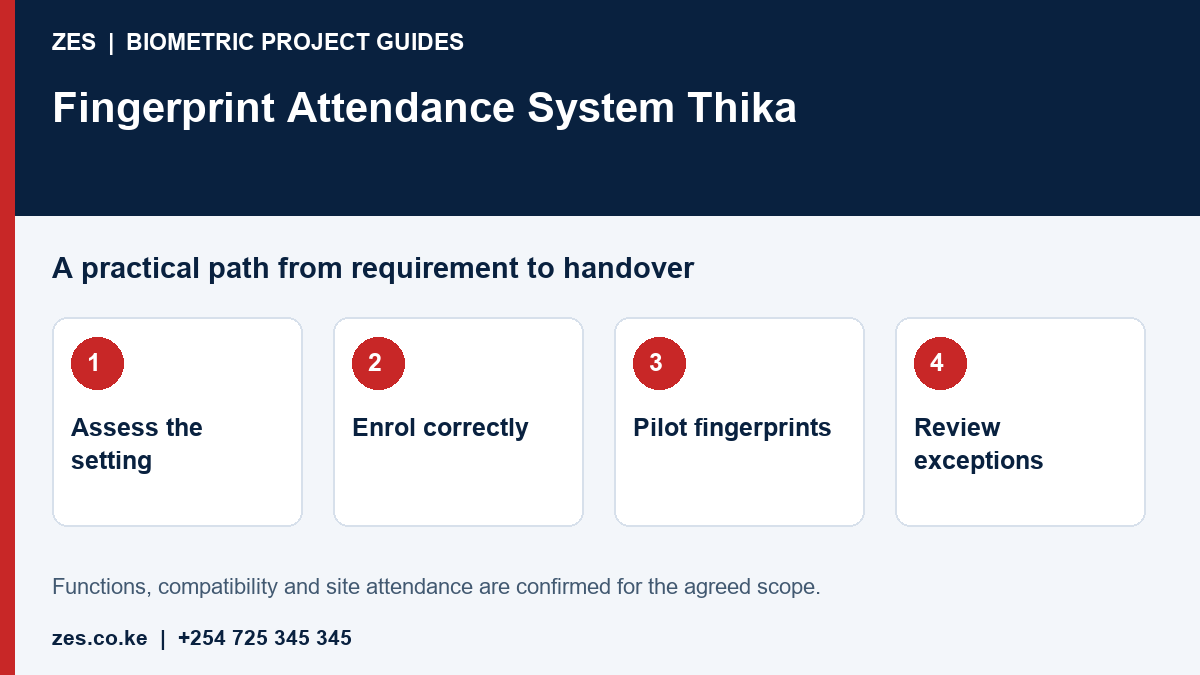
Describe the working environment
Tell the supplier whether the equipment will serve an office, factory, workshop, institution or mixed site. Consider accessible mounting, dust, moisture and the condition of users' hands. Product suitability should follow manufacturer documentation and a practical review. Avoid assuming that an indoor office terminal can be used in any entrance. A device location also needs a safe approach and queue plan so clocking does not interfere with goods movement or an exit.
Agree a controlled enrolment process
Use a consistent staff identifier and an authorised identity-checking process. Name the people who may add, change or remove device profiles. Test the association between the employee record and the terminal before wider rollout. Mistaken enrolment can produce records that look technically valid but belong to the wrong person. The employer should review purpose, permissions and handling requirements with responsible advisers and communicate the agreed attendance process to staff.
Pilot recognition with the intended users
Ask for a demonstration reflecting the people and conditions involved. Observe retries and the operator response when recognition does not succeed. Agree a practical alternative or correction process rather than treating every failure as a disciplinary matter. Catalogue specifications alone do not prove real-world suitability. Keep the pilot findings and any unresolved requirements so the purchase decision can be compared with evidence rather than only a model number and price.
Follow an event through to a report
After a sample clocking interaction, check the employee identifier, time and transfer into the reporting application. Distinguish scanner recognition from synchronisation and shift calculation. Missing reports may have a configuration or network cause even when the reader functions. Confirm software and licence dependencies. Ask the administrator to retrieve sample records and identify missing or duplicate events. Record this workflow as part of acceptance, rather than ending the demonstration at device enrolment.
Maintain an exception and support routine
Document how staff report failed clocking, who approves corrections and how changes remain reviewable. Follow device care instructions and monitor recurring recognition issues. Update records for transfers and departures. Confirm installation, training and site attendance terms for Thika in the written proposal. ZES can review the required outcome and existing equipment before suggesting a scope, with compatibility and any integration commitments subject to the available interfaces and testing.
Prepare an assessable ZES enquiry
Include the location, organisation type, employee numbers and number of devices or controlled doors. Describe the existing equipment, software, shifts and intended reports. Identify who will approve the scope and receive training. Share sample or sanitised requirements, not employee biometric records or passwords. Ask the proposal to distinguish equipment, supporting infrastructure, software, configuration, testing, training, recurring charges and support.
Frequently asked questions
Should every employee use the same finger or method?
The enrolment process should follow equipment guidance and the employer's reviewed requirements, including suitable alternatives where necessary.
Does a failed fingerprint mean an employee was absent?
No. Recognition or equipment problems require review alongside the employee's explanation and other relevant records.
Related biometric guides
- Biometric Time Attendance Thika: Rosters, Exceptions and Management Reports
- Fingerprint Attendance System Kenya: Recognition, Enrolment and Staff Exceptions
Discuss your requirement with ZES
ZES reviews each brief before confirming the appropriate assessment, installation or support scope. Site visits, travel, equipment availability and specialist delivery responsibilities are confirmed directly. Final interfaces and functions are agreed against accessible technical information and the written proposal.
Biometric attendance services · Access-control services · Request a quotation · Request a site assessment