
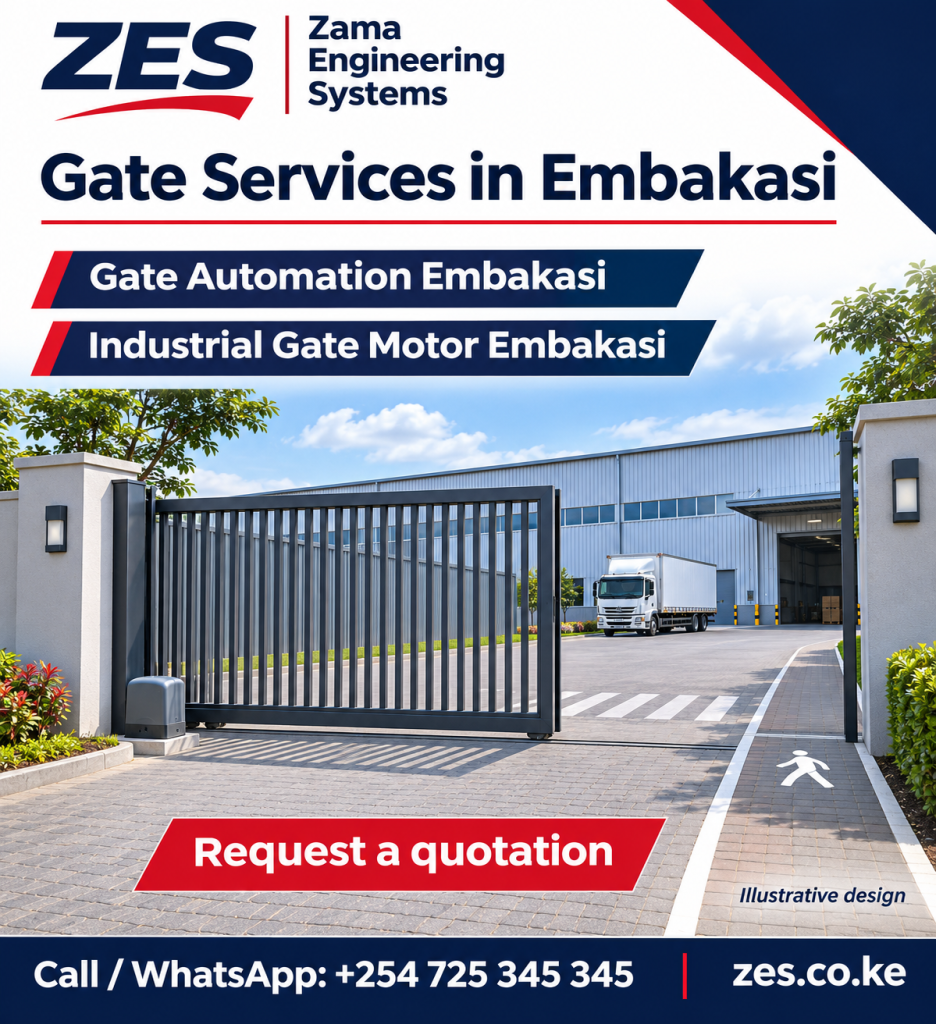
Gate Automation Embakasi enquiries can include residential entrances, commercial access and industrial sites. The equipment proposal should follow the actual operation rather than the location label. ZES can assess the automatic gate and discuss a defined installation or repair scope, including Industrial Gate Motor Embakasi requirements where vehicle movement and operating duty need particular attention.
This guide is written for owners and facilities teams preparing an industrial or commercial brief. It does not claim crash-rated performance, unlimited operation or compatibility with every site system. Those capabilities must be established for the actual equipment and design.
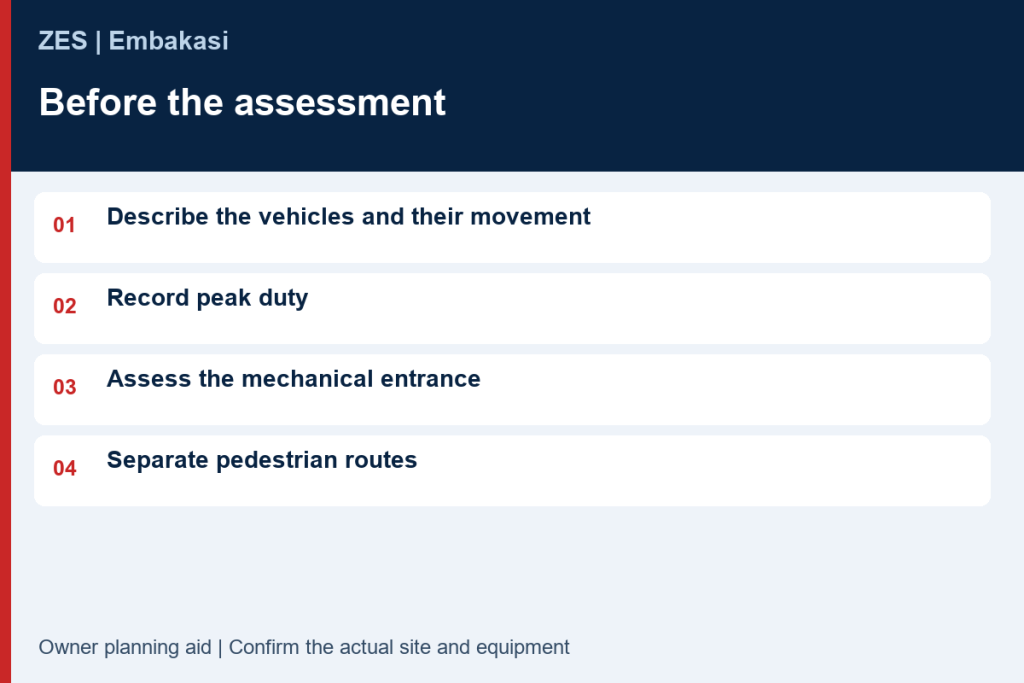
Gate Automation Embakasi: 7 easy operational checks
1. Describe the vehicles and their movement
List the vehicle types that use the entrance, including occasional larger deliveries. Explain approach direction, turning constraints and waiting arrangements. The opening should be assessed with the route through it, not selected only from the width of a typical car.
If incoming and outgoing traffic share one opening, explain the operating procedure. A different motor may not resolve a queue caused by visitor processing or insufficient waiting space. The site movement plan and automation requirement should be considered together.
2. Record peak duty
Give the busiest period and any repeated operating cycles associated with shifts or deliveries. An average daily total can hide a demanding short period. Mention reasonably known changes such as an additional tenant or delivery schedule.
Ask how the proposed industrial gate motor suits those assumptions and the assessed gate. An industrial label is not a promise of unlimited duty in every environment.
3. Assess the mechanical entrance
the automatic gate, supports, running arrangement, mounting and surrounding conditions need clear responsibilities. Identify the fabricator and civil contractor where relevant. Existing drawings can help, but current condition should still be assessed.
Report damage, abnormal movement or recurring site conditions. A motor should not be selected to force an unsuitable gate through its travel. Necessary preparation belongs in the complete project scope.
4. Separate pedestrian routes
Identify how staff, contractors and visitors approach on foot. Show waiting areas and crossing points. The competent assessment should consider the gate movement and surrounding vehicle activity together.
Ask the installer to explain the proposed protective provisions for the complete arrangement. Do not bypass a protective function to increase throughput or hide a nuisance stop; the underlying condition should be assessed.
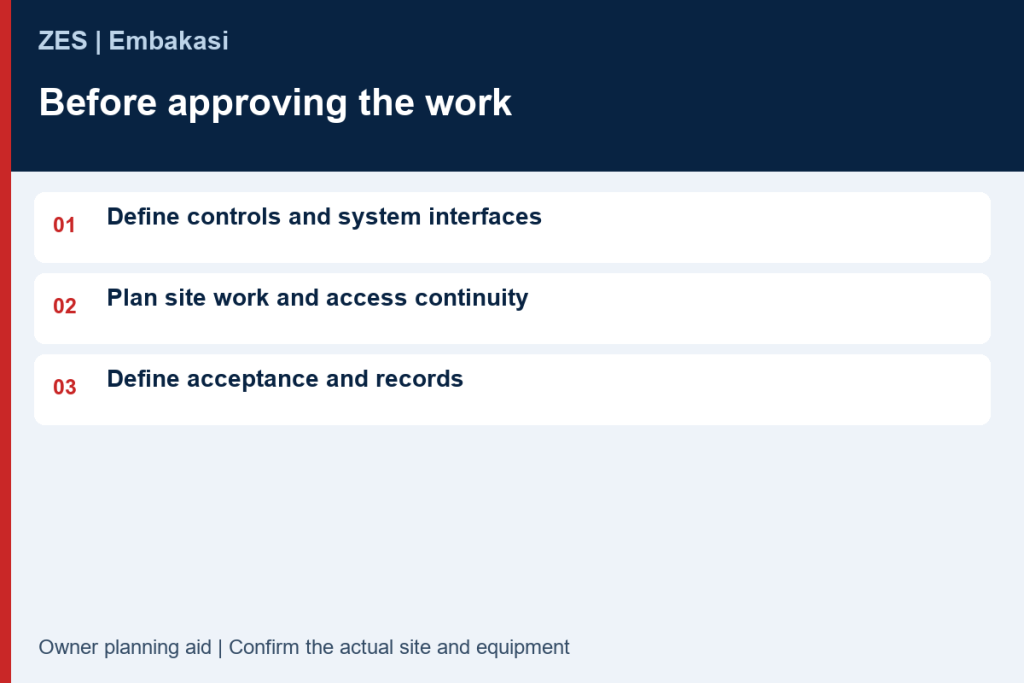
5. Define controls and system interfaces
Explain whether a guard, authorised credential or another supported system requests movement. Name existing equipment where known and describe the intended user action. Compatibility should be checked rather than assumed from the word integration.
Assign configuration and end-to-end demonstration responsibilities. Where another provider manages access software or networking, identify their scope and any relevant account or licensing responsibility separately.
6. Plan site work and access continuity
Provide induction, permit and work-hour requirements before scheduling. Identify a responsible contact who can approve variations. Explain how vehicle and pedestrian access will be managed while work is incomplete.
No blanket promise of uninterrupted access is made here. The practical arrangement depends on the site and work. Discuss the required plan with the relevant facilities and operations teams.
7. Define acceptance and records
Agree which functions are demonstrated, who attends and which documents are delivered. Keep the installed model, relevant instructions, completed checks and actual support terms. Record unresolved interfaces separately.
The facilities team should receive a usable asset record. A later service request is easier to assess when the equipment and previous work can be identified without relying on former staff or contractors.
Industrial Gate Motor Embakasi: selection is a site decision
Ask for the proposed model and the basis of suitability for the automatic gate and operating demand. Confirm supplied accessories, power requirements and any supported backup arrangement. A product photograph or headline capacity is not a complete specification.
If an existing motor is being replaced, explain why the change is requested. A confirmed fault, a changed duty and an optional control upgrade should be distinguished. Retained rack, receiver or power equipment needs condition and compatibility review.
The industrial sliding-gate guide provides a wider planning framework. Use the documentation for the selected model, such as the relevant FAAC manuals, rather than a generic installation diagram.
Example: a delivery queue is blamed on the motor
Imagine a warehouse entrance where vehicles wait while a guard checks delivery details. The owner asks for a faster gate. The project team first distinguishes gate movement from the approval process and waiting arrangement.
The brief records vehicle types, busiest periods and the desired control sequence. The responsible parties assess the entrance and propose equipment and operational interfaces accordingly. The acceptance plan then demonstrates the agreed function rather than assuming a new motor alone solves every delay.
This illustrative example is not a claimed ZES project or a guaranteed improvement in throughput. It shows why an industrial gate quotation should connect equipment to the site’s actual operation.
Procurement checklist
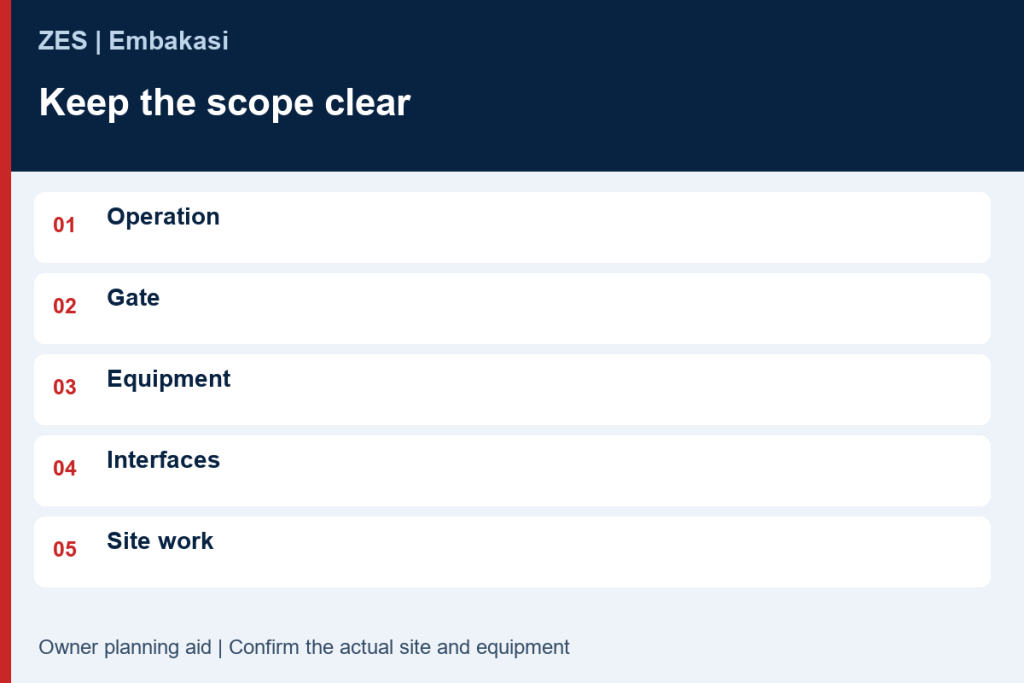
| Scope area | Confirm before approval |
|---|---|
| Operation | Vehicle types, peak demand and access procedure |
| Gate | Structure, movement condition and preparation |
| Equipment | Proposed operator and supplied accessories |
| Interfaces | Power, controls and work by other providers |
| Site work | Rules, access arrangements and responsible contact |
| Acceptance | Demonstration, records and outstanding items |
Ask unclear exclusions to be resolved before comparing totals. A proposal that relies on civil work or software configuration by others should identify those responsibilities. Otherwise, the owner may buy a motor installation without the complete function the site needs.
Repair planning at an operating site
Describe the fault, current gate position and effect on access. Keep staff clear of damaged or unpredictable equipment and follow the site’s approved process. Do not improvise a release or wiring workaround to maintain operations.
Provide previous service records and identify connected systems. A recurring fault may require coordination between providers. Ask the repair scope to explain the finding, proposed work, retained equipment and completion checks.
If a part must be sourced, confirm the actual availability and work arrangements. No stock or attendance guarantee is implied by this article. ZES can discuss the enquiry once the equipment and site details are known.
Questions from facilities teams
Is a boom barrier equivalent to an industrial gate?
They can serve different functions. Explain the access requirement so the responsible parties can assess the appropriate arrangement. Ordinary gate or barrier equipment should not be assumed to have anti-ram or crash-rated performance.
Can existing access control be retained?
Potentially, subject to the supported interface and condition. Provide the model and required function. Confirm who handles configuration and the complete acceptance demonstration.
Should a spare motor be kept on site?
Discuss the actual maintenance plan, equipment and supply position before buying spares. A generic spare may be unsuitable. The spare-parts guide explains identification and compatibility questions.
What should accompany an initial brief?
Provide the Embakasi location, entrance photographs, vehicle types, usage pattern, known models and responsible contact. Include relevant drawings and site rules where available.
Define the industrial entrance as an operating requirement
An industrial gate motor should be selected within the context of the complete entrance. Explain the types of vehicles, movement patterns and busiest periods, together with the way pedestrians and visitors enter the site. A description such as heavy duty is not a complete equipment specification.
The gate automation assessor needs the actual gate construction, movement and installation conditions. Changes to the automatic gate or its use should be communicated before equipment is ordered. A proposed operator should be identified by model and suitability basis, rather than only a marketing category.
Coordinate with site management
Nominate who controls access during assessment and installation work. Explain the site’s induction, work-access and approval requirements when arranging attendance. Confirm which responsible person can authorise the scope and accept the completed work.
If the entrance must remain available for operations, discuss the work sequence and an appropriate access arrangement with the relevant site personnel. This article does not promise that every gate installation can proceed without interruption. The arrangement depends on the assessed site and scope.
Include interfaces and retained equipment
List any access control, intercom or other system expected to operate with the automatic gate. Identify the responsible provider for each interface. A gate motor operating from one local control does not establish that every agreed site function has been completed.
The handover should cover the agreed functions and relevant checks. Record outstanding work, responsible parties and any limitations. Keep sensitive access information under the site’s normal controls rather than placing it in a general circulation report.
Use records to support later repair
Retain equipment details, service findings and changes to the operating arrangement. When requesting gate repair, explain the current symptom and its effect on operations. Avoid assuming that a particular component has failed before assessment.
If the use of the entrance changes, review whether the installed gate automation remains suitable. Increased demand, different vehicle movement or altered controls may require reassessment. The owner’s record should describe the current system so future decisions are based on the installation actually in service.
Request an Embakasi assessment
Request a quotation or book a site survey. Call or WhatsApp +254 725 345 345 to discuss the project. A defined operating brief helps ZES propose the actual gate work and interfaces required.