
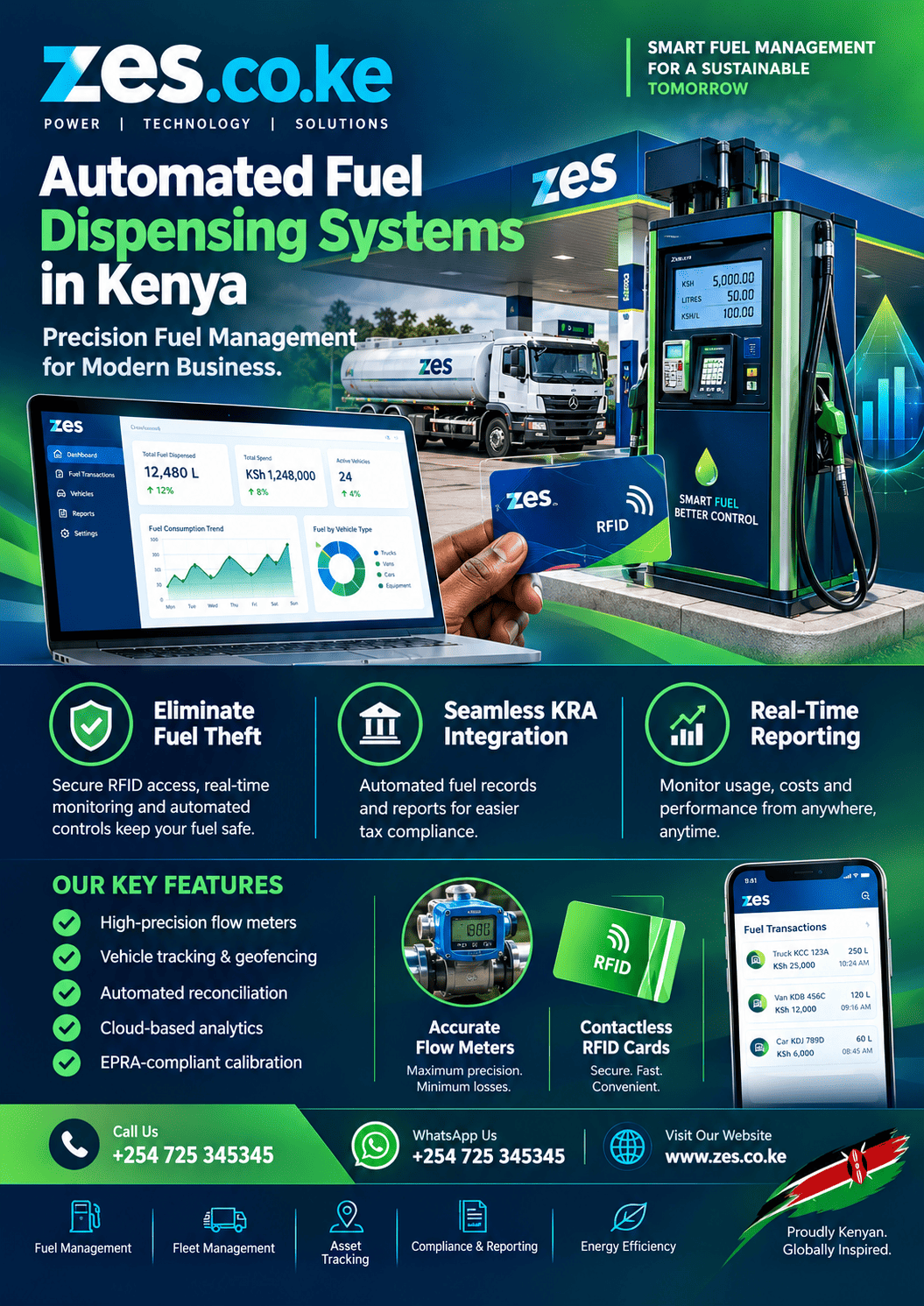
Automated fuel dispensing systems in Kenya represent a fundamental shift in how fuel retail stations, fleet depots, and industrial facilities manage their petroleum products. At zes.co.ke, we understand that these systems are no longer a luxury for high-end operations—they are a necessary tool for eliminating fuel theft, ensuring accurate accounting, and maintaining regulatory compliance. Whether you operate a busy service station in Nairobi, a logistics fleet in Mombasa, or a manufacturing plant in Thika, deploying Automated fuel dispensing systems in Kenya is the first step toward complete operational control.
The traditional method of manually dispensing fuel and recording volumes in a logbook is fraught with risk. Human error, deliberate under-dispensing, and unrecorded transactions lead to massive revenue losses. By implementing Automated fuel dispensing systems in Kenya, station owners and fleet managers gain instant, digital oversight over every single litre that leaves the pump.
At zes.co.ke, we specialize in the design, installation, and integration of Automated fuel dispensing systems in Kenya. Our approach is consultative; we analyze your specific throughput, fuel types, and reporting requirements before recommending a hardware and software configuration. From the forecourt to the back office, our Automated fuel dispensing systems in Kenya ensure that your data flows seamlessly and securely.
The financial impact of installing Automated fuel dispensing systems in Kenya is immediate. By locking out unauthorized users and tracking every drop, businesses plug the leaks that drain profitability. Furthermore, modern Automated fuel dispensing systems in Kenya integrate with digital payment platforms, allowing for faster customer throughput and reduced cash handling risks.
When evaluating Automated fuel dispensing systems in Kenya, it is vital to consider the regulatory landscape. The Energy and Petroleum Regulatory Authority (EPRA) requires strict adherence to calibration and safety standards. Our deployments of Automated fuel dispensing systems in Kenya are designed to exceed these requirements, providing tamper-proof logging that satisfies both internal audits and government inspections.
For fleet operators, Automated fuel dispensing systems in Kenya offer unparalleled control over driver behavior and vehicle efficiency. By issuing RFID tags or fuel cards to specific vehicles, managers can restrict refueling to authorized times, quantities, and fuel grades. This level of control, delivered by Automated fuel dispensing systems in Kenya, drastically reduces fuel card fraud and unauthorized weekend usage.
The hardware components of Automated fuel dispensing systems in Kenya include high-precision flow meters, electronic control units, and secure communication modules. These are not ordinary pumps; they are intelligent terminals capable of processing complex data. When we deploy Automated fuel dispensing systems in Kenya, we ensure that every component is calibrated to the highest standards of accuracy.
Integration is the key to unlocking the full value of Automated fuel dispensing systems in Kenya. These systems must talk directly to your Enterprise Resource Planning (ERP) software, accounting packages, and inventory management tools. Our team ensures that the Automated fuel dispensing systems in Kenya we install provide real-time data synchronization, eliminating manual data entry and the errors that come with it.
Security is built into every layer of Automated fuel dispensing systems in Kenya. From encrypted communication protocols between the pump and the server to role-based access controls for station managers, we ensure that your data and your fuel are protected.
The Role of Automation in Fuel Loss Prevention
Fuel shrinkage is a persistent challenge in the petroleum industry. It can occur through evaporation, leaks, or outright theft. Automated fuel dispensing systems in Kenya address this by reconciling physical tank dips with dispensed volumes automatically. If there is a variance, the system flags it immediately.
By monitoring every transaction, these systems deter internal collusion between attendants and drivers. When every transaction requires authentication via a secure card, PIN, or biometric scan, the opportunity for “ghost” transactions is eliminated.
Integration with eTIMS and KRA Compliance
A major driver for upgrading technology in Kenya is the requirement for real-time tax invoicing. The Kenya Revenue Authority (KRA) mandates that fuel stations integrate with the eTIMS system. Automated fuel dispensing systems in Kenya are built to interface directly with KRA systems, generating electronic tax invoices for every sale automatically.
This integration ensures that businesses remain fully compliant without adding administrative burden to the station attendants. It also provides a transparent audit trail that protects the business owner during tax reviews.
{{VIDEO_EMBED: Insert a 2-minute video here showing a driver using an RFID tag at a fuel pump, the digital display registering the liters and vehicle data, and a manager reviewing the real-time transaction log on a computer screen.}}
Types of Automated Dispensing Solutions
The market offers various solutions depending on the application. Retail forecourt systems are designed for high-volume, public-facing environments. They prioritize speed, payment integration (including M-Pesa and card terminals), and customer experience.
Private fleet systems are designed for depots and industrial yards. These focus heavily on vehicle identification, driver authorization, and strict fuel rationing. They often operate without an attendant present, relying entirely on the automated protocols.
For industrial applications, specialized dispensing systems handle bulk fluids like diesel for generators or heavy machinery. These systems are ruggedized to withstand harsh environments and provide highly accurate flow measurements.
The Installation and Calibration Process at zes.co.ke
Deploying these systems requires a methodical approach. We begin with a site survey to assess the existing tanks, piping, and electrical infrastructure. This ensures that the new automated equipment integrates flawlessly.
Next, our technicians install the dispenser units and the central control terminal. We establish the network connectivity, ensuring that data can securely reach your cloud dashboard or local server.
Calibration is the most critical phase. We work with certified technicians to calibrate the flow meters against a standard measure. This ensures that when the system says one liter has been dispensed, exactly one liter has been dispensed.
Finally, we provide comprehensive training. We show your managers how to generate reports, set fuel limits, and troubleshoot basic issues.
Maintenance and Uptime
Technology requires care. Dust, temperature fluctuations, and continuous use can affect the performance of dispensing hardware. We offer proactive maintenance contracts to keep your system running smoothly.
Regular maintenance includes cleaning the optical sensors, updating the terminal software, and re-verifying the calibration. By keeping the system in top condition, you avoid unexpected downtime during peak business hours.
Common Mistakes to Avoid
Organizations often make the mistake of focusing solely on the hardware and neglecting the software. A high-tech pump connected to a poor management system is useless. The true power lies in the data analytics and reporting capabilities.
Another mistake is failing to train staff properly. If attendants do not understand how to operate the new terminals, they may resort to old habits or intentionally bypass the system.
Finally, neglecting cybersecurity can be disastrous. These systems are connected to the internet. Failing to use secure passwords and encrypted networks leaves your operation vulnerable to remote tampering.
Applications Across Kenyan Sectors
Retail Service Stations use these systems to manage high traffic, integrate digital payments, and ensure accurate reconciliation at the end of every shift.
Logistics and Transport Companies use them to tightly control fuel budgets, monitor driver behavior, and prevent fuel siphoning.
Manufacturing Plants rely on automated dispensing for their generators and machinery, ensuring accurate cost allocation to different production lines.
Agricultural Estates use them to manage fuel for tractors and heavy equipment, tracking consumption per field or per operator.
Selecting the Right Partner
Choosing the right integrator for your system is a decision that impacts your bottom line for years. Look for a partner with deep experience in both electrical engineering and software integration.
At zes.co.ke, we provide end-to-end support. From the initial consultation to the final handover and ongoing maintenance, we stand by our deployments. We ensure that your transition to automated fuel management is smooth, profitable, and fully compliant with Kenyan regulations.
Investing in Automated fuel dispensing systems in Kenya is a strategic move that transforms your fuel operations from vulnerable and manual to secure and highly efficient. At zes.co.ke, we provide the expertise, technology, and support to make this transition seamless.
Automated fuel dispensing systems in Kenya represent the future of petroleum management. By choosing a professional partner like zes.co.ke, you protect your revenue and gain peace of mind. For more information about Automated fuel dispensing systems in Kenya and to schedule a free site assessment, contact zes.co.ke today.