
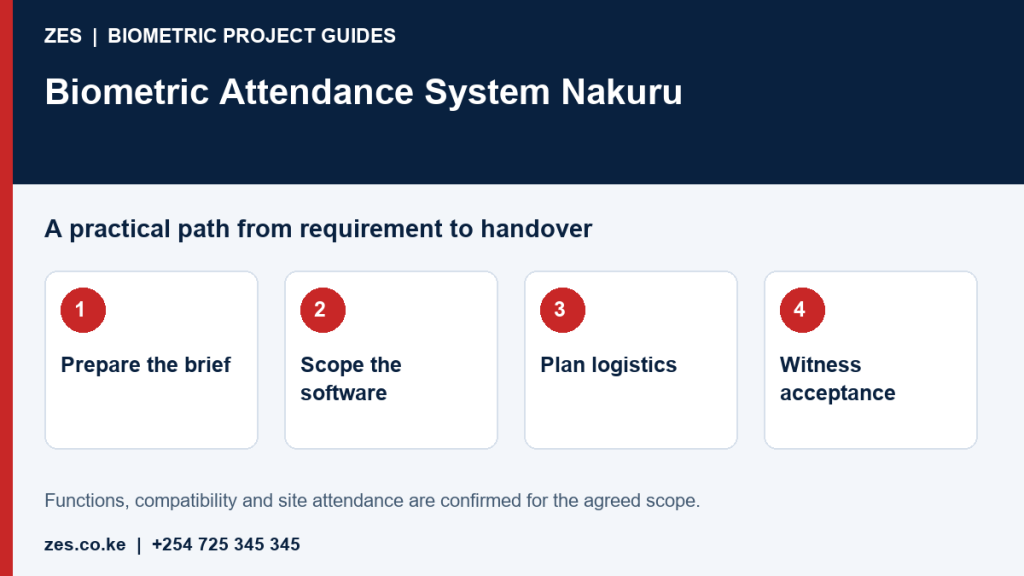
A biometric attendance system in Nakuru should begin with the organisation's operating requirements and a complete proposal. Device choice, software, installation, staff administration and continuing support all influence the result. This guide helps employers compare deployment options and prepare an enquiry for ZES. It addresses project planning and procurement; a separate clock-in adoption guide covers how staff and supervisors can use the system after installation.
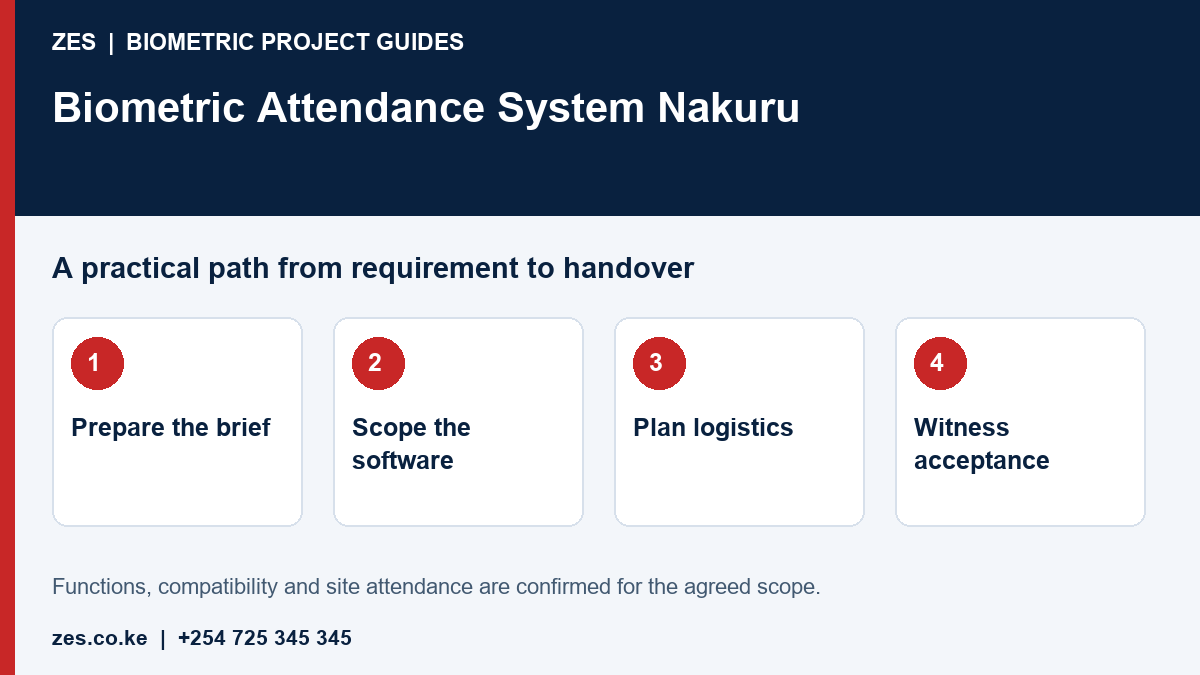
Write a project brief before requesting prices
Include the type of workplace, headcount, locations, shifts and busiest clocking period. Explain the problem with the current process and the desired reports. Identify existing terminals, software or cabling that may be retained. Supply anonymised examples rather than employee biometric information. A well-defined brief allows suppliers to state what they can deliver and what still needs assessment, instead of quoting an unspecified device package with important dependencies left out.
Choose the deployment model deliberately
Discuss where records will be held and who needs access. One site with a responsible administrator differs from several premises reporting centrally. Ask about software hosting, licences, supported connections and recurring charges. Establish ownership of accounts and exports. Do not assume cloud or local software is inherently the right choice without considering administration, connectivity and the organisation's requirements. The proposal should explain the selected model and the dependencies it introduces.
Coordinate site work and logistics
Confirm mounting locations, environmental protection, power and network routes. Identify the IT and facilities contacts who can approve access. Regional travel, survey timing and the installation programme should be agreed directly. A coverage statement does not imply a ZES office at every location or guaranteed immediate attendance. Include supporting works, reinstatement and backup requirements in the quote so the deployment can be scheduled against a realistic scope.
Use a pilot to test the operating assumptions
Demonstrate sample enrolment, normal clocking, missed events and relevant shift patterns. Ask the intended administrator to produce and review the required report. Test the agreed behaviour during a connection interruption. Record issues and responsibility for correction. Acceptance should relate to the stated project outcome, rather than only counting mounted terminals. Where existing software is involved, compatibility remains a separate checkpoint requiring accessible documentation and practical verification.
Agree training and support before rollout
State who administers users, approves corrections and manages reporting periods. Keep device details, configuration basis and acceptance results in the handover. Confirm support contacts, included maintenance and chargeable work. The employer should review staff communication and data-handling requirements before operational enrolment. ZES can assess the Nakuru project brief and confirm suitable delivery arrangements, including any dependencies that need a specialist or third-party vendor.
Prepare an assessable ZES enquiry
Include the location, organisation type, employee numbers and number of devices or controlled doors. Describe the existing equipment, software, shifts and intended reports. Identify who will approve the scope and receive training. Share sample or sanitised requirements, not employee biometric records or passwords. Ask the proposal to distinguish equipment, supporting infrastructure, software, configuration, testing, training, recurring charges and support.
Frequently asked questions
Can Nakuru branches share a report?
Specify the requirement and assess compatible devices, software, connectivity and permissions. It should be demonstrated before acceptance.
Are regional travel costs included?
Only if the written proposal says so. Confirm survey and installation logistics for the actual location.
Related biometric guides
- Employee Clock-In System Nakuru: Staff Adoption and Daily Exception Handling
- Biometric Attendance System Kenya: Devices, Reports and a Practical Rollout
Discuss your requirement with ZES
ZES reviews each brief before confirming the appropriate assessment, installation or support scope. Site visits, travel, equipment availability and specialist delivery responsibilities are confirmed directly. Final interfaces and functions are agreed against accessible technical information and the written proposal.
Biometric attendance services · Access-control services · Request a quotation · Request a site assessment