
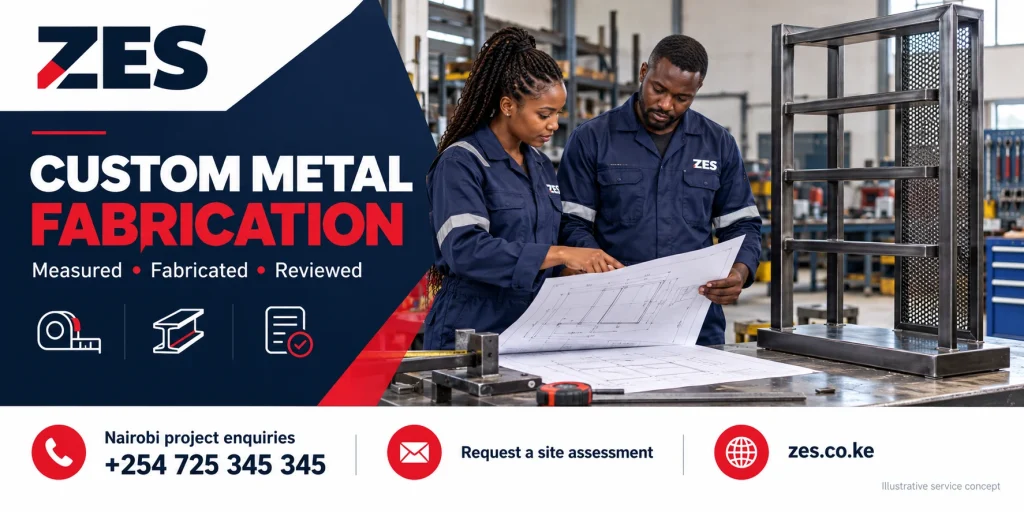
Custom Metal Fabrication Kamukunji enquiries often start with a rough sketch or an idea for a frame, stand, bracket or other purpose-built item. Turning that idea into a reviewable order requires a clear function, measured interfaces, design responsibility and acceptance reference. This guide explains how to brief custom fabrication and manage changes between an initial concept and production. ZES can review Kamukunji requirements and confirm the appropriate assessment, design interfaces, sample work and supplied scope before a final commercial commitment.
1. Explain the task rather than only the shape
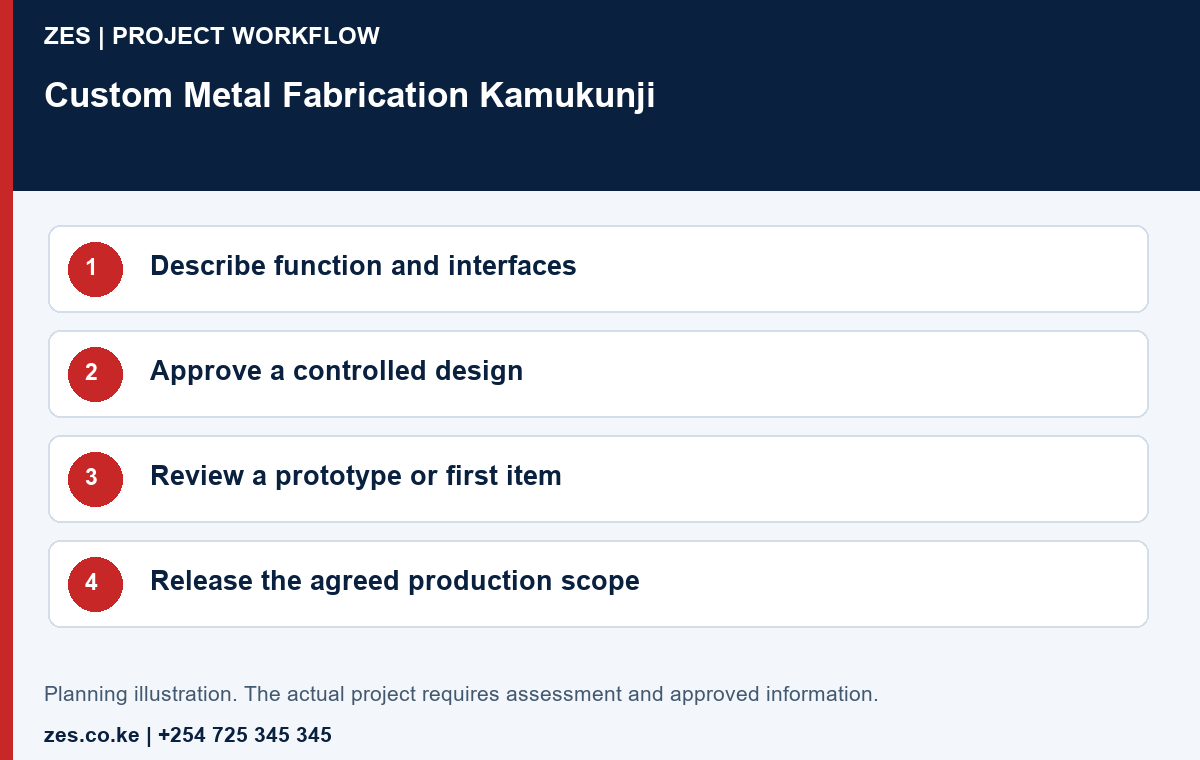
Describe what the item supports, holds, separates or displays and how it will be used. Include quantities and relevant operating conditions. Different duties can require different design and verification responsibilities even when the shapes look similar. Custom fabrication should follow an approved functional brief rather than assume that reproducing a photograph establishes suitability for a new use.
2. Identify the critical interfaces
Mark the dimensions and connections that affect fit with other work. Explain who supplies the mating component and who verifies its current information. Custom metal fabrication Kamukunji should not depend on an unverified measurement being treated as final. Where the interface is still being designed, identify the approval point before production instead of expecting a finished component to accommodate every later change.
3. Assign responsibility for the design
Identify which information the customer provides, which details need an appropriately qualified designer and which tasks are included in the fabrication offer. A measured workshop sketch and specialist design approval are not interchangeable. Keep the actual approved references with the order. If an item supports loads or forms part of a safety-related arrangement, the appropriate competent parties must establish its requirements.
4. Decide what a prototype should prove
A prototype or first item can clarify appearance, dimensions, assembly or a defined operation. Agree the purpose, commercial treatment and acceptance before it is made. A custom-fabrication sample should not be described as proof of every future duty or supporting condition. Record unresolved requirements so a useful appearance review does not become an unintended approval to manufacture the complete batch.
5. Control revisions and substitutions
Give the current approved version a reference and identify the person who can authorise changes. A revised dimension, material or finish can affect related requirements, price and programme. Ask for the technical decision before accepting an undocumented substitution. Keep superseded versions distinguishable so the customer and workshop do not manufacture, inspect or install against different information.
6. Release a clearly defined production order
Once the relevant reviews are complete, confirm quantities, approved details, materials, finish and delivery or installation responsibilities. Custom fabrication pricing should identify customer-supplied parts and exclusions. If the order contains several variants, use an item schedule. Define any checks that apply to the whole batch rather than assuming one approved component establishes every other item’s condition.
7. Keep final information useful
Retain the accepted version, supplied quantities, relevant inspection or operation evidence and any agreed limitations. If the design changes during production, record the final approved arrangement. A future custom metal fabrication Kamukunji order should be reviewed against current use and interfaces rather than treated as an unconditional repeat of an old price or specification.
Illustrative project brief for Kamukunji
An invented buyer wants a display frame that must fit a separately supplied panel. The custom-fabrication brief identifies the panel supplier, approved interface dimensions and the appearance reference. A first item is reviewed for the agreed purpose before a batch is released. If the panel changes, the buyer obtains a revised technical and commercial decision instead of asking the workshop to guess. This is a planning example, not a claim of a completed Kamukunji order or a standard design for every display frame.
Prepare a clear enquiry for ZES
Send the site location, intended use, quantity, photographs, available drawings and approximate dimensions. Mark measurements that still need verification. Identify the person authorised to approve the work and the relevant technical or property contacts. Explain the preferred programme and which activities must continue. Avoid sending private tenant information, security credentials or unrelated personal records when a simple project description will explain the requirement.
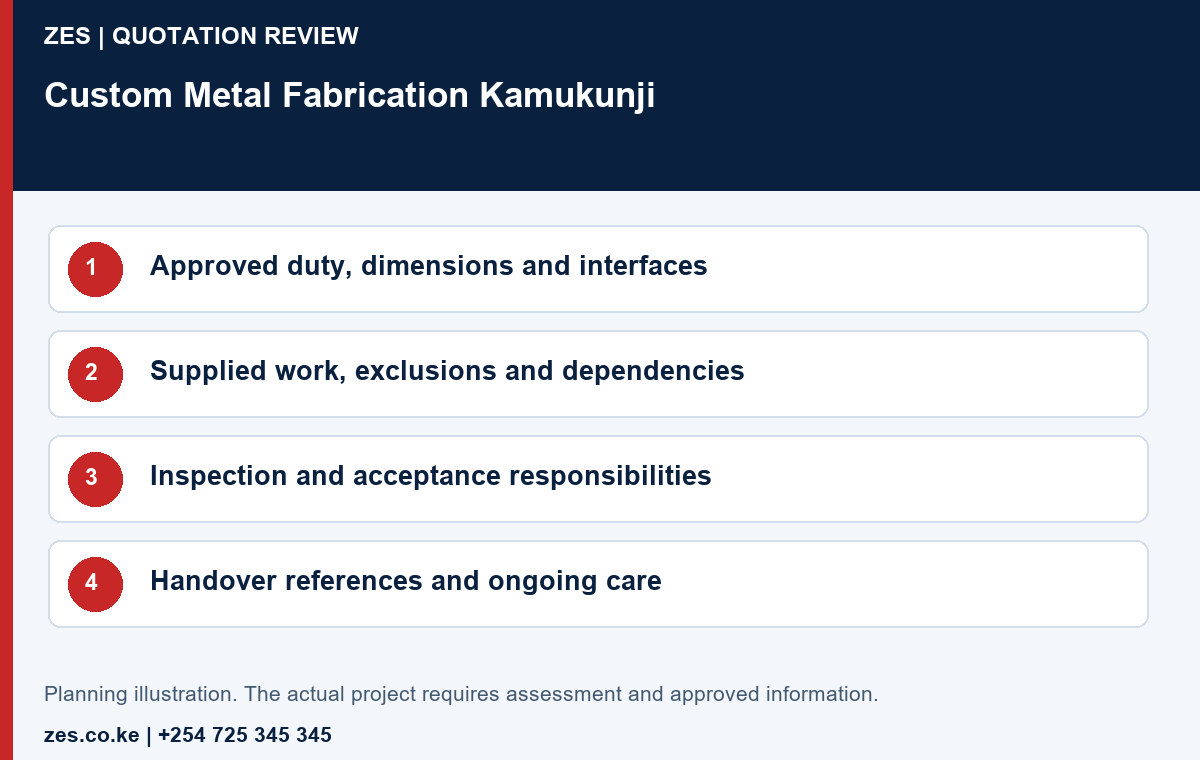
A written proposal should identify supplied work, exclusions, customer dependencies, approved references and acceptance evidence. Confirm current commercial terms and any assessment, travel, delivery or installation arrangements directly. Relevant design, approvals and specialist verification remain with the appropriately qualified responsible parties where required. This guide provides buying questions; it is not a site-specific welding method, structural design or certification of an existing installation.
- Required result: identify the item, duty and quantity.
- Information: distinguish approved details from assumptions.
- Interfaces: name customer and third-party responsibilities.
- Commercial scope: compare equivalent supplied outcomes.
- Acceptance: agree evidence, outstanding actions and handover references.
Frequently asked questions
Can ZES start from a rough sketch?
A sketch can start the discussion. The final proposal may require verified dimensions, intended use, design responsibilities, material and finish requirements, interfaces and acceptance information.
Is a prototype automatically included?
No. Request its purpose, price treatment, scope and approval process explicitly. Identify what it establishes and what still needs design or technical verification.
Can an approved prototype be changed during production?
Changes need an authorised review of the affected requirements, cost and programme. Keep the revised version identifiable rather than relying on an informal instruction that different people interpret differently.
Related specialist ZES guide · Welding and metal fabrication services · Request a welding quotation · Request a site assessment · Call +254 725 345 345.
Reference: NCA contractor information. Confirm requirements applicable to the actual scope with the responsible advisers.