
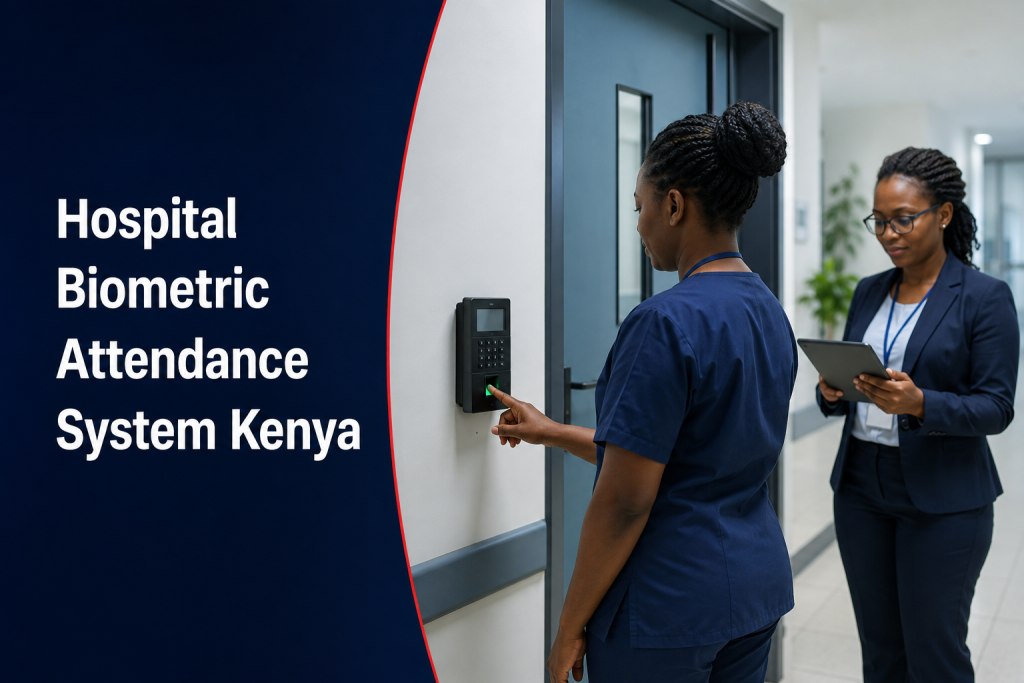
A Hospital Biometric Attendance System Kenya project must reflect rotating clinical and support shifts without interfering with patient care. The system should create reliable workforce records, but supervisors and HR still need to review on-call work, emergency extensions, approved swaps and missing punches.
Map departments and shift patterns
Nursing, laboratory, pharmacy, theatre support, administration, security and facilities teams may follow different schedules. Define normal shifts, cross-midnight work, standby arrangements, handover periods and approved overtime before configuring attendance rules.
Choose staff-only device locations
Place terminals where employees can clock in without crowding patient routes, sterile areas or emergency circulation. Consider lighting, infection-control practice, accessibility, network and backup power. Device placement should be approved by hospital operations and safety teams.
Contactless or fingerprint attendance
Face-recognition devices provide contactless interaction but require suitable lighting, height and enrollment. Fingerprint devices may be familiar but need cleaning procedures and may not suit every user’s working conditions. A pilot should test the chosen method with representative staff and PPE.
Handle urgent and exceptional work
A clinician may respond to an emergency without following the normal clocking sequence. The system should not turn that operational exception into an automatic penalty. Use a documented correction process with supervisor evidence, HR review and an audit trail.
On-call, overtime and shift swaps
Attendance software should distinguish planned duty from approved additional work. Shift swaps must be authorized and reflected in schedules before payroll processing. A raw timestamp alone cannot decide whether overtime is payable.
Continuity during outages
Confirm how terminals store records when the network is unavailable, how clocks remain synchronized and how transactions are recovered. Hospitals should have a manual fallback that does not delay staff deployment. Restoration should include reconciliation to prevent lost or duplicated events.
Protect biometric and workforce data
Biometric data is sensitive personal data under Kenya’s Data Protection Act. Keep attendance data separate from patient records, limit administrator access, define retention and secure transfers. Review the ODPC biometric and health-sector guidance; the hospital remains responsible for its legal and employment obligations.
Useful hospital attendance reports
- Planned versus recorded attendance by department
- Late, absent and missing-punch exceptions
- Cross-midnight and on-call events for review
- Approved overtime and shift-swap summaries
- Manual adjustments with approver and reason
- Payroll-ready totals after departmental sign-off
Implementation checklist
- Document departments, rotations and on-call rules.
- Approve safe, staff-only terminal locations.
- Pilot the biometric method with real working conditions.
- Configure exceptions and supervisor approval.
- Test outage, backup and reconciliation procedures.
- Validate payroll outputs against a controlled sample.
What affects the hospital quotation?
Important variables include staff numbers, departments, entrances, shift complexity, device method, protected power, network segmentation, central reporting, payroll integration, training and support. The proposal should distinguish workforce-attendance data from clinical systems and avoid unnecessary access to patient information.
Include a controlled pilot department and agreed acceptance period. That gives HR, IT and clinical operations time to validate reports, device placement and exception handling before the system expands across the hospital.
Frequently asked questions
Can the system manage locums and temporary staff?
It can support time-limited worker profiles when HR or an authorized administrator controls enrollment, assignment dates and removal. A temporary biometric record still requires appropriate privacy safeguards.
Can one terminal serve all hospital departments?
Possibly for a small facility, but peak shift changes, building layout and staff-only routes may justify several terminals. Capacity should be assessed from actual traffic.
Does attendance prove a clinician remained on duty?
No. A punch records an event at the terminal. Rosters, supervision and operational records provide the wider context needed for workforce decisions.
Request a hospital workforce assessment
For integration questions, read the biometric attendance and payroll guide. Request a scoped ZES assessment with staff numbers, departments, shifts, branches and existing payroll process.