
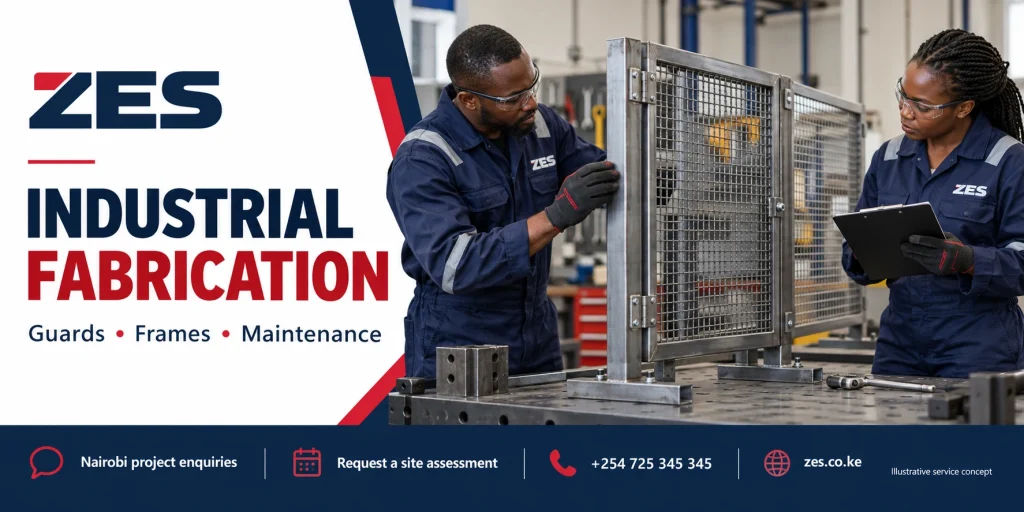
Industrial Welding Services Ruaraka enquiries should identify the equipment interface and operating requirement before fabrication is selected. A guard, support frame, barrier and service platform have different duties even when all are made from steel. This guide focuses on preparing an industrial-fabrication brief for assessed guards and frames. ZES can review a Ruaraka requirement and confirm the relevant capability, specialist responsibilities, assessment and supplied scope. It does not promise that one workshop can modify every machine or regulated system.
1. Describe the operating problem
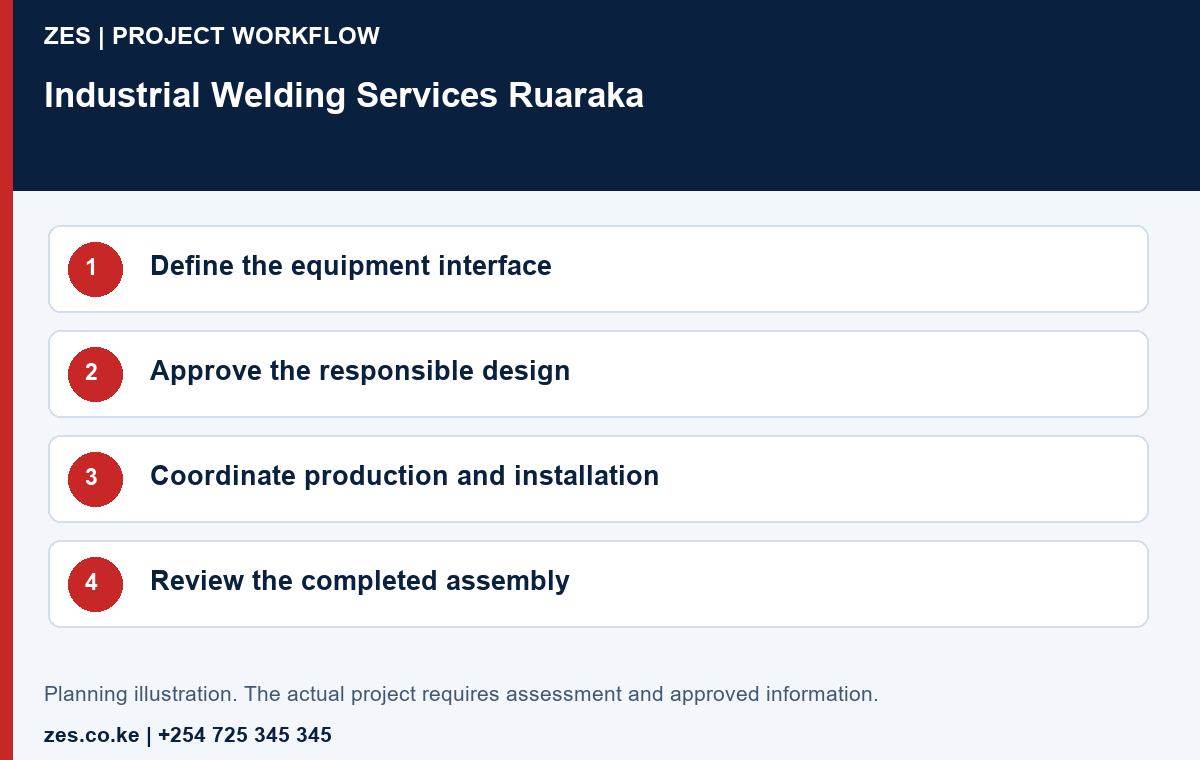
Explain what the proposed component must do and how it relates to the existing equipment. Distinguish physical support, separation, protection and ordinary access. The responsible equipment owner and competent designer should establish the actual requirements. Industrial fabrication should follow that approved information rather than start with a request for a cage or frame whose intended function remains undefined.
2. Identify the equipment and design owners
Give the relevant equipment references and name any manufacturer, appointed service provider or designer involved. Modifying an existing arrangement can affect responsibilities outside the fabrication package. Obtain the necessary interface information and approvals before production. Industrial welding services Ruaraka should be coordinated with those parties rather than treated as authority to alter any available machine surface.
3. Agree the measured interfaces
Identify who verifies dimensions, supporting conditions and relevant movement or access requirements. Mark assumptions and unresolved information. A fabricated item may match a sketch while interfering with the actual equipment or its maintenance. Use controlled references and resolve discrepancies before manufacturing. If the responsible reviewer requires a trial fit or first-item review, identify its timing and acceptance purpose.
4. Separate fabrication from a complete safeguarding system
A fabricated guard may form part of a wider assessed arrangement. Identify who is responsible for its design, relevant openings, supports, release, interfaces and any associated control system. This guide does not prescribe safeguarding details or authorise bypassing an existing protection. Keep the supplied industrial-fabrication component distinguishable from the competent assessment and verification of the complete equipment arrangement.
5. Plan work around the site’s approved arrangements
Identify the site team responsible for access, equipment isolation, work boundaries and authorisation of the actual method. This is procurement guidance, not an isolation or hot-work procedure. Confirm customer dependencies and specialist attendance before agreeing installation. A short fabrication task may still require a carefully coordinated operating window, and urgency should not conceal missing approvals or information.
6. Specify inspection and evidence before award
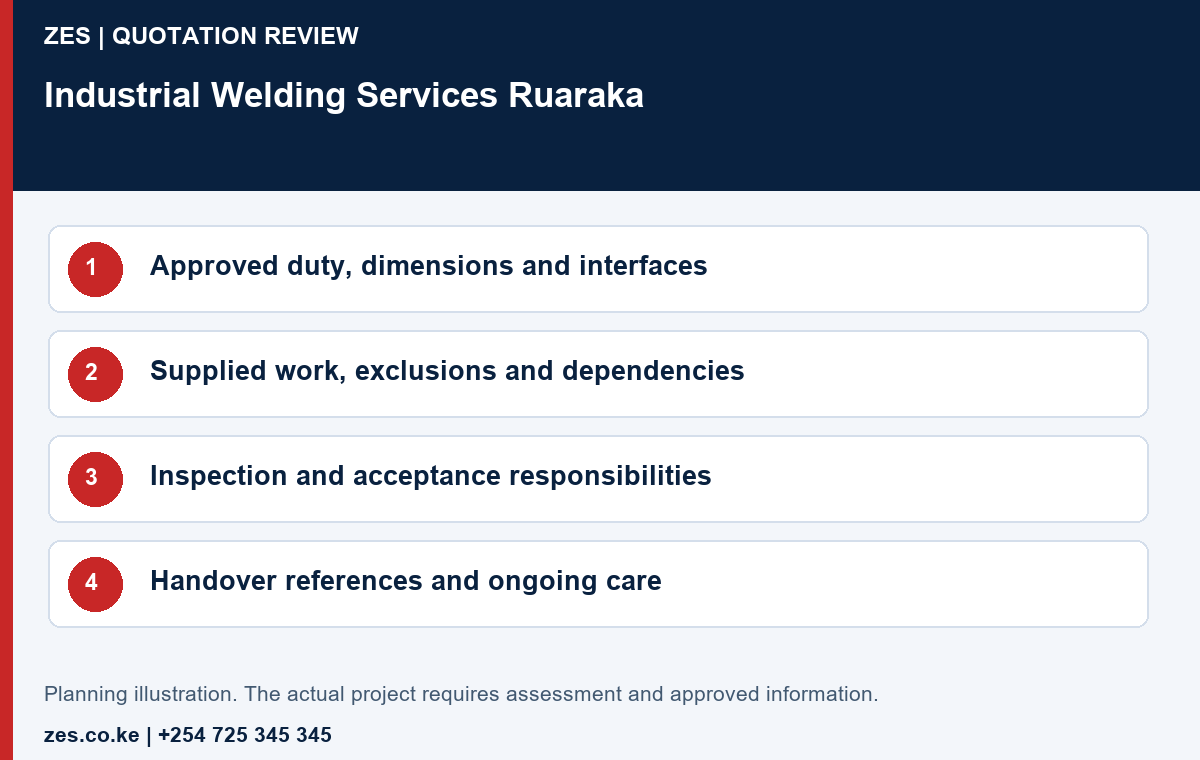
The appropriate responsible parties should establish the inspection and verification requirements for the actual duty. Identify material references, dimensional checks, fabrication evidence and relevant installed-system tests where required. Do not add unverified certification labels to a general industrial-fabrication offer. A photograph of a completed frame should not replace evidence required by the approved design or contract.
7. Keep future modifications traceable
Retain final approved references, supplied-work details, acceptance records and care requirements. Review later changes with the equipment owner and responsible designer. An added panel, altered guard or new load can change the original requirement. When requesting industrial welding services Ruaraka for another task, identify the asset and intended change rather than assume the first assessment covers every subsequent alteration.
Illustrative project brief for Ruaraka
An invented buyer needs a removable fabricated guard around a defined equipment area. The equipment owner provides interface requirements, the responsible designer approves the arrangement and the fabricator prices the specified component and installation tasks. The acceptance plan separates component checks from any wider equipment verification. It also identifies the permitted installation window and the decision if the site is not ready. This is a proposed procurement example, not a completed ZES project or a universal guard design.
Prepare a clear enquiry for ZES
Send the site location, intended use, quantity, photographs, available drawings and approximate dimensions. Mark measurements that still need verification. Identify the person authorised to approve the work and the relevant technical or property contacts. Explain the preferred programme and which activities must continue. Avoid sending private tenant information, security credentials or unrelated personal records when a simple project description will explain the requirement.
A written proposal should identify supplied work, exclusions, customer dependencies, approved references and acceptance evidence. Confirm current commercial terms and any assessment, travel, delivery or installation arrangements directly. Relevant design, approvals and specialist verification remain with the appropriately qualified responsible parties where required. This guide provides buying questions; it is not a site-specific welding method, structural design or certification of an existing installation.
- Required result: identify the item, duty and quantity.
- Information: distinguish approved details from assumptions.
- Interfaces: name customer and third-party responsibilities.
- Commercial scope: compare equivalent supplied outcomes.
- Acceptance: agree evidence, outstanding actions and handover references.
Frequently asked questions
Does fabricating a guard establish that the machine is safe?
No. The complete arrangement needs the appropriate competent assessment and verification. Define the fabricated component, supporting interfaces and responsible parties explicitly.
Can existing equipment be modified from a photograph?
A photograph may support the enquiry, but the actual duty, interfaces, approved design and relevant equipment responsibilities need review before an appropriate modification is specified.
Can ZES supply specialist inspection or certification?
State the actual inspection requirement in the brief. The proposal must confirm the appropriately qualified responsible parties and evidence supplied; no blanket certification capability is claimed here.
Related specialist ZES guide · Welding and metal fabrication services · Request a welding quotation · Request a site assessment · Call +254 725 345 345.
Reference: NCA contractor information. Confirm requirements applicable to the actual scope with the responsible advisers.