
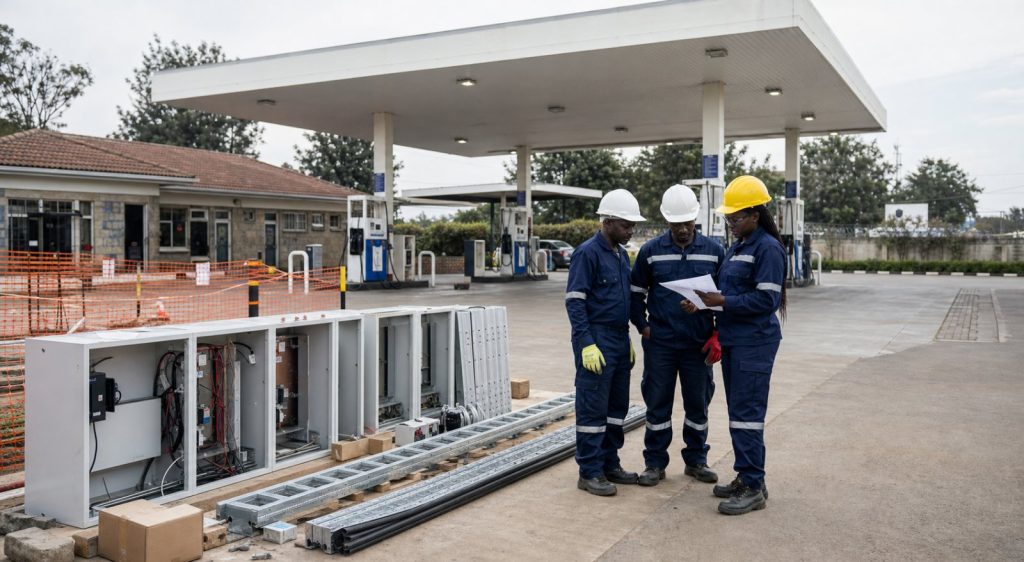
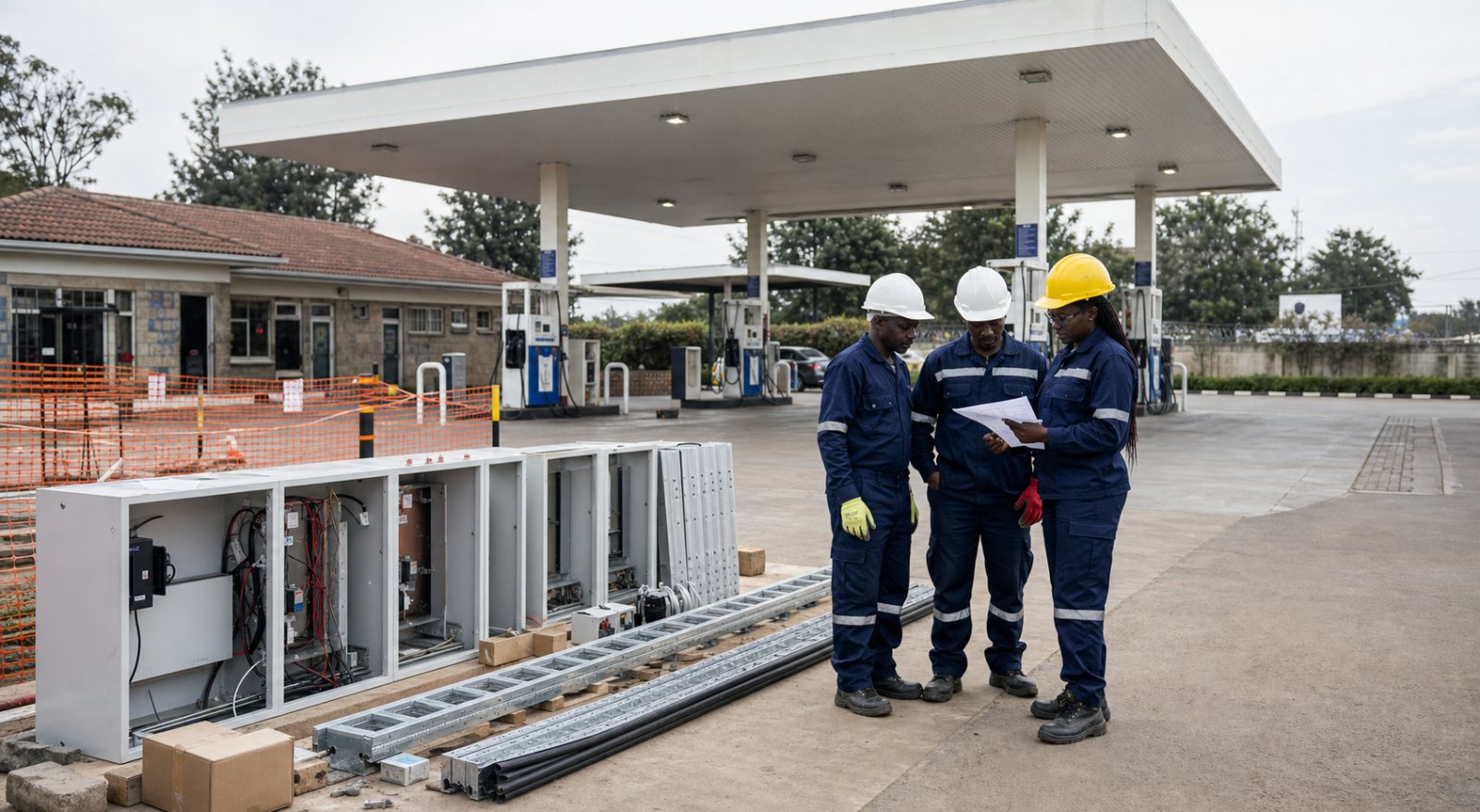
Petrol station renovation and upgrade in Kenya should begin with an existing-condition survey, not a shopping list of replacement equipment. A forecourt is an integrated system: tanks, piping, dispensers, islands, canopy, drainage, electrical infrastructure, emergency controls, automation, CCTV and operating procedures affect one another.
A successful upgrade defines which assets can safely remain, which require repair, which should be replaced and which proposed changes need regulatory or professional review. This guide explains how owners can build a phased, testable renovation scope without confusing refurbishment with routine maintenance or new-site construction.
Quick answer: start with a documented audit and a retain–repair–replace matrix. Confirm the approval route before structural, storage, dispensing or electrical modifications; plan isolation and customer separation; then commission every changed system and hand over updated records.
What counts as a petrol station renovation?
Projects described as renovation can have very different technical and regulatory effects:
- Cosmetic refurbishment: finishes, approved branding elements and non-structural appearance work.
- Like-for-like maintenance: scheduled servicing or replacement that preserves the approved design.
- Technical retrofit: new dispensers, monitoring, automation, electrical systems or safety equipment.
- Structural modification: canopy extension, foundation work, island changes or building alterations.
- Capacity or layout change: tank, pipework, product, traffic or dispensing configuration changes.
The name used in a proposal does not determine the approval route. The actual effect of the work does. Define the scope first, then confirm whether it is maintenance, a regulated modification or a larger redevelopment.
Begin with an existing-condition survey
The survey should combine document review with physical inspection and operating history. Collect available permits, drawings, equipment schedules, manuals, service records, calibration information, incident history and previous modification records. Where information is missing, record the uncertainty rather than treating an assumption as fact.
The technical review may cover:
- tank configuration, chambers, fill and vent systems, gauging and leak monitoring;
- product piping, valves, sumps, visible containment and access points;
- dispensers, hoses, nozzles, breakaways, islands and protection;
- forecourt slabs, drainage, separators, kerbs and traffic flow;
- canopy structure, roofing, fascia, water disposal and lighting;
- power distribution, isolation, earthing, bonding and emergency controls;
- forecourt automation, tank inventory, POS interfaces, network and CCTV;
- buildings, customer facilities, back-office space and maintenance access.
The output should identify observed condition, testing required, immediate risks, retained assets, proposed interventions and assumptions that need confirmation.
Check approvals before modifying the site
Kenya’s current Petroleum (Retail Dispensing Site Construction and Licensing) (No. 2) Regulations, 2025 address both construction and modification of retail dispensing sites. A change affecting the technical design, storage capacity, environmental or safety compliance, or requiring local approval can fall within the modification framework.
Not every repaint should be treated like a new tank installation, but neither should a structural, storage, dispensing or electrical change be dismissed as “maintenance” without review. Confirm the applicable EPRA, county, road, environmental and professional requirements for the actual scope. Where environmental approval is affected, consult current NEMA EIA guidance and the project’s existing licence and mitigation commitments.
ZES’s EPRA construction and modification planning guide provides a separate overview of the compliance pathway.
Build a retain–repair–replace matrix
| Decision | When it may be appropriate | Evidence to require |
|---|---|---|
| Retain | Condition, performance, compatibility and support remain satisfactory | Inspection, test results, records, manuals and approved integration plan |
| Repair | The defect is isolated, diagnosable and supported by compatible parts and procedures | Fault report, repair method, parts record, testing and applicable verification |
| Retrofit | A defined upgrade improves monitoring, control, safety or maintainability without unnecessary replacement | Interface design, compatibility review, approvals and commissioning criteria |
| Replace | Equipment is unsupported, repeatedly unreliable, extensively damaged or incompatible with the required outcome | Condition evidence, lifecycle comparison, replacement specification and handover plan |
Renovation is not automatically cheaper than replacement. Reusing assets without reliable records or testing can transfer cost and risk into the operating phase. Conversely, replacing serviceable equipment simply because it is older can waste capital. The matrix gives every decision a reason.
Forecourt civil works and customer movement
Renovation may address damaged slabs, poor drainage, unsafe traffic flow, worn islands, inadequate protection, access constraints or water entering chambers. Before breaking concrete, confirm underground tank, pipe, electrical, drainage and communications routes.
A phased site plan should separate customers and vehicles from the work zone. Temporary barriers, pedestrian routes, equipment access and delivery movements must be coordinated. Some activities can be phased; excavation, fuel-system work, electrical isolation or major lifting may require partial or complete closure.
Tank, piping and leak-monitoring upgrades
Storage-system work can range from instrument replacement to a larger modification. The survey should review accessible fittings, chambers, known product or water issues, inventory records, alarms, pipe routes and available test history. Cleaning, integrity testing, repair and replacement are separate scopes and should not be merged into a vague “tank service.”
Options may include compatible automatic tank gauging, fuel tank leak detection, improved inventory reporting or replacement of components that fail the approved assessment. Any tank or pipework intervention needs defined isolation, testing and recommissioning criteria.
Dispenser and pump-island upgrades
Existing dispensers may be retained, repaired or replaced depending on condition, measurement performance, parts support, compatibility and the intended control system. A replacement project should define product connections, power, communications, island work, impact protection, testing, calibration and official verification where required.
Use the fuel dispenser installation guide for new or replacement installation scope. Corrective faults belong to the separate fuel dispenser repair assessment guide, while measurement accuracy belongs to fuel pump calibration services.
Canopy, lighting and building improvements
Canopy renovation can include corrosion repair, roofing, drainage, fascia, lighting or structural changes. Existing conditions and foundations must be assessed before extension, additional signage, solar panels or new equipment loads. Read the dedicated petrol station canopy construction guide before comparing structural quotations.
Buildings and customer facilities should be scoped with accessibility, water, drainage, power, security, operations and maintenance in mind. Cosmetic finishes should not hide unresolved leaks, movement, electrical defects or drainage problems.
Electrical, emergency controls and backup power
Electrical upgrades may address distribution capacity, isolation, cable condition, earthing, bonding, surge protection, emergency controls, lighting and equipment interfaces. They should be based on the approved project design and performed by competent personnel.
Changing dispensers, tank gauges, canopy lighting, automation or backup power can affect several circuits and communication links. ZES can coordinate the petrol station electrical upgrade with the wider renovation scope so systems are tested together.
Automation, monitoring, CCTV and networking
A renovation is an opportunity to improve operational visibility. Depending on the requirement, the scope may connect dispensers, tank data, pricing, transactions, alarms, CCTV and the business network. Integration should begin with a clear reporting and control objective.
Review the existing petrol station automation system, forecourt management and security infrastructure for capacity, support, compatibility and cybersecurity. Back up configurations before change and document final settings at handover.
Planning work at an operating petrol station
The programme should state which areas remain available, how equipment will be isolated, how customers and deliveries will be separated, and who authorizes each change window. Do not promise zero downtime before the method and site conditions are understood.
Useful controls include staged work zones, coordinated shutdowns, controlled contractor access, daily reinstatement checks, change approval and clear communication with station staff. Safety and integrity take priority over keeping every dispenser available.
Testing, commissioning and handover
The acceptance plan should match the systems changed. It may include tank or piping tests, leak checks, electrical tests, emergency-control checks, dispenser function, calibration and verification, ATG and alarm tests, automation integration, CCTV coverage and network performance.
Handover records can include updated drawings, equipment schedules, manuals, settings backups, service and test certificates, applicable verification records, warranties, spare-parts information, training and an open-items register. An upgrade is not complete when the contractor leaves; it is complete when the owner can operate and maintain the changed site.
What determines renovation cost?
Cost and duration depend on the condition found, systems included, approvals, access, shutdown requirements, civil quantities, equipment availability, specialist testing, logistics and the amount of reliable existing information. Concealed work may require controlled provisional sums until access or testing confirms the condition.
A useful quotation should identify retained equipment, makes and models, parts, approval responsibilities, shutdown assumptions, disposal, testing, documentation, taxes, exclusions and the process for approving variations.
Move from renovation into preventive maintenance
The handover should establish the next inspection and maintenance actions based on the installed equipment, manufacturer information, operating duty and observed condition. Link recurring tasks to a documented petrol station preventive maintenance plan instead of waiting for the next failure.
Frequently asked questions
Does a petrol station renovation require an EPRA permit?
If the proposed work meets the current regulation’s definition of a modification, it must be undertaken under a valid construction permit. Confirm whether the scope meets that definition, and verify the current approval route with EPRA and the relevant project professionals before work.
Can the station remain open during renovation?
Some work may be phased, but fuel-system, electrical, excavation, lifting or safety-critical activities can require isolated areas or a shutdown. The site-specific work plan determines what is practical.
Can existing tanks and dispensers be retained?
Only after reviewing condition, compatibility, test results, regulatory acceptability, parts support and the intended upgrade. Retention should be an evidence-based decision.
Does rebranding alone count as a modification?
Purely cosmetic work may differ from a technical modification, but structural, electrical, access, storage or safety changes require project-specific review.
What should the handover pack include?
Include updated drawings and schedules, test and service records, applicable calibration or verification documents, manuals, settings, warranties, training records and unresolved-item tracking.
Petrol station renovation services Kenya should start with a condition survey and an operating-continuity plan. Existing drawings may not match buried services, equipment can be obsolete and opening up work may reveal corrosion or structural damage. The contractor should separate confirmed scope from provisional repairs and define when trading areas must be isolated.
Prioritize upgrades by risk and business value
The survey should grade tanks and chambers, piping, dispensers, canopy and forecourt, drainage, electrical systems, automation, CCTV, signage and customer areas. Findings can be grouped as immediate safety or compliance concerns, reliability work, capacity improvements and appearance upgrades. Link recurring-fault evidence from the maintenance programme to the capital plan.
Procurement documents should show demolition, temporary barriers, product isolation, discovered-condition allowances, equipment storage, waste responsibility, phasing and required recommissioning. New component compatibility should be checked using the equipment procurement guide. Authority and professional review requirements for modifications must be verified before construction.
Recommission every affected system
Acceptance is not limited to finishes. Any disturbed tank connection, piping, electrical circuit, controller, camera, drainage route or emergency device should receive the appropriate inspection and functional test. Phased handover should clearly mark which area is safe for use, which remains isolated and which defects have temporary controls.
The final records should include survey findings, approved changes, concealed-work photographs, as-built drawings, test and commissioning sheets, new asset and serial data, warranty, removed equipment record and maintenance updates. Send ZES photographs, fault history and available drawings for a renovation-scope assessment.
Trading-phase checkpoint
For a station that remains partly open, each construction phase needs a signed boundary plan. It should show public routes, contractor access, isolated fuel or electrical systems, temporary barriers, emergency movement and the person who can authorize a change. Inspect the boundary at the start of every shift and after work alters the site. Noise, dust, hot work, deliveries and open excavations require planned timing and controls. This checkpoint helps management avoid gradual encroachment of construction into live operations and provides a clear release process before a refurbished area returns to customers. Supervisors should record the inspection, any changed barrier and the corrective action completed before public access resumes.
Request a petrol station upgrade survey
Send ZES the site location, operating status, intended changes, tank and dispenser count, available drawings, known faults and preferred programme. We will help define an assessment and coordinated upgrade scope.