
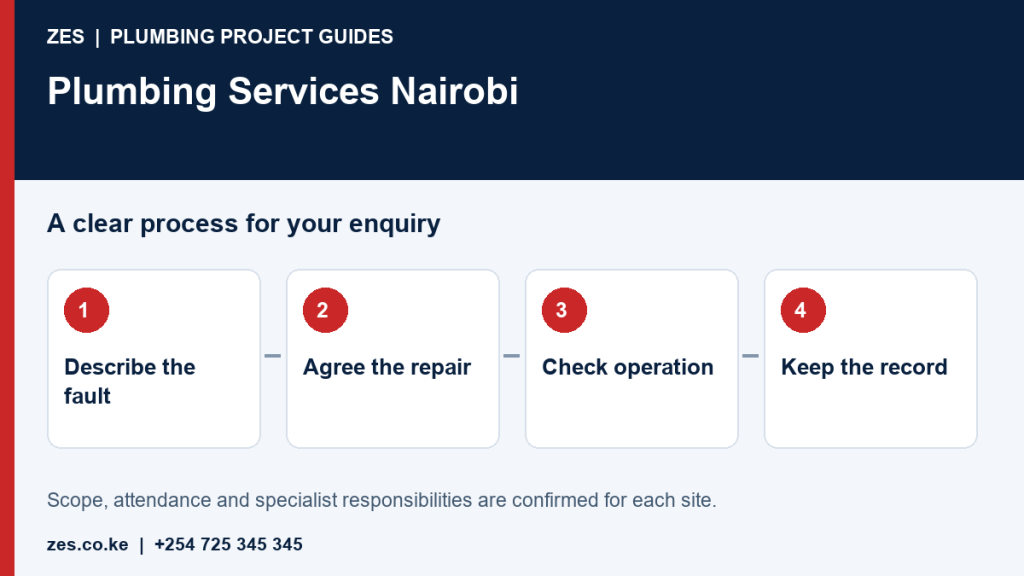
Plumbing services in Nairobi cover water supply, fixtures, valves and drainage connections. A leaking tap, an overflowing cistern and a new bathroom need different assessments and working arrangements. Start by describing what changed, which outlets are affected and what you need restored. This guide helps homeowners, tenants and small businesses prepare an enquiry, compare quotations and agree completion checks. ZES accepts plumbing enquiries and confirms a suitable scope after reviewing the property and available information.
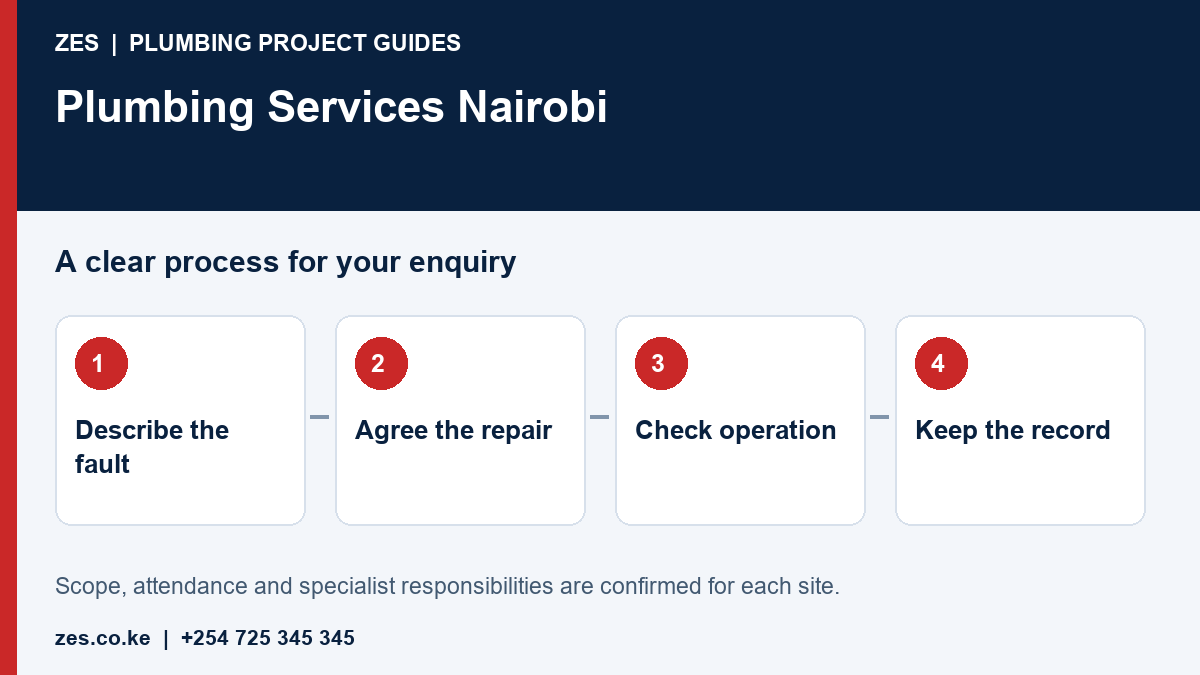
Describe the symptom before choosing a repair
Record whether the problem is constant or intermittent, limited to one fixture or present across the property. A slow kitchen sink with otherwise normal drainage differs from several fixtures backing up together. Weak flow everywhere may involve supply, storage, valves or distribution. Share when the problem began, recent alterations and accessible photographs. These observations help plan investigation; they do not prove the cause. Avoid buying replacement parts before the condition and compatibility of the installation have been assessed.
Choose between repair, replacement and alteration
Ask what failed and why the proposed method addresses it. Replacing a worn tap component may be proportionate when surrounding fittings remain sound. Repeated leakage from deteriorating pipework may justify renewing a defined section. Moving a basin is an alteration that changes water routes, drainage and finishes. The quotation should distinguish essential correction from optional improvements. If existing components will be retained, ask about their condition and access for future servicing. A lasting solution should follow the actual fault rather than simply hide its visible symptom.
Plan access in occupied premises
In an apartment, establish who can authorise a shutdown and whether neighbouring units share the supply. In a shop or office, identify the hours when water must remain available. Ceiling access, furniture, parking and tiled surfaces affect the method. Agree who opens and reinstates walls or floors; plumbing labour does not automatically include painting or tiling. Inform the responsible building representative before shared services are interrupted. Where a shutdown is needed, record the affected areas, expected working window and person who will confirm restoration.
Compare a complete quotation
Look for the material specification, agreed quantities, labour, investigation, testing and exclusions. Confirm whether fittings are supplied or provided by the customer. Transport, disposal and access equipment can change the total. Ask how concealed damage and additional work will be authorised. A cheaper quotation may cover less scope, so compare against the same fixture count and route. An online rate or photograph-based estimate is useful only when its assumptions are clear. Keep the approved scope and changes together with the invoice.
Check operation and retain the record
Ask for a demonstration of the affected fixtures and the agreed leak, flow or drainage checks. Confirm accessible isolation and note unresolved items before closing the job. Test methods must suit the material and manufacturer instructions. Keep component details, photographs and care guidance where relevant. Good appearance and a clean workspace matter, but do not replace functional checks. Property managers should record the fault, its cause where established and the repair so recurring problems can be recognised rather than investigated from scratch each time.
Reduce avoidable callouts
Keep accessible isolation points unobstructed and report small changes early: persistent cistern flow, staining or progressively slower drainage. Avoid disposing of grease, cloth and solid waste through drains. Do not force seized valves or alter shared services without authority. A short repair history helps identify whether repeated incidents call for planned replacement. During a tenancy change, check visible leakage and fixture operation before occupation. Maintenance should follow the condition and use of the installation, with work beyond the caretaker's competence referred to a suitable technician.
Information to include in your project brief
- Affected rooms and fixtures
- Symptoms and start date
- Recent work and photographs
- Access and shutdown permissions
Frequently asked questions
Can ZES quote from photographs?
Photographs support an initial review. Hidden routes, pressure, access and adjoining fittings may need a site assessment before a firm quotation.
Does every leak require replacement pipework?
No. The repair should follow diagnosis and the condition of the surrounding installation. Ask why a local repair or wider replacement is proposed.
What should my first enquiry include?
Send the Nairobi location, property type, symptoms, affected outlets, photographs, access limits and preferred working time.
Related plumbing planning guides
- Plumbers in Ruiru: Local Repairs, Rental Properties and New Connections
- Emergency Plumber Nairobi: Safe Reporting and Urgent Repair Planning
Discuss your plumbing requirement with ZES
Share the location, property use, symptoms or proposed work, and available drawings or photographs. ZES will review the information and confirm the suitable scope, any assessment arrangements and current attendance availability. Materials, responsibilities, programme and applicable terms are agreed in the written quotation.
Explore ZES plumbing services · Request a plumbing quotation · Call +254 725 345 345