
Updated 1 November 2026 · Zama Engineering Systems buyer guide
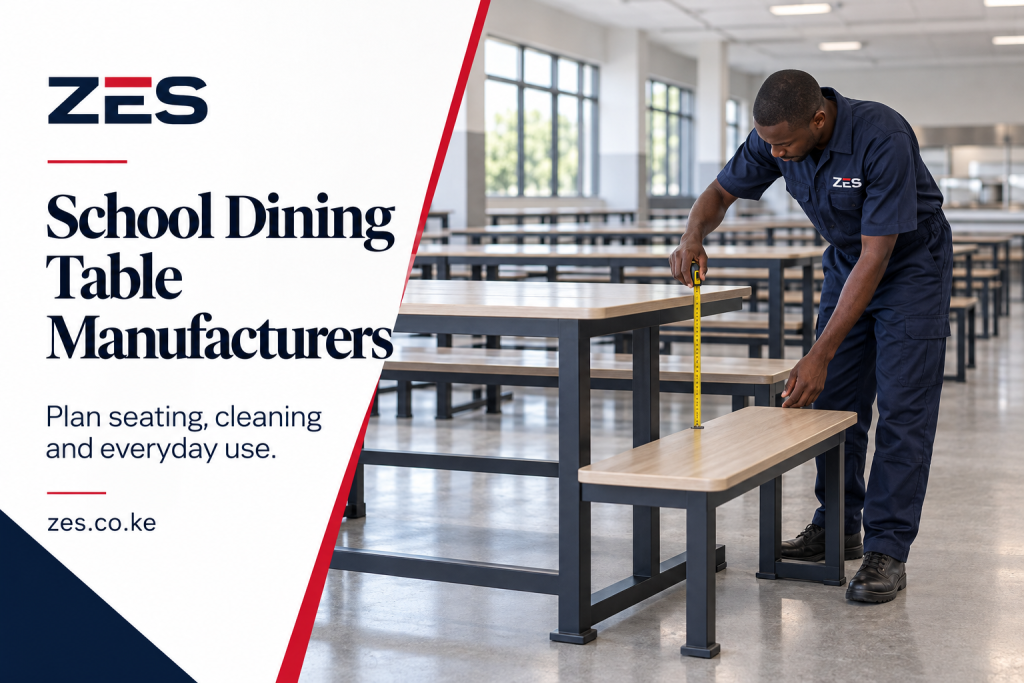
School dining table manufacturers need to understand the users, seating arrangement, cleaning routine and available dining space. A table and bench set can look suitable in a photograph yet prove awkward to move or clean in the intended room. This guide helps schools define the item and receiving process without assuming a standard size or unsupported product-performance claim.
Describe the dining operation
State the pupil age groups, seating pattern and expected dining routine. Explain whether furniture stays in place or is regularly moved. Include how staff clean the room and manage circulation. The responsible school team should review the proposed arrangement for its users. A purchase should support the actual dining operation rather than only meet a headline seat-count target.
School dining table manufacturers: define the item
Specify whether benches are attached or separate and describe tops, frames and any relevant accessories. Ask for the proposed materials, construction and finish. Food-contact or specialist performance claims need evidence applicable to the actual product where relevant. Do not infer suitability from terms such as hygienic or heavy-duty. Keep the accepted item specification connected to the order.
Review a sample against ordinary use
Agree a prototype or first-article review where appropriate. The school can assess the agreed arrangement, finish and practical use through its responsible representatives. Formal testing, if required, should be specified through the appropriate competent parties. Record approved changes before the batch proceeds. Do not ask pupils to perform unsafe tests or treat an improvised demonstration as proof of every requirement.
Coordinate cleaning and finish expectations
Ask how the actual surfaces should be cleaned and which products or methods the manufacturer recommends. Review edges, joints and accessible areas with the cleaning routine in mind. Where tops or seating surfaces can be replaced, request the relevant details. Agree how damaged finish or exposed edges will be reported and corrected. Keep any food-contact specification explicit rather than implied by the word dining.
Plan quantities, delivery and placement
Issue an item schedule and delivery location, including room access and any placement or assembly requirement. Agree how shortages, transport damage and nonconforming items are recorded. Confirm the actual programme and any delivery phasing. A generic supplier article is not evidence of available batch capacity. The commercial offer should identify what the customer must prepare before receiving the furniture.
Retain information for future replacement
Keep the approved sample references, materials and finish details with the receiving record. Identify relevant support and warranty terms from the proposal. A replacement order should state whether it must match existing furniture or meet an updated brief. Repairs need assessment against the actual construction and condition. Reliable records help the school avoid a patchwork of incompatible replacement items.
Compare the project scope
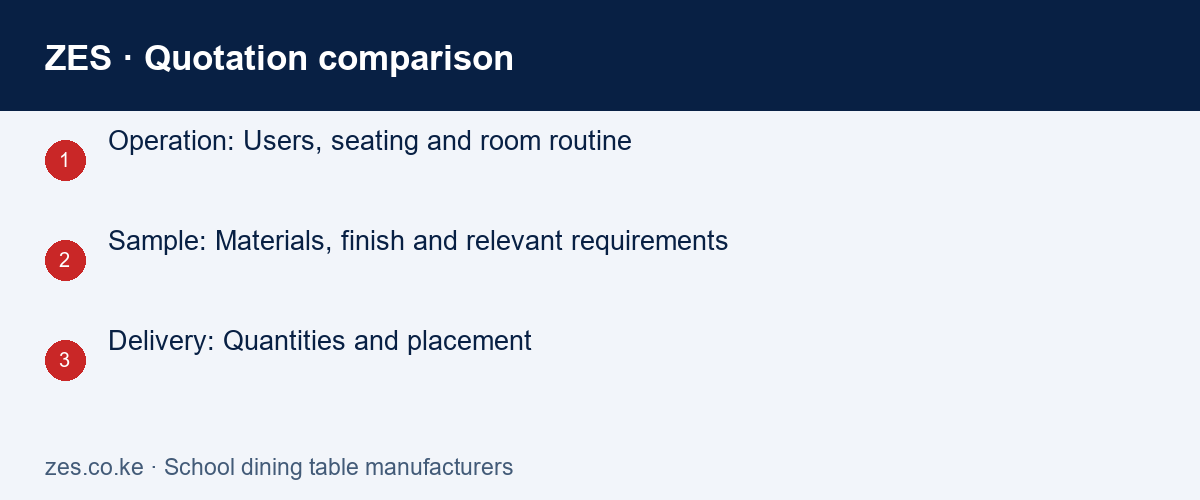
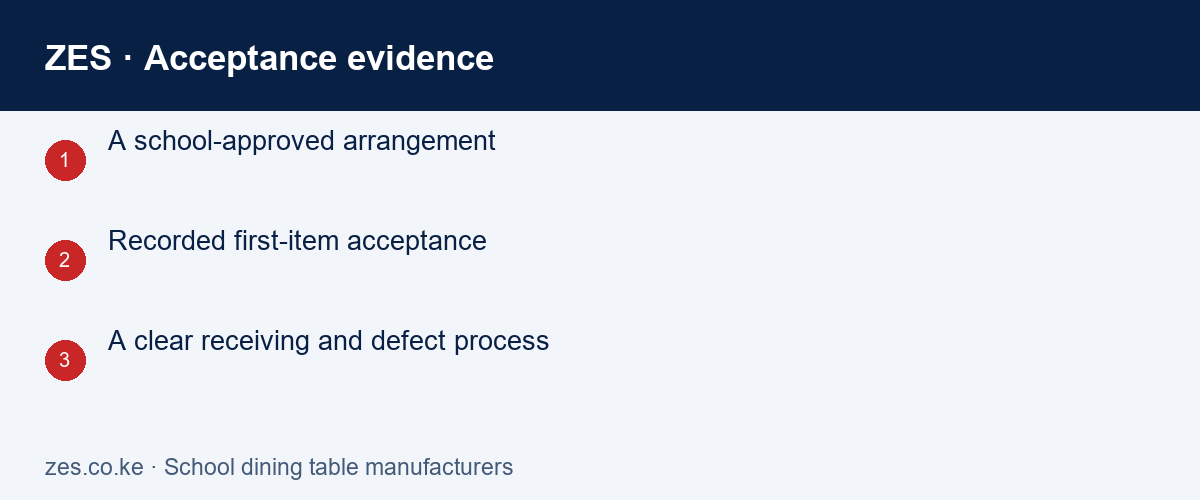
| Decision | Information to confirm | Useful acceptance evidence |
|---|---|---|
| Operation | Users, seating and room routine | A school-approved arrangement |
| Sample | Materials, finish and relevant requirements | Recorded first-item acceptance |
| Delivery | Quantities and placement | A clear receiving and defect process |
A practical planning example
A school that regularly rearranges its dining room should discuss movement and storage with the supplier before selecting an attached-bench design. This is an illustrative buying question, not a product recommendation for an unassessed school.
School dining table manufacturers: enquiry checklist
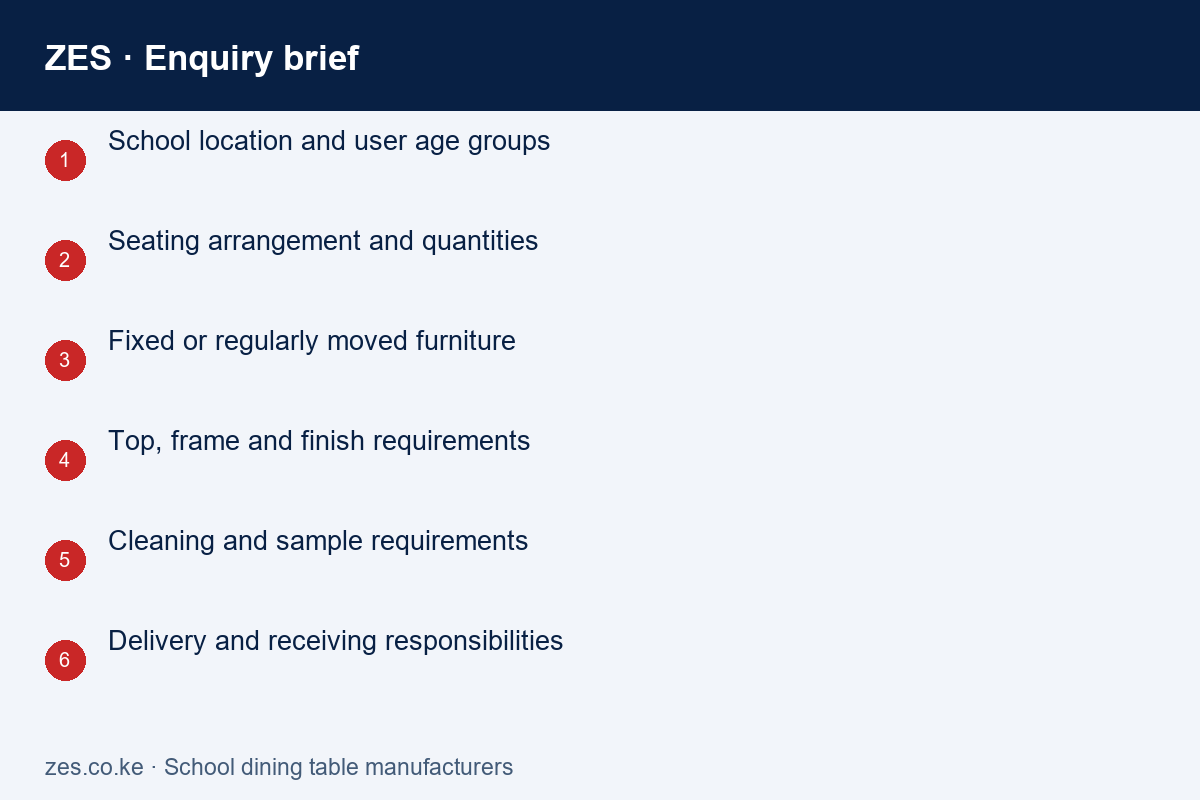
- School location and user age groups
- Seating arrangement and quantities
- Fixed or regularly moved furniture
- Top, frame and finish requirements
- Cleaning and sample requirements
- Delivery and receiving responsibilities
Related enquiry: Institutional dining table fabrication Kenya. Include the location and the intended outcome so the proposed scope can address the actual requirement.
Frequently asked questions
Can tables be made to a school specification?
Submit the intended users, materials and arrangement so suitability and commercial scope can be assessed.
Does dining furniture automatically carry food-contact certification?
No. Any applicable requirement and supporting evidence should be defined for the actual supplied materials and product.
Can repairs be included?
Describe the existing item and condition. The proposed repair or replacement scope must be assessed and agreed.
School dining table manufacturers: discuss the scope with ZES
Read the related ZES project planning guide and explore welding and metal fabrication services. Share the site, quantities, existing equipment and required outcome. Assessment, availability, delivery responsibilities and commercial terms are confirmed in the written proposal.
Request a scoped quotation · Request a site assessment · Call +254 725 345 345
Further reference: NCA contractor information. Product instructions and project-specific specialist advice remain important for the actual equipment and work.