
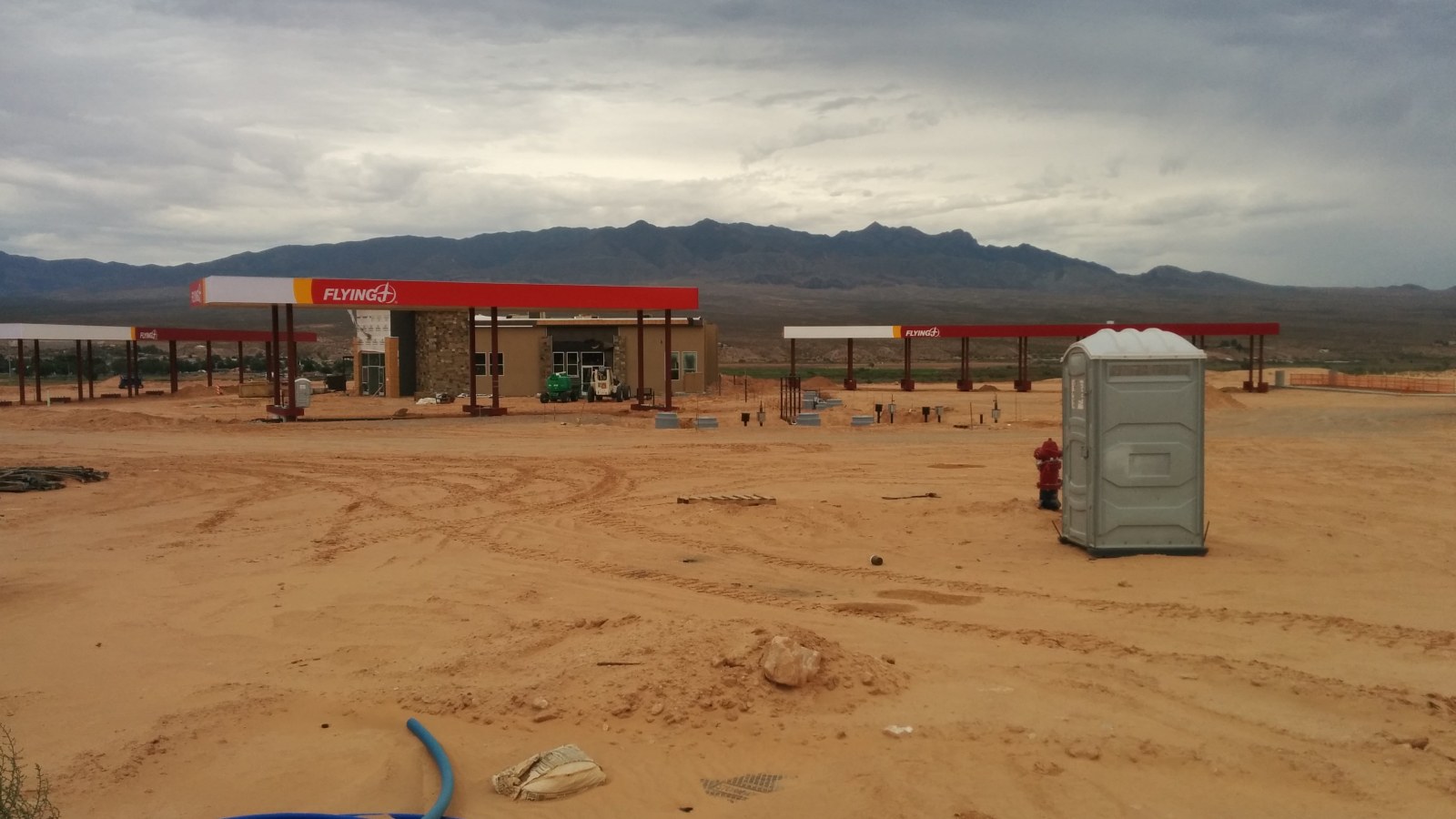
A developer searching for a petrol station construction company in Meru needs a proposal that responds to the county’s varied terrain, market network and delivery routes. A constrained plot near Meru town or Makutano cannot be planned like a highway-facing site around Timau, a busy commercial location in Maua, or an outlying market-centre project where utilities and specialist deliveries travel farther.
ZES evaluates Kenyan projects by their scope, location, logistics and programme. This page does not represent a Meru office, local crew, completed project or assurance that a regulator will approve a site. The national petrol station construction and equipment service explains the core offer; the Kenya service-area directory explains how county enquiries are assessed.
Turnkey petrol station setup in Meru Town, Maua, Nkubu and Timau
A petrol station setup in Meru should distinguish a constrained town site from a highway, agricultural-distribution or outlying market-centre project. Meru Town and Makutano, Maua, Nkubu and Timau can create different customer mixes, gradients, delivery routes and utility distances. The brief should state the intended vehicles and facilities before storage capacity and dispenser quantity are treated as fixed.
The turnkey setup scope coordinates survey and design inputs, earthworks, tank systems, piping, dispensers, canopy, power, drainage, monitoring, testing and handover. Mobilisation, material storage, lifting and temporary utilities need site-specific allowances, particularly where specialist deliveries travel farther.
One county requires several feasibility questions
Meru, Nkubu, Timau, Maua, Mikinduri, Laare and the county’s many trading centres sit in different operating contexts. The Embu–Meru, Meru–Nanyuki or Isiolo direction, and Meru–Maua movement can create different vehicle mixes and supply routes. These examples help frame an enquiry; they do not endorse a town, road or parcel for a fuel station.
Begin by defining who will use the site: local cars and motorcycles, agricultural and delivery vehicles, buses, long-distance travellers or trucks. Estimate peak demand, queue length and parking rather than maximising the dispenser count by default. The arrangement should protect pedestrians, keep customer circulation legible and allow a fuel tanker to enter, stand at the fill point and depart forward without reversing across live dispensing lanes.
A site visit should document approach direction, road gradient, bends and junctions, roadside trading, stages, drains, power lines and the road reserve. A swept-path exercise must use the intended tanker and the most demanding regular customer vehicle. The agency responsible for the frontage decides whether access approval, a culvert, road-reserve consent, traffic study or additional road work is needed.
Resolve levels before tank and canopy positions
Meru’s topography can change quickly between sites. On sloping land, the team should compare balanced earthworks with retaining structures and accessible finished levels. It must also prevent runoff from entering tank excavations, the shop or neighbouring plots. On flatter sites, a small survey difference can still decide whether the forecourt drains or ponds. A topographic survey should therefore precede the final platform, access and drainage design.
At the screening stage, check whether the actual parcel is exposed to flash flooding, unstable slopes, gullies, erosion or other forms of land degradation. These are site-review prompts, not a statement that every Meru plot faces them. Confirm catchment, slope stability, soil erosion, watercourse setbacks and downstream discharge for the actual parcel. Potentially contaminated runoff requires containment and appropriate treatment, while roof and clean runoff should be managed separately where the design permits.
A geotechnical investigation should establish bearing, variable fill, groundwater, excavation stability and pavement formation. Its recommendations govern tank support, any anchorage, canopy bases, retaining structures and compaction. For the buried petroleum scope, use the underground tank installation guide to coordinate excavation, lifting, chambers, fill and vent assemblies, pipe routes, containment and inspection records.
Coordinate the full station, not isolated equipment
A complete scope normally connects the following workstreams:
- Surveys and engineering: land and boundary data, levels, geotechnical findings, traffic movement, architectural layout, civil, structural, mechanical, electrical, drainage and fire information.
- Enabling and civil works: safe site establishment, temporary water control, earthworks, foundations, tank excavation, drainage, separators and reinforced pavements.
- Fuel systems: compatible tanks, chambers, product pipework, fill and vent points, leak-control provisions, dispensers and monitoring interfaces.
- Structures and amenities: canopy, shop, office, washrooms, parking, waste area, boundary treatment and any food, wash-bay or fleet facilities.
- Electrical and controls: distribution, hazardous-area equipment, emergency isolation, bonding, earthing, lightning protection, lighting, communications and backup power interfaces.
- Completion evidence: inspections, integrity and functional tests, calibration coordination, snag closure, training, certificates, manuals and as-built drawings.
The fuel dispenser installation guide helps define equipment bases, pipe and electrical terminations, impact protection, testing and calibration responsibilities. Where terrain or exposure makes canopy foundations, drainage and erection sequence important, the canopy construction guide provides a more useful brief than buying a roof only by square metres.
Build the programme around release points
A Meru project should move from feasibility to survey and investigation, coordinated design, submissions, procurement, construction, testing and handover. Each stage needs a release condition. For example, tank procurement should follow a confirmed product and capacity schedule; excavation should follow approved setting-out and a safe method; paving should follow accepted underground tests; and product introduction should follow completion of the required safety and operating controls.
Programme specialist deliveries from their realistic origin and route. A long tank, canopy steel or dispenser consignment may need route checks, offloading space and lifting plant. Rain can interrupt excavation, compaction and concrete work, particularly when temporary drainage has not been established. The schedule should show these risks and the party responsible for each decision rather than offer an unsupported opening date.
What changes a Meru construction quotation?
No defensible contractor can derive a fixed county price from a pin alone. Key cost drivers include:
- Plot geometry and gradient: retaining, cut and fill, ramp gradients, boundary works and usable tanker manoeuvring space.
- Ground and water: unsuitable material, rock if encountered, groundwater controls, engineered fill and slope protection.
- Access: frontage drainage, culvert, road works, temporary traffic control, utility relocation and authority conditions.
- Storage plan: tank capacities and construction, number of products, chambers, pipe lengths, monitoring and expansion allowance.
- Forecourt duty: customer and tanker axle loads, pavement area, turning movements, islands and impact protection.
- Utilities: distance and capacity of power, water, sewer or on-site treatment, communications and standby systems.
- Delivery logistics: equipment route, lifting, specialist mobilisation, storage security and restricted access windows.
- Ancillary business: shop size, food preparation, wash bay, service area, truck parking, LPG proposal or renewable-energy scope.
The Kenya petrol station construction cost guide sets out a scope-based comparison method. Ask bidders to identify design, preliminaries, approvals support, civil works, supplied equipment, installation, testing, taxes, exclusions and provisional sums instead of comparing headline totals.
Use Meru’s county process and national approvals together
Meru County’s Electronic Development Applications Management System lists construction permits, change or extension of use, inspections, occupation permits and related development-control services. The applicant should confirm which services and documents apply to the specific parcel and proposal. Approved professional drawings, ownership and survey information may be needed, but the current county checklist—not an article—should govern the submission.
The county process does not replace petroleum or environmental permission. The current national retail-site regulations provide for an EPRA construction permit and supporting documents that include environmental approval. NEMA determines the environmental assessment and licensing route. The developer should also register the construction project with NCA using the required approved drawings and registered contractor and consultant information.
Separate input may be required from the road authority, water-resource or utility bodies, airport or aviation authority, or other agencies when a site falls within their mandate. Maintain an approvals schedule with dependencies and conditions. Review the EPRA-compliant petrol station construction guide for a national overview while confirming current instructions directly. ZES can coordinate an agreed support scope but cannot award or promise approval.
Safety details should be visible in the tender documents
Safe construction requires service detection, excavation controls, lifting plans, temporary drainage, hot-work controls, access separation and inspection points. Petroleum pipework and tanks need specified integrity tests and traceable results before concealment. Concrete, reinforcement, earthing and buried services should have records tied to drawings, not only progress photographs.
For operation, the coordinated design should cover hazardous-area classification, compatible equipment, emergency stops, isolation, bonding and earthing, lightning protection, fire points, tanker offloading, spill response, ventilation, signs and vehicle-impact protection. The petrol station electrical installation guide explains the electrical interfaces that must be settled before the forecourt is closed up.
Meru quotation brief checklist
- GPS pin, plot number, ownership or lease evidence, survey plan and boundaries
- Proposed land use and any Meru County submission or decision already received
- Road manager if known, frontage photos, levels, junctions, drain and reserve limits
- Largest tanker, main customer vehicles, queue assumptions and operating hours
- Topographic survey, ground information, erosion or ponding history and outfall
- Tank products and capacities, dispensers, fill points, monitoring and future phase
- Shop, office, washroom, parking, food, wash-bay and waste requirements
- Available power, backup, water, sanitation and communications
- Responsibility for design, applications, fees, inspections, tests and calibration
- Required handover date, known dependencies and client-supplied items
Frequently asked questions for Meru developments
Is a sloping petrol station plot automatically unsuitable?
No. It requires survey, access, drainage, earthworks, retaining and cost assessment. A concept may prove feasible, need redesign or show that another plot offers better whole-life value.
Can tanks be ordered while capacity is still being discussed?
That creates avoidable risk. Confirm products, usable volumes, replenishment assumptions, chamber arrangement, pipe interfaces, monitoring and approval implications before procurement.
Does every project use the Meru EDAMS services in the same way?
No. The plot, land use, development type, municipality and reviewing agencies can affect the route. Obtain the current, project-specific county checklist and respond to formal comments.
How is wet-weather construction managed?
Sequence temporary drainage early, protect excavations and stockpiles, test formation moisture and compaction, and allow realistic recovery time. The method must fit the site and season.
Can remote tank data be included from the start?
Yes. The automatic tank gauging system can be coordinated with tank fittings, power, communications, alarms and operating procedures during design rather than retrofitted after paving.
Will ZES quote from a location pin only?
A pin supports initial screening, not a complete construction price. A responsible quote needs the plot evidence, design basis, equipment schedule, investigations, access and clear allocation of approval responsibilities.
Start with a complete Meru project brief
Share the location, land and development information, frontage and drainage photographs, vehicle plan, proposed fuel capacities, customer facilities, utilities and available surveys. ZES can then identify the feasibility gaps and prepare an appropriate proposal scope. Send a Meru petrol station construction enquiry.
Sources
- County Government of Meru: Electronic Development Applications Management System
- County Government of Meru: County Integrated Development Plan 2023–2027
- Kenya Law: Petroleum (Retail Dispensing Site Construction and Licensing) (No. 2) Regulations, 2025
- National Construction Authority: project registration requirements