
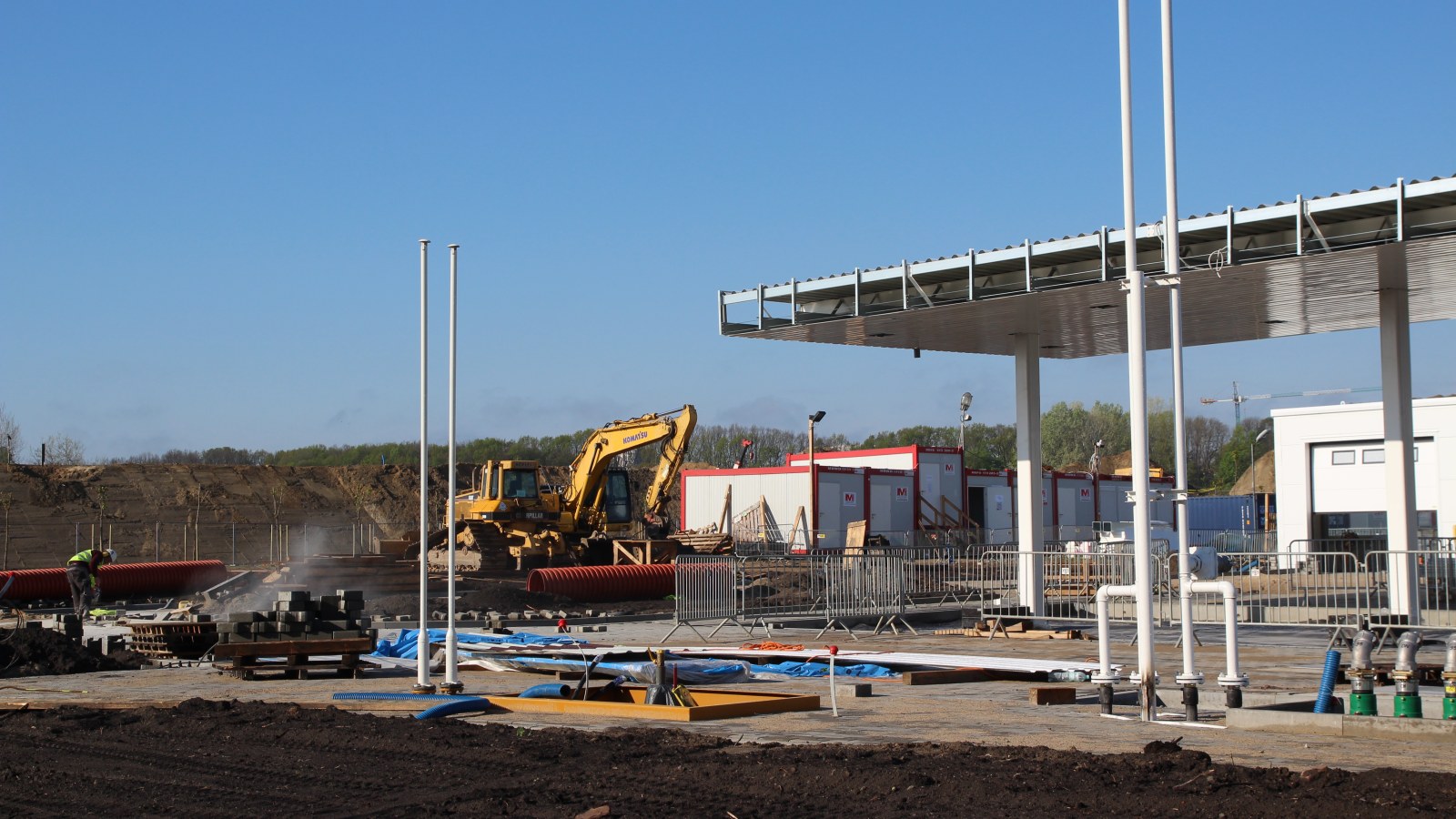
A petrol station construction company in Nakuru County should not treat the county as one uniform market. A city infill plot, a highway-facing site near Naivasha or Gilgil, and a service-centre plot around Molo, Njoro, Rongai or Subukia can differ sharply in ground conditions, traffic mix, utility access, drainage and delivery distance. The first commercial decision is therefore whether the proposed site can support safe, lawful and workable fuel retailing before a standard forecourt concept is priced.
ZES evaluates projects across Kenya by scope, location, logistics and programme. Coverage of Nakuru County does not mean ZES maintains a county office, has completed a project on a particular corridor, or can promise an approval. Developers can begin with the national petrol-station engineering and construction service and use the Kenya service-area directory to understand the wider coverage model.
Turnkey petrol station setup in Naivasha, Gilgil, Nakuru and Salgaa
A petrol station setup in Nakuru should reflect whether it serves city traffic, Naivasha industrial and tourism activity, Gilgil movement, the Salgaa freight corridor or a smaller centre such as Molo or Njoro. Truck parking, bus movement, customer queues and tanker access can materially change the land and pavement requirement. Demand assumptions should be tested separately from the physical feasibility of the plot.
The turnkey setup process aligns tank and piping installation, dispensers, canopy, civil works, electrical systems, drainage, monitoring, testing and operator handover. A corridor-site quotation should also record road-access works, traffic management, accommodation, lifting and delivery timing so that the setup programme is realistic.
Define which Nakuru operating context the plot belongs to
Nakuru’s size makes location classification useful at feasibility stage. Urban plots need careful queue, pedestrian, neighbour and service-access planning. Sites on inter-county freight routes need safe entry geometry, adequate tanker stacking and a clear exit path. Agricultural market centres may experience seasonal traffic patterns and require a realistic assessment of product demand and delivery frequency. Tourism and conservation-sensitive areas call for particularly careful land-use, visual, drainage and environmental review.
The concept plan should map the road reserve, existing access, sight distance, nearby junctions, pedestrian paths, power lines, watercourses and adjacent uses. A fuel tanker must be able to reach a protected offloading position without crossing the principal customer queue or relying on an unsafe reverse movement. If a new crossover, turning lane or road-reserve intervention is proposed, the relevant national or county road authority must review it. A county planning approval does not by itself authorise works on a national road.
Investigate terrain, soils and water before fixing the layout
Nakuru County includes rift-floor, volcanic, agricultural and upland settings. That description is not a substitute for plot evidence. A topographical survey should establish gradients and drainage paths, while geotechnical work should confirm bearing capacity, excavation conditions and groundwater. Results may change tank depth, slab design, retaining structures, earthworks balance and the need for stabilisation. Standard foundation assumptions can distort both safety and cost.
Water management should reflect the specific catchment. Sites near lakes, rivers, wetlands or mapped riparian areas may face additional siting and mitigation questions. Elsewhere, the main issue may be intense runoff from an uphill catchment or an inadequate roadside drain. The engineering design should separate clean water where feasible, grade the forecourt toward controlled collection, include appropriate oil-water separation, protect fill points and allow inspection and maintenance. The receiving drain or disposal route must be verified rather than assumed.
Temperature range, wind exposure and rainfall also influence detailing. Canopy drainage, joints, pavement falls, signage foundations and electrical equipment need to suit the site. For technical scope boundaries, see the guides to underground tank installation and fuel-station canopy construction in Kenya.
Construction packages ZES can evaluate
The project can be structured as defined design support, equipment supply and installation, coordinated construction, or a broader delivery package, depending on the client’s consultants, approvals and procurement strategy. A typical scope may include:
| Work package | Typical deliverables to define |
|---|---|
| Pre-construction | Site information review, surveys, concept layout, risk register, programme and responsibility matrix |
| Civil and structural | Earthworks, foundations, tank base, chambers, forecourt, drainage, access, service building and canopy |
| Petroleum systems | Tanks, fill and vent systems, product pipework, dispensers, containment and leak-control provisions |
| Electrical and safety | Hazardous-area coordination, distribution, earthing, lightning protection, emergency isolation, lighting and fire points |
| Close-out | Inspection records, pressure or integrity tests, calibration coordination, training, drawings and handover schedules |
Each line must be tied to drawings, specifications and stated standards. Items such as a restaurant, car wash, LPG area, truck parking, generator, solar system, borehole or wastewater treatment are not automatically part of a petrol-station price; include them expressly when they form part of the business plan.
Build the safety plan around the Nakuru operating model
A petrol station construction company in Nakuru County should test safety against the vehicles and conditions expected at that plot. A freight-oriented frontage may need stronger separation between tankers, trucks and customer cars, while an urban or market-centre site may demand tighter pedestrian protection and delivery controls. The construction risk register should address excavation support, lifting, temporary drainage, ignition control, electrical isolation and traffic management. If rock, unstable ground or groundwater is encountered, the method should be revised from verified conditions instead of continuing under a standard excavation assumption.
Commissioning should prove that the installed systems match the approved design: product identification, pipe and tank integrity, dispenser function, emergency stops, earthing, lighting, drainage and fire-safety provisions all need recorded checks appropriate to the scope. Handover should include a realistic tanker-offloading exercise and operator response to a spill, alarm or shutdown. Review the fuel-dispenser installation scope when assigning island preparation, connections, protection, testing and calibration responsibilities.
How a Nakuru quotation is developed
The initial enquiry should provide a location pin, plot dimensions, ownership or lease information, present land use, road frontage and the proposed operating model. ZES then reviews what is known about storage, dispensers, shop or amenities, utilities, target finishes and intended delivery route. Where essential evidence is missing, the next deliverable may be a feasibility or investigation proposal rather than a fixed construction sum.
After the concept and scope are agreed, quantities can be organised under preliminaries, professional or coordination services, statutory items, siteworks, structures, petroleum equipment, electrical and mechanical services, finishes, external works, testing and documentation. A quotation should distinguish firm quantities from provisional allowances and identify taxes, client-supplied items and exclusions. This gives the developer a traceable basis for value engineering.
The national petrol-station construction cost guide provides a better budgeting framework than an unsupported “cost per station.” ZES does not publish an invented Nakuru price because capacity, terrain, road works and ancillary uses can shift the total substantially.
County-specific cost drivers to test
- Distance and mobilisation: plant, specialist crews, petroleum equipment and fabricated components may have different haulage costs across the county’s sub-counties.
- Site cut and fill: sloping or irregular ground can add retaining, export, imported fill and compaction work.
- Subsoil conditions: rock excavation, weak material or groundwater controls should follow investigation results, not regional stereotypes.
- Highway interface: traffic studies, access works, culverts, service lanes or road reinstatement may sit outside the plot boundary.
- Environmental safeguards: sensitive catchments, riparian constraints, dust control, wastewater and more robust spill containment can expand the mitigation scope.
- Remote utilities: power extension, water storage, sanitation or communications can be significant outside serviced urban areas.
- Business mix: truck parking, food retail, workshops or car-care facilities require more land, pavement, drainage and services than a compact forecourt.
- Weather and programme: earthworks sequencing and temporary drainage during wet periods may affect duration and preliminaries.
Coordinate county development control with national permits
Nakuru County’s development-control role may include planning or change-of-use review, building-plan approval, public-health and fire input, drainage and access matters on county assets, inspection and occupation requirements. The correct route depends on the plot and current county procedure, so the applicant and registered professionals should verify forms, fees and drawing requirements directly with the county.
At national level, the current petroleum retail-site regulations require an EPRA construction permit before construction or modification and list supporting evidence for the application. The environmental assessment process is administered by NEMA. The developer is also responsible for National Construction Authority project registration, using registered contractors and consultants as applicable. Road authority consent, water-resource authorisation, aviation review or other specialist approvals may be triggered by the actual location; they should not be presented as universal.
An approvals schedule should identify dependencies. Land-use and access feasibility should be sufficiently clear before detailed engineering; environmental findings may require design changes; construction should not be released merely because one of several submissions has been accepted. The EPRA-compliant petrol-station construction guide explains the national compliance lane, but all final requirements must be confirmed with the authorities.
Nakuru County project and quotation checklist
- Exact town, trading centre or corridor and a GPS location pin
- Plot number, title or registered lease, dimensions and current use
- Responsible road authority if known, road class, frontage and access history
- Expected customer mix: local motorists, buses, light commercial vehicles or trucks
- Proposed tanker capacity, approach direction, dwell position and turning plan
- Survey levels, boundary beacons, roadside drain and neighbouring entrances
- Any lake, river, wetland, riparian or conservation constraint already identified
- Geotechnical results or known excavation history from the plot
- Fuel grades, total storage, dispenser hoses and future expansion allowance
- Shop, food, washroom, car-care, parking and truck-service requirements
- Power, water, sewer or on-site wastewater plan
- Target opening sequence, funding limits and client-supplied equipment
- Quotation issue date, taxes, specifications, exclusions, provisional sums and scope owner for each work package
Questions Nakuru developers commonly need answered
Is a highway plot automatically suitable for a petrol station?
No. Visibility and traffic volume do not establish legal access, safe stopping distance, adequate plot depth or separation from other uses. Confirm land use, road-authority requirements, tanker turning and environmental constraints before acquisition or detailed design.
Can one concept be reused in Nakuru City and Naivasha?
The equipment schedule may share principles, but the layout should respond to the actual road, demand, drainage, neighbours and ground. Reusing a drawing without a new site review can carry unsuitable levels, access and foundation assumptions into the second project.
How should a plot near a lake or wetland be assessed?
Begin with authoritative mapping, a survey and the appropriate environmental and water-resource consultation. Do not infer a lawful buffer from an online map alone. The design may need revised siting, containment or drainage, and some plots may not be suitable.
Can ZES quote before the tank capacities are selected?
ZES can help develop an early budget range or options, but a firm equipment and civil price needs an agreed capacity schedule. Tank number and size influence excavation, base design, chambers, pipework, working capital and the approval documents.
Who registers the construction project with NCA?
NCA states that project registration is the developer’s responsibility. The contractor and consultants provide required registration, licence and appointment information, so these responsibilities should appear in the project matrix.
Does ZES guarantee an EPRA licence after construction?
No. Construction quality and records support an application, but EPRA and other authorities make their own determinations. ZES can deliver only the documentation and coordination explicitly included in the contract.
Build the quote around your actual Nakuru plot
Share the location pin, site-control documents, frontage and access photographs, proposed products, intended customer facilities and any survey or county correspondence already obtained. ZES can review the brief, identify missing feasibility evidence and define the next pricing stage. Contact ZES about a Nakuru County petrol-station construction enquiry.
Sources
- County Government of Nakuru: County Integrated Development Plan 2023–2027
- County Government of Nakuru: transport and stormwater-drainage planning in Nakuru City
- Kenya Law: Petroleum (Retail Dispensing Site Construction and Licensing) (No. 2) Regulations, 2025
- National Construction Authority: project registration requirements