
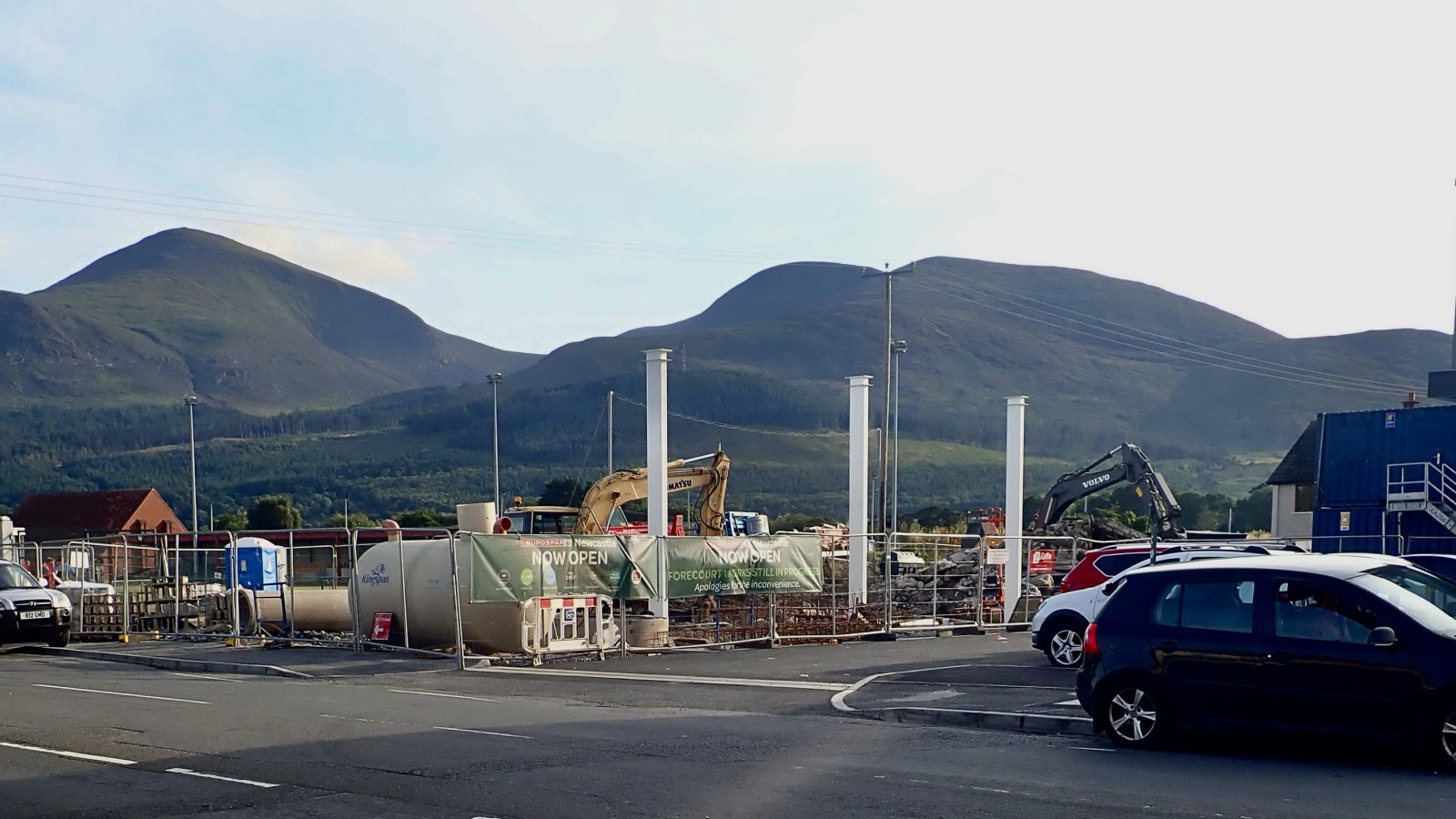
Selecting a petrol station construction company in Narok should start with the exact parcel and route—not a generic promise about the county. Zama Engineering Systems (ZES) helps investors organise petrol station construction and setup work across Kenya around a verified site brief, coordinated design, equipment interfaces, testing and handover. Approval remains the responsibility of the relevant authorities, and commercial performance depends on the investor’s own site and market assessment.
Narok Town, Suswa, Ntulele, Kilgoris and Ololulunga are distinct operating environments. A through-route forecourt can have different access speeds, tanker movements and customer facilities from a town station or a site serving surrounding rural activity. Travel distance, utilities, drainage, terrain, ground conditions and construction logistics can also change the package. ZES develops the technical scope only after these variables are made visible.
Essential first step: a responsible petrol station setup Narok brief should confirm land and planning status, road ownership, approved access strategy, tanker circulation, water and drainage constraints, ground information, equipment needs and the sequence of national and county decisions.
Turnkey petrol station setup in Narok Town, Suswa, Ntulele, Kilgoris and Ololulunga
The ZES turnkey petrol station setup model can coordinate professional inputs, civil construction, storage, dispensing, canopy, electrical services, monitoring and completion documents. The agreed proposal must still show what ZES, the client and each consultant or specialist is responsible for. “Turnkey” is valuable when it closes interfaces; it should never imply that statutory approval, land rights or commercial demand have been guaranteed.
The county’s Physical and Land Use Development Plan identifies Narok as a municipality and lists Kilgoris, Ololulunga, Suswa and Ntulele in its discussion of urban areas. That provides planning context, but each parcel requires current verification. Practical setup questions include:
- Narok Town: can entrance and exit movements, customer queues, pedestrian routes, tanker offloading and construction staging be fitted safely around the site’s actual urban surroundings?
- Suswa: what road authority, approach conditions, site levels, utilities, delivery logistics and environmental features apply to the exact frontage?
- Ntulele: does the parcel support the intended through-traffic and local-customer mix without allowing queues or tanker movements to conflict with the public road?
- Kilgoris: how will the project confirm planning status, access, reliable services, drainage, equipment transport and support for future maintenance?
- Ololulunga: what surrounding land uses, water paths, customer vehicles, tanker route and construction-season assumptions need to be reflected in the design?
These are not claims that any named town has an available or automatically viable market. They are the checks needed to convert a location-based enquiry into a defensible engineering and commercial brief.
Land, planning and site feasibility
Begin with evidence of ownership or lease rights, the parcel reference, survey boundaries, current land use, intended use, easements, road reserve and nearby uses. The Narok County Department of Lands, Physical Planning and Urban Development publishes a service charter that includes building-plan processing and approval among its listed services. Applicants should confirm the documents, charges and current process directly for their project rather than copying requirements or timelines from an old proposal.
A boundary and topographical survey should show the road edge, verge, visible reserves, existing access, structures, utilities, drains, watercourses or seasonal flow paths and changes in level. Overlay the tanks, fill points, vents, dispensers, shop, sanitation, parking, tanker route, drainage controls and emergency access. If the concept only fits by using an unverified road reserve, an off-site drain or an adjoining parcel, the issue must be resolved before procurement.
The investor’s market study is a separate workstream. It should test customer types, competing supply, expected fuel mix and volume, pricing and non-fuel offer, working capital and operating requirements. ZES can design for a stated mix of cars, motorcycles, buses, trucks or agricultural vehicles, but should not invent demand to justify construction.
Road authority, tanker access and route operations
The project team must identify who controls the frontage. A national highway, county road, municipal street or another classified road may have different access procedures and design expectations. Planning or building approval does not automatically authorise an entrance, service-road alteration or drainage connection. Obtain the road authority’s current requirements before the forecourt geometry is fixed.
Access assessment should consider sight distance, approach conditions, neighbouring junctions, crossings, pedestrian movements, entry and exit widths, queue storage and the effect of turning vehicles on public traffic. Where the business brief targets buses or trucks, the layout should provide suitable turning, stopping, dispensing and pavement capacity. The selected dispenser arrangement should follow the flow plan, rather than forcing large vehicles through a car-scale template.
The delivery tanker’s journey needs its own swept-path and operating review. Confirm the expected tanker size, supply approach, gate clearance, gradient, turning radius, protected fill location, emergency escape route and forward exit where the approved layout permits. Offloading should not rely on blocking the road or reversing through active customer lanes. The schedule must also account for how tanks, canopy steel, plant and concrete deliveries reach and move within the construction site.
Drainage, water and actual ground conditions
A dry inspection is not enough to understand storm water. Ask where runoff comes from during rainfall, whether road drains discharge toward the plot, whether seasonal channels or low points cross it, and where the proposed site may lawfully discharge. A topographical and drainage design should maintain building and chamber protection, separate clean roof water from potentially contaminated forecourt drainage, and incorporate the approved treatment and containment measures.
Environmental sensitivity must be assessed for the actual parcel. If a site is near a watercourse, wetland, conservation area, settlement, school or other sensitive receptor, the environmental professional and authorities should define the needed buffers and mitigation. County-wide assumptions—whether permissive or restrictive—are not a substitute for the NEMA process and site-specific evidence.
Ground investigation can reveal bearing conditions, groundwater observations, excavation risks, suitable backfill and pavement needs. The findings may require special tank support or anchoring, excavation protection, dewatering, imported fill, retaining or foundation solutions. Review the ZES underground fuel tank installation scope for the interfaces between tank selection, civil design, chambers, pipework, corrosion protection, monitoring and testing.
Integrated petrol station construction and equipment
The ZES petrol station construction and equipment installation service can be packaged around the approved project boundary. A coordinated scope can include:
- Brief and design coordination: site information review, operating requirements, concept arrangement, professional drawings, equipment schedule and interface register.
- Site and civil works: mobilisation, controlled clearing, earthworks, tank support, foundations, buildings, islands, pavement, drainage, containment and reinstatement.
- Fuel storage: specified tanks, chambers, access covers, fill and vent assemblies, valves and overfill or spill-control provisions.
- Fuel pipework: compatible product lines and fittings, routing, supports, containment and documented pressure or integrity tests.
- Dispensers: islands, bollards or other approved protection and fuel dispenser installation, including power, controls, communications and calibration interfaces.
- Forecourt canopy: surveyed column positions, designed foundations and frame, roofing, rainwater collection, lighting and fascia support within the petrol station canopy construction package.
- Electrical and safety services: distribution, equipment selection, earthing and bonding, lightning and surge provisions where designed, emergency isolation, lighting, signs and fire-safety interfaces.
- Measurement and monitoring: probes, console, power, data links and operator reporting through an automatic tank gauging system where required.
- Testing and handover: inspection records, tank and pipeline tests, commissioning, calibration coordination, operator training, as-built information, manuals and snag close-out.
Interface control is particularly important when the project is far from specialist suppliers. Confirm equipment models, lead times, lifting arrangements, storage, specialist attendance, commissioning prerequisites and replacement-part support before mobilisation. A cheaper component that cannot be integrated or supported can increase whole-life disruption.
EPRA, NEMA, Narok County and road permissions
National petroleum regulation, environmental assessment, county development control and road access are separate approval streams. The Petroleum (Retail Dispensing Site Construction and Licensing) (No. 2) Regulations, Legal Notice 188 of 2025, apply to retail dispensing site construction and licensing. The EPRA construction-permit milestone is different from the petroleum retail licence needed for operation. Construction or modification should be sequenced against the applicable national requirements.
NEMA administers environmental impact assessment. Its official guidance describes EIA as a preventive process that identifies impacts, considers alternatives and sets mitigation across the project life cycle. The proponent should confirm the required assessment route and ensure the approved environmental measures are incorporated into design drawings, quantities, construction methods and monitoring—not left as a separate report.
Narok County’s lands and planning processes may cover planning or development matters and building plans, depending on the project. Fire, business and inspection requirements may also be relevant at later stages. The authority responsible for the road separately addresses access. Other national obligations can involve construction registration and supervision, workplace safety, water resources, electricity, standards, weights and measures and professional regulation. No contractor can promise approval on behalf of these bodies.
What changes petrol station construction cost in Narok?
A county name cannot produce a fixed price. The approved tank quantity and capacity, fuel grades, dispensers, pipe lengths, canopy, buildings, pavement duty, access, drainage, power, water, sanitation, monitoring, safety equipment, tests and handover records determine the base scope. Site investigation can add rock excavation, unsuitable-soil replacement, dewatering, retaining, erosion control, special foundations or longer connections.
Transport and mobilisation should be transparent. A project may need long-haul equipment delivery, accommodation, secure storage, temporary power or water, specialist return visits and planned lifting. A constrained town site may instead add phasing, traffic control and restricted delivery hours. The quotation should state taxes, authority charges, professional services, utility costs, provisional sums, exclusions and client-supplied items.
Use the petrol station construction cost in Kenya guide to create comparable scope categories. When selecting a petrol station construction company in Narok, give bidders the same survey, drawings, specifications, quantities and responsibility schedule. An offer is not complete merely because it includes tanks and pumps; civil, electrical, safety, monitoring, test and documentation boundaries matter.
Narok project brief checklist
- Site pin, parcel reference, ownership or registered-lease documents and nearest town.
- Boundary survey, dimensions, topographical levels and visible road-reserve features.
- Current and proposed use, neighbouring activities and county correspondence available.
- Road name, responsible authority if known, frontage, entrance and nearby junctions.
- Intended cars, motorcycles, buses, trucks or agricultural vehicles and parking needs.
- Tanker size and supply route, gate, turning, offloading position and exit strategy.
- Fuel grades, tank capacities, dispenser configuration, hoses and expansion allowance.
- Canopy, shop, office, sanitation, accommodation or other service facilities requested.
- Runoff, seasonal water, drainage outfall, slopes and any available ground investigation.
- Electricity, water, communications, backup, security and stock-management requirements.
- Environmental reports, professional drawings, permits or authority feedback already obtained.
- Target procurement structure, programme basis and allocation of responsibilities.
Frequently asked questions
Is land beside a busy road in Narok automatically suitable?
No. Traffic is only one commercial input. Legal land use, access approval, site spacing or suitability under the petroleum framework, drainage, tanker movement, environmental conditions and engineering feasibility all require separate confirmation.
What is different about planning a Suswa or Ntulele forecourt?
The answer depends on the parcel. Confirm the relevant road authority, route geometry, traffic mix, levels, water paths, utilities and construction logistics. Do not copy assumptions from Narok Town or another highway site.
Can ZES provide a setup in Kilgoris or Ololulunga?
ZES can review a project enquiry and define a delivery approach after receiving the location, scope and logistics information. This page does not claim a permanent local office, an automatic mobilisation date or site approval.
Should tanks and dispensers be bought before approvals?
Early technical selection can support design, but committing to equipment before feasibility and authority conditions are understood can create expensive mismatch. Freeze procurement against an approved design basis and interface schedule.
Does a turnkey contract remove the client’s approval duties?
No. The contract can allocate document preparation and coordination, but the proponent retains statutory responsibilities and each authority controls its own decision. Record every submission, prerequisite, condition and completion document.
See the ZES service areas across Kenya for additional county project-planning resources.
Request a Narok petrol station construction review
Send the site pin, survey or parcel dimensions, road frontage, intended vehicle market, fuel products, storage concept, buildings and available authority documents. ZES can identify the missing technical inputs and prepare a project-specific scope without assuming that an unassessed parcel is suitable.
Submit Your Narok Project Brief Review Construction and Equipment Services
Sources
- Narok County Government: Department of Lands, Physical Planning and Urban Development Service Charter
- Narok County Government: County Physical and Land Use Development Plan
- Kenya Law: Petroleum (Retail Dispensing Site Construction and Licensing) (No. 2) Regulations, 2025
- National Environment Management Authority: Environmental Impact Assessment guidance