
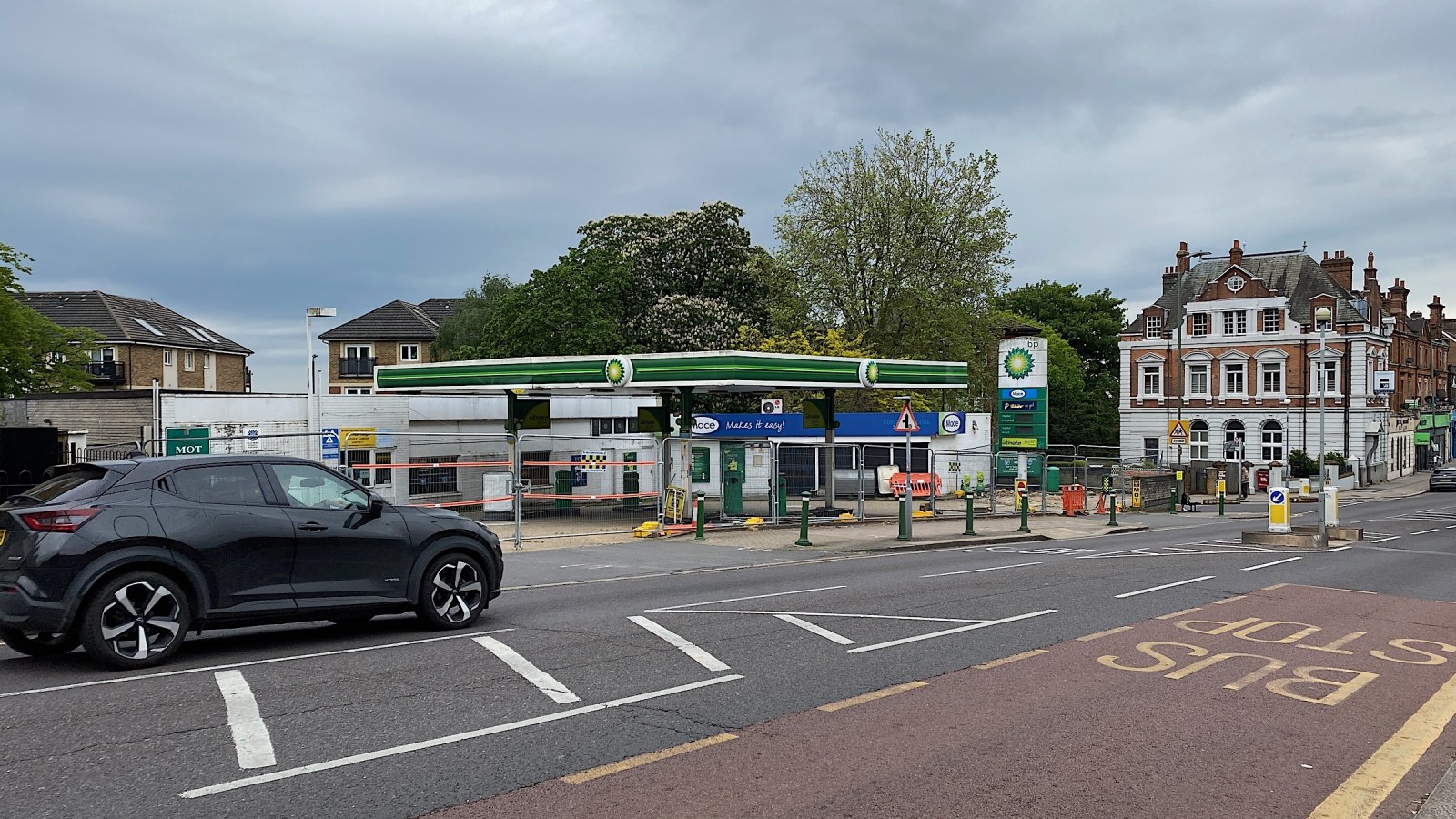
A dependable petrol station construction company in Nyeri should begin by testing whether the proposed site, access and operating concept work together. Zama Engineering Systems (ZES) supports clients with coordinated petrol station construction and setup scopes across Kenya, covering civil works, fuel systems, dispensing, canopy, electrical systems, monitoring, testing and handover. Every proposal remains subject to the parcel-specific designs and approvals required by the relevant authorities.
Nyeri Town, Karatina, Othaya, Mukurwe-ini and Naro Moru present different road, terrain, neighbourhood and delivery conditions. A forecourt beside a major through-route may need a different entrance, queue and tanker solution from one serving a local town or agricultural hinterland. County location alone cannot establish demand, approval or price. ZES therefore asks for the site pin, survey information and business brief before defining the construction package.
Planning principle: a serious petrol station setup Nyeri study should resolve land use, road authority, customer and tanker movement, levels, drainage, ground conditions and utility capacity before equipment quantities are frozen.
Turnkey petrol station setup in Nyeri Town, Karatina, Othaya, Mukurwe-ini and Naro Moru
The ZES turnkey petrol station setup service brings project workstreams under one documented delivery plan. Turnkey does not mean bypassing approvals or applying one layout everywhere. It means aligning the client’s brief, professional design, authority conditions, construction, equipment interfaces and completion evidence with a clear allocation of responsibility.
Location-specific questions include:
- Nyeri Town: can the proposed entrance, customer queue, pedestrian route, tanker path and construction working space fit without unsafe conflict with surrounding urban activity?
- Karatina: what road controls, junctions, local traffic movements, drainage levels and neighbouring uses influence the parcel and its forecourt access?
- Othaya: do frontage width, gradients, surface-water paths and approach conditions allow the intended vehicle mix and delivery arrangement?
- Mukurwe-ini: what planning status, access geometry, utilities and construction logistics apply to the exact market-centre, town or rural-road site?
- Naro Moru: how do road ownership, site levels, ground findings, drainage and the intended customer base affect the station size and configuration?
Nyeri County’s official Lands, Physical Planning and Urban Development page identifies development-application review and local physical and land-use planning among the directorate’s functions. It also lists Naro Moru and Mukurwe-ini among locations for draft local plans. Investors should check the current adopted planning context and parcel requirements directly; a reference to a plan in preparation is not an approval.
Build a feasibility record before purchasing equipment
The first feasibility record should combine land, planning, road, environmental and technical evidence. Include the parcel reference, ownership or registered lease, survey boundaries, current and intended use, road reserve information, existing access, neighbouring development, utility corridors and any restrictions already communicated by an authority. If the proposed use or building form requires a county application, its documents and sequence should be verified for the current date.
A measured topographical survey should show the public-road edge, verge or service-road features, entrances, drains, buildings, utilities, spot levels and visible water routes. Overlay the customer route, tanker route, dispensers, tanks, vents, fill points, shop, parking, sanitation, drainage and emergency access. This exposes space conflicts while revisions are still affordable.
Commercial feasibility is separate. The developer should assess customer segments, competing supply, forecast volumes, retail offer, capital availability and operating costs using appropriate professional advice. ZES can translate a confirmed operating brief into a technical scope, but the presence of traffic or a growing centre should not be presented as a guarantee of sales.
Access approval and tanker-safe circulation
Identify the road authority before designing the entrance. Nyeri County’s Transport, Public Works, Infrastructure and Energy Department describes county functions that include roads, traffic management, storm-water drainage in built-up areas and providing road levels for developers. A frontage can instead fall under a national or another road authority, so the official road owner and its current requirements must be confirmed for the parcel.
Road access assessment can cover sight lines, approach speed, nearby junctions and crossings, median or service-road conditions, entry and exit arrangement, queue storage and pedestrian movement. A county development approval is not automatically an access approval, and an accepted entrance does not replace the national petroleum, environmental or construction decisions.
Plot the delivery tanker from the expected approach route to a protected offloading position. Check gates, gradients, turning, overhead clearance, fill-point access and the exit movement. The tanker should not have to depend on an unverified manoeuvre across customer queues or public traffic. If the operating brief includes buses, trucks or agricultural vehicles, their dimensions, pavement loading and dwell time should inform the design rather than being added after islands are built.
Levels, drainage and ground investigation
Site levels control more than appearance. They influence road tie-in, building thresholds, forecourt falls, tanker stability, retaining, excavation depth and storm-water discharge. The topographical design should keep clean runoff separate from areas that may collect petroleum contamination, direct water away from electrical and tank chambers, and use a lawful, verified outfall. It should also consider water arriving from the road or adjoining parcels.
Ground conditions can change within a short distance and cannot be inferred from a town name. Appropriate geotechnical investigation may be needed to determine allowable bearing, excavation stability, groundwater observations, backfill requirements, pavement layers and recommendations for tank and canopy foundations. The designer should respond to the report rather than pricing generic earthworks and treating every difference as a later variation.
For the petroleum storage workstream, see the ZES underground fuel tank installation guide. Tank specification, support or anchoring, chambers, corrosion controls, fill and vent assemblies, product piping, monitoring provisions and tests need to operate as one system.
One integrated petrol station construction scope
ZES can coordinate a complete petrol station construction and equipment installation package or a defined portion of it. The project scope should state, at minimum:
- Design basis: survey and investigation inputs, vehicle and fuel brief, concept layout, equipment schedule and coordinated professional information.
- Civil construction: enabling works, excavation, tank bed or slab, selected backfill, foundations, buildings, islands, pavement, drainage and containment.
- Tanks and fittings: tanks of the approved type and capacity, chambers, fill points, vents, access, valves and specified protection systems.
- Product pipework: compatible pipes and fittings, routes, containment, supports and documented integrity or pressure testing as specified.
- Dispensing package: islands, impact protection and fuel dispenser installation, with mechanical, electrical, data and calibration interfaces.
- Canopy: foundations, columns, structural frame, roof, rainwater goods, fascia support, lighting and clearance coordination under the petrol station canopy construction scope.
- Electrical and emergency systems: distribution, approved equipment selection, earthing, bonding, emergency isolation, lighting, communications and fire-safety interfaces.
- Stock monitoring: tank probes, console, power, communications and reports where an automatic tank gauging system forms part of the brief.
- Quality and handover: inspection points, material and equipment records, tests, commissioning, training, as-built information and a controlled snag close-out.
The responsibility matrix should name the party accountable for each drawing, submission, supply, interface and record. If the civil contractor expects another party to provide tank details, or the electrician has no dispenser and gauging load schedule, the gap needs closing before site work—not during commissioning.
Approval pathway: keep every authority’s role clear
The Petroleum (Retail Dispensing Site Construction and Licensing) (No. 2) Regulations, Legal Notice 188 of 2025, apply to retail dispensing site construction and petroleum retail licensing. The current EPRA requirements should be checked against the project stage. A construction permit and a retail operating licence are separate milestones; neither should be described as a county building approval or an environmental licence.
NEMA administers environmental impact assessment under the national environmental framework. NEMA’s guidance says EIA is undertaken early to identify project effects, alternatives and mitigation before implementation. For a fuel site, the assessment pathway and conditions can influence layout, runoff controls, waste arrangements, spill prevention, construction methods, monitoring and later environmental auditing.
Nyeri County’s lands and planning functions can be relevant to land-use and development applications, while the county’s public works, transport and roads responsibilities may be relevant where a county road or associated infrastructure is involved. A national road frontage must be addressed with the appropriate national authority. Fire, business, construction, workplace, water, electricity, weights and measures, standards and professional requirements may create additional workstreams depending on scope. ZES can support coordination but cannot issue or guarantee an authority’s decision.
Nyeri petrol station cost drivers
A quotation should be based on quantities and defined assumptions, not a flat “Nyeri rate.” Storage capacity, fuel grades, dispenser quantity, hoses, pipe length, canopy area, shop and amenities, pavement duty, access work, drainage, utilities, safety systems, tank gauging, testing and documentation all affect cost. The site investigation may introduce excavation support, unsuitable-material replacement, dewatering, rock work, retaining or specialised foundation measures.
Location affects logistics differently. A constrained plot can require staged excavation and carefully scheduled deliveries. Another site can add long transport, temporary services, lifting mobilisation or secure storage. Confirm whether taxes, transport, professional services, authority charges, utility connections, calibration, branding and client-supplied equipment are included. The ZES Kenya petrol station construction cost guide provides a useful scope framework without pretending to price an unseen parcel.
When assessing a petrol station construction company in Nyeri, compare bidders against one drawing set, specification, bill of quantities and responsibility matrix. Ask for named equipment and test deliverables. A figure that omits road access, drainage discharge, tank accessories, cabling or handover records is not directly comparable with a complete offer.
Nyeri project brief checklist
- Location pin, parcel reference, ownership or registered lease, and nearest centre.
- Survey boundaries, topographical levels, existing features and road-reserve information.
- Current and intended use plus any county planning or development correspondence.
- Road name and responsible authority if known, frontage, entrance and nearby junctions.
- Customer vehicle types, expected queue, parking, retail and operating-hour assumptions.
- Tanker size, approach route, turning path, offloading position and proposed exit.
- Fuel grades, total storage, tank arrangement, dispensers, hoses and expansion plan.
- Canopy, shop, office, sanitation, parking and any service or wash facilities.
- Known slopes, drainage paths, ground data, groundwater observations or past earthworks.
- Electricity, water, communications, backup power, security and stock-monitoring needs.
- Available environmental, professional, construction or authority documents.
- Target scope, procurement method and client-versus-contractor responsibilities.
Frequently asked questions
Does land in Nyeri Town or Karatina qualify because it is commercially zoned?
Commercial use alone does not settle petroleum-site suitability. Access, site layout, neighbouring uses, environmental review, engineering conditions and every applicable authority decision must still be addressed.
Can ZES design a setup for trucks near Naro Moru?
A truck-oriented concept can be reviewed when the brief provides the intended vehicles, access, turning and parking requirements. Suitability depends on the parcel, approved entrance, pavement design, tanker separation, facilities and authority requirements.
What information is most important for an Othaya or Mukurwe-ini site?
Begin with the pin, boundary and topographical survey, land-use position, road owner, access geometry, intended vehicle market, drainage observations and available utilities. Those facts determine what further investigation is needed.
Can a fixed construction price be issued before soil and drainage checks?
A contractor can state a preliminary allowance, but it must disclose assumptions and exclusions. A dependable fixed price requires sufficient design, quantities and ground information; otherwise substantial civil items remain provisional.
Who obtains the permits?
The responsibility should be agreed in writing for each submission. Even when consultants or contractors prepare and coordinate documents, the project proponent retains obligations, and only the relevant authority can make its decision.
Visit the Kenya petrol station service-area directory to compare related county planning pages.
Request a Nyeri petrol station setup review
Share the site location, survey or parcel dimensions, road frontage, target vehicle mix, fuel products, proposed storage and facilities. ZES can identify missing technical inputs and prepare a scope-led proposal based on the actual project rather than a generic county estimate.
Send Your Nyeri Project Brief See the Integrated Construction Scope
Sources
- County Government of Nyeri: Lands, Physical Planning and Urban Development
- County Government of Nyeri: Transport, Public Works, Infrastructure and Energy
- Kenya Law: Petroleum (Retail Dispensing Site Construction and Licensing) (No. 2) Regulations, 2025
- National Environment Management Authority: Environmental Impact Assessment guidance