
Welding and Fabrication Services Lang’ata enquiries for handrails, railings and other public-facing metalwork need a clear description of use. An attractive pattern is only one part of the requirement: the actual design, supporting construction, interfaces and installation responsibilities also matter. This guide helps a property or institutional buyer prepare a railing-fabrication brief without prescribing dimensions or loads for an unassessed site. ZES can review Lang’ata enquiries and confirm the relevant assessment and supplied scope.
1. Identify the purpose of each metalwork item
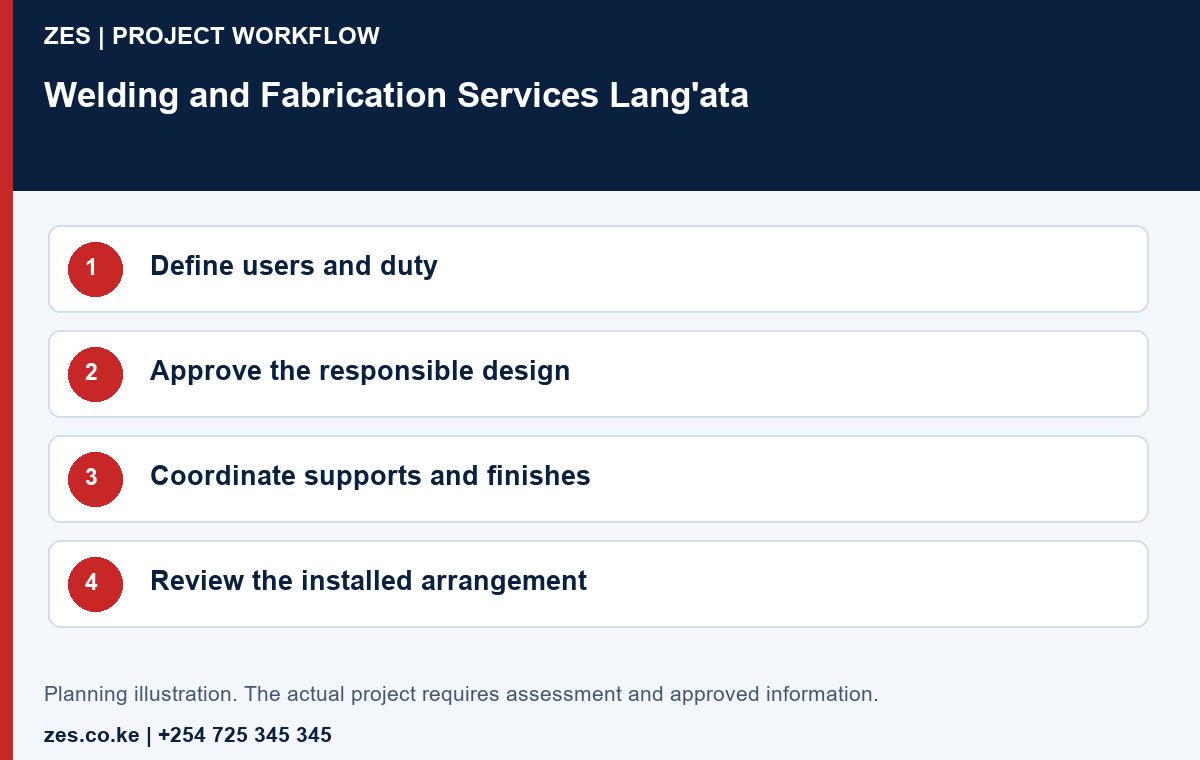
Distinguish a handrail, protective barrier, decorative screen and equipment enclosure. They may look similar in a reference image while serving different duties. Describe who uses the area and which existing elements are retained. The appropriately qualified parties must establish the design requirements for the actual use. Railing fabrication should follow that approved information rather than infer performance from appearance.
2. Name the design and approval owners
Identify who supplies and approves the drawings, supporting information and relevant interfaces. A fabricator working to an approved detail does not automatically own every architectural or structural decision. Record drawing references and revisions in the enquiry. If the site differs from the drawing, resolve the discrepancy before fabrication. Welding and Fabrication Services Lang’ata should be coordinated with the actual responsible project team.
3. Review existing supporting construction
Explain whether the railing attaches to new or existing work and who verifies the relevant condition and dimensions. An apparent attachment position does not prove that the underlying support is suitable. If finishes conceal information needed for assessment, identify the investigation and reinstatement responsibilities. A final quotation should keep assumptions visible instead of treating an inaccessible condition as inspected.
4. Agree the visible finish and ordinary use
Use an approved sample or specification to define the visible treatment, edges, joints and finish. Discuss relevant exposure and routine care before selecting a protection system. The customer’s appearance preference should be coordinated with technical requirements rather than substituted for them. Railing fabrication intended for frequent public use needs a clear acceptance reference; the buyer should not have to decide what good workmanship means only after installation.
5. Coordinate the installation boundary
State whether the premises remains occupied and who approves access and temporary arrangements. The responsible site team should plan the work and controls appropriate to the actual task. Identify responsibility for protecting adjacent surfaces, managing other suppliers and making supporting work ready. Workshop completion is not proof that the full installed railing scope, including interfaces and required checks, has been supplied.
6. Request appropriate evidence
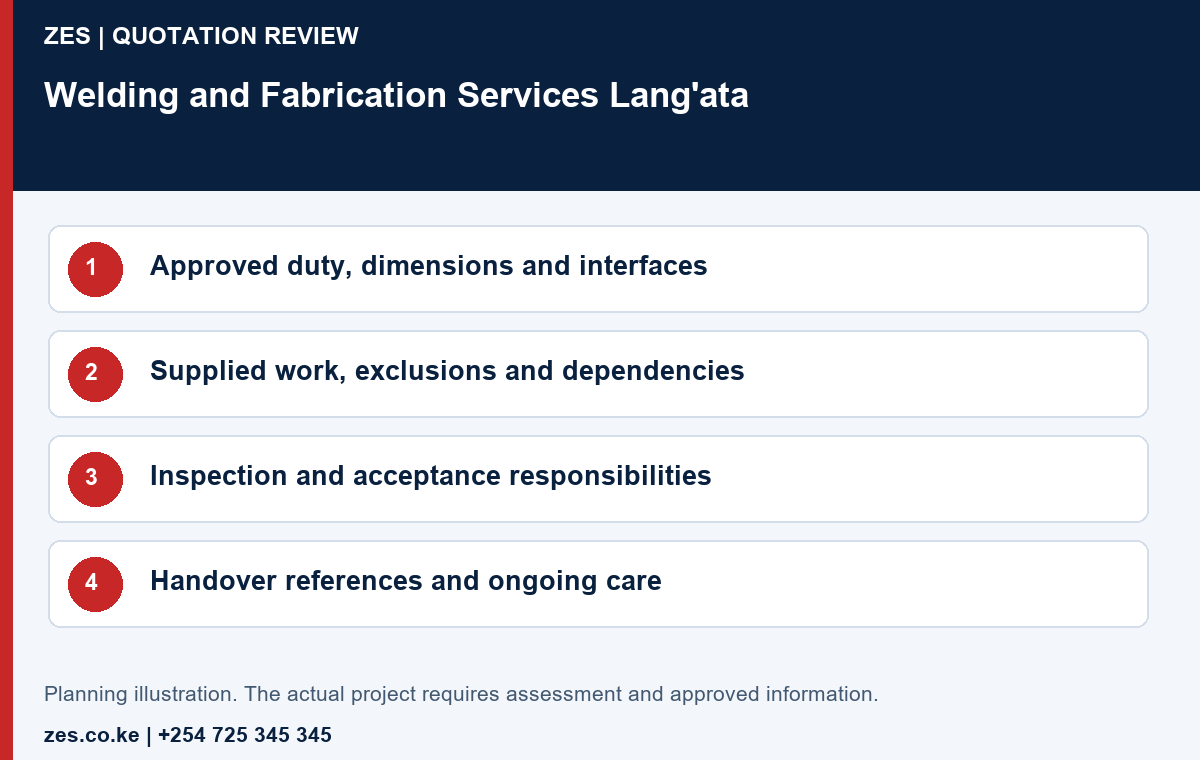
Ask the responsible parties to identify the dimensional, inspection and other acceptance evidence required by the actual approved scope. Keep any specialist test or certification requirement explicit before procurement. Photographs can support a record but do not replace technical verification. Do not accept a decorative finish as evidence of load capacity or suitability of concealed connections.
7. Keep later alterations controlled
Retain final approved information, the supplied-work record and relevant care instructions. Additional cladding, advertising, accessories or changed use can affect the original requirement. Refer proposed alterations to the appropriate responsible people. When requesting Welding and Fabrication Services Lang’ata for maintenance, identify the original item and describe the condition instead of assuming every existing railing can be modified without another assessment.
Illustrative project brief for Lang’ata
A hypothetical institution wants a coordinated railing finish while a building contractor supplies the supporting construction. The enquiry should identify the approved design, who verifies the support before installation and which finish sample defines appearance. It should also separate fabrication, supporting work, installation and acceptance documentation. If the building detail changes, the metalwork information must be reviewed before production proceeds. This example explains project coordination and is not a completed ZES project, a standard railing design or a claim of approval for a particular premises.
Prepare a clear enquiry for ZES
Send the site location, intended use, quantity, photographs, available drawings and approximate dimensions. Mark measurements that still need verification. Identify the person authorised to approve the work and the relevant technical or property contacts. Explain the preferred programme and which activities must continue. Avoid sending private tenant information, security credentials or unrelated personal records when a simple project description will explain the requirement.
A written proposal should identify supplied work, exclusions, customer dependencies, approved references and acceptance evidence. Confirm current commercial terms and any assessment, travel, delivery or installation arrangements directly. Relevant design, approvals and specialist verification remain with the appropriately qualified responsible parties where required. This guide provides buying questions; it is not a site-specific welding method, structural design or certification of an existing installation.
- Required result: identify the item, duty and quantity.
- Information: distinguish approved details from assumptions.
- Interfaces: name customer and third-party responsibilities.
- Commercial scope: compare equivalent supplied outcomes.
- Acceptance: agree evidence, outstanding actions and handover references.
Frequently asked questions
Can a photograph determine the correct railing specification?
No. A photograph can show appearance, but the actual duty, dimensions, supporting arrangement and appropriate design requirements need competent review and approved information.
Does railing fabrication automatically include specialist design?
Only where the written project scope assigns and supplies that responsibility through the appropriate party. Ask for design, fabrication, installation and acceptance responsibilities to be identified.
How can a Lang’ata buyer start the discussion?
Send the site location, intended use, quantity or approximate extent, available drawings and photographs. ZES can confirm the assessment and information needed before a final proposal.
Related specialist ZES guide · Welding and metal fabrication services · Request a welding quotation · Request a site assessment · Call +254 725 345 345.
Reference: NCA contractor information. Confirm requirements applicable to the actual scope with the responsible advisers.