
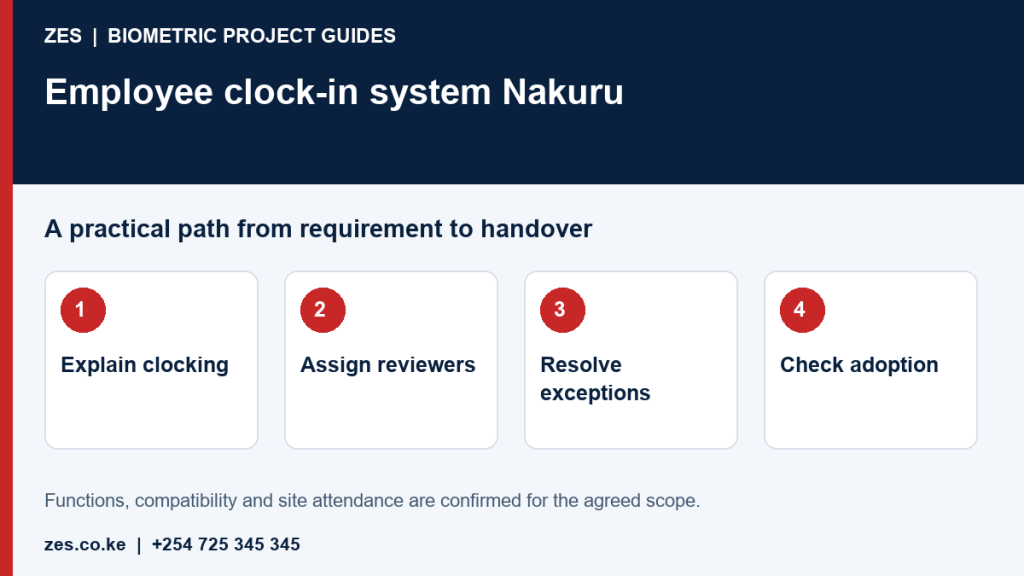
An employee clock-in system in Nakuru becomes useful when staff know how to use it and supervisors can handle exceptions consistently. A working device does not by itself create a reliable attendance process. This guide focuses on adoption, daily checks and review responsibilities. It is intended for HR teams, supervisors and administrators preparing to introduce or improve clocking after the equipment and software scope has been selected.
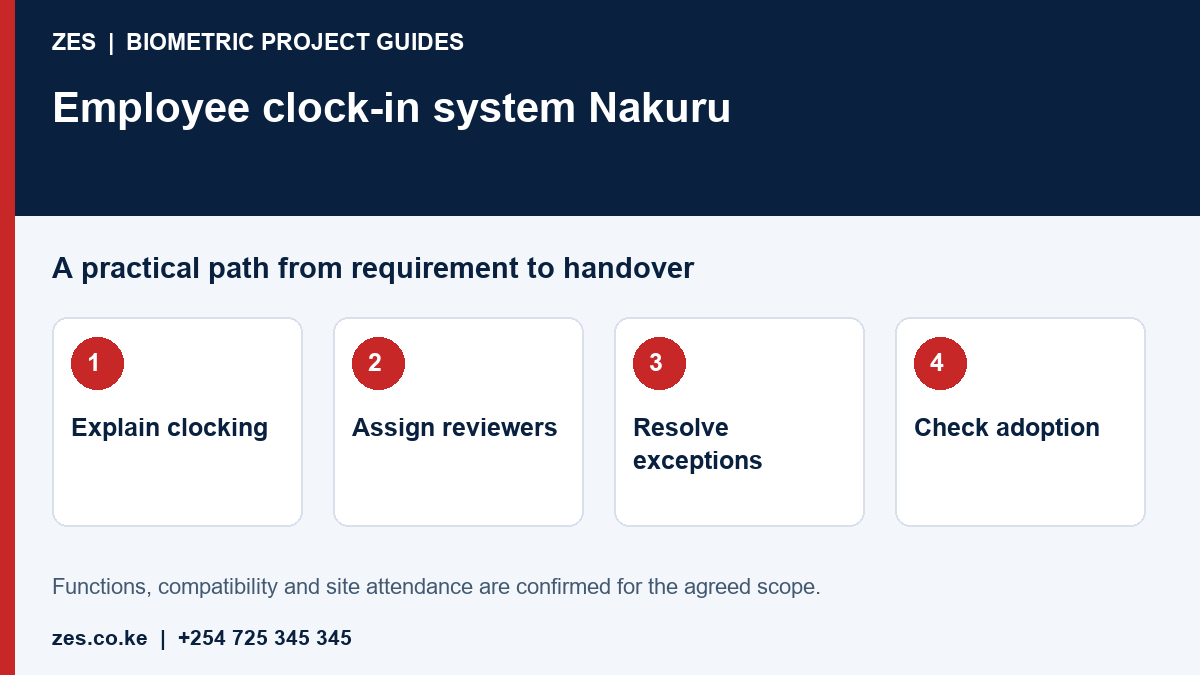
Explain the process before the first day
Tell staff where to clock, which events are required and whom to contact when the process fails. Explain how authorised travel, temporary duties and changed shifts are recorded. Use a demonstration with sample records. Make the reporting purpose and employee-record responsibilities clear through the organisation's reviewed communication. People should not discover the correction procedure only after a missing event appears in a payroll-preparation report.
Separate clocking from access and work approval
A terminal interaction is an attendance event; it may not prove door access, time at a workstation or approved overtime. If the organisation needs several functions, specify each. Explain the limits to supervisors so a device event is not used to draw conclusions it cannot support. Keep rules for authorised work and attendance interpretation documented. This makes employee queries easier to resolve and avoids relying on informal assumptions about what the machine records.
Assign a daily exception owner
Have an authorised person review missing events, repeated recognition failures and unusual duplicates. Record whether the issue relates to a user, schedule, terminal or transfer connection. Ask for explanations and supporting information through the agreed route. Approved corrections should retain suitable accountability. A daily process prevents a large unresolved backlog at month end. It also helps identify a technical fault affecting several employees before managers treat the problem as separate individual incidents.
Make reports understandable to supervisors
Use clear employee identifiers, dates, shift references and exception status. Avoid sharing more personal information than a supervisor needs. Agree who sees raw events and who receives a reviewed summary. Demonstrate an ordinary shift, a missed checkout and an approved correction. A report can be accurate technically yet confusing operationally if labels and ownership are unclear. Have actual users review sample outputs before depending on them for routine administration.
Review adoption after the pilot
Look at repeated mistakes, queues, failed recognition and the time spent resolving reports. Adjust training or the documented process where needed, without silently changing approved employment rules. Keep the support route available and update it when personnel change. ZES can review device, software and configuration issues against an agreed scope for the Nakuru workplace. Site attendance and support commitments must be confirmed rather than inferred from the article's location.
Prepare an assessable ZES enquiry
Include the location, organisation type, employee numbers and number of devices or controlled doors. Describe the existing equipment, software, shifts and intended reports. Identify who will approve the scope and receive training. Share sample or sanitised requirements, not employee biometric records or passwords. Ask the proposal to distinguish equipment, supporting infrastructure, software, configuration, testing, training, recurring charges and support.
Frequently asked questions
Should a missing punch automatically mean absence?
No. Review equipment, schedule and authorised-work circumstances alongside the employee's explanation.
Who should approve corrections?
The employer should name authorised reviewers and define the record or audit history required for changes.
Related biometric guides
- Biometric Attendance System Nakuru: An Employer Procurement and Rollout Guide
- Shift and Overtime Attendance: Rules, Midnight Boundaries and Exception Review
Discuss your requirement with ZES
ZES reviews each brief before confirming the appropriate assessment, installation or support scope. Site visits, travel, equipment availability and specialist delivery responsibilities are confirmed directly. Final interfaces and functions are agreed against accessible technical information and the written proposal.
Biometric attendance services · Access-control services · Request a quotation · Request a site assessment